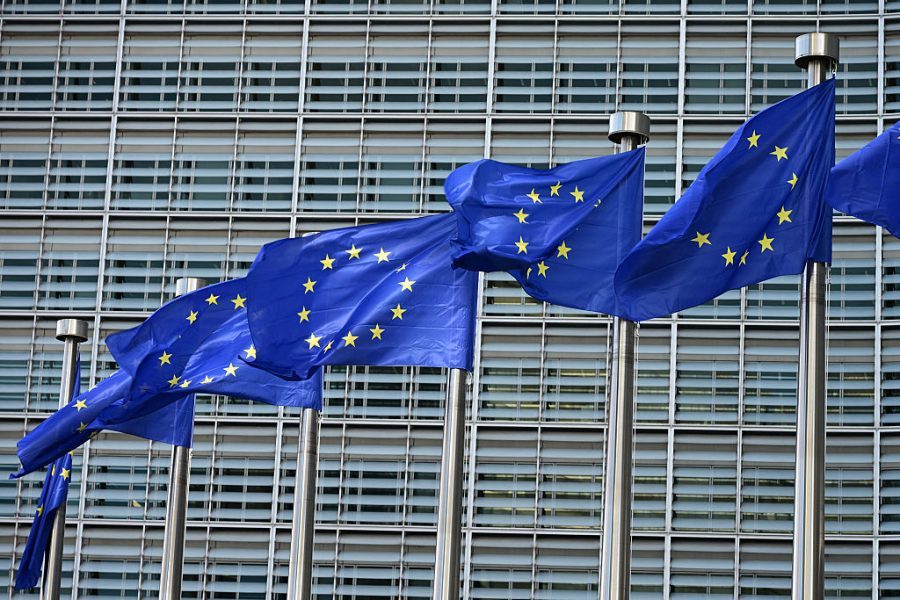
As the UK once again contemplates its future in Europe, the European Union is looking to inject momentum into its enlargement process. Croatia was the last to join in 2013; with Brexit, the bloc has only shrunk. Now, many in the EU hope the next few years will mark the next phase of enlargement. Documents published this week, on the ‘pre-enlargement policy reviews’, are designed to move this conversation on and show that the EU is thinking strategically about what this actually means – namely how to accept new members while maintaining broad consensus.
At the start of the year, it looked like external events were pushing European nations closer together. Trump’s posturing over Greenland saw the Icelandic referendum on accession talks brought forward, the new Norwegian opposition leader came out in favour of re-opening the European question in Oslo and, as Russia’s war in Ukraine overtook the first world war in length, Ukraine and Moldova continued to push for an accelerated route to accession.
Attention is focused on the candidate countries in southeast Europe
At the start of September, the European Commissioner for Enlargement Marta Kos declared that the EU was approaching an ‘autumn of enlargement’. While the pre-enlargement papers have been expected for over a year, her remarks came one week after the pro-accession side lost the Icelandic referendum. They should also be seen in the context of criticism over the slowing down of accession by the two frontrunners, Montenegro and Albania, who are close to membership but continue to face challenges.
Iceland was important because, not only would a different result have been welcomed by liberals and institutionalists, it may have had an influence on EU discourse in Norway. Due to Norway and Iceland’s membership of EFTA, it would have necessitated a discussion about what Norway should do, in the event that Iceland joined. Iceland remains a candidate country officially, but its status stays frozen.
While the North Sea membership debate has stalled, attention is focused on the candidate countries in southeast Europe. Montenegro and Albania are seen as the frontrunners for membership next – indeed, Montenegro has a stated ambition to join by 2028. Russia’s war in Ukraine has meant that much attention over enlargement has focused on Ukraine and Moldova, given the geopolitical concerns, but the EU has been at pains to show that this won’t come at the detriment to Montenegro and Albania’s accession. Nevertheless, it seems now that Montenegro’s accession is being slowed down by bilateral disputes with Croatia.
This is partly what the pre-enlargement discussions are designed to prevent – or at least show that they are considering how to prevent these types of disputes in the future. While Croatia is slowing down Montenegro’s accession, the same thing happened with Croatia itself, whose own talks were slowed down at the time by neighbour Slovenia. While the presidents of Serbia and Albania effectively called for the option of a second tier of EU membership earlier this year, the Commission appears to be against this notion, preferring instead what it calls ‘safeguards’.
Instead of having a second tier of membership, where members join the EU at an accelerated rate but do not hold full voting rights, the Commission prefers a method where safeguards would be put in place for new members that could be enacted should it be deemed necessary. Meanwhile, new members would also undertake not to use bilateral disputes to hold up further accession talks. For example, for a period of time these new members could have voting rights suspended if they were found guilty of democratic backsliding. This is designed to prevent a repeat of the deadlock the EU repeatedly found itself in with Hungary during Viktor Orban’s premiership.
This would essentially be a probationary period and could last for at least 15 years. The key, however, is that these safeguards – for now – would only be put in place for newcomers. Candidate countries will surely argue that this, in effect, does create a second tier of membership, as the pressure on new members not to exercise their veto or to adhere to consensus will be far greater than on older members. Commission insiders argue these safeguards are necessary as the reforms these countries have undertaken, in order to join the EU, are less secure.
All this matters for Britain, at a time when Andy Burnham has signalled a willingness to re-open the Brexit settlement. With party conference season having finished in the UK, it is clear there is still no consensus on European relations, beyond the idea that Brexit hasn’t worked. The Lib Dems favour a closer defence relationship, Burnham has confirmed that rejoining is one of many options that should be considered, while the Tories have pledged to reverse any changes Labour makes during this parliament. The UK however will need to consider how much the EU has changed in the time since Brexit. On the one hand, a looser and more pragmatic, expanded Union could be more palatable to British voters, while on the other, rejoining would be a hard sell without a definitive veto.
As the ‘autumn of enlargement’ began, the announcement that Canada could be the first ‘associate member’ of the EU caused confusion. Eyebrows were raised about this potential new tier of membership amongst both candidate countries and the more eurosceptic states, like the UK, who could be interested in a looser arrangement. The EU quickly clarified this option was only for states that would be ineligible to join ordinarily. There is a paradox for Britain. An associate membership or special arrangement would be the most likely to succeed at present (and arguably be the most beneficial to both the UK and EU), but Britain can’t be seen to benefit from Brexit.
Marta Kos has stressed that these documents show the EU is acting with ‘realism and pragmatism’ as it prepares for a larger Union. Despite the setback of Iceland and the slowdown over Montenegro and Albania, each step is designed to show there is movement over accession. Those in favour of expansion are aware of the danger of perceived inertia, which only hurts the pro-European camps in candidate countries which have long wished to join the EU (like North Macedonia). Indeed, Ursula von der Leyen calls expansion a ‘geopolitical imperative’. If true, the EU needs to act faster; otherwise, the bloc’s break from enlargement could stretch into another decade.




Comments