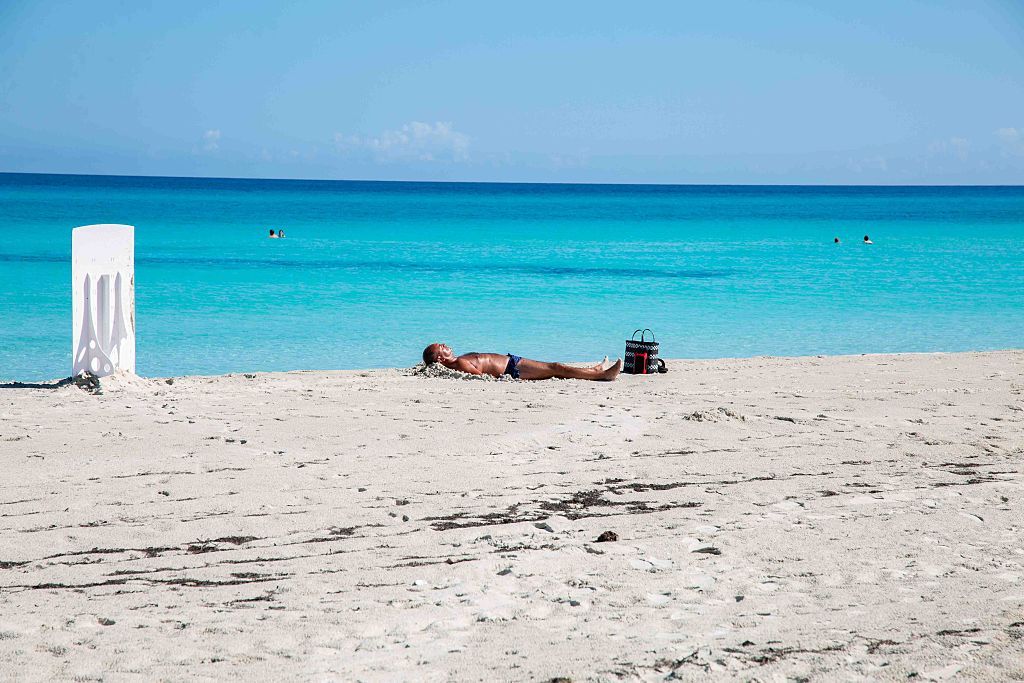
I have a sideline in travel writing, so am lucky enough to have seen some very lovely beaches. Few are as spectacular as Cuba’s Varadero. There are others I prefer – Cossies in the Cocos (Keeling), if you happen to be passing, or the hidden beach at Achmelvich in Scotland, where I shivered between granite walls in my childhood summers.
But if classic sun, sea and sand is your thing, Varadero’s 12-mile, palm-fringed spit is unbeatable. It took me years of living in Cuba to visit. I believed that Varadero was all about package tourism – socialist package tourism. Then I went and walked those infinite sands at dawn, the water as clear and intoxicating as absinthe, and got over myself.
Now my family and I have moved here for a month. I can’t leave Cuba – Donald Trump has said we’re next on the list for regime change and as a reporter it would be bad form to miss it. But life in Havana, six months into the US fuel blockade, was grueling. Water, electricity and gas disappeared at random, sometimes for days at a time, and the blackouts deprived us of sleep. For my Cuban neighbors, life was far worse. So there’s a certain guilt to decamping to the beach but I justify the move by telling myself the Marines might choose this one for an invasion. Such ballsiness doesn’t appear to impress the mural of Che Guevara I now pass everyday – it is so badly painted he resembles the eye-roll emoji.
Varadero pokes out from the top of Cuba, and has a small town at its southern end. In August, it’s usually packed with my fellow Habaneros, reverberating to reguetón and salsa. Cubans like to spend summer chest deep in the water, drinking beer and laughing. But the crisis has put paid to that. It was shockingly easy to rent a house here for a month – one with a lovely terrace where my four-year-old boy likes to hang out, gossiping with passersby.
As a foreigner I used to be scalped by the taxi drivers with their old 1950s Chevys and Dodges. But with no gas, electric Chinese tuk-tuks have taken over, charging a flat 10c a trip. If we’re not hurrying, Angel will pick us up in his pony and trap and we’ll ride in style. Maybe to Amauri, a fisherman who filets fresh red snapper that feeds us for three days (soup from its head, fried fish, lastly a risotto). Tito turns up with avocados; Gabriel has a stall selling guarapo – sugarcane juice – while on the beach; Javier sells mamoncillos, a relative of the lychee that my son (and my wife) eat as they while away hours by the water.
I haven’t seen a single non-Cuban tourist. Pressure from Washington has caused all the package holiday airlines to pull out, laying waste to the country’s economy.
There are visitors though. In the evenings, families from the nearby towns of Cárdenas and Santa Marta arrive, the new tuks-tuks making the journey affordable. My son befriends their kids in the surf, while the parents tell us of the hardships they face – and the relief the beach brings.
My family sits in the eye of this geopolitical hurricane and finds the calm a passing paradise
Whatever happens, I suspect it will again become unaffordable for them. If Washington fails to fell the Cuban system, Varadero will return to being a tourist cash-cow for the communist government. If the US succeeds, a very different future beckons, given Miami is only a 45-minute flight away.
I stand in the water and look at the palm- fringed beach edge, with its low-slung houses, some of which are made of beautiful coral brick. Varadero would turn from a worn, out-of-time village with terrible restaurants into a Miami Beach-style strip with alternatively awful, if infinitely more expensive, restaurants.
For the moment though, my family sits in the eye of this geopolitical hurricane and finds the calm a passing paradise. “We will look back on this as an idyll,” says my father-in-law, who has joined us. Only our sleep remains unsettled, disturbed by anxious dreams of what must come.





Comments