
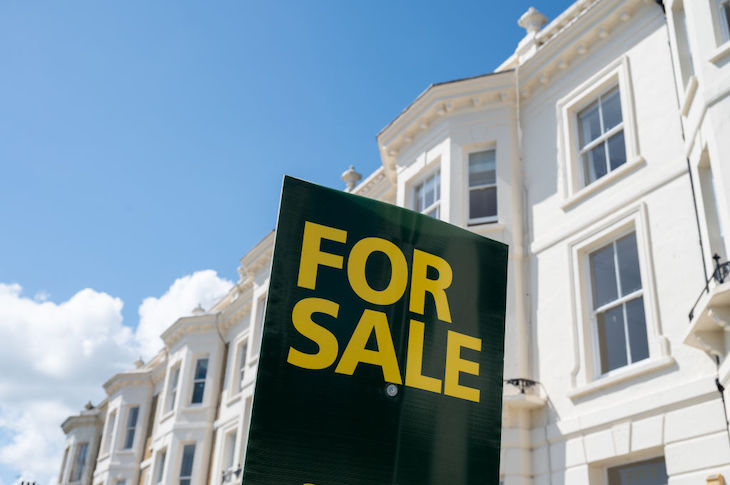
Earnings are taxed too highly, Andy Burnham has hinted, and wealth too little. I don’t hold much hope for a cut in income tax, but I think we can pencil in higher wealth taxes, on property especially. This could possibly take the form of a new Proportional Property Tax such as that proposed by the ground Fairer Share, which would replace council tax and stamp duty with an annual levy of 0.48 per cent of a property’s value (that percentage being chosen because in Fairer Share’s calculations it would raise the same revenue as stamp duty and council tax currently does). But there is also an intriguing possibility that Burnham could resort to an idea he has backed in the past: a land value tax.
You don’t have to be on the progressive left to appreciate that Council Tax is unfair
In contrast to Council Tax, a land value tax would be levied not on buildings but on the land on which they stand. The land would be liable to be taxed even if no buildings stood on it. Owners would be charged, not on the basis of what exists, but on what could potentially exist.
A land value tax is not an especially left-wing idea; indeed, it has many supporters across the political spectrum, including the Institute for Economic Affairs (IEA) and the Centre for Economic Policy Research. It has been supported by MPs and former MPs from Nick Boles to Jeremy Corbyn. There aren’t many other taxation policies which can boast such wide support.
But that doesn’t mean that a land value tax is a good idea. On the contrary, it is a very bad one. First, the matter of practicalities. One of the criticisms of Council Tax is that it relies on out-of-date valuations; properties have never been revalued since the tax was introduced in 1991. Why? Because it is expensive and time-consuming to value every home in the country.
But if you think that is hard, how much harder is it going to be to value land? The value of a plot of land varies enormously according to what is allowed to be built on it. An acre of agricultural land in a location which is not zoned for development might be worth £10,000 an acre. Zone it for development, on the other hand, and it could suddenly be worth £1 million an acre or more. If a piece of land is not zoned for development but lies close to an existing town and village and speculators believe that they might be able to persuade a planning authority to grant it permission, then it could be worth somewhere in the middle, say £100,000.

So what value does a government assessor put on a piece of land: £10,000, £100,000 or £1 million? It doesn’t take too much to work out how cash-strapped, unscrupulous councils might behave: at a stroke they could increase their tax-take by re-zoning pieces of land, or merely by dropping hints that they might re-zone them. No garden would be safe, and nor would low-rise homes in town centres: any property which could possibly be redeveloped would suddenly be made liable for huge levies.
For some advocates of a land value tax, that is its beauty: it encourages development of land. But that doesn’t exactly help landowners who suddenly find themselves hit with a huge tax bill.
Moreover, not all landowners are wealthy. If you own an acre of smallholding you could find yourself effectively paying an entire housing estate’s worth of council tax. You might not mind if it meant you could sell the land and cash in, but there is no guarantee that a developer will be prepared to pay what a council valuer has decided a piece of land is worth. There may be reasons it can’t be developed in spite of the ‘hope value’ which has been put upon it: thanks to the lack of services, flood risk and so on.
The old domestic rates – which were replaced by the poll tax in 1990 – were criticised for landing hefty tax bills on elderly widows who were asset-rich but cash poor. A land value tax would be even worse in this respect. Anyone who owned a modest house in an area which developers would like to turn into blocks of flats would be forced to sell up. To set up a land value tax it would be necessary to re-value land constantly. If you think property prices change rapidly, land values change far more quickly.
Fairer Share’s Proportional Property Tax has a lot more to say for it – on one condition: that it is not levied who have just paid a huge stamp duty bill. Here is how it should work. Stamp Duty should be abolished immediately, or returned to being a levy of no more than one per cent of a property’s current value. So too should Council Tax be abolished – for newly-sold homes. Buy a home tomorrow and you should instead be charged an annual levy equivalent to 0.5 per cent of the value of your home. It is not necessary to employ a valuer to work out what that value should be: initially, the value of the your home should be taken as what you have just paid for it. This could then be annually uprated with the government’s House Price Index for the region of the country in which you live.
However, Council Tax should be retained – at its current rate – on homes until they are next sold. This would spare a tax rise for anyone who has recently paid a hefty Stamp Duty bill. Elderly widows, too, would be unaffected by the change. It would also avoid the need for millions of homes suddenly to be revalued for the new Proportional Property Tax. If anyone thinks they could cut their tax bill by paying the new tax instead of Council Tax, they should be allowed to have their home revalued – at their expense – and make the switch.
You don’t have to be on the progressive left to appreciate that Council Tax is unfair. We have owners of one bedroom flats in the North paying more than owners of mansions in the South. Burnham will be right to reform it. But a land value tax will not make life fairer. A proportional property tax, on the other hand, just might.




Comments