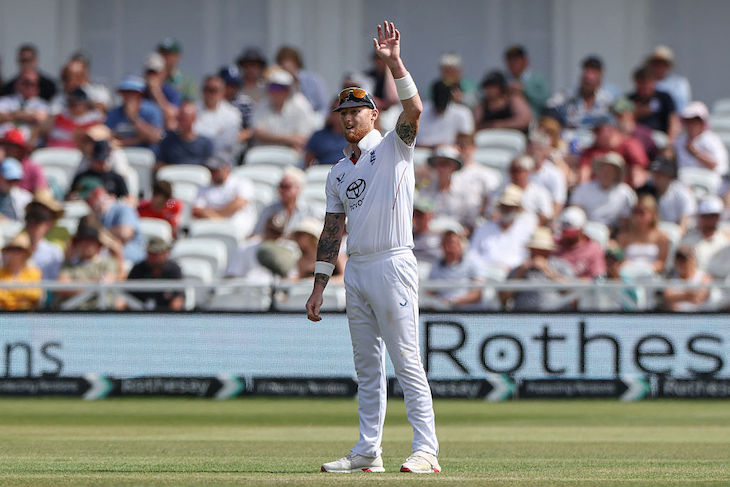
Ben Stokes, the England captain, has announced his retirement from international cricket. There will be plenty of time to celebrate his glittering career, his force of personality and his refusal to admit that a lost cause was lost. There will also be time to discuss the reasons for his decision and the wisdom (or otherwise) of making the announcement in the middle of an important Test match. The most pressing question now is: how should England go about replacing him?
England lost the game badly and it looks extremely unlikely that Joe Root will be asked to return to the captaincy full time
The answer is: carefully. The next Test match – against Pakistan – starts on 19 August so the England cricket authorities have plenty of time to think very carefully about who should be the new captain. They should not rush this. Sometimes the selectors give the impression that there’s nothing to think about. In this case that would mean immediate promotion for Harry Brook.
Brook might indeed be the right answer. He is certainly a thrilling cricketer and clearly central to England’s future. He also has the formal advantages of being the Test vice-captain and the white-ball captain. But Brook is already leading the limited-overs sides and still making the transition from brilliant young batsman to senior international cricketer.
An incident last winter at a nightclub in Wellington on the eve of an important match suggests that he may not yet be quite ready. Besides England play so much cricket – Twenty20s, one-day internationals, and five-day Test matches – with so little time between games that asking Brook to captain all three teams might be less a show of confidence and more an act of administrative laziness.
When Stokes missed the second Test match against New Zealand, it was veteran Joe Root not Brook who was asked to take over the captaincy. But England lost that game badly and it looks extremely unlikely that Root will now be asked to return to the captaincy full time – or that he would accept if he was asked. Back in 2017 when first appointed he may have seemed an impeccable choice: he was England’s best batsman, polite, articulate, presentable and apparently uncontroversial. And that, in England, has often been half the argument. Yet Root’s captaincy ended in 2022 with just one win in the final 17 Tests. ‘It [the captaincy] started to take a really bad toll on my personal health,’ he later admitted. Root should now be left to be what he is: one of England’s greatest ever batsmen.

Nor should the suits comfort themselves with the idea that the captaincy can be outsourced to a coach sending out messages with drinks. Modern cricket is crowded with staff: head coaches, batting coaches, bowling coaches, data analysts, selectors, psychologists, performance directors. But if the captain really is to be captain, their roles must all be supporting roles. In a Test match the captain still matters in crucial ways that no backroom figure can ever hope to replicate. Only he can take the myriad on-field decisions – big and small – that a good captain takes. Test captaincy still has to be done in public, under pressure, on the field, in real time.
That is why Stokes was often so effective. Whatever his flaws, he had presence. His players followed him because he gave the impression that he believed absolutely in the course he had chosen. At times, it seemed, they were even perhaps slightly afraid of him – they certainly respected him. England’s next captain must have some of that force. Not necessarily Stokes’s charisma, still less his appetite for melodrama, but certainly a comparable seriousness and sense of purpose.
The new captain should take responsibility not only for all the on-field decisions but also, crucially, for selection. The success or failure of a cricket team depends, obviously, on the eleven men chosen to play. That means giving the new captain real authority over who plays. Selectors, coaches and analysts should still advise and warn. But the captain must have the deciding voice: it’s his team and he should pick it.
With such power comes accountability. England should stop pretending that responsibility can be dissolved across a committee. If the team is chosen by everybody, it is ultimately owned by nobody. The next captain should be allowed to make the side in his image – and then be judged on results.
In this new dispensation, the captain would be a director of cricket in whites. It’s a big job so England should take their time, weigh up lots of options and appoint someone who relishes taking full responsibility.






Comments