Rome
Last month, I found myself sitting on a panel discussing the European Union’s digital asset strategy. The conversation revolved around the digital euro, tokenization, stablecoins, financial regulation and the future of capital markets. Outside the conference hall stood one of the great cities of human civilization. Rome encourages long thoughts. Every stone seems to remind visitors that history is not a straight line. Great nations rise, stagnate and sometimes disappear altogether.
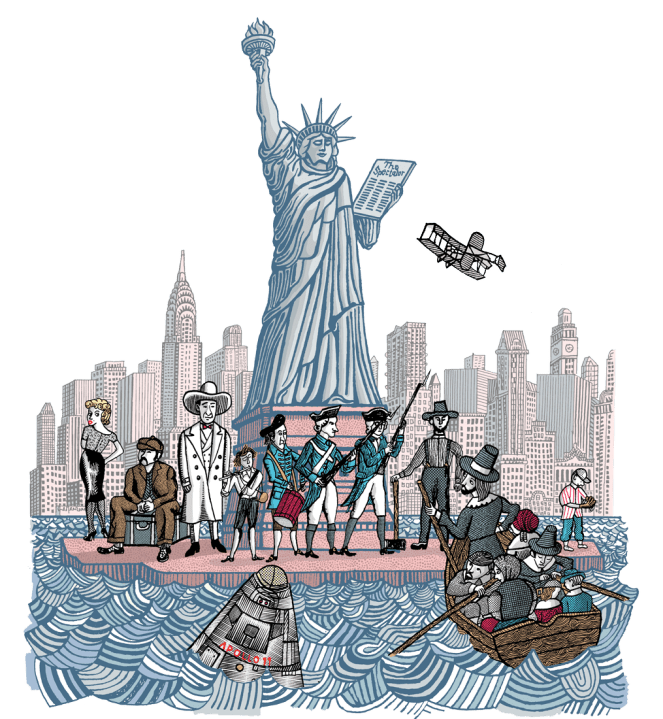
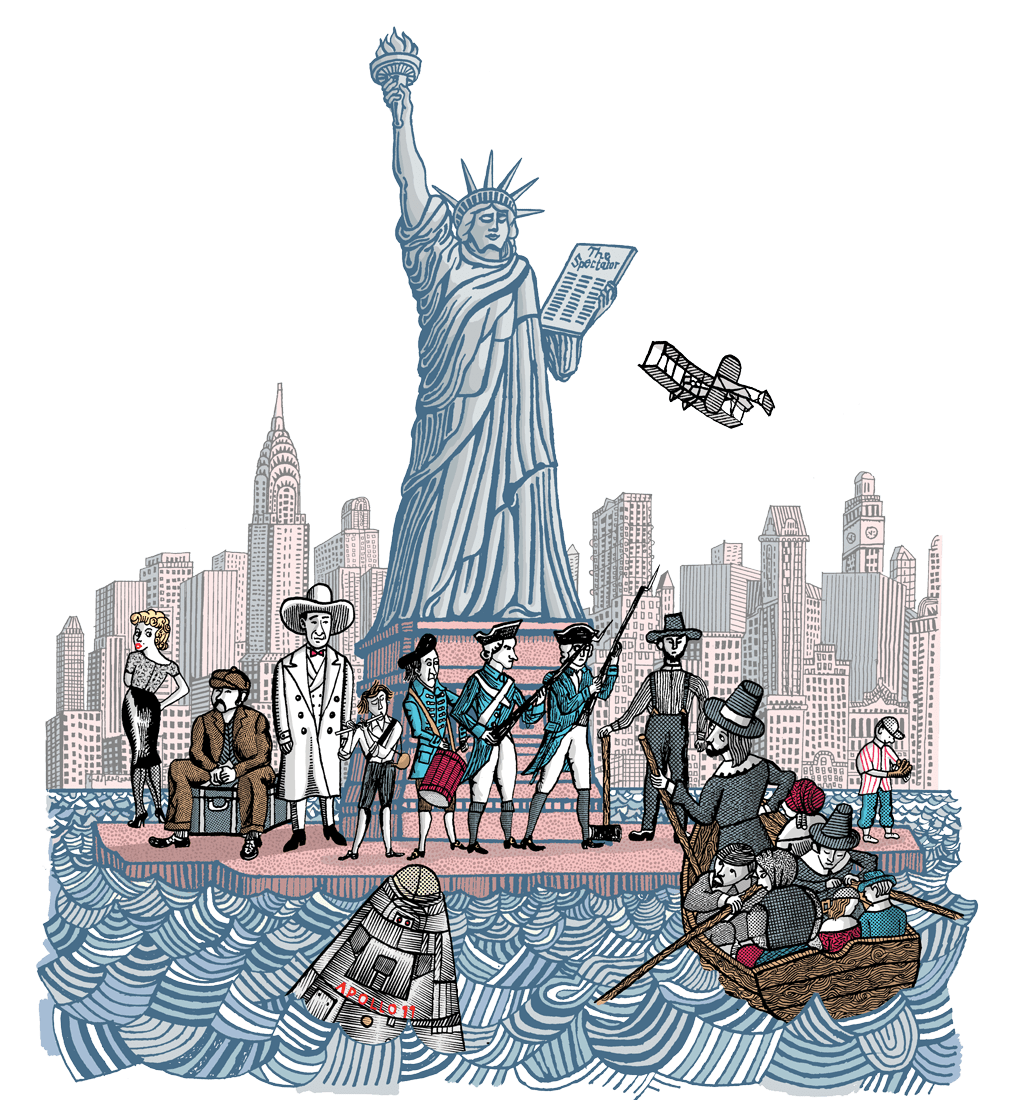
Walking through Rome after the conference, I started thinking less about digital currencies and more about something else entirely. America turns 250 this year. For any nation, two and a half centuries is a respectable run. For a republic, it is extraordinary. The Founders would be pleased but perhaps also astonished that the constitutional system they created has thrived for so long. They certainly would not have assumed it inevitable. The men who signed the Declaration of Independence understood history too well to believe that freedom, prosperity and self-government were permanent conditions. Their genius was in creating republican institutions that accounted for the shortcomings of human nature in our postlapsarian world. One of the striking realizations that comes from spending time in Rome is how unique the American story really is. Most nations are ancient peoples inhabiting ancient lands. America was created by the sons and daughters of the Old World, primarily England and the Netherlands, with the intention of making a clean break and building something distinct and better. Americans are a people continually in the act of becoming. That energy is our strength.
As America approaches its 250th birthday, both its critics and its supporters tend to view the nation primarily through the lens of its problems. Turn on the television, open social media or spend a few minutes reading the daily news and one could be forgiven for believing that America is in terminal decline. But the decline narrative fundamentally misunderstands what has made America successful in the first place. This is particularly true in the Trump era, the motto of which might be: “Yes, we can just do things.” America has never been great because it was orderly, though we have order. America has never been great because it was efficient, though we are remarkably efficient. And America has never been great because it was harmonious. Sometimes we are and sometimes we are not. The defining characteristic of the American experiment is not democracy: many countries have democracy. Nor is it capitalism: many countries have markets. It is not even liberty in the abstract. Our defining characteristic is the belief that ordinary individuals can act upon the world and change it. The farmer moving westward. The immigrant arriving with nothing. The entrepreneur starting a company. The inventor tinkering in a workshop. America’s greatest natural resource has always been human ambition. The frontier spirit is in our DNA.
We are entering one of the most consequential periods of technological change since the Industrial Revolution. Artificial intelligence, robotics, advanced manufacturing, energy systems, space technology and digital infrastructure are poised to reshape the global economy. The United States remains uniquely positioned to benefit from this new era because it possesses something far more valuable than any individual technology. It possesses an ecosystem: capital markets willing to finance risk; universities that generate talent; entrepreneurs willing to challenge incumbents; and a culture that still celebrates builders. America still has millions of people who continue to believe that tomorrow can be better. That belief matters more than policymakers often realize. Economic growth is not merely a function of resources. It is a function of expectations. Innovation is not merely a function of technology. It is a function of confidence.
The United States has repeatedly demonstrated its capacity for renewal. We saw it after the Revolution, after the Civil War, after the Great Depression, after World War Two and after the turbulence of the 1970s. That ability flows directly from the principles established in 1776. The Founders did not merely create a government. They created a framework within which future generations could build. They unleashed human creativity on a continental scale. And 250 years later, that remains the country’s greatest competitive advantage. The challenge for our generation is therefore not simply to preserve the American inheritance but to extend it – and to leave behind a country that is stronger, wealthier, more capable and more confident than the one we inherited.






Comments