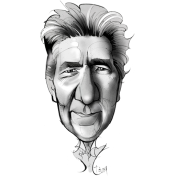

Edward Gibbon was troubled by a swelling in his lower abdomen. I have the same condition. ‘Wow. That’s huge,’ said my GP as he gazed at the affected area. ‘Huge?’ I said, trying to sound nonchalant. ‘I wouldn’t know. It’s the only one I’ve ever seen.’ My cyst has been expanding steadily for decades and I was told a few years ago that its intentions were peaceful. My new GP was trying to scare me, obviously. I don’t blame him. It’s dull work staring at sick bodies all day and he was trying to amuse himself with a spot of scaremongering. ‘You’ll need a scan within two weeks,’ he added. ‘Cancerous perhaps?’ I asked. He nodded with a sly grin.
My cyst has been expanding steadily for decades and I was told a few years ago that its intentions were peaceful
I got the usual frosty welcome at my local hospital. The NHS believes in fairness and they treat everyone with equal contempt. I approached an Asian woman seated behind a sheet of glass. Stab-proof, no doubt. She was glancing at some important papers. ‘Is the imaging centre here?’ I asked, to catch her attention. She tilted her head towards a long corridor. ‘Costa. Keep going straight,’ she said. I set off down the corridor and passed two extra-wide nurses in blue uniforms who were advancing at the pace of elephants fording a lake. One held a carton of hot chocolate in her hand. The other was nibbling at an oat bar. Crumbs fell around her as she waddled.
I turned a corner and found half a dozen NHS workers queuing outside Costa to collect their elevenses. No sign of the imaging centre. I approached another stab-proof kiosk where a bearded clerk was toying with some plastic badges. ‘Imaging centre?’ He raised his eyes and gazed at me malevolently. ‘Go to Costa, turn left.’ I retraced my steps and saw that the queue had grown busier in the last few moments. Costa, like the pole star, seemed to be the main navigational marker at this hospital. Still no trace of the imaging centre. I didn’t want to provoke the staff by asking for directions again so I lingered on the spot, trying to appear lost. A passing cleaner gave me the kind of look that a leper might get at a pottery class. Venturing into a side-corridor, I noticed the letters ‘CIC’ above a doorway. I’d found it. The ‘Community Imaging Centre’.
I approached a third stab-proof cubicle where a woman in her forties was staring at a monitor. She had a Mediterranean complexion and jet-black hair scraped back into a bun. A widow perhaps. But widows tend to look happy. She seemed surly and distracted. ‘I’m here for a scan?’ I said. ‘Your poin men is what time?’ Her accent was Spanish or Portuguese. ‘Ten forty.’ She consulted her screen. ‘Nem?’ I gave her my baptismal name, David Evans. ‘Dot bert?’ she asked. I trilled out the familiar date, ‘six-three, sixty-three’ whose jingling rhythm sometimes prompts a smile from a clerk. But not here. ‘Have a sit,’ she ordered.
I tried to read my book but I kept glancing up at the ample nurses, some as large as tumble-dryers, who sauntered through the waiting area holding creamy drinks and warm pies in their plump fingers. The silence was broken by an Indian assistant shouting out my name: ‘Daybed Eebuns.’ She led me into a suite and nodded at a mattress behind a screen. I understood that she wanted me to disrobe and lie down. She was new to the NHS and hadn’t yet learned to use the word ‘pop’ as a multi-purpose verb of motion. ‘Pop your shirt off, pop your bag down, pop yourself on the couch.’
She smeared a chilly fluid over my skin and applied a handheld sensor. ‘Blow the tummy out big,’ she said. Guessing at her intention, I braced my muscles and everted my stomach. ‘Like that?’ She smiled. ‘Good.’ A male colleague, also Indian, walked in and took charge of the sensor. When the scan was complete, he said to me: ‘We will write this information to your doctor. This will take one week time.’
I got the usual frosty welcome. The NHS believes in fairness and they treat everyone with equal contempt
My GP called with the verdict. ‘Benign,’ he said sounding a bit disappointed. Surgery next. Pop the cyst. Drain the pus. ‘A local anaesthetic?’ I asked. ‘General,’ he said. My heart sank. In 1982 I had a general anaesthetic and it flattened me for days. Mind you, at least I woke up. The NHS has a habit of turning non-urgent surgery into corporate manslaughter.
Will the doctors kill me? According to the tables, my healthcare trust is ranked 74th in the country. Each facility is graded as outstanding, good, requires improvement or inadequate. My local hospital has the words ‘no rating’ beside its name. Which is worrying. The inspectors found it so unimpressive that they suspended the entire system of assessment. On Google I checked the nearby mortuary, a private facility, which has five gold stars. Is there a connection? Nul points for the hospital. Top marks for the morgue.
In 1793, Gibbon was treated by a surgeon who drew four quarts of fluid from his body. He survived. My little pouch of sap is smaller, about the size of a lollipop, and yet I fear British medicine hasn’t advanced since pre-Napoleonic days. Maybe I should ignore it and just sit at home and write a big fat book.


Comments