Hospitals

The day the bishop hit me in the face

From our UK edition

The bishop hit us in the face. That was the best thing about confirmation. When I was 12, along with every other boy in the school, I was formally prepared for the sacrament that marked our passage from infancy to adulthood. Confirmation lacks the festive atmosphere of a bar mitzvah where families enjoy booze, dancing and speeches along with the exchange of gifts. For us, it was a cheerless affair held in the vast, under-heated parish church where 200 fidgety 12-year-olds waited to receive the appropriate blessing from the bishop. He was called Cyril. We were familiar with his name from Sunday Mass when he was cited as an appropriate subject for our orations. ‘We remember our Bishop Cyril in our prayers,’ said the priest.
The NHS believes in fairness – they treat everyone with equal contempt

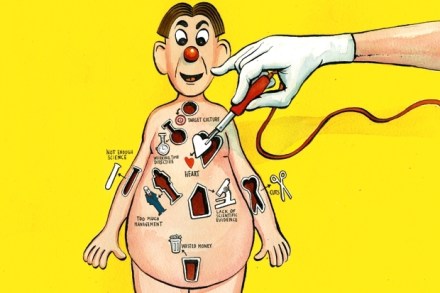
Edward Gibbon was troubled by a swelling in his lower abdomen. I have the same condition. ‘Wow. That’s huge,’ said my GP as he gazed at the affected area. ‘Huge?’ I said, trying to sound nonchalant. ‘I wouldn’t know. It’s the only one I’ve ever seen.’ My cyst has been expanding steadily for decades and I was told a few years ago that its intentions were peaceful. My new GP was trying to scare me, obviously. I don’t blame him. It’s dull work staring at sick bodies all day and he was trying to amuse himself with a spot of scaremongering. ‘You’ll need a scan within two weeks,’ he added. ‘Cancerous perhaps?’ I asked. He nodded with a sly grin.

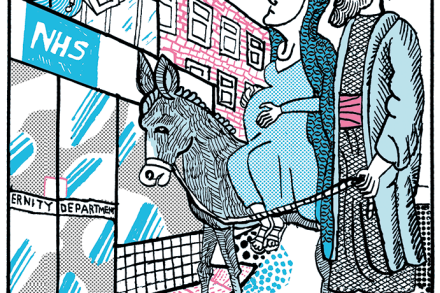
Why is maternity care in Britain getting worse?

From our UK edition

Chelsea and her partner had been trying for a baby for two years. Following several miscarriages, she became pregnant again last spring. ‘We were overjoyed,’ the 26-year-old says. ‘We thought this time everything would finally be different.’ Joy rapidly turned to worry when Chelsea began to suffer headaches and visual disturbances and made several trips to Worthing Hospital, part of University Hospitals Sussex NHS Foundation Trust. Eventually, foetal distress was picked up during a scan; after a transfer to another hospital and an emergency Caesarean, Bonnie was born in September at just over 26 weeks’ gestation. She had suffered a brain bleed and had chronic lung disease. ‘I knew something wasn’t right,’ Chelsea says.

Stop the Medicaid ambulance grift

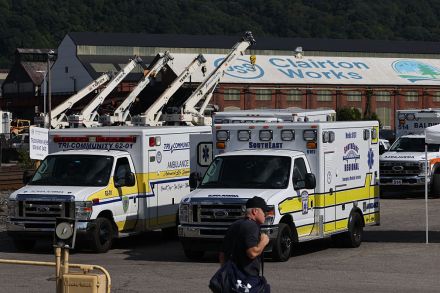
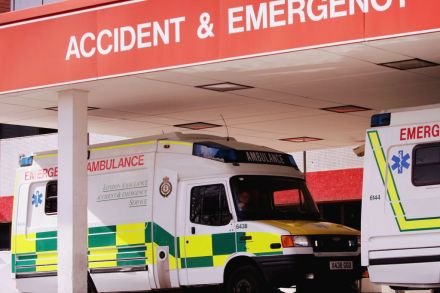
With Congress back in their districts for the August recess, GOP members will undoubtedly be bragging to their base about the Medicaid abuses they stopped by passing President Trump’s One Big Beautiful Bill. These reforms include enrollment reductions and new work requirements for enrollees. However, many Members are hoping that no one calls them out for failing to address an intergovernmental transfer grift. This little-known accounting trick has turned this basic entitlement program into a bloated scam that enriches public agencies while squeezing out private providers. In theory, many of the services Medicaid covers, such as emergency ambulance rides, officially known as Ground Emergency Medical Transport (GEMT), should be straightforward.

Ambulance

Our B&B is the opposite of organic

From our UK edition

‘You need a Wwoofer,’ said the guest as he luxuriated in the big armchair by the roaring fire in our sitting room. We looked at him blankly for a moment before I replied: ‘We have a woofer. Two woofers.’ And I nodded to the spaniels lying at our feet. ‘No, I’m talking about the Wwoof scheme,’ he said, a hint of his Welsh accent showing through. ‘World Wide Opportunities on Organic Farms. A Wwoofer is someone who comes to work for you for nothing in return for learning about organic principles.’ The big old house on the hill seduces them with her Georgian charm.

America’s top medical schools still hire by race

The institutions just won’t quit. Even after the Supreme Court made it abundantly clear that race-based admissions violate the Constitution, many of America’s top medical schools are digging in their heels – and, apparently, digging graves for meritocracy. A new report by Do No Harm, a group of physicians and health policy experts, reveals that public medical schools continue to admit students with dramatically different qualifications based largely on race. In other words, the diversity-industrial complex is alive and well – just operating in the shadows. The numbers don’t lie. According to the report, black students admitted to these schools had average MCAT scores significantly lower than their white and Asian counterparts.

Hospital

How to spot a troublesome Airbnb review

From our UK edition

The guest who thought our farm was in the town centre was very cross indeed. She got out of her car by the old fountain and stood hands on hips surveying the meadows sloping from the big old house towards the rugged mountains beyond. She was wearing knee-length khaki safari shorts, so you’d have thought she’d be pleased to pitch up in the middle of nowhere. But she looked askance at the rolling hills and affected to be shocked by the reality of what was clearly pictured and described on the booking site. She asked how she and her husband were supposed to walk to their drinks party in town that evening. Could they walk there? Not really, I said. Not unless the party was tomorrow evening and they had good hiking boots. ‘Taxi?’ she asked. So we had to explain.

Why must B&B guests give us advice?

From our UK edition

‘You could mow all this lawn here and it would look a treat,’ said the arborist, returning from a stroll around the grounds, which were looking resplendent in the sunshine. ‘Yes, yes, mow the grass. Good idea,’ I said, for the builder boyfriend has told me I have to agree with the customers. No matter what they say, no matter how obvious their suggestions, just smile and say ‘Good idea.’ Old houses are like horses. Passing strangers feel ownership of them. Once they encounter them, they proclaim how they would care for them, because they decide from their soulful look that the owners must be neglecting them – when the truth is the owners slave day and night for them, getting nothing but a good kicking for their trouble.

Must my fish and chips come with a side of geopolitics?

From our UK edition

‘Our boys went to Lebanon and trained Hezbollah!’ shouted the drunk Irish lad in the fish and chip shop as an Indian man behind the counter silently fried chips. ‘Chucky ar la!’ the lad shouted, or Tiocfaidh ar la, to correctly spell in Irish the slogan of the IRA, meaning ‘Our day will come.’ And he went on shouting this, over and over, as the Indian fellow stared down into the fryer, and the Friday night customers formed a queue in this small fast-food joint in a West Cork harbour town. The Irish lad was not getting the message that the Hindu chap frying chips was probably not a massive Hezbollah or Hamas supporter, and he carried on shouting about Gaza and inviting the man behind the counter to join in with him.

Speed traps are designed to make you fail

From our UK edition

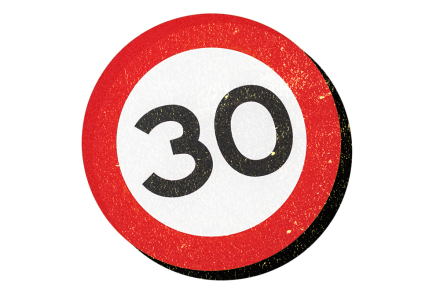
The builder boyfriend returned from a trip to London to inform me he was being done for speeding at 32mph, for crying out loud. He was flashed by a camera crawling uphill in a 30 zone going through the almost middle-of-nowhere in the Ashdown Forest, on his way to visit his sister in Sussex for the weekend. A few weeks after I completed a speed awareness course for doing an improbably incorrect 40mph on a dual carriageway during a trip to see my parents in Coventry, we were going round the same rigmarole with him. He showed me his letter from the Sussex Police on his return to Ireland. It was slightly less obnoxious than the one from West Midlands Police, but it amounted to the same thing: a £100 fine, sorry speed course.

The £486 driving licence con

From our UK edition

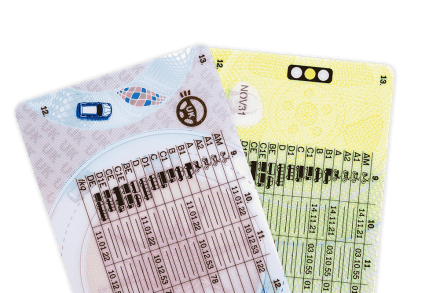
By changing the address on my driving licence, I was somehow signed up to something that began charging my credit card £39 a month and was going to carry on charging for ever. It was Barclaycard that spotted it and warned me it was a ‘scam’ in a text alert. Had I really agreed to a recurring payment to a company called British Drive? I had no idea what British Drive was, and at first suspected it was an insurance policy, or the firm that organised my recent speeding course. Eventually, I realised it could be something to do with going on to the DVLA website – or so I thought – to change my driving licence address. I tried to cancel the payment on the Barclaycard app but it wouldn’t cancel.

Aren’t women wonderful?

From our UK edition

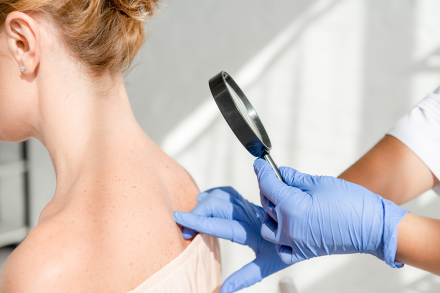
The mole specialist was wearing a pink Chanel-looking suit and pink diamanté shoes. By mole specialist, I don’t mean someone turned up dressed in Chanel to deal with moles on our land. I mean I went to see a top London dermatologist about a mole I was worried about, and when I walked into her office she looked so fabulous all I wanted to do was talk to her about her Jackie O miniskirt and jacket, given a twist with the sparkly stilettos. Before I could do that, however, she complimented me on my long striped coat. ‘Villa Gallo,’ I said, sitting down in front of her desk on the first floor of a smart building in Chelsea. ‘And can I say, your shoes are divine.

I am facing a future in a wheelchair

From our UK edition

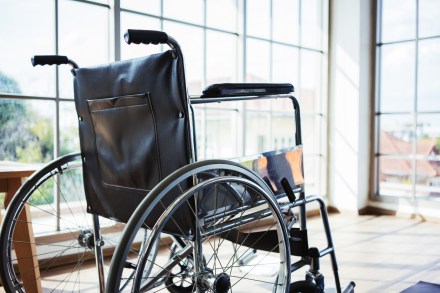
I’ve always liked the old Winston Churchill maxim ‘Never stand up when you can sit down, and never sit down when you can lie down’. After a month lying down in hospital, contemplating life without the use of my legs, I now utter a laugh which I hope is suitably hollow. O, my lovely legs! By the time I was 14, they were the longest in my class; by the time I was 17 they had embarked on the merry dance that has been my ‘journey’, propelling me forever onwards towards enough fun, love and money for nine lifetimes. Now I feel like a mermaid – without the sexiness – and my shameless gams are but a floppy old mono-thing.

Whatever happened to Lionel Shriver?

From our UK edition

For many readers, my absence from these pages may have gone unnoticed. Those few who’ve detected my disappearance might have idly concocted theories: maybe Shriver crossed a line in her opposition to uncontrolled illegal immigration such that she finally got the sack. The explanation is more quotidian. Six years ago, I was diagnosed with the unwieldy sounding spondylolisthesis: a vertebra in my lower spine had moved out of alignment, squeezing the nerves to my right hip and leg. I’d been managing, but the situation was degenerative. By this summer, I could barely complete a 15-minute walk, and – the limit – I could not play tennis.

The radical alternative to a hospital birth

Giving birth hurts. A lot. Like any other major physical feat, it’s risky, but it’s not the inherently dangerous medical event some have come to believe. Plenty of women know this. Many are skeptical of the need to give birth in a hospital. But some are taking things further, deciding to forgo medical care entirely and give birth at home totally unassisted. Free birth, or unassisted birth as it’s called by most birth workers, is an intentionally unassisted birth: no professional, no midwife, no nurse, no doctor. For hardcore freebirthers, even having a doula present for your birth means you’re not doing it properly. Thanks to Instagram and one very compelling podcast called The Free Birth Society, the movement is growing.

birth

Tales from the ER

I used to think I knew my hometown pretty well, after living here on and off for thirty years. And then I encountered my boyfriend, a third-year resident in the Emergency Department of the local hospital. It turns out, you only know a place as well as you know its emergencies. We met around July 4, when his days were filled with fireworks mishaps: burns, the occasional missing finger. “If I ever have children,” he said, with the tactical reserve of an early date, “no fireworks.” Fair enough! “And no ATVs,” he added. The four-wheelers and jury-rigged motorbikes that proliferate in the streets around my apartment every summer, annoying me with their noisy revving and curiously powerful stereo systems, also keep the ER busy with head traumas.

ER

Why the baby doomers are wrong

From our UK edition

Rarely does a piece of journalism bring a tear to my normally cynical eye, but I did find this happening when I read Tom Woodman’s piece (‘You must be kidding’) in last week’s edition. He and his wife would not have children, he wrote, because climate collapse means that ‘I can’t give them a future’. What made me weepy was his combination of obvious decency and utter mistakenness. How tragic that what he called ‘the facts and figures’ — in reality, contentious projections — have persuaded this couple that no little Woodman must come into the world. ‘Tree,’ I felt like shouting, in reversal of the Green order of priorities, ‘spare that Woodman!

In India, the Covid crisis has left us helpless and broken

From our UK edition

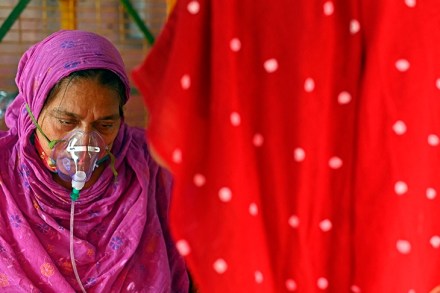
New Delhi Crematoriums are burning so many pyres that they have run out of space and wood to keep up with demand. Vehicles filled with bodies queue outside the funeral homes for hours. People are dying in the streets, some laid out on stretchers, while ambulances wait in vain outside every hospital in the city. This is what a collapsed healthcare system looks like. There are 4,700 Covid intensive care beds for Delhi’s population of 19 million. There are 20,750 non-ICU Covid hospital beds, but most are without any oxygen support and have strict admission criteria. To find a bed, the families of Covid sufferers are forced to call hundreds of leads to see if any hospital has capacity. I was one of those people desperately searching for a bed last week.

Hospital wards are filling up again – with fakers

From our UK edition

How do I know that Britain’s Covid crisis is over? The fakers are back. The hypochondriacs, the psychosomatics, the pseudo-fitters, the attention-seekers and the lonely. They’ve started to return to the acute medical ward where I work. They’ve been gone so long I actually almost missed them. This collection of patients, who take up time and resources inversely proportional to the state of their physical health, simulate symptoms for gain (malingerers), simulate/induce their symptoms for the pleasure of the sick role (Munchausen’s syndrome) or genuinely experience symptoms such as pain, seizures or paralysis in atypical ways with no physically identifiable or treatable cause (now vaguely termed ‘functional disorders’).

Is the virus retreating?

From our UK edition

Imperial College’s React study was in the news again this morning. The latest instalment swabbed 167,642 people between 6 and 22 January and found that 2,282 of them tested positive. A weighted average suggested that 1.57 per cent of the population had the virus between those dates. The study concluded: 'Prevalence remained high throughout, but with the suggestion of a decline at the end of the study period'. It led to reports this morning that the latest wave of the epidemic is declining only very slowly. The React study, however, seems to be increasingly out of line with government data on new infections, as picked up through the test and trace system. On 6 January, the seven day average of new infections across the UK stood at 594.6 per 100,000.