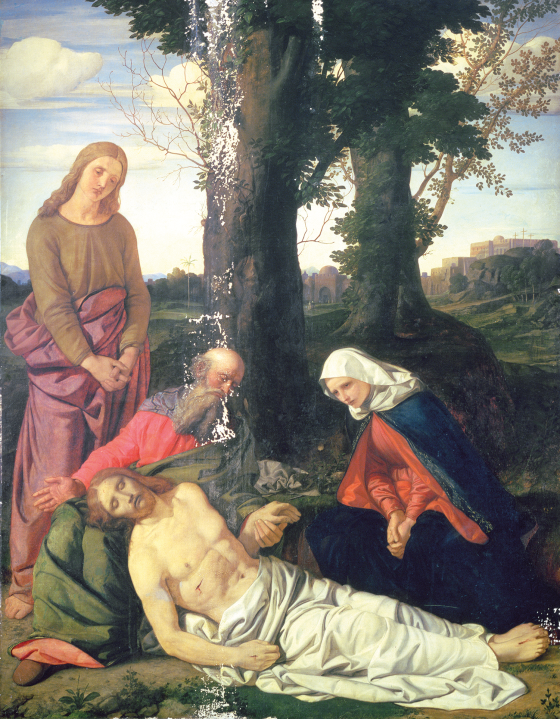
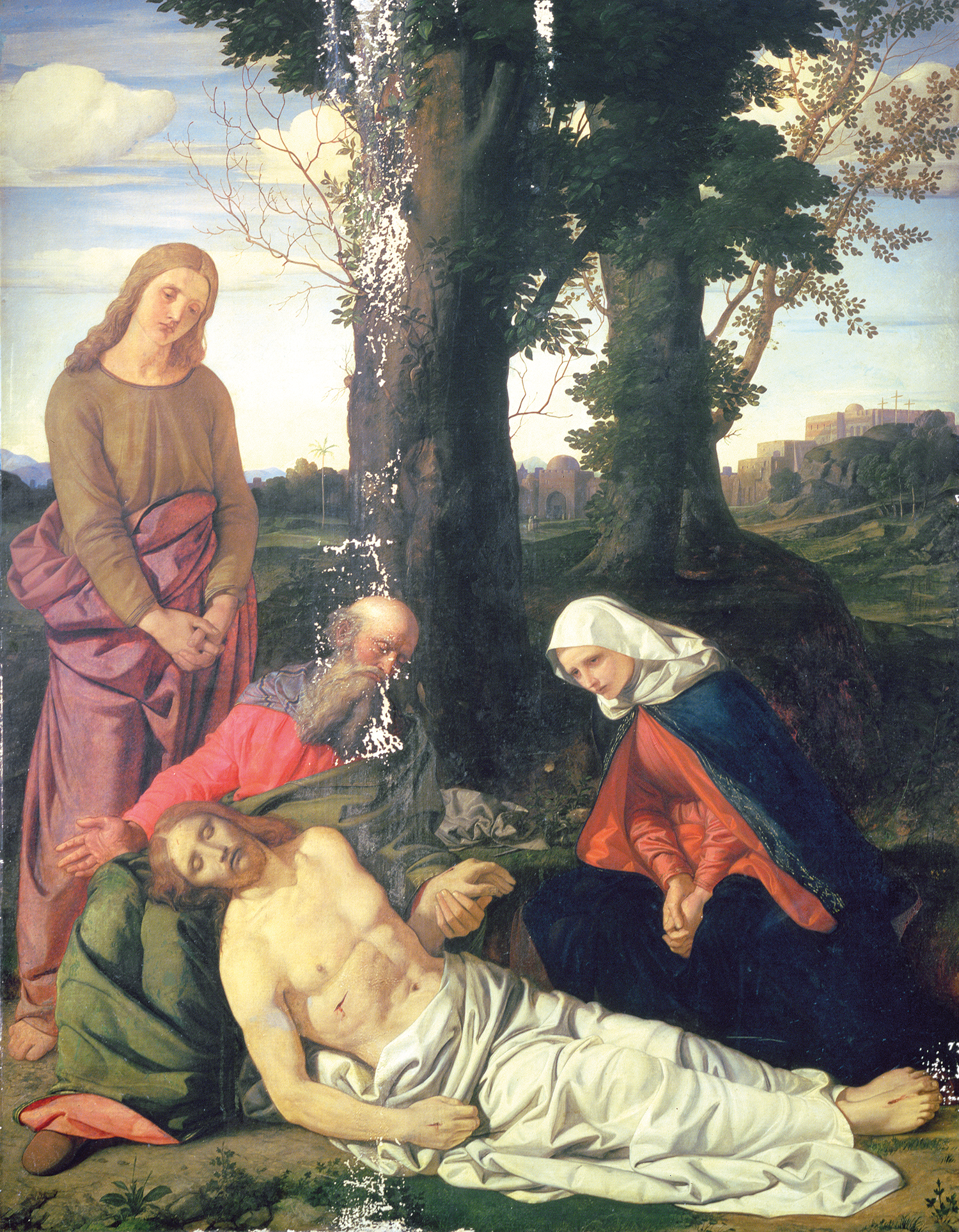
A retired priest in North Wales told me that after the war he had been asked by Billy Butlin to buy 19th-century paintings for the holiday-camp chapels, because they were going cheap. One he bought, for 49 guineas in 1947, was William Dyce’s 1835 ‘Lamentation of the Dead Christ’. In 1983, after the Butlin’s chapels had closed, it made a handy £125,000 at auction, when it was bought by Aberdeen Art Gallery. As late as 1962, Lord Leighton’s great ‘Flaming June’ (1895) was sold for £50. Today? Millions.
Talk about ‘the bubble reputation’. The pattern of artistic fame followed by subsequent obscurity has been repeated through the centuries. But now we live in an age of more art exhibitions than anyone in the past could have imagined, and many of them are vehicles – not always successful – for resurrecting forgotten artists or a specific aspect of their work. A good example of the latter is the display of Constable portraits at the National Portrait Gallery in 2009. Only 20 years earlier, a house sale in East Anglia included a large group portrait by Constable on the wall. The seller saw no point in removing it, since no one cared twopence for a Constable portrait, only his landscapes. As it happened, the NPG show failed to alter anyone’s opinion because, of course, Constable’s portraits hadn’t got any better: they were still as clunky as ever.
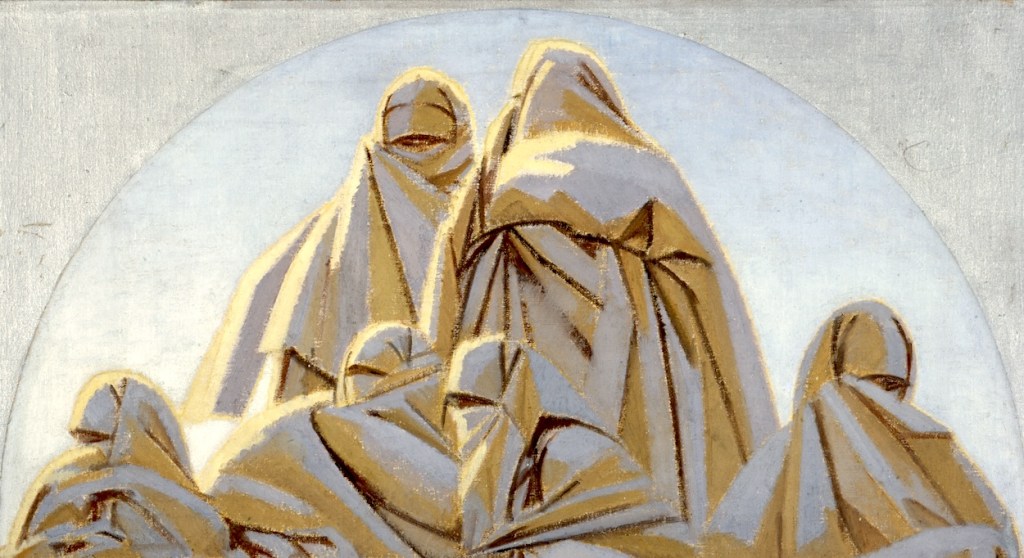
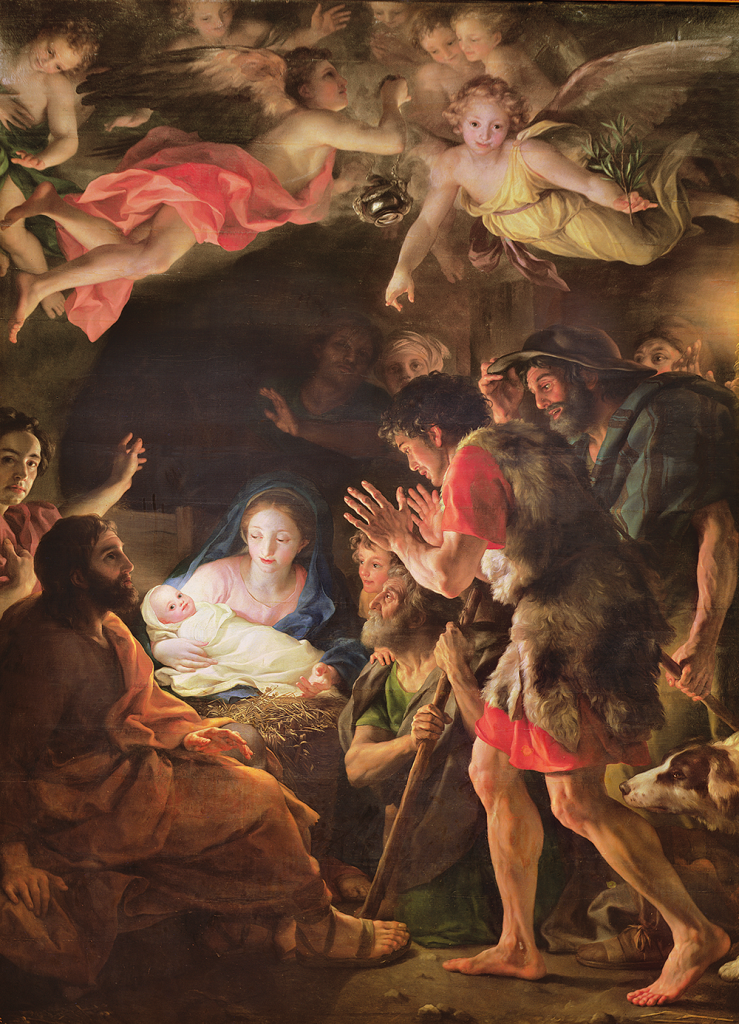
An instance of the former, of artists who were giants in their day but are now unknown to the general public, is Carlo Maratti (1625-1713). During his lifetime he was compared to Raphael and dominated the Roman art world. Yet his 400th anniversary last year barely ruffled the surface of public ignorance. There was a fascinating one-room exhibition of his portraiture at Palazzo Barberini in Rome, which included likenesses of Pope Clement IX and several Barberini that are among the most penetrating portraits of the 17th century. But Maratti was always much more admired for his religious compositions, and those are still thought too much to take today, notwithstanding a home-grown show at Palazzo Sciarra Colonnna. That side of Maratti’s achievement was barely alluded to in his anniversary year while his sideline in portraiture cut no ice, and so a notable landmark in the history of art passed unnoticed:
He left the Name, at which the World grew pale,
To point a Moral, or adorn a Tale.
Others have been more fortunate. After Maratti came Anton Rafael Mengs, emperor of the 18th-century Roman art world and admired throughout Europe as the greatest living painter. Winckelmann said of him: ‘He is the greatest artist of his time and perhaps of succeeding times, reborn like the phoenix from the ashes of the first Raphael.’ To echo Noël Coward: ‘I wonder what happened to him?’
What happened is that Mengs’s blazing fame was instantly extinguished at his death and never recovered. Until late last year that is. Last November an absolutely vast exhibition opened at the Prado, Madrid, which revealed what a varied talent he possessed. Mengs’s great rival in Rome was Pompeo Batoni: any English Grand Tourist who didn’t commission a portrait from him could consider his journey a failure. Again, however, Batoni’s superb creations were despised for centuries following his demise. He too has struck lucky. The first stirrings of his rehabilitation were felt with an exhibition in London and New York in 1982 and then triumphantly accomplished in 2007-8 with a large show in Houston and London that was mounted on an even grander scale in his native Lucca.
It is in the context of these alarming reversals of fortune that contemporary efforts at resurrecting women artists of the past need to be seen – and goodness knows it is a much harder task. It is true that few, if any, women artists attained the celebrity status of the men I have mentioned: the baroque painter Artemisia Gentileschi was an exception. But it has now become clear that the identities of many high-powered professional women artists were unjustifiably lost for hundreds of years owing to – and there’s no way round this – the prejudices of male-dominated culture. Works by such women fell into anonymity or were reattributed to men, all feeding the myth that there hadn’t been any women artists worth considering. Two exhibitions this year that emphatically disprove it are Michaelina Wautier at the Royal Academy and one that’s just closed in Ghent that was devoted to some 40 professional women artists working in Flanders between 1600 and 1750.
The Tate exhibition in 2024 Now You See Us: Women artists in Britain 1520-1920 was, however, an example of how not to do it. It lacked focus and discrimination. Superb paintings were mixed up with journeywoman work and the merely absurd. It was full of good things: Anna Airy was a major discovery for me, with her paintings of the first world war. But the curators strained, too often, at a gnat, as witness the decision to include the embroidered copies of paintings by Mary Linwood. These quirky objects, such as the head of Our Lord in crewel work, enjoyed a vogue in the Georgian period, although merely as a fashionable freak-show attraction. They should never have been included in an exhibition aimed at raising our awareness of serious women artists.
Other exhibitions are simply too big and can expose the shortcomings of an artist instead of enhancing a reputation. Gwen John may be a fresh victim. Her obscurity and rise to recent fame has traced a pattern in reverse to that of her brother Augustus, who was once a towering figure in British art but is now thought of, if at all, as a fine draughtsman with a once-overblown renown as a painter. But the current, almost exhaustive, show devoted to Gwen John at National Museum Cardiff has done the female of the species few favours. Whatever you think of her endless droopy women with the light and life sucked out of them – and they are cleverly painted – the show has revealed that, far from maturing, she ended her life creating doodles on the scale of a few inches that were simply childish.
During his lifetime Maratti was compared to Raphael and dominated the Roman art world
Similarly, the Ben Nicholson show at the Tate in 1993 did for him – or should have done. There were 135 works to get through: wall after wall of timid little tea-and-scones abstracts. Nicholson’s slight and decorous talent was cruelly exposed. His arid creations can only take being seen in small numbers – or, better still, very small numbers – but, bafflingly, some determined devotees of abstraction in our artistically insular country are still liable to call him ‘great’.
A recent phenomenon is the flood of exhibitions showing different aspects of the work of the late Lucian Freud. The latest is Drawing into Painting at the National Portrait Gallery. I could already hear the sound of a barrel being scraped, with the enthusiastic encouragement of the artist’s estate. Dare one suggest that it is all driven by the desire to get in quick, before Freud’s reputation takes a dive? The NPG has congratulated itself on buying 12 works from the estate ahead of this exhibition. If it thought, however, that the show was going to increase Freud’s prices, it may well be mistaken, since the exhibition has proved the opposite of what its title intended. It turns out that Freud’s drawings did not usually lead to the paintings: rather, he made sketches of pictures in progress.
Looking ahead, I see with sinking spirits that Tate Britain is promising yet another exhibition this winter of odds and ends – a daunting 250 of them – by those overrated Bloomsberries, Vanessa Bell and Duncan Grant. Surely we have seen more than enough of them to have long since realised that their amateur productions – canvases, pots, tiles, fabrics, possibly crocheted doilies – are third-rate at best. It is precisely how these two were perceived during their lifetimes, which means that their present contrived celebrity is not so much a resurrection as a rebirth. It is time to bury them, preferably with a stake in each heart.



Comments