Female artists

The art of resurrecting forgotten artists

A retired priest in North Wales told me that after the war he had been asked by Billy Butlin to buy 19th-century paintings for the holiday-camp chapels, because they were going cheap. One he bought, for 49 guineas in 1947, was William Dyce’s 1835 ‘Lamentation of the Dead Christ’. In 1983, after the Butlin’s chapels had closed, it made a handy £125,000 at auction, when it was bought by Aberdeen Art Gallery. As late as 1962, Lord Leighton’s great ‘Flaming June’ (1895) was sold for £50. Today? Millions. Talk about ‘the bubble reputation’. The pattern of artistic fame followed by subsequent obscurity has been repeated through the centuries.
Why Alice Neel remains a vital presence

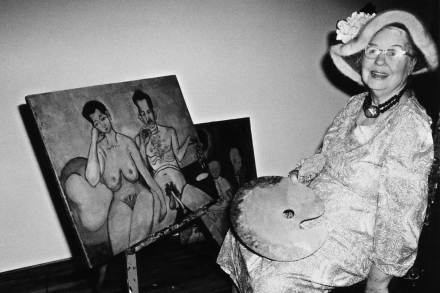
There is no portrait by Alice Neel quite as radical as her own. The artist was one of the first octogenarian women to exhibit a nude of herself with 1980’s “Self-Portrait.” In the painting, Neel grasps her paintbrush and sits exposed at the edge of a blue-and-white striped armchair. There’s no doubt about it; this is a woman of conviction who demands, “Look at me, in all my senescent glory: my silver hair, wrinkled face, sagging breasts, this is a life lived and here are its marks.” It’s only in the last decade or so that Neel has risen from relative obscurity to be acknowledged as one of the twentieth century’s greatest portraitists.

Neel

Portrait of the artist and mother

From our UK edition

On reaching the end of Hettie Judah’s Acts of Creation, I felt somewhat overwhelmed. At 272 pages, the book isn’t particularly large, but the time span it covers, from prehistoric goddess figures to Laure Prouvost’s 2021 cyborg-octopus installation ‘MOOTHERR’, is enormous. The trajectories, practices and obsessions of the artists discussed range far and wide. Written to coincide with a touring exhibition of the same name, this ambitious book is more of a survey – a highly illustrated, annotated and well-researched one – than a traditional narrative. Judah’s energetic text displays the hunger of someone after a fast who can’t decide where to start at the buffet.

Suppress your groans: this women-only show is fascinating

From our UK edition

In a Victorian art dealer’s shop a woman waits with her young son while the supercilious owner examines her work; behind her two top-hatted gents interrupt their inspection of a drawing of a dancer in a tutu to give her the once-over. The woman’s shabby umbrella, propped against the counter, awaits reopening in the rain outside. She knows what the dealer will say, and so do we. Every picture tells a story, and Emily Mary Osborn’s ‘Nameless and Friendless’ (1857) summarises the plot of Tate Britain’s latest exhibition, Now You See Us. Unlike her picture’s protagonist, Osborn was herself a successful artist in a field dominated by men – not the fate of many of the artists in the Tate’s new survey of four centuries of British art by women.

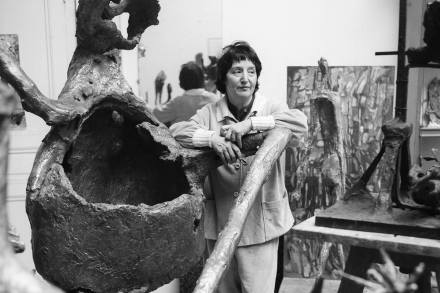
The brilliant, underappreciated work of Germaine Richier

In the spring of 1951, there was a commotion in Assy, a remote part of the Alps where France and Italy are only separated by mountains and valleys. In a town normally famed for its tuberculosis-healing properties and its winter sports, a debate about sacred art was beginning to make itself heard. After nine years of construction, the Église Notre-Dame de Toute Grâce du Plateau d’Assy was finally finished in 1946. A low, squat building, designed by architect Maurice Novarina and fashioned out of sandstone, it looked more like a chalet than a church.

Richier

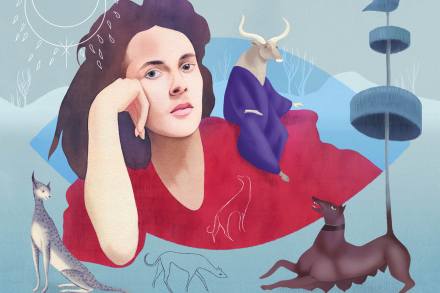
The surreal life of Leonora Carrington

"It’s the belief that nothing is ordinary, that everything in life is extraordinary. And being old is no more, no less, extraordinary than being young.” When the artist and writer Leonora Carrington was asked in 2006 what “Surrealism” meant to her, this was her reply. It was a remarkably frank statement from an artist who had, at other points in her career, declared that she “was never a Surrealist,” even memorably asserting that the Surrealist link between women (the femme-enfant) and the muse was “bullshit.” Perhaps it owes its frankness to the interviewer: sitting across the kitchen in Carrington’s house in Mexico City was her cousin, the journalist and author Joanna Moorhead.

carrington

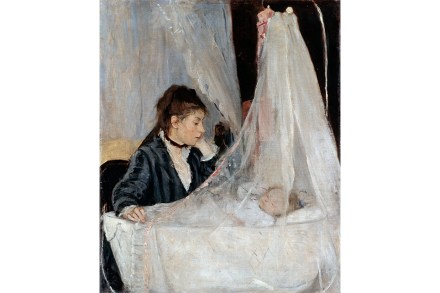
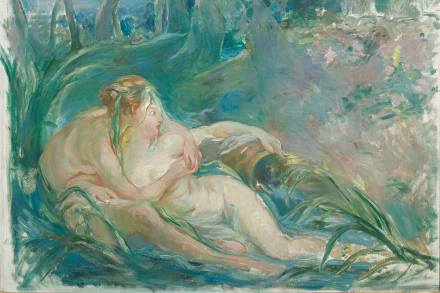
What makes Berthe Morisot’s nudes so unique?

In the years before the French Revolution saw heads roll down the boulevards, revolutionaries murdered in the bath, and endless numbers of fluffy lap dogs forced to fend for themselves after their mamans met their untimely ends, one art critic made his name with his fearless criticism of Paris’s annual art exhibition, the “Salon.” The prominent style in mid- and late-eighteenth century France was Rococo — think impossibly ornate, gold-swirled furniture; paintings of pink, fluffy nymphs in gilt-edged, asymmetrical frames; and portraits of women in dresses so large, and so embellished, that they resemble iced wedding cakes more than human beings. In the face of endless walls of this style of art, the critic Denis Diderot was caustic.

Morisot

Mary Blair, doyenne of Disneyland

On a cold day at Disneyland, I walk through sugarplum-scented air, past a midcentury-modern poster for Alice in Wonderland, and beneath a plaque that reads, “Here you leave today and enter the world of yesterday, tomorrow and fantasy.” Walt Disney — the controversial impresario of twentieth-century animation and escapism, not the corporation that bears his name — intended his magic kingdom as an escape, a real-life never-never land devoid of the politics and troubles of the everyday. But on this visit to the park, I encounter the here and now around every corner. Passersby notice that an empowered female pirate has replaced the bride-auction scene in the Pirates of the Caribbean ride. (“Did anyone really believe pirates were role models?” one visitor asks.

mary blair

Women artists have been ignored for far too long

From our UK edition

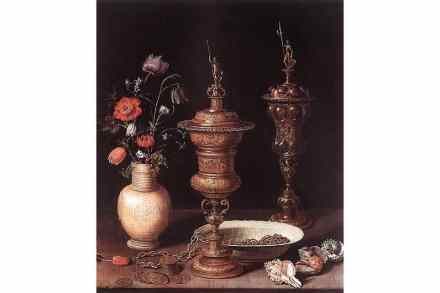
At first glance, Clara Peeters’s ‘Still Life with a Vase of Flowers, Goblets and Shells’ (1612) appears to be just that. Carefully arranged on a wooden tabletop, the collected objects are in conversation, the nubby curves of the shells echoing the ribbed neck of the stone vase, their dusky and rosy hues matching the open and squeezed shut buds. But look closer at the gleaming gilt goblet on the right and you’ll notice that the Flemish artist has smuggled tiny self-portraits into the polished roundels – a clever bid to avoid the misattribution of her painting to a man, perhaps, and a form of self-assertion in the male-dominated art world.

Evelyn Statsinger’s otherwordly art

New York’s Upper East Side — 1018 Madison Avenue, to be exact — currently hosts another world at the Gray Gallery. It’s a universe with a near-scientific attention to detail. Plant stems are bisected and, in turn, bisect paintings like winding snakes; petals and branches are painted in such microscopic detail that they appear like the surface of some far-flung planet; and canvases are awash with such bright, clean lines they seem almost like subway maps of a particularly topsy-turvy city. The works — pastels, oil on canvas, and oil on linen — are those of Evelyn Statsinger (1927 – 2016), the deeply underappreciated artist who lived in New York, Chicago, and Michigan.

How to succeed in sculpture (without being a man)

From our UK edition

Whee-ooh-whee ya-ya-yang skrittle-skrittle skreeeek… Is it a space pod bearing aliens from Mars? No, it’s a podcast featuring aliens from Venus: women sculptors. If the intro music to Sculpting Lives: Women & Sculpture sounds like Dr Who, its two jolly presenters — Jo Baring, director of the Ingram Collection of Modern British & Contemporary Art, and Sarah Turner, deputy director for research at the Paul Mellon Centre for British Art — come across as younger, slimmer, artier versions of the Two Fat Ladies. ‘Jo can talk about Liz Frink’s work until the cows come home,’ Sarah informs us at one point before warning Jo: ‘You’re going to have to convince me a little bit.

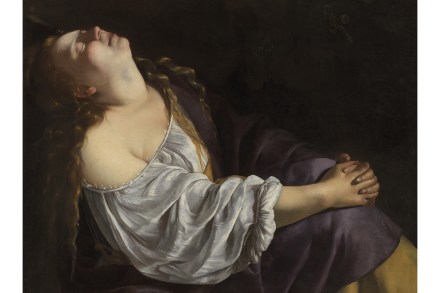
The life of Artemisia Gentileschi is made for Netflix, but it’s the art that really excites

From our UK edition

‘It’s true, it’s true, it’s true.’ Over and over she said it. ‘E vero, e vero, e vero.’ It’s true he raped me. It’s true I was a virgin. It’s true all I say. Even under judicial torture, even with cords wrapped around her fingers and pulled tight, she did not waver. ‘E vero.’ These words, spoken by the 17-year-old Artemisia Gentileschi, have come down to us in a trial transcript of 1612. This haunting document, never seen outside the state archives in Rome, will be shown for the first time in the National Gallery’s forthcoming Artemisia exhibition. Artemisia ought to have opened this month. Curator Letizia Treves has been through hell and high water. Italy in lockdown. American flights suspended.