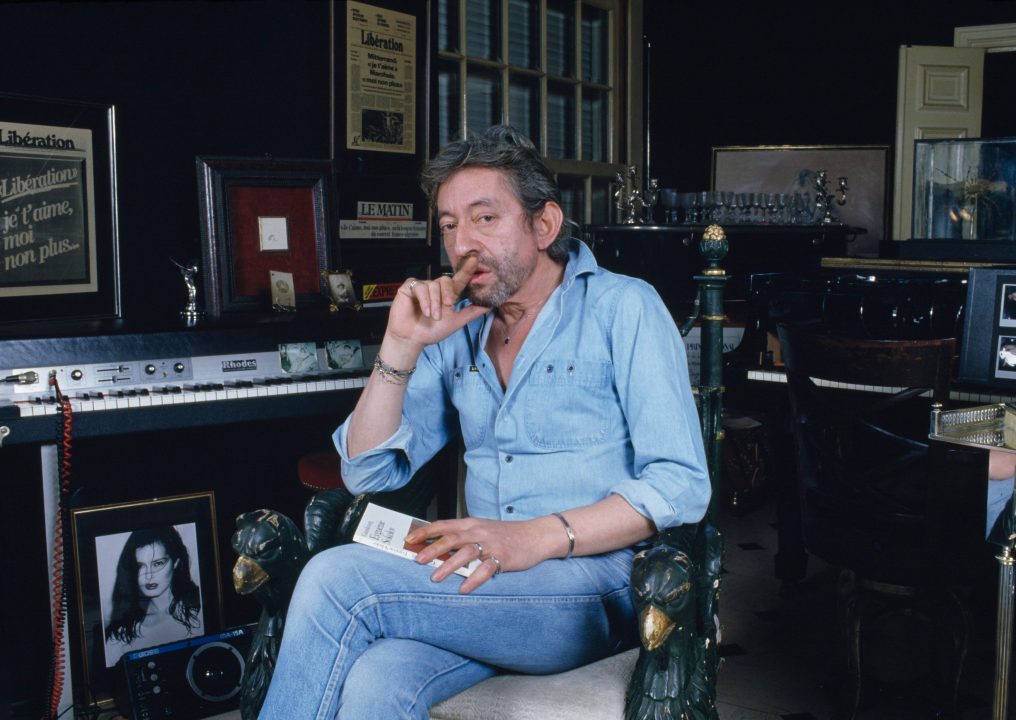
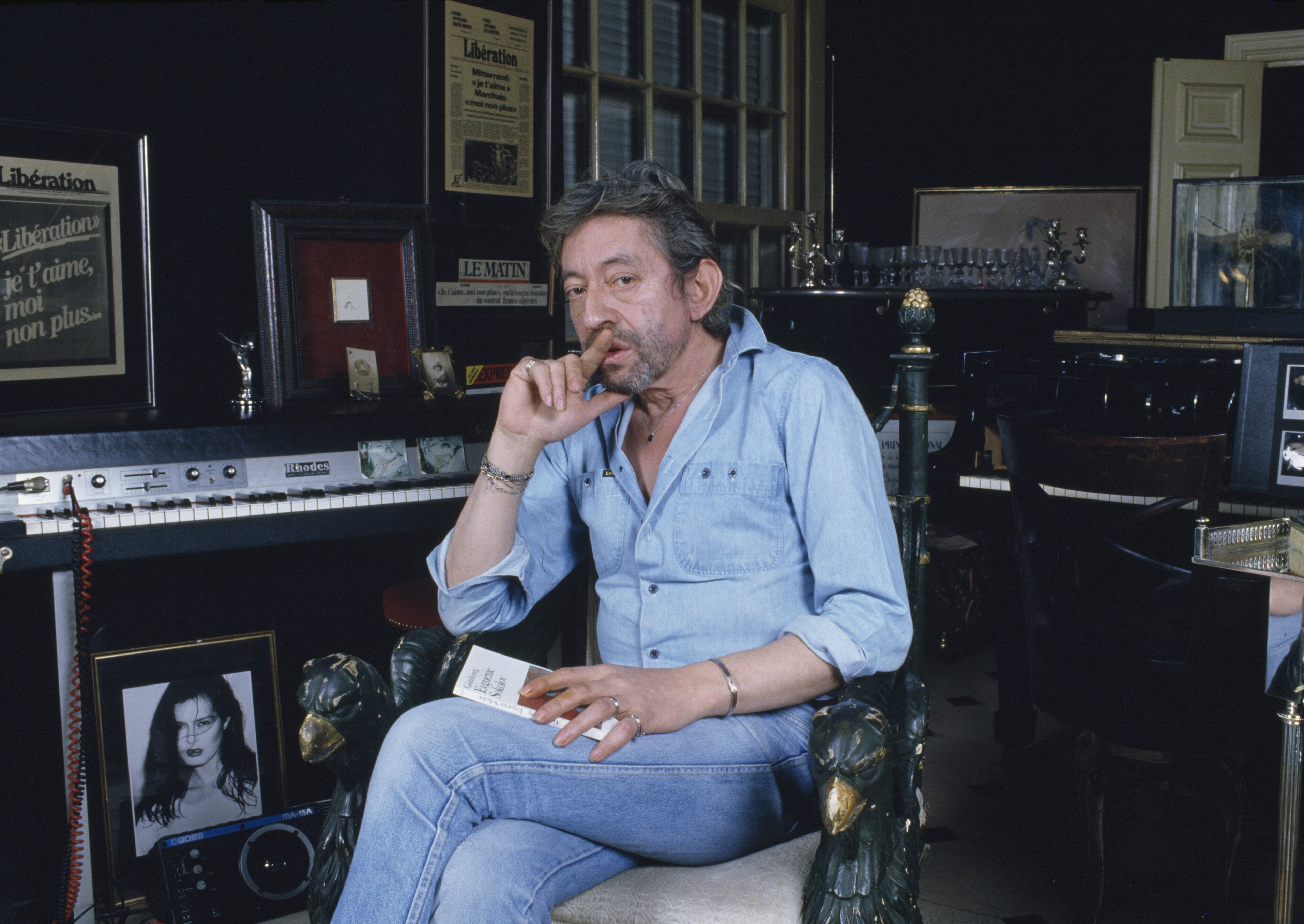
Yesterday marked the 35th anniversary of the death of Serge Gainsbourg at 62 from a heart attack. The only real surprise is that he ever made it to such an age. Gainsbourg, whose unlovely but strangely beguiling countenance can best be likened to a garden gnome left outside in the rain for too long, was a performer and composer who epitomised French popular music of the 1960s and 1970s in all its bizarre contradictions. Compared to such wholesome British figures as Cliff Richard and Tom Jones, Gainsbourg was a seedy, almost sinister figure whose demeanour gave off an odour of stale aftershave, Gitanes and day-old red wine.
That he was also a songwriter of genius who has influenced countless other musicians – everyone from Jarvis Cocker and Radiohead to R.E.M and Neil Hannon – should not be ignored or belittled. His greatest albums, such as 1971’s Histoire de Melody Nelson, are classics of popular music that should be taken seriously by anyone who loves complex and beautiful songs. Yet Gainsbourg’s undoubted musical talent is often obscured in popular memory by his rumpled lechery and personal eccentricities.
He became notorious in Britain when he recorded the song ‘Je t’aime… moi non plus’ (‘I love you… I don’t love you either’) with his former lover Jane Birkin in 1969 (having originally recorded it with his other inamorata Brigitte Bardot). Its combination of heavy breathing, frankly sexual lyrics (‘Tu es la vague, moi l’île nue’ sounds far less sensual in English: ‘You are the wave, me the naked island’) saw it banned from radio airwaves in Britain and led to the duo being denounced by the Pope, whom Birkin later referred to as ‘our best PR man’. It was rumoured that the song contained the sounds of Gainsbourg having sex with Birkin, which the singer denied on the grounds that, if it had done, it would have been a 45-minute LP, rather than a four-minute pop song.
Gainsbourg was as far from other leading French pop stars of the day – such as the ‘Gallic Elvis’ Johnny Hallyday and the brilliant chanteuse Francoise Hardy – as it was possible to be. Both Hallyday and Hardy might have had their own eccentricities and ego issues but both were, ultimately, professionals who were accordingly rewarded with lengthy and successful careers. Gainsbourg, however, was someone who was apparently bent on self-destruction in every conceivable form. It is a source of discomfort even to his greatest admirers that he recorded a song called ‘Lemon Incest’ in 1984 with his 13-year-old daughter Charlotte, just as it was unfortunate that he once informed Whitney Houston live on French television: ‘I want to fuck you.’ The embarrassed host swiftly remedied the situation by telling the uncomprehending Houston: ‘He thinks you’re great.’
For all his bravado, seediness and absurdity, he died a national hero
Yet for all his bravado, seediness and absurdity (which included an ill-advised diversion into reggae in the late 1970s), Gainsbourg died beloved: a national hero who was eulogised by then-president Francois Mitterrand as ‘our Baudelaire, our Apollinaire’ and as someone ‘who elevated the song to the level of art’. There is something gloriously, quintessentially French about Gainsbourg: a man who always seemed to be in on the joke, even as he did and said things that would have him cancelled in our now-censorious society before you could say ‘dirty old frog’. Not for nothing was his final film as writer and director simply entitled Stan the Flasher in 1990.
Perhaps his greatest moment came, late in life, when Gainsbourg’s song ‘Je suis venu te dire que je m’en vais’ (‘I came to tell you that I’m leaving’) – a typical piece of ennui-soaked existentialism – was performed in front of him, live on national television, by a group of choristers. The boys wielded whisky glasses and prop cigarettes, and dressed in Gainsbourg’s inimitable style of sunglasses, stubble, jeans and sports coat. As they sang the now reworded song, ‘On est venu te dire qu’on t’aime bien’ (‘We came to tell you that we love you’), the disreputable old Gaul was honestly and sincerely moved to tears. The clip has deservedly gone viral since and been used in countless memes online. But it says much about Gainsbourg, and about the country he bestrode like an especially dirty Colossus, that someone as eccentric and disreputable as him might still be held in such high regard.
France has never had another Serge Gainsbourg and, if one emerged today, he would be cancelled before you could even say ‘Je t’aime’. For the sake of the country’s morals and France’s dry cleaning bills, that is probably just as well. But as a homage to Europhile gaiety as well as some marvellous music that stands far better today than 90 per cent of what was being recorded in this country, the baffling, maddening, brilliant Gainsbourg lives on forever. All we can say to that is santé.






Comments