If you reckon you have an understanding of international politics today, you probably haven’t been listening properly. Vladimir Putin, Xi Jinping, Benjamin Netanyahu and Donald Trump are making history too fast for most of us to keep up. Odd Arne Westad’s The Coming Storm seeks to make sense of the current geopolitical chaos by drawing parallels between now and the years before 1914. If you don’t find those comparisons reassuring, you aren’t supposed to. The point being stressed is that, unless we are careful, we risk sleepwalking into a Great Power conflict as terrible as, or worse than, the first world war.
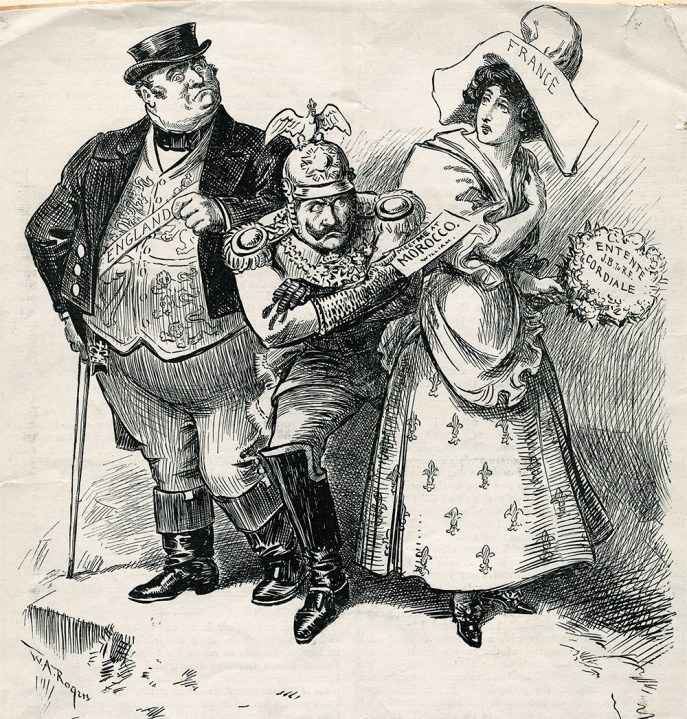
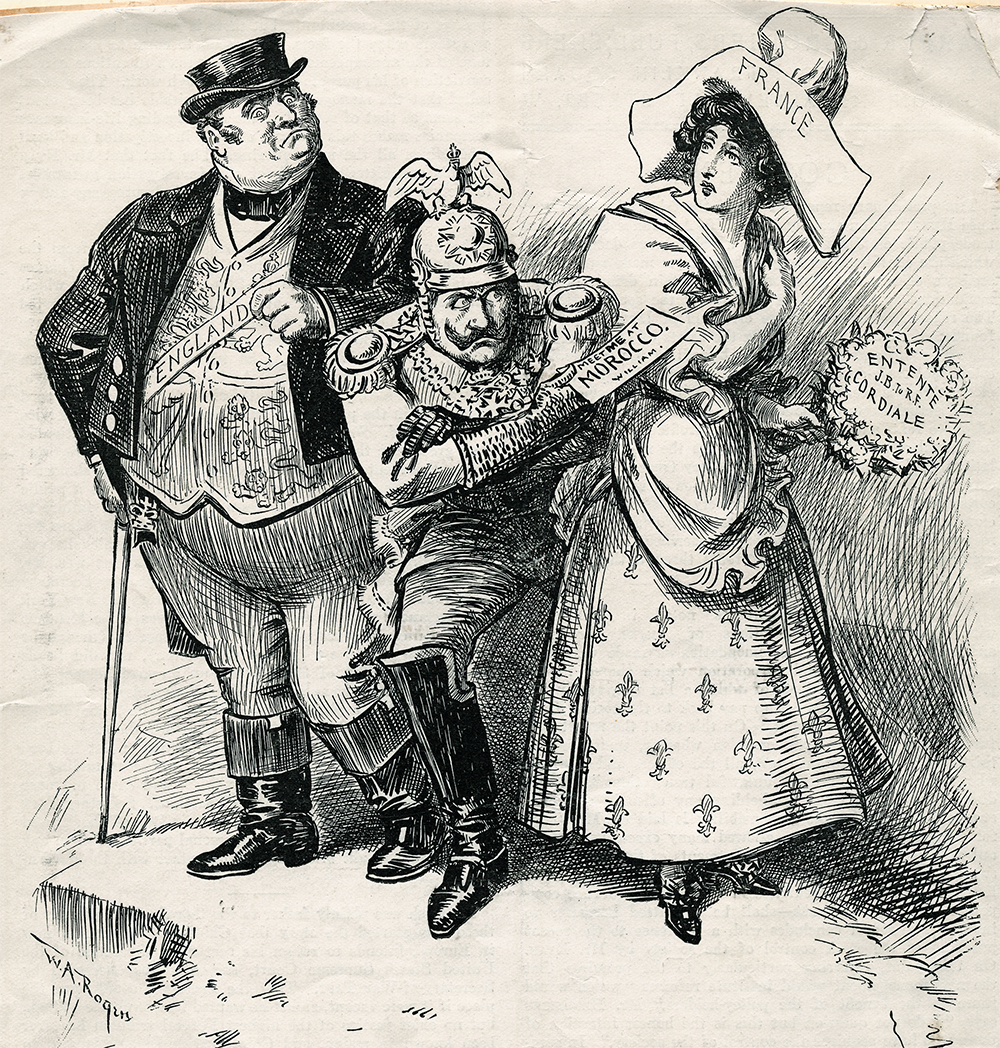
Westad is a leading Cold War historian from Yale and his comparisons are always thought-provoking and often accurate. Two weary titans, staggering under the too-vast orbs of their fate (the UK then, the USA now), mourn their fading hegemony in societies beset by popular nationalism and xenophobia, while impulsive and irresponsible leaders exploit fear and resentment for their own political gain. Revolutions in technology and armaments promise deterrence but risk only massive destruction. Sound familiar?
Inevitably, perhaps, the analogies sometimes feel forced. Yes, there are similarities between the economic rise of China since 1989 and Germany’s after 1871, but China, crucially, does not sit surrounded by rivals at the heart of a fragmented continent. Further, Germany’s conversion of economic strength into military might, and ultimately its decision to employ force, were not inevitable. They depended on a series of deliberate choices made by the Kaiser and his chancellors. President Xi may well have made some similar decisions already, but there remain others yet to make. Just because something happened before does not mean it must happen again.
There are broader divergences, too. One hidden assumption underpinning this book is that international politics is akin to a grown-up game of Risk, with a handful of players of approximately equal strength all reaching for the same ring: global power and prestige. If that were ever the case, today the picture is surely more complex. Putin and Xi seem motivated more by a desire to consolidate and expand their control at home than anything else. For Trump, the metric is column inches. Also, we define power differently these days. The European Union and Japan are economic leviathans, yet global military tiddlers. Soft power, in the form of cultural diplomacy and shared values, has an influence all its own. It is weird that a fan of Coca-Cola like Trump should have so completely forgotten its value to the American brand.
Accuracy is not really the main point with comparisons like this, though. No 200-plus-page book can hope to capture every nuance of one of the most debated questions in all history. More importantly, none of us really thinks that history repeats itself exactly. When politicians invoked ‘Munich’ to explain why they needed to stand up to President Nasser, Arthur Scargill or Saddam Hussein, the point they were making was more rhetorical than historical. If we go to the past expecting to find how-to guides that spell out, step by step, how to navigate the problems we face, we will be disappointed. Worse, we risk bending the present to fit into the shape of the past and misunderstanding the real problem. The analogies we choose to help answer our questions determine the answers we get.
President John F. Kennedy knew that when, during the 1962 Cuban Missile Crisis, he quoted 1914 as an example of how not to make decisions. The outbreak of the Great War was fresh in his mind because he had recently read Barbara Tuchman’s The Guns of August – still one of the most evocative accounts we have. Also, he had studied at Harvard under Sidney B. Fay, a leading expert on the July Crisis. Kennedy’s point was that his administration must avoid being hustled into hasty and faulty decisions by generals citing mobilisation timetables, as the statesmen of 1914 had been. At a time when the military was pressing hard for pre-emptive strikes on Cuba, this was a useful point to make. JFK was employing history with great sophistication and skill. He identified patterns in human behaviour that, despite vastly different circumstances between 1914 and 1962, were nonetheless relevant to solving the problems he faced. That is the way to do it.
Westad, similarly, is trying to identify how and why people make the bad decisions that lead to conflict. There are plenty of examples from 1914, of course. These suit his central message that war is dreadful and we need to work hard to avoid it. That may not be a terribly original thing to say, but it bears repetition. The Coming Storm is an easy read and if it helps people in Washington and Whitehall think about applying history to help navigate the squalls bearing down on us, it will have made a useful contribution.



Comments