John f. kennedy

Did Robert McNamara know Vietnam was unwinnable?

Former US defense secretary Robert McNamara was known in Washington as a relentless, humorless taskmaster or even “a computer on legs.” Then on February 9, 1962, a little over a year after taking office, McNamara made headlines when he danced the twist with Jackie Kennedy at a White House party. A few days later, the then-first lady sent by hand to McNamara a lighthearted Valentine collage she had made from the news coverage of their dance. After her husband’s assassination, their friendship deepened. Jackie’s opposition to the Vietnam War grew, as did her conviction that McNamara secretly opposed it.

mcnamara

The time I danced with Lyndon B. Johnson

There is general excitement among the legions of fans of A Dance to the Music of Time: next week a plaque to Anthony Powell will be placed on 1 Chester Gate, the London house where he started to write the many-volumed work of genius. I have a particular interest in attending, not only because Powell was married to my father’s sister Violet, but also because I took advantage of the relationship to lodge for several years in Chester Gate. This was when my parents chose to live maddeningly in Hampstead Garden Suburb and at the age of about seventeen I was beginning to go to parties. Go to them? But how to return? That was the problem. No taxi would go so far. I batted my eyes in vain. Fortunately, Violet was one of the kindest and most tolerant people I have ever encountered.

Johnson

Was JFK any ‘good’ as a president?

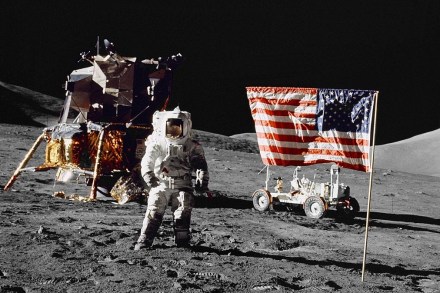
How should we assess the value of a US president? In the case of John F. Kennedy, who died sixty years ago, the box denoting youthful vigor clearly gets a checkmark. Kennedy was just forty-six at the time of his assassination, which makes him younger than Hunter Biden is now. The box denoting the “vision thing” gets checked as well, if only because Kennedy saw the potential for beating the Soviets in the race to put a man on the moon, famously declaring, “We choose to do this, not because [it is] easy, but because it is hard; because that goal will serve to organize and measure the best of our energies and skills.” Also to be considered is the collective trauma of the events of November 22, 1963.

jfk

John F. Kennedy’s trip worth remembering

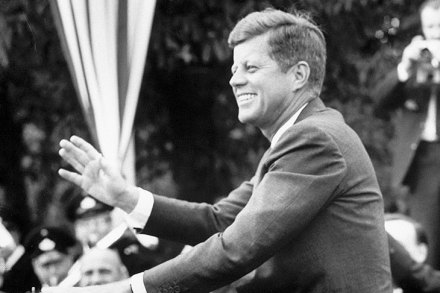
Sloppy Joe Biden may face strong political headwinds with just seven months to go before the first presidential primary, but at least he’s in good company. Assessing the Washington landscape in mid-June 1963, when John F. Kennedy set off on a European tour designed to bolster not only the NATO alliance but his own poll numbers, the British ambassador David Ormsby-Gore cabled back to London: He will be leaving behind a disquieting domestic situation, [with] economic troubles to the fore... The Negro leaders are beginning to talk about large scale civil disobedience on a nation-wide basis... Moreover, the racial crisis is causing new difficulties for [Kennedy’s] legislative program...

Kennedy in Berlin

When the moon brought America together

The Artemis rocket is back from the moon. Within a couple of years, if all goes to plan, it will bring men to the moon’s surface. It is a great loss that a bigger deal hasn’t been made of this expedition. I was only three when John F. Kennedy died, and his famous 1962 pronouncement that we would go to the moon not because it was easy but because it was hard was already history. The picture books I got on birthdays always included him in the history of space exploration. Those books made sure every kid knew how “we” were going to get to the moon. They changed us, and with us, America. We started with Mercury, baby steps mostly proving we could launch men into space. Then Gemini, a long proof-of-concept program to try out the technology of docking.

How the British helped JFK navigate the Cuban Missile Crisis

The Atlantic alliance hasn’t always been quite as special as politicians on both sides of the sea like to pretend. To take just the last sixty years: there were the differing views on Vietnam that led Lyndon Johnson to assess the British premier Harold Wilson as "a creep," while Richard Nixon privately considered Ted Heath "weak" and "as crooked as a corkscrew" (which was saying something coming from him). In October 1962, however, the principal Western leaders really did have something special. Between them, they probably helped save the world from nuclear annihilation. When on October 16, President John F.

The Cuban Missile Crisis has become a cultural touchstone

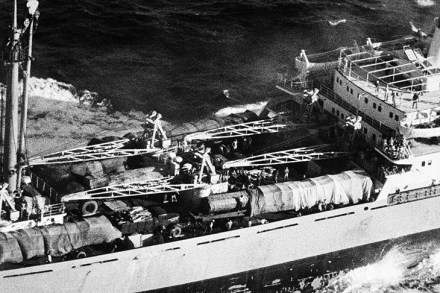
At the beginning of 1962, President John F. Kennedy had high hopes for a peaceful year with the Soviet Union, the United States’ most dangerous adversary. On December 30, 1961, Kennedy issued a statement offering his good wishes for the new year to Soviet Premier Nikita Khrushchev and the Soviet people. Ten months later, in October of 1962, the US and the Soviet Union were on the brink of war. The Soviets had moved missiles into Cuba, which initially went undetected by US intelligence. On October 14, an American U-2 spy plane took pictures showing missile base construction taking place in Cuba. The next evening, American analysts realized the implications of what that construction meant.

How Catholics became the new WASPs

Close to a century ago, in 1928, Alfred E. Smith, the governor of New York, became the first Catholic nominee of a major political party. A predominantly Protestant America was suspicious of Smith, who, among other things, opposed Prohibition. New York lawyer and Episcopalian Charles C. Marshall published a letter questioning Smith’s fitness for office. Among other criticisms, Marshall quoted papal encyclicals that denied the legitimacy of religious freedom as popularly understood by most Americans. “What the hell is an encyclical?” Smith is reported to have responded. Concerns about the irreconcilability of American republican government and Catholicism were nothing new.

The unsolved mystery of Marilyn Monroe

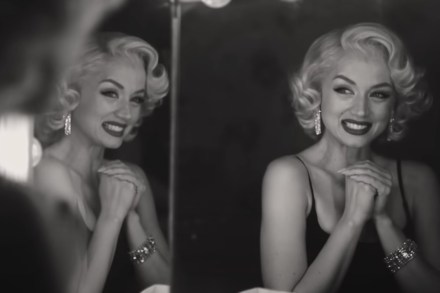
When Kim Kardashian wore Marilyn Monroe’s dress to the Met Ball back in May, the world was aghast. Many claimed the dress was damaged (something the owners deny), and the dress’s original designer, Bob Mackie, told the world it was a “big mistake," saying, “Nobody else should be seen in that dress.” Some of the concerns came from the fact that Kim Kardashian had had to lose a significant amount of weight to fit the blonde bombshell’s proportions — the dress was so tight on Monroe that she'd had to be sewn into it — and that it set a dangerous precedent for the preservation of historical costumes.

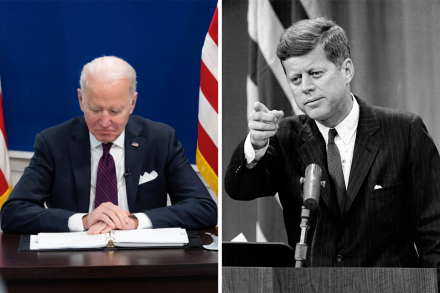
Joe Biden is no Jack Kennedy

As the Ukraine situation heats up, you can already picture the insider account Vice President Kamala Harris will publish one day in her 2025 bestseller Thirty-One Days in February. But then, as any survivor of the Cuban Missile Crisis is bound to tell President Joe Biden, “I knew Jack Kennedy, Jack Kennedy was a friend of mine, and you, Joe Biden, are no Jack Kennedy.” One of the clichés if not the myths about the Cuban Missile Crisis was that President Kennedy and Soviet leader Nikita Khrushchev were playing chicken and Khrushchev “blinked." Under threat of potential nuclear war, he then decided to withdraw the Soviet nuclear missiles from Cuba. We now know that what really happened was more complicated than the initial reports made it appear.

American celebrity culture has become exhausting

How was your Super Bowl party? I spent mine investing all my money in crypto and then blowing it on Peacock subscriptions. For once it was the commercials that were the most memorable part of the game — not Matthew Stafford's lightning arm, not even 50 Cent entering the halftime show upside-down like a bat. And that was because every ad was a broadside of celebrities. Not a fan of Bud Light Seltzer? Wait until it's pitched to you by Guy Fieri and a race of Eloi-like doppelgangers (spoiler: you still won't be a fan of Bud Light Seltzer). And how can I not order Uber Eats after watching Gwyneth Paltrow smell her own vagina candle while Trevor Noah eats deodorant? I'm old enough to remember when movie stars starred in movies; now they're hawking Doritos and cheap flights to Istanbul.

celebrity

Richard Nixon took the high road in 1960. Donald Trump should now

‘You gotta swallow this one, they stole it fair and square.’ That’s a Republican hack speaking to Richard Nixon, as fabricated in Oliver Stone’s 1995 biopic about our nation’s 37th president. The reference is to the 1960 election, in which Nixon’s opponent John F. Kennedy prevailed by 303 electoral votes to his opponent’s 219, although the popular margin was a scant 113,000, or about 0.16 percent, out of 68,837,000 ballots cast.

nixon

The Democrats have learned nothing in four years

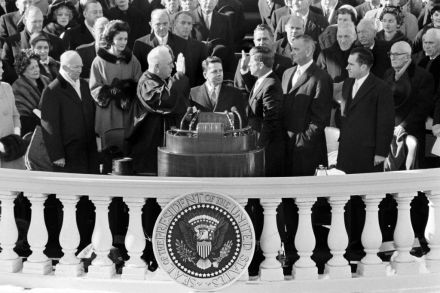
On night two of the Democratic National Convention, Jack Schlossberg, son of Caroline Kennedy and grandson of President John F. Kennedy, hammered a cynical final nail in the coffin of the more palatable and moderate party that his grandfather once represented.Speaking in a slight lisp, Schlossberg, who was named in 2017 to Vanity Fair’s ‘best dressed list’, intentionally perverted one of the most iconic quotes in American political history.‘Ask not what your country can do for you, ask what you can do for your country,’ John F. Kennedy said in his inaugural address on January 20, 1961.On Tuesday evening, the former president’s grandson tossed that old-timey sentiment aside, while still trying to capitalize on JFK’s memory.

democrats

Why men don’t read books anymore

When John F. Kennedy was dating Jacqueline Bouvier, he gave her two books. One was Pilgrim’s Way (1940) a memoir by the British spy and author John Buchan. The other was The Young Melbourne (1939) by Lord David Cecil, which describes the raffish exploits and political intrigues of a Whig aristocrat, and later prime minister, in the early 19th century. Quite what Jackie thought of this is unrecorded. Later President Kennedy told Life magazine what his favorite books were. Both of the titles above were in this proto-listicle, along with works about Byron, John C. Calhoun, Talleyrand and Gibbon’s The Decline and Fall of The Roman Empire.

read books

The audacity of verse

This article is in The Spectator’s January 2020 US edition. Subscribe here. Shelley famously and optimistically proclaimed that poets were the unacknowledged legislators of the world. Adorno famously and pessimistically declared that poetry was impossible after Auschwitz. In The Music of Time, his new study of poetry in the 20th century, John Burnside makes a rather more modest claim: that to write a poem at all is an act of hope. By any standards, Burnside’s own career seems cause for hope in poetry’s capacity to transform at least one individual life.

Johnson

How the myth of JFK tortured the Democratic Party for 55 years

Will the Kennedy assassination ever lose its cultural centrality? Even as organic memory of the event fades, new works of pop art like Jackie (2017) and 11.22.63 (2016) attest to the powerful ongoing significance of the event. The slain president turned out to have much more weight dead than living. Woodrow Wilson once claimed that while men die, ideas live. John F. Kennedy had no ideas but in death he became one. All the zesty confidence and breezy chutzpah of the American century became flesh in JFK, though like him it would never recover from what happened in Dallas. The United States now had a wound that was worthy of Shakespeare, what Don DeLillo memorably called the moment ‘that broke the back of the American century.

jfk assassination

Encounters with eight presidents

Peregrine Worsthorne, the hugely distinguished British journalist, has died aged 96. He was a wonderful man and a brilliant columnist, who once described his job as 'the articulation of an intelligent, well thought out, coherent set of prejudices'. He also worked as Washington correspondent for The Times of London and the Daily Telegraph. In 2014, he wrote the following piece about meeting various American presidents. It was his last contribution to The Spectator. RIP. I feel a bit of a fraud writing about the ‘presidents I knew’, since journalists do not really get to know the great figures they interview or shake hands with. Indeed the relationship between journalist and great personage is about as false as any relationship can be, since each is trying to make use of the other.

Richard Nixon in September 1968