Cuban missile crisis

Khrushchev and me

It was December 1968, and I was a twelve-year-old English schoolboy seriously obsessed with cricket. The sport’s headline news at the time concerned a thirty-seven-year-old South African-born, dark-skinned player named Basil D’Oliveira. The previous August, D’Oliveira had scored a magnificent century (baseball fans need only think of Reggie Jackson hitting three consecutive homers in the clinching game of the 1977 World Series to get the flavor) while representing his adopted home team of England in a match against Australia. Despite this achievement, just days later the English team’s selectors omitted D’Oliveira from a tour of South Africa that was due to follow in the winter. Was the decision taken on purely technical cricketing grounds?

nikita khrushchev

The Doomsday Clock has been corrupted by ideology

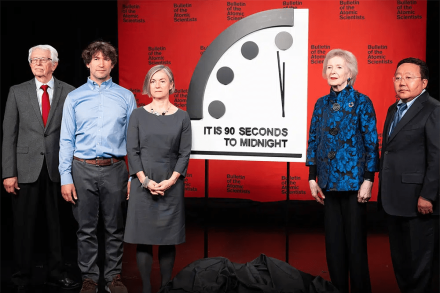
Ever since I can remember, I have always been aware of something called the “Doomsday Clock,” a symbolized calculation produced by a panel of prominent scientists of just how close humanity is to destroying itself. Published on the cover of every issue of the Bulletin of the Atomic Scientists, a journal founded in 1945 by Manhattan Project physicists, the clock’s hands would move toward or away from the dreaded midnight hour depending on how near Armageddon was believed to be. As a kid, the Doomsday Clock seemed an appropriate warning of how the conflict between the US and the Soviet Union might accidentally spin out of control.

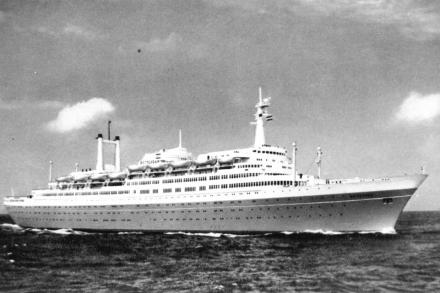
A Cuban Missile Crisis spent on the Atlantic

It is a common thing we have all experienced to be true: events that forever fix themselves in our memory of a certain place. Call it the “I’ll never forget where I was on December 7, 1941 or September 11, 2001” syndrome. On the Sunday Japan attacked Pearl Harbor, my father was on a train passing through western Pennsylvania after a job interview in New York City; he preserved a copy of the Pittsburgh paper to prove it. On the morning of September 11, I was breakfasting at home, awaiting my driver for Dulles International Airport; due to fly that day, I did not.

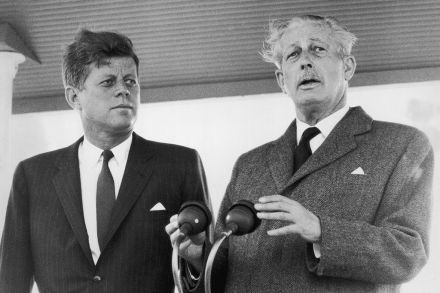
How the British helped JFK navigate the Cuban Missile Crisis

The Atlantic alliance hasn’t always been quite as special as politicians on both sides of the sea like to pretend. To take just the last sixty years: there were the differing views on Vietnam that led Lyndon Johnson to assess the British premier Harold Wilson as "a creep," while Richard Nixon privately considered Ted Heath "weak" and "as crooked as a corkscrew" (which was saying something coming from him). In October 1962, however, the principal Western leaders really did have something special. Between them, they probably helped save the world from nuclear annihilation. When on October 16, President John F.

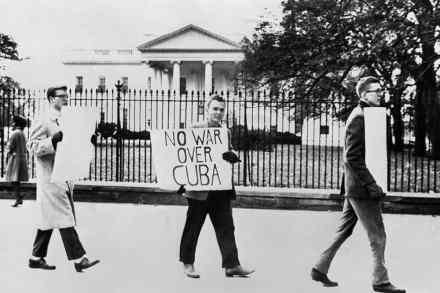
The Cuban Missile Crisis has become a cultural touchstone

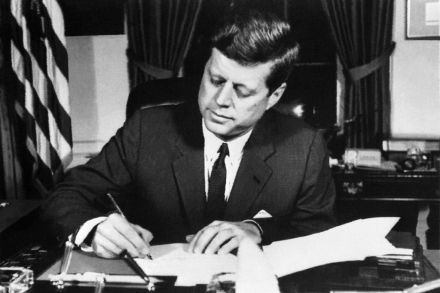
At the beginning of 1962, President John F. Kennedy had high hopes for a peaceful year with the Soviet Union, the United States’ most dangerous adversary. On December 30, 1961, Kennedy issued a statement offering his good wishes for the new year to Soviet Premier Nikita Khrushchev and the Soviet people. Ten months later, in October of 1962, the US and the Soviet Union were on the brink of war. The Soviets had moved missiles into Cuba, which initially went undetected by US intelligence. On October 14, an American U-2 spy plane took pictures showing missile base construction taking place in Cuba. The next evening, American analysts realized the implications of what that construction meant.