Xi jinping

Chinese puzzle or matryoshka doll – the complexity of Sino-Russia relations

From our UK edition

China and Russia are twins. Both are great Asian land empires; both are continental, multi-ethnic powers that expanded by pushing forward their borders rather than by crossing oceans; both have a deep tradition of autocracy that survives to this day; and both (more plausibly in China’s case) believe that their social contract, ideology and system of government is a universal one superior to all others. In Entangled Empires, the German historians Sören Urbansky and Martin Wagner explore the convoluted story of Russo-Chinese relations from the moment in the mid-17th century that roving Cossack bands bumped up against Siberian tribes who owed fealty to Beijing up to the latest performative amity between Vladimir Putin and Xi Jinping.

The real ‘Thucydides Trap’ Beijing and Washington must avoid

These are good times to be a scholar of the classical world. Last summer, Donald Trump issued an order that all federal architecture needed to be “beautiful,” noting that the Founding Fathers “wanted America’s public buildings to inspire the American people and encourage civic virtue.” George Washington and Thomas Jefferson had therefore “consciously modeled the most important buildings in Washington, DC, on the classical architecture of ancient Athens and Rome.” It was time to go back to these principles, said Trump. From now on “classical architecture shall be the preferred and default architecture for Federal public buildings” in the District of Columbia.

Is Xi Jinping’s time up?

From our UK edition

Stories about Xi Jinping’s father, Xi Zhongxun, are blowing up on social media. He died in 2002, so why the interest in him now? The weird fact is that Xi Zhongxun is being talked about in the West because he is not being talked about in China. Omission is the perverse way that one learns about what is really going on in the opaque world of Chinese Communist party (CCP) politics. China-watchers live on scraps. Xi Zhongxun was a big cheese in his own right. Born in the north-west’s Shaanxi province, he was an early member of the youth league of the CCP. After meeting Mao Zedong at the conclusion of the Long March, which ended up in his home province, he quickly rose through the party ranks.

The President is winning the geopolitical battle with China

Almost all media commentators seem convinced that Donald Trump’s foreign policy in his second term is a disaster. He is bogged down in Iran, snookered in Ukraine, his tariff agenda has failed and he has alienated his NATO allies. But this consensus has been too hastily formed. Looking at the bigger global picture, Trump’s foreign policy has been a spectacular success. Take the western hemisphere. We have the so-called “Donroe Doctrine,” the updated version of the 19th-century Monroe Doctrine.

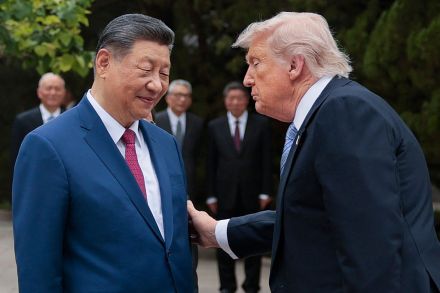
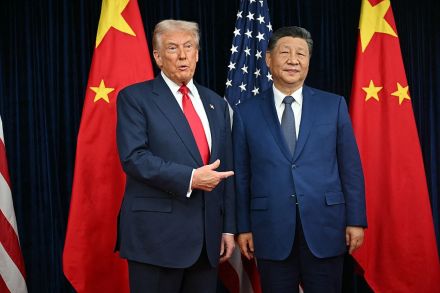
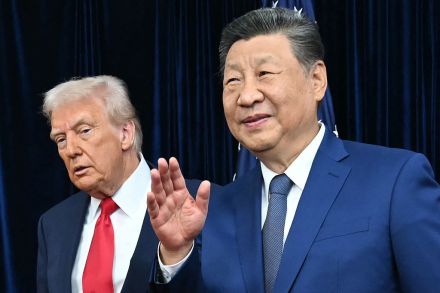
Did the Trump/Xi summit achieve anything?

Air Force One is in the air as I write, whizzing from Beijing back to Washington – and Donald Trump leaves China with many questions unanswered. There were warm words on both sides and plenty of friendly symbolism in the President’s big summit with Xi Jinping. But the fundamental great power tensions remain – over trade, technology, and war and peace in the Middle East and Taiwan. Washington and Beijing agree that Iran should never have a nuclear weapon – though it remains unclear the extent to which China will help reopen the Strait of Hormuz. Its closure hurts the Chinese economy, of course, but China has significant energy reserves and Xi knows that the pain spreads around the world to his advantage.

trump xi

Will Trump and Xi get what they want?

Donald Trump flew to Beijing this week and wants three things when he sits down with China’s President Xi Jinping: a tariff truce that survives his own courts, Chinese pressure on Iran to end the war that never seems to end and a photograph that makes him look victorious. Xi has problems of his own. But he has watched four American presidencies from Zhongnanhai, the walled compound beside the Forbidden City where the Communist party leadership rules, and he knows the value of silence when his counterpart is talking himself into trouble. Trump’s approval rating is the lowest of his second term. What Xi wants from this meeting with Trump is recognition: two great powers, two systems, meeting as equals Trump has obliged Xi noisily.

America’s Trump card in China

The Trump administration has released a list of CEOs who will be accompanying the president to his meeting in China with Xi Jinping. Foremost among the delegation is Elon Musk, traveling in his capacity as CEO of Tesla and SpaceX. Another notable inclusion is Tim Cook, in what may be his swan song international trip as Apple CEO. All told, 17 executives will accompany President Trump to the People’s Republic of China (PRC). Their companies represent sectors ranging from banking and investment to automobiles and AI. Their asks of Xi will likely range from market access (Coherent) and advertising (Meta) to component orders (Boeing) and soybean purchases (Cargill). On paper, President Trump should take business leaders with him to China.

Trump

China’s theft of American AI tech is becoming more brazen

Despite the hype surrounding China’s artificial intelligence capabilities, progress remains heavily dependent on theft and smuggling. The Chinese Communist party (CCP), meanwhile, is determined to maintain tight control. That has become increasingly clear ahead of this week’s Beijing summit between Donald Trump and Xi Jinping. The Chinese leader is determined to lead the world in what he terms an "epoch-defining technology." He appears confident that Trump, preoccupied by his war against Iran, has limited options to counter Beijing’s increasingly brazen activities. Last month, the White House accused Beijing of "industrial-scale" theft of know-how from American AI labs.

china

Will the war in Iran really weaken China?

Analogies in international politics are tricky and easily abused, yet they remain irresistible because they can illuminate patterns that are otherwise hard to see. Consider the present moment.  Just as Ukraine has become a growing burden for Washington and its Western allies, Iran is now a strategic burden for Moscow and Beijing. The US, particularly under the Trump administration, appears to be placing less emphasis on supporting Ukraine. Something similar may be happening in reverse with Iran.  Moscow continues to provide Tehran with assistance – most notably intelligence on US military targets – but the broader pattern suggests caution rather than deep commitment.

China Iran

Trump’s ultimate target in this war is China

The United States and Israel killed Ayatollah Khamenei, and Xi Jinping’s decade-long project to build an alternative to the American-led order died with him. For years, Beijing quietly assembled a network of dictatorships and client states designed to blunt American power. Iran supplied China with cheap oil and kept Washington bogged down in the Middle East. Russia waged war on Ukraine with Chinese materiel support, a gamble that was supposed to cement a powerful anti-western axis but has instead bled Moscow into dependence on Beijing. Regional proxies from Lebanon to Gaza added just enough chaos to stop Washington focusing on China. The Chinese Communist party (CCP) propped up Nicolas Maduro’s Venezuela, too, as it funneled narcotics and other ills into America.

Japan is refusing to tiptoe around the Taiwan issue

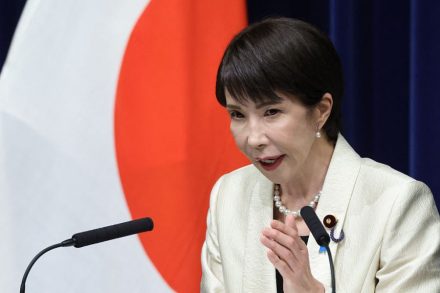
One of the most serious issues in the well-filled in-tray of freshly endorsed Japanese Prime Minister Sanae Takaichi is Taiwan, which China claims as its own sovereign territory, and the lamentable state of Sino-Japanese relations. Takaichi provoked fury with comments in the Japanese parliament in November when she stated that were China to attack Taiwan, it would be interpreted as a "survival-threatening situation" for Japan, implying a military response could follow. Under the terms of its constitution, Japan is severely limited in its military options but Takaichi appeared to be preparing more solid ground with her phrasing. A 2015 law changed the constitution allowing Japan to retaliate if the country faced a "life-threatening" situation.

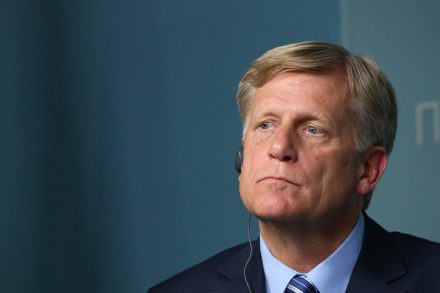
It feels as if Michael McFaul’s audience has long since left

Since the end of the Cold War, politicians and commentators have been searching for a new paradigm through which to understand international relations. Notwithstanding Francis Fukuyama’s oft-misunderstood The End of History, we have tried various patterns to classify the world order, of which George W. Bush’s “Axis of Evil,” first used in 2002, was among the more enduring. In Autocrats vs. Democrats: China, Russia, America, and the New Global Disorder, Michael McFaul acknowledges the widespread if nebulous consensus that the challenge presented by Russia and China is a kind of second Cold War – historian Niall Ferguson has labeled America’s relations with China “Cold War II.

Michael McFaul

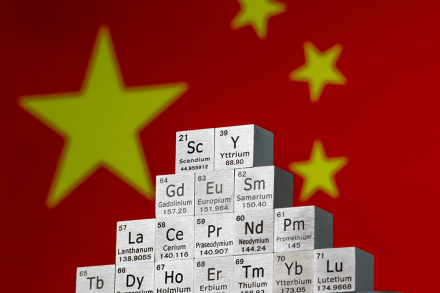
China is holding the West to ransom over rare earths

China’s naked weaponization of rare earths brings to mind Mao Zedong’s "four pests" campaign, the old tyrant’s fanatical effort to exterminate all flies, mosquitoes, rats and sparrows, which turned into a spectacular piece of self-harm. Sparrows were always an odd choice of enemy, but Mao and his communist advisors reckoned each one ate four pounds of grain a year and a million dead sparrows would free up food for 60,000 people. The campaign, launched in 1958, saw the extermination of a billion sparrows, driving them to the brink of extinction. But the sparrows also ate insects, notably locusts, whose population exploded, and the ravenous locusts wreaked far more damage to crops than the sparrows ever did, hastening China’s descent into the deadliest famine in human history.

ian williams china rare earths

A rare earths deal is China’s gift to Trump

Donald Trump went nuclear. Before his meeting with Chinese leader Xi Jinping at an air base in South Korea, he ordered the Pentagon to test atomic weapons on an “equal basis” with China and Russia. Was Xi impressed? Probably not. While Russia expressed indignation, China did not permit itself to be distracted by Trump’s nuclear shenanigans. Instead, Beijing aimed to obtain economic concessions from a prideful Trump, which it did. From the outset, Xi sought to bring Trump down a peg, declaring that “both sides should consider the bigger picture and focus on the long-term benefits of cooperation, rather than falling into a vicious cycle of mutual retaliation.” Trump seems to have absorbed the lesson.

Press-pool stew

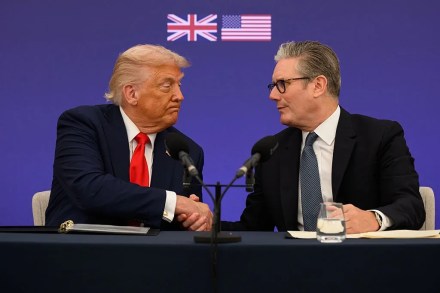
Looking for a good time, sweet’eart? Team Trump is back in Washington today after their sojourn to Britain for a state visit. The President took to the Old Country with the gusto of an American girl on study abroad: castles, royals, knights, fancy dinners, all the pageantry. “I saw more paintings than any human being has ever saw, and statues,” he gushed to the press pool on the flight back. He even managed to dodge the most difficult question in his joint press conference with Prime Minister Keir Starmer, flatly claiming “I don’t know him, actually,” of ousted UK ambassador Peter Mandelson, who was fired over new revelations of his ties to Jeffrey Epstein.

Trump

Is China riding for a fall?

From our UK edition

The West gets China wrong. Spectator readers know the country as a vampire state feasting on foreign intellectual property and spewing out phony economic data in its thirst for wealth and power. It certainly is these things – but it also isn’t. It is more complex, and telling only half the story is ultimately self-defeating. While there is plenty to appal us about modern China, there is also much that we can learn from it. In Breakneck, Dan Wang reveals both sides of the ledger. ‘Too many outsiders see only the enrichment or the repression,’ he complains. His ‘big idea’ is that China is an engineering state, building at breakneck speed, whereas the United States is a ‘lawyerly society’ that has forgotten how to get stuff done.

Fragile China: who’s really in charge?

From our UK edition

Xi Jinping effectively vanished in July and the first half of August. Some China watchers speculated that his unexplained absence was a sign that he was losing his grip on power. But he has since reappeared and been very visible again. At the end of last month, he visited Tibet, then indulged in a high-profile, back-slapping meeting with Vladimir Putin and the Indian Prime Minister Narendra Modi in Tianjin. He capped off his busy fortnight with the 3 September military parade in Beijing and a second meeting with his star guest Putin, this time accompanied by Kim Jong-un. So, a great triumph for the neo-Maoist leader and the new Axis of Evil? Not so fast. The lessons to draw from these three events are a sight more nuanced. Here are five take-aways from Xi’s last few weeks. 1.

How powerful is the China-Russia alliance?

This summer’s big security summit in Tianjin, followed by the military parade in Beijing on September 3, has been widely interpreted as a sign of a new global realignment. At a time of growing friction within the US alliances in East Asia and Europe, President Xi Jinping of China, President Vladimir Putin of Russia and about 20 leaders mostly from Central Asia have not just reaffirmed their nations’ close ties. They sought to strengthen the emerging multipolar system, which they see as a rejection of the US-dominated global order. This idea is hardly new.

China

The Art of the Dealmaker-in-Chief

Who really thought Donald Trump’s America was about to join the stampede of first-world powers promising to recognize Palestine at the United Nations?  "Wow!" He exclaimed this morning on Truth Social. "Canada has just announced that it is backing statehood for Palestine. That will make it very hard for us to make a Trade Deal with them."  All over the world, commentators convinced themselves that Trump’s expression of concern on Monday about "real starvation" in Gaza meant he was pivoting with global opinion and against Israel.  It turns out, however, that Team Trump is not for turning when it comes to the Middle East. Marco Rubio, the US Secretary of State, has accused the countries now embracing Palestinian statehood of falling for "Hamas propaganda".

Trump deals

What’s next for Taiwan?

From our UK edition

When Portuguese traders sailed past a verdant, mountainous land on the fringe of the Chinese empire in the mid-16th century, they named it Ihla Formosa – ‘beautiful island’. But Kangxi, the third emperor of the Manchu Qing Dynasty, was less impressed when his naval forces captured it in 1683, scoffing: ‘Taiwan is no bigger than a ball of mud. We gain nothing by possessing it, and it would be no loss if we did not acquire it.’ Beautiful or not, Taiwan was a pirates’ lair, inhabited by tattooed head-hunters and best left alone. Yet the Qing clung on to Taiwan for two centuries, with Chinese settlers gradually displacing the indigenous Austronesian population.