Vietnam

Accelerating the ‘kill chain’ – a terrifying glimpse of future warfare

From our UK edition

America possesses the most powerful military in history, but since 1945 it has not won a war against anyone other than Saddam Hussein. It appears not to understand why. In fact the only thing the US seems worse at than winning wars is learning lessons from its defeats. People such as the secretary of war Pete Hegseth think it’s all about woke. Lily-livered longhairs stateside stabbed the army in the back over Vietnam; then ‘stupid rules of engagement’ tied the military’s hands in Iraq and Afghanistan and caused the disasters there. The solution is to fight harder, if necessary even at the expense of ethics and the law. Another answer might be to get US forces fighting smarter.

Did Robert McNamara know Vietnam was unwinnable?

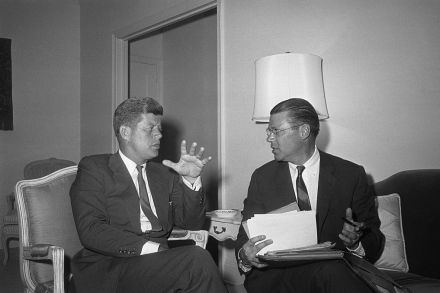
Former US defense secretary Robert McNamara was known in Washington as a relentless, humorless taskmaster or even “a computer on legs.” Then on February 9, 1962, a little over a year after taking office, McNamara made headlines when he danced the twist with Jackie Kennedy at a White House party. A few days later, the then-first lady sent by hand to McNamara a lighthearted Valentine collage she had made from the news coverage of their dance. After her husband’s assassination, their friendship deepened. Jackie’s opposition to the Vietnam War grew, as did her conviction that McNamara secretly opposed it.

mcnamara

Could a ‘futurehood’ revolution save Britain?

From our UK edition

As the collapse of birthrates accelerates across the developed world, even our language is struggling to keep up. Over nine years of demographic research, I’ve resorted to coining my own vocabulary just to describe what’s unfolding. ‘Birthgap’, for the widening gulf between generations – too few young to support too many old. ‘Yesterlands’, for once-thriving communities now quietly hollowing out. ‘Retronomics’, for the slow yet continuous un-ravelling that follows demographic decline, as nations are forced to retrofit their economies to fit their shrunken societies. Lately, I’ve been searching for another missing word – this time, to capture the invisible sense that a society still believes in its own tomorrow.

The dog that haunts Russ Benzin

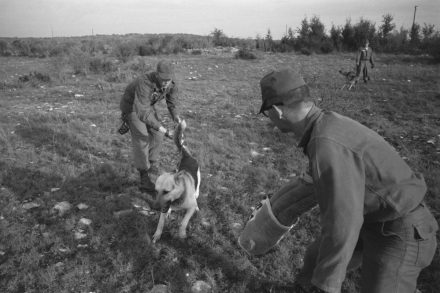
Batavia, New York Fifty-five years after his Vietnam-era military service ended, Russ Benzin remains haunted. Not, thank God, by memories of the state-sanctioned mass murder that is war, but by a seemingly intractable and feral military dog he came to love. I met Russ years ago in the third-base bleachers at Dwyer Stadium, where we whiled away many summers watching a set of trained canines – the Batavia Muckdogs of the (now defunct or, rather, exterminated) New York-Penn League. In the manner of ballpark friendships, ours developed over the years: from nodding acquaintance to grumbling exchanges (“why the hell didn’t the third-base coach send that guy?”) to friendship.

dog russ benzin

The rise of soapy, dead-safe drama: The Band Back Together reviewed

From our UK edition

The Band Back Together is a newish play, written and directed by Barney Norris, which succeeds wildly on its own terms. It delivers a low-energy slice of feelgood nostalgia involving three musicians who reunite in their hometown of Salisbury. The action consists of talk and songs, more talk, more songs, some cider-drinking and a surprise ending to convince the audience that it was worth the wait. The play was commissioned by Farnham Maltings, an arts centre in Surrey, whose aim is to ‘bring artists, makers and communities together’ and it feels a bit am-dram. The script has no conflict, suspense or uncertainty. No harrowing emotions or life-changing experiences. It’s just a pipe-and-slippers get-together involving three has-beens who once shared a stage as musicians.

Tim Walz’s military crime is all in the cover-up

There’s an unmistakable aura if you’ve ever been to any of the 172 VA medical centers run by the Veterans Health Administration. It’s a quiet somberness — near reverence — that demands attention and respect. Many veterans are elderly, and they glide through the hallways in wheelchairs pushed by volunteers. They often wear jackets with American flags and service branch patches that look oversized on their age-shrunken frames. But from under their hats, almost always in caps of the conflict and associated service ribbon, their eyes reflect a knowledge of human nature that goes along with the horrors of war. They aren’t asked to explain their service; you can see it in their faces. At the VA Medical Center in Minneapolis, this is a common scene.

war

The American epoch of failure 

For 20 years America built a Potemkin village and called it Afghanistan. Now this cardboard democracy has been trampled down in a matter of days by the Taliban. The speed and comprehensiveness of the rout cannot be explained by Joe Biden’s blunders. The war has drawn to a humiliating end not because of a weak president’s missteps in the final weeks but because the entire project was misconceived. Afghanistan was not ready for democracy and trillions of dollars in American aid could not even begin to change that fact. With US and allied forces providing security, the Afghan government did not even have to fulfill the most basic function of any state. The Afghan government lived off charity — foreign money, foreign arms.

Joe Biden’s grapple with senility is the GOP’s 2024 message

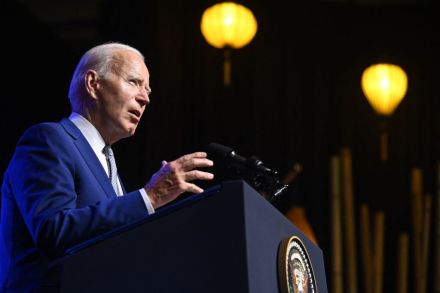
Weep, ad men. The Republican Party shouldn’t have to rely on any of you in 2024. They don’t need your creative, your deployment of over-the-top grainy crime videos, your use of shooting up legislation with AR-15s. All the GOP needs this election is an editor and the C-SPAN live feed of Joe Biden coping with senility. For a cringe-inducing twenty-six minutes in Hanoi, Biden put his diminished, cranky, meandering mental capacity on display. He rolled out his frequently deployed Hollywood equivalent of a Mandela Effect — his own personal Berenstein Bears, his Stouffer’s Stove Top — about a movie scene that simply does not exist in the plane of existence which we, for our sins, inhabit.

joe biden

Bittersweet memories: Ti Amo, by Hanne Ørstavik, reviewed

From our UK edition

This is a deceptively slim novel. Its 96 pages contain multitudes: two lives, past and present, seamlessly interwoven. The narrator, a Norwegian novelist, and her Italian husband live in Milan. ‘Ti amo,’ they frequently tell each other. Easier to say ‘I love you’, than for him to say he’s dying, and her to say she doesn’t know what she’ll do without him. When did it all start, she wonders. ‘When did you actually become ill?

Pelosi is right to put China on notice

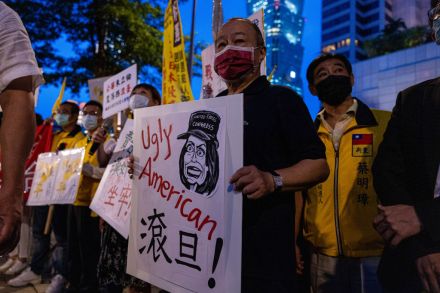
House speaker Nancy Pelosi has always had a flair for the dramatic. During the Trump presidency, for example, she ostentatiously tore up his State of the Union speech. But for sheer spectacle, it will be hard for Pelosi to top her “will she, won’t she” visit to Taiwan this week. In spite of the suspense, there was never really any doubt about it. For weeks China has issued dire warnings about the perils of her visit. So, as it happens, have several commentators, including The Spectator’s Freddy Gray, whom I debated on the Americano podcast, and who seems to have a bad case of the collywobbles about the Pelosi trip.

China: one bully to rule them all

Several years ago, I visited the War Remnants Museum in Ho Chi Minh City, Vietnam. It’s located, a bit surreally, in the former United States Information Agency building. Formerly called the "Museum of Chinese and American War Crimes," it showcases various captured US military equipment. What was particularly jarring to me was learning of the millions of Vietnamese civilians killed during the Vietnam War era. Of course, there’s a bit of irony here: a building formerly dedicated to projecting American public diplomacy and messaging in Southeast Asia now serves the different propaganda purpose of seeking to portray America as a violent aggressor guilty of war crimes.

How the left thought they were right to fight the war on terror

From our UK edition

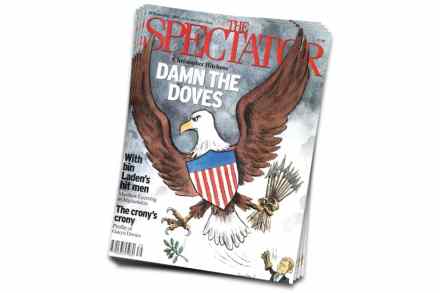
Late one soft summer night in 1966, my brother Christopher slipped out of our north Oxford house and bicycled to the centre of the city. There he spent a worryingly long time with a spraypaint can, inscribing the words ‘Hey! Hey! LBJ! How many kids did you kill today?’ on a long builders’ hoarding outside Trinity College in Broad Street. You will have to work out for yourselves how I know this, but I do. The punctuation was perfect, and a handwriting expert could easily have told it was him. The slogan endured for months and even appeared in a TV drama filmed in the city some months later. This was how we felt then. There was no other cause so great. Even on its own terms, the Vietnam war was a terrible error and multitudes did indeed die for a mistake.

Kamala Havana?

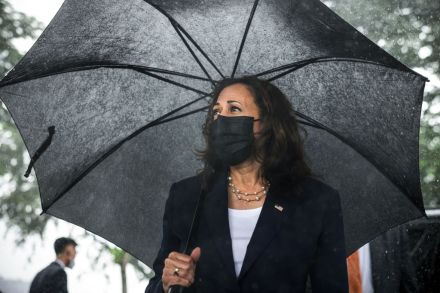
It was supposed to be a welcome break from serving as the Biden administration’s stooge. Instead of being the mascot for the Biden administration’s busted border policy, Kamala Harris would get a pleasant little trip to Singapore and Vietnam, to shore up her foreign policy experience just in case, God forbid, the Democratic party has to actually rally behind her as president. But instead of gaining experience, Harris has to worry about US diplomats being shot with a laser beam, or something. Yes, that’s right, the latest incident of Kamala’s ill-starred vice presidency is an outbreak of Havana syndrome. US State Department officials announced that it was investigating a 'possible anomalous health incident’ in Hanoi, the preferred euphemism for the mysterious disease.

kamala havana

Saigon and Kabul: what would Nixon say?

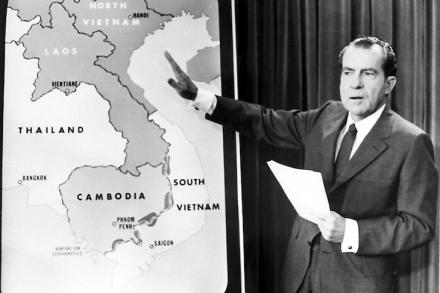
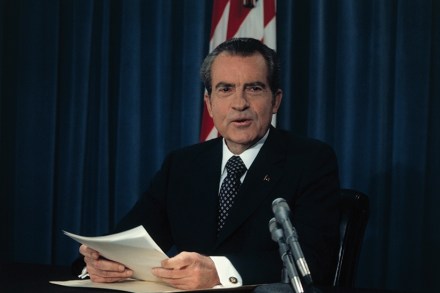
Having worked with former president Richard Nixon during the last years of his life, I’m often asked what his view would be about some present-day issue. Given the rampant comparisons between the calamitous fall of Afghanistan to the Taliban following the Biden administration’s precipitous withdrawal and the disastrous fall of Saigon in 1975, Nixon’s perspective would have been invaluable. He believed, like all strong, effective US presidents, that American strength means greater stability and peace and American weakness begets instability and conflict. With the end of the cold war and the bipolar international system, the US became the global hegemon, nearly solely responsible for a stable global order.

NIxon

The complex character of Tricky Dick

From our UK edition

In this Age of Trump, as we cast about for some moment in American history that might help us make sense of the present, the name Richard M. Nixon keeps resurfacing. Nixon, who resigned the presidency in 1974 after being swept up in investigations into the crimes and cover-ups known collectively as Watergate, offers easy comparisons with Donald J. Trump: two corrupt American presidents who left office in disgrace; who considered the press their enemy; who accused the previous administration of surveilling them; who weaponised racism as a way to win elections; who employed the politics of division as a way of keeping power; who possessed and indulged an outsized thirst for revenge.

An interest in the bizarre helps keep melancholy at bay

From our UK edition

If you crush the right testicle of a wolf and administer it in oil or rose water it will induce a loathing for sex. The Turks have a drink called coffee (for they use no wine). The Chinese have no nobility, or only those philosophers and doctors who have raised themselves by their worth. If you allowed a human being 25 square feet each, the Earth could bear 148,456,800,000,000 people. The Persian kings trained sparrows to hunt butterflies, inspired by hunting with hawks. Speaking of sparrows, the reason they are so short-lived is because of their salacity, which is very frequent.

The attraction of repulsion: The Disaster Tourist, by Yun-Ko Eun, reviewed

From our UK edition

Disaster tourism allows people to explore places in the aftermath of natural and man-made disasters. Sites of massacres and concentration camps can be visited; tours operate around Chernobyl, Centralia — the city in America that is perpetually on fire — Aleppo and Fukushima. Tourists can ‘experience’ what it is like to live in a war zone, in extreme poverty or a place emptied by nuclear fallout, and then return to the safety of their homes. In Yun Ko-Eun’s The Disaster Tourist, translated from the Korean by Lizzie Buehler, the protagonist Yoona works for Jungle, a Korean disaster tourism travel company.

The differences between British and American readers

This article is in The Spectator’s October 2019 US edition. Subscribe here. New York This feels strange. Since 1977, I have been writing the High Life column in the London Spectator and concentrating on American goings-on for a British audience. Now I am about to write the High Life for an American readership. Are American readers very different? You betcha, though they are supposed to speak the King’s, or the Queen’s, English. Never mind. Both countries take their democracies seriously, and their freedoms even more so. One difference is that, over in the Old Country, people know that democracy is rare in distant parts of the world.

new york american

The agony of the ‘almost man’

From our UK edition

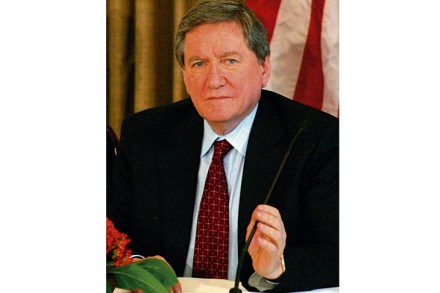
You may ask yourself, is it worth one of the best American non-fiction writers producing a book of just under 600 pages on an arrogant and abrasive egotist whose highest sustained rank in the State Department was that of a lowly assistant secretary? The answer is unabashedly yes. This is a remarkable work about a remarkable, if deeply flawed, statesman whose career was intimately intertwined with the 50 years of American decline from Vietnam to Afghanistan. Nearly all biographies have long, boring stretches you want to skip. This one has none. The access to Richard Holbrooke’s papers and to the uncensored memories of his wives and mistresses, as well as George Packer’s own racy writing, makes this a fascinating and compulsive read.

The Trump-Kim summit: what we know and what’s useless prattle

Cable networks have countless hours to fill, and it is far easier to fill them with speculation about a closed-door summit than to wait patiently for real news. We won’t have that news until the Trump-Kim summit ends. Oh, we might get a nudge about whether the talks are going well, but nothing more. That’s how secretive negotiations work. To save time, here’s the essential background. It covers almost everything you can hear — and several things you won’t — for the next 24 hours ‘live from Hanoi’ on all the networks. Kim Jong-un’s only goals are to stay alive and in power. To that end, he and his father have spent enormous resources to build deliverable nuclear weapons, with substantial aid from China.

trump-kim summit