Iraq

Accelerating the ‘kill chain’ – a terrifying glimpse of future warfare

From our UK edition

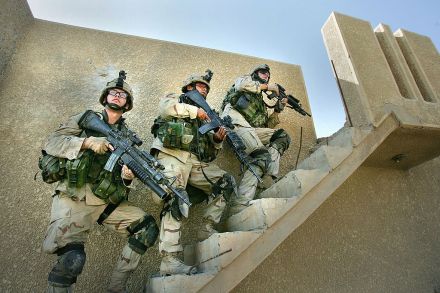
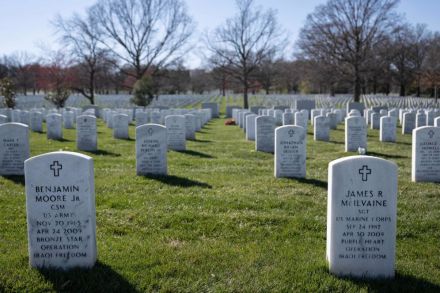
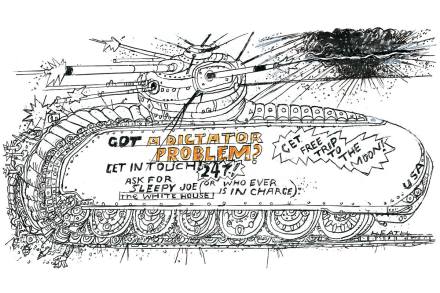
America possesses the most powerful military in history, but since 1945 it has not won a war against anyone other than Saddam Hussein. It appears not to understand why. In fact the only thing the US seems worse at than winning wars is learning lessons from its defeats. People such as the secretary of war Pete Hegseth think it’s all about woke. Lily-livered longhairs stateside stabbed the army in the back over Vietnam; then ‘stupid rules of engagement’ tied the military’s hands in Iraq and Afghanistan and caused the disasters there. The solution is to fight harder, if necessary even at the expense of ethics and the law. Another answer might be to get US forces fighting smarter.
Trump’s goals in Iran have always been clear

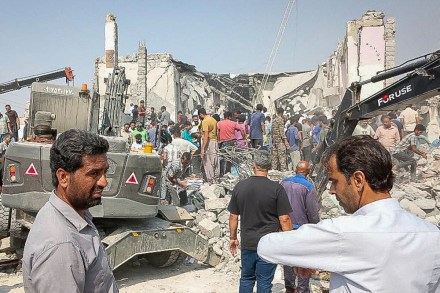
The bombing of the Revolutionary government in Iran is drawing comparisons with the war in Iraq. But the comparisons are with the wrong war. In 1981 there was an attack on Iraq which much more closely resembles what Donald Trump is trying to achieve in Iran. The story goes back to 1976, when the government of Jacques Chirac in France sold a nuclear reactor to the Iraqis – a deal for which the French have always managed to avoid much criticism. The French charged the Iraqi government twice the going rate. But as one of the Iraqi nuclear team later recalled: ‘We were happy to pay. After all, who else was going to sell us a nuclear reactor?’ Who indeed.

The three options facing Trump in Iran

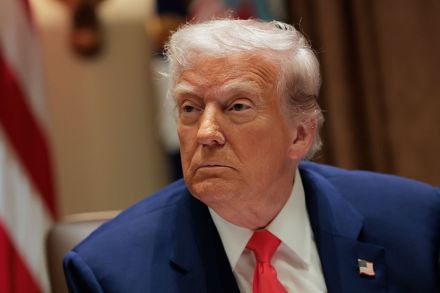
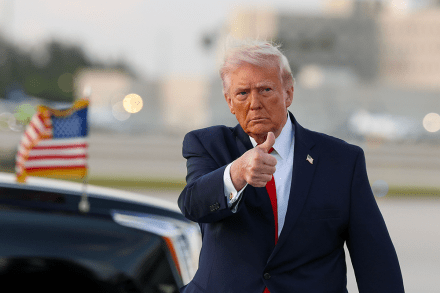
As Trump contemplates a ground operation in Iran, he will be reckoning with the ghosts of previous western "excursions" in the region, as he recently labeled this war. History suggests three endgames for his intervention in Iran are plausible. First, a hasty deal on terms that aggrandize and empower Iran, creating an American equivalent to Britain’s Suez Crisis. Second, a protracted struggle which becomes structurally reminiscent of the Iraq War. Third, a dramatic escalation which achieves Iranian surrender quickly and cleanly. The bad news for Trump is that the outcome he seeks, number three, is the one without real precedent. In the first scenario, Trump makes a deal on terms that flatter Iran.

I spent 25 years fighting neocons. Then Trump became one

Like everyone, I’m glued to the news coming out of Iran. I’m experiencing some depression, as one might, upon realizing that much of what one has worked on for 25 years has suddenly gone up in smoke, destroyed when Donald Trump discovered he was pretty much a neocon after all. Like everyone else, I have no idea what will happen in Iran, whether Trump’s bombing and perhaps breaking apart a very unpopular regime will lead to something better, or just chaos, a failed state spitting out a cohort of embittered men.

neocon

Why Iran marks the end of neoconservatism

45 min listen

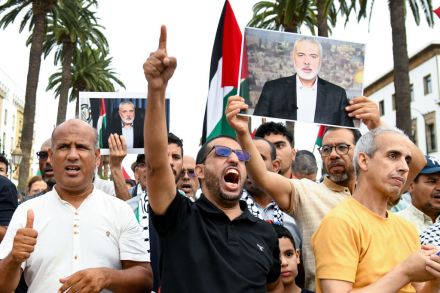
Spectator World columnist – and Heritage Foundation fellow – Daniel McCarthy joins Freddy Gray to explain how Trump's war with Iran could mark the end of an era, that of neoconservatism. For Daniel, there is no contradiction between Trump's 'America First' policy and its overseas interventions: Trump is pursuing a version of hegemony that will reduce the need for future interventions. If all goes to plan, this could mark an ideological watershed that stretches back to the first Gulf War in the early 1990s – but it's a big 'if'. What if the conflict spirals out of control? To what extent was this driven by Trump, or by Netanyahu? And what are the dynamics at play between the leadership figures in Maga? Produced by Patrick Gibbons.

Why Iran marks the end of neoconservatism

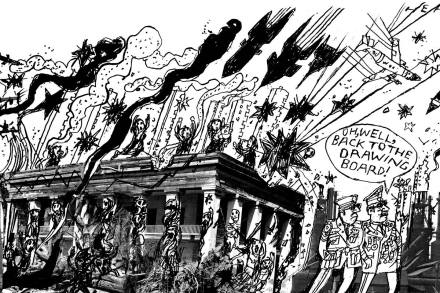
Tracey Emin should remake her bed

From our UK edition

Sir Keir Starmer’s position on the US bombing of Iran is inglorious, but one should suspend disapproval to understand how he must have been thinking politically. His party had just lost the Gorton and Denton by-election to the Greens (backed by a strong Muslim vote). His leadership had never seemed weaker. So he calculated that he could not unequivocally back the actions of Israel and Donald Trump. He will have had the Iraq war in mind, particularly the role of the attorney general. Over Iraq, the then attorney general, Lord Goldsmith, was criticised for seeming to change his legal advice to Tony Blair in order to legitimise British participation in the invasion. Sir Keir’s Attorney General, Lord Hermer, is much more central to the administration than an AG ever should be.

US troops finally leave Syria

In December 2018, to the shock of pretty much everybody in the US national security establishment at the time, President Donald Trump publicly ordered the withdrawal of all US troops from Syria. The announcement caused a panic within the Defense Department, State Department and National Security Council, whose officials teamed up to dissuade Trump from going through with it. A similar story unfolded ten months later, in October 2019. Again, the bureaucracy pushed back; in October 2019, the House went so far as to pass a resolution opposing a US withdrawal, with senior Republican lawmakers signing onto the measure. Fast-forward more than six years later, and the US troop withdrawal Trump floated about during his first term is finally coming to fruition in his second.

Syria

If this play is correct, the Foreign Office is a joke

From our UK edition

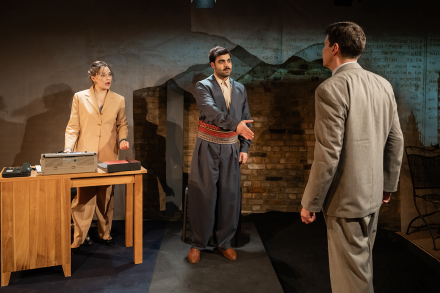
Safe Haven is a history play by Chris Bowers who worked for the Foreign Office and later for the UN as a human-rights activist. The two careers seem to be interchangeable. His drama follows an idealistic and oversensitive Oxford graduate, Catherine, who joins the diplomatic service during the first Gulf War in 1991. Catherine believes that the Foreign Office exists to throw money at basket-case countries that lack the maturity to govern themselves. The entire department acts as a sort of puppy rescue service for dysfunctional nations overseas. All her colleagues accept the wisdom of this approach even though it has the same effect as casting diamonds into quicksand. Catherine responds to historic events like a homeowner assessing a new lamp for the guest bedroom.

ISIS is stirring once more

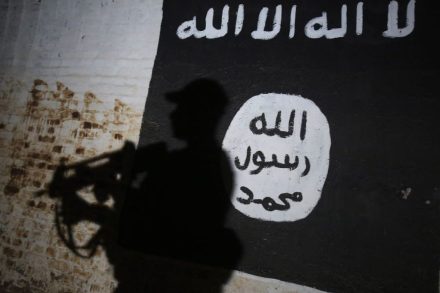
Indications that the Islamic State (ISIS) has begun to employ artificial intelligence in its efforts to recruit new fighters should come as no surprise. At the height of its power a decade ago, Isis was characterized by its combination of having mastered the latest methods of communication with an ideology and praxis that seemed to have emerged wholesale from the deserts of 7th century Arabia. In 2014 and 2015, ISIS recruitment took place on Twitter and Facebook. YouTube was the favored platform for the dissemination of propaganda. The group's videoclips of its barbaric prisoner executions, including the beheadings of a series of western journalists and aid workers and the immolation of a captured Jordanian pilot, became the organization’s gruesome trademark.

isis

How many illegal migrants does Britain return?

From our UK edition

Condemned leaders Former Bangladeshi prime minister Sheikh Hasina was sentenced to death for crimes against humanity, for using lethal force against student protests last year. But on past records, she might yet live to an advanced age. The last national leader to be executed was Saddam Hussein in 2006, during the Allied occupation of Iraq. Other leaders sentenced to death in their country’s courts have fared better: — Emile Derlin Zinsou, installed as president of Dahomey (now Benin) after a coup in 1968, was sentenced to death in 1975. That was rescinded and he returned to Benin in 1990. He died aged 98 in 2016. — Chun Doo-hwan, who led a coup in South Korea in 1979, was sentenced to death in 1996, later commuted to life imprisonment. He died in 2021 aged 90.

There are glimmers of hope for Iraq’s Christians

From our UK edition

It is 43˚C in Erbil, which a friend here describes as ‘cool’. Unlike my first visit in 2015, when Isis was just a few miles from the airport, the flight in was smooth. The plane this time was full of Iraqis and Kurds, mainly those who have emigrated, returning to visit their families. Ten years ago, the plane was empty apart from a few American contractors in fatigues and one lone priest. The descent then was rapid, to avoid Isis missiles. Erbil is the capital of the north-east Kurdish region of Iraq. After the 2003 invasion, the Kurds were given greater autonomy but since then they’ve found themselves fighting Isis, Iraqi armed forces and even each other.

Trump won’t be dragged into a regime-change war

The handsome pages of The Spectator World’s July issue readers will find an essay of mine arguing that the United States doesn’t win wars anymore because we don’t even understand what a modern war is. From the French Revolution to the Cold War, and in the long, warm afterglow—thankfully, non-nuclear—of Cold War success, Western elites have tended to think about wars in terms of regimes and ideologies. Winning a war is all about changing the opponent’s regime so that it endorses one’s own ideology: turning a “dictatorship” into a “liberal democracy” through the magic of bombs and bullets.

Regime change

Why Trump met Syria’s interim president

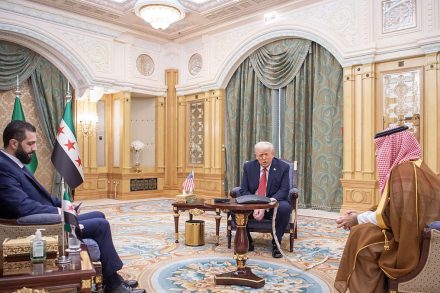
Few career arcs in modern history can be as remarkable as that of Ahmed Hussein al-Sharaa – or Abu Mohammed al-Jolani, to give him the nom de guerre under which he fought American troops in Iraq back when he was a firebrand member of al-Qaeda. Twenty years ago al-Sharaa was languishing in a US military prison in Baghdad, held on suspicion of terrorism. Today, as Syria’s new interim President, he shook hands with Donald Trump posing for photo-calls alongside the de-facto ruler of Saudi Arabia Mohammad bin Salman. Trump was evidently impressed by al-Sharaa, who has swapped the turban and dusty fatigues that he habitually wore before taking Damascus by storm last winter for a plain blue suit and purple tie. “He’s a young attractive guy.

al-sharaa

‘Blood! Blood! Blood!’: the Battle of Fallujah twenty years on

The National Museum of the Marine Corps has built a replica of a street in Fallujah, the Iraqi city that American forces half-destroyed in order to save it, in a battle twenty years ago next month. The exhibit promises visitors an “interactive experience that puts them in the boots of a Marine as he kicks down the door of a suspected insurgent stronghold.” If you have a games console, you can play Six Days in Fallujah, a video game where you take the role of a Marine who narrates the action of a firefight that really happened. Fallujah has become a symbol of gritty heroism and sacrifice — or for critics of the Iraq war, occupation and war crimes. Either way, the battle is deeply lodged in the popular imagination.

Fallujah

Why America was in the dark over Israel’s assassinations

For the last three months, the Biden administration has had one top priority in the Middle East: end the war in Gaza. President Biden’s May 31 address, during which he outlined a three-stage process whereby a temporary six-week ceasefire and hostage exchange would eventually led to a permanent end to the fighting and Gaza’s reconstruction, remains official US policy. CIA director Bill Burns, a former senior negotiator himself courtesy of his decades-long experience in the State Department, has spent the last ten months flying to Cairo, Doha, Jerusalem and Rome to close the remaining gaps between Israel and Hamas. It’s hard and thankless work.

Are all great civilisations doomed?

From our UK edition

To quote Private Frazer in Dad’s Army, ‘We’re doomed, doomed!’ That seems to be the message of Paul Cooper’s eminently readable series of essays about how and why 14 civilisations rose to greatness and then collapsed. He begins with the Sumerians in the fourth millennium BC, at the northern tip of the Persian Gulf, and he finishes with Easter Island in the 18th century. He then concludes with dark prophecies about how a few centuries from now an overheated planet will look in a simpler post-industrial age. The style is informal, based on a series of popular podcasts, and one can almost hear the spoken word as one reads.

technology

Inside the May issue: technology

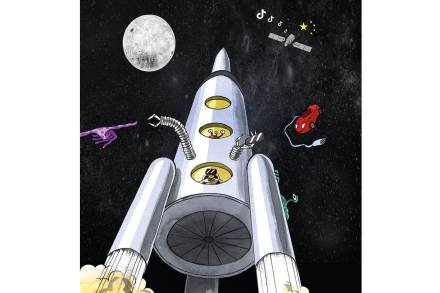
Western governments seem ill-prepared to grapple with rapidly advancing technology. Watch any congressional hearing where a crusty congressman tries to keep pace with Silicon Valley’s top “autists” if you need further evidence — and read Spencer A. Klavan’s analysis of the high-skill but low-status rejects uniting into a formidable social class. The Silent Generation and boomers simply cannot keep up. The Space Race is back on — and tycoons are eager to cash in on the final frontier. Shane Cashman dives into the new wild west of explorers and entrepreneurs commercializing the great unknown. Lionel Shriver brings us back to earth with a look at the electrical grid and our government’s push for green energy and electric vehicles.

Why do neoliberals get let off the Iraq War hook?

Given the worldwide climate of political intolerance, I often try to deflect hostility by prefacing my comments with the old saw that “reasonable people can disagree.” As a strong believer in intellectual freedom and Socratic dialogue, I do in fact feel duty-bound to listen to the other side, or sides, of an argument. Yet there’s one subject about which I’m as close-minded as the wokest opponent of liberal debate — a topic about which I won’t brook any disagreement because there simply isn’t any reasonable form it can take: that is, George W. Bush’s and British prime minister Tony Blair’s disastrous decision to invade Iraq in 2003 and its deadly, still hugely malignant consequences in the Middle East.

invasion

On the anniversary of the Iraq invasion, spare us the sermons

Twenty-one years ago today, the United States committed its worst foreign-policy mistake in generations: invading Iraq to overthrow Saddam Hussein, the despot who ruled the Arab country with an iron fist for nearly a quarter-century. The entire operation was supposed to be a “cakewalk,” in which the mighty US military, stocked with the best technology and weapons the world had to offer, would pummel a decrepit Iraqi army that was hobbled by international sanctions for the better part of a decade. The mood at the time was serious but stoic. Donald Rumsfeld, the US defense secretary, argued that the entire war wouldn’t last more than five months.

iraq war

An impressive examination of the conjoined fates of Iraq and the United States

In July 4, 1821, secretary of state John Quincy Adams gave a speech to Congress on American foreign policy. He said of the United States that “wherever the standard of freedom and independence has been or shall be unfurled, there will her heart, her benedictions and her prayers be. But she goes not abroad, in search of monsters to destroy.” For the first 150 years of the republic, its leaders dutifully observed Adams’s counsel. But after Woodrow Wilson’s intervention in World War One, American policy has tacked in the opposite direction. For over a century America has indeed been going abroad, searching for monsters to destroy.

Iraq