France

The riots are driving French politics to its extremes

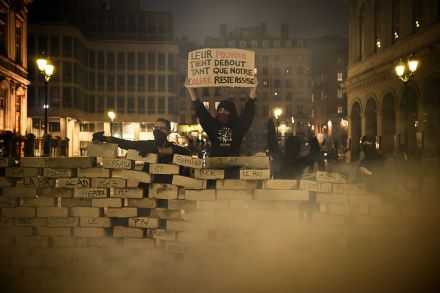
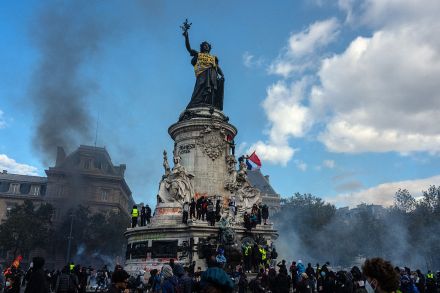
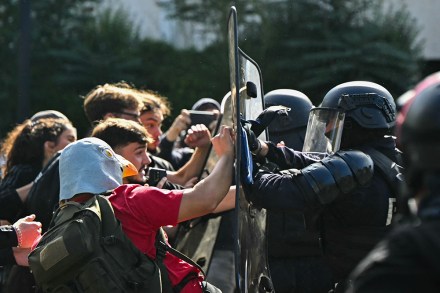
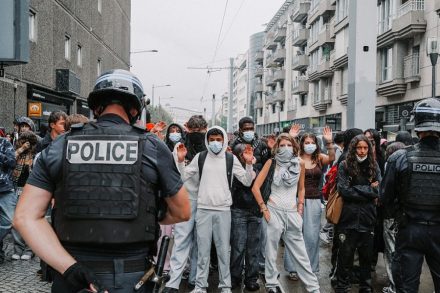
Paris The wonderful thing about electric bikes, if you are fighting with French riot police, is the way they burn. You skid your Lime or Vélib’ into the middle of the Boulevard de Magenta, which leads from the Gare du Nord down to the Place de la République, and set it alight along with a pile of ordinary bikes, and soon you have a conflagration of rubber and battery chemicals. During the weekend’s street protests, the fires provided cover for rioters breaking into mobile phone, vape and jewelry stores and the money-transfer shops which serve the many immigrants who work in eastern Paris. By Monday morning, a vicious guard dog stood outside an Intermarché supermarket, snarling at customers coming in one by one.

What do Italy’s rioters want?

“Facciamo come in Francia!” shouted the masked and hooded rioters on Sunday in Milan and other major Italian cities, notably Turin and Bologna. “Let’s do like in France!” By far the worst violence was in Milan around the Duomo where about 3,000 rioters fought running battles with police and sacked and looted countless high-end shops. Most of the 200 rioters arrested in Milan on Sunday, plus the 70 odd on Saturday during similar though less destructive scenes, were Italian citizens who are the children of immigrants, according to media reports. They are known in Italian as “di seconda generazione.” Around 60 of those arrested were foreign nationals. Eighty percent were teenagers under the age of 18, some as young as 12. Far-left white activists were a small minority.

France is a warning – our civilization is not immortal

Could it happen here? I suppose that’s the underlying thought many of us have had as we watch France burn. And the immediate response is, why wouldn’t it? I am old enough to remember in the early 2000s when people used to say France was a model of integration. Then in 2005 the suburbs went up in flames, followed by parts of the center of Paris and other major cities. The Citroën flambé became a national dish and suddenly talk of “the French model of integration” disappeared. That same year, eight home-grown terrorists of foreign origin attempted to blow up the London transport network, four succeeded and a little bit of that blasé British attitude that we know better than the French disappeared too. In 2011 our own cities started burning, but we learned nothing from that.

I’ve ended my ‘situationship’

From our UK edition

Provence Lying awake at 3.30 the other morning, I thought about a V.S. Pritchett quote: ‘Once one has got used to the big wrongs of life, little ones wake up, with their mean little teeth.’ These past few weeks ‘little ones… with their mean little teeth’ meant another chest infection, laryngitis, baffling spreadsheets, a painting I couldn’t get right which was holding up studio work, two new tyres, losing my glasses and almost daily migraines. But worse, with regret and a heavy heart, a few days before I’d ended for good an on/off long-distance and occasional, but fond, ‘situationship’. Horrible word but apt in this case. It was never going anywhere, neither of us wanted it to.

Our thirst for torching old buildings

From our UK edition

Regard the protestors. See how happy they are. Can you hear them whoop and whistle? The burning clock tower of the town hall has fallen inside the old building. Houp-là. How they whistle and whoop! The baying of such mobs in public places is as old as the history of towns and cities, the burning of buildings equally antique. Order and chaos, civilisation and barbarity, the call of the primeval. Limoges has long been famed for its ‘arts of fire’, of the elements and crafts involved in the making of enamelware that reached its artistic zenith between the 12th and 14th centuries with a host of exquisite crucifixes, crosiers and tomb effigies, a hosanna of book covers and reliquary caskets.

What I saw in the French riots

It’s the third week of the student-led protests in Lyon, and the second that my university has been blockaded “in solidarity.” When clouds of tear gas drift onto my street on Saturday, it’s an almost routine sight. My neighbor across the road is sitting by his window, eating potato chips, pointing out some of the more family-friendly placards to his toddler. Smartly dressed shoppers move through the crowds with scarves as improvised gas masks. I decide to make myself some porridge.   I am interrupted by a series of heavy thuds. Out of my window I see a group of balaclava-clad men taking turns to launch themselves at my neighbor’s front door. It eventually gives way, and they rush into his stairwell. The toddler begins to cry.   Time to leave.

lyon french riots

Could this be the end of the French Fifth Republic?

May 1958. After 12 years, France’s Fourth Republic was ungovernable, with cabinets lasting barely seven months on average. Four years of worsening war in Algeria culminated in the army’s Algiers putsch of May 13, demanding stronger political authority. General de Gaulle – Resistance hero, France’s savior in 1944 and now the army commanders’ choice – stepped forward. Exploiting the insurrection, he demanded the premiership, temporary rule by decree and six months to draft a constitution for approval by referendum rather than parliament. President René Coty agreed. On June 1, 1958, de Gaulle became the Fourth Republic’s last prime minister; six months later, he was the Fifth’s first president.

Barbarism cannot triumph in France

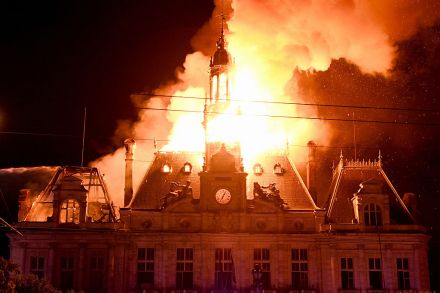
On Bastille Day, 1883, the people of Limoges inaugurated a beautiful new town hall, paid for from the legacy of a rich burgher with no children. On Saturday, rioters set fire to it. “Barbarism is not the prehistory of humanity but the faithful shadow that accompanies its every step.” That was Alain Finkielkraut, but I know it because Clive James quoted him when he wrote of how to keep our societies and values alive. He said we liked to think being cultured warded off barbarism, but that barbarism doesn’t care if we are cultured or not. He was only half right. Barbarism does care: it hates us for being cultured. Barbarism, whether imported or home bred, wants to see our culture burn.

The world’s greatest hotel has blocked the invasion of influencers

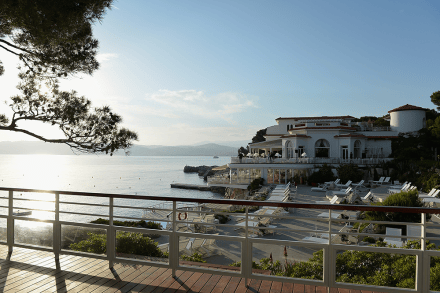
Antibes The poule de luxe stalked through the lobby on six-inch spike heels. In her wake shambled a small son and broken wallet of a husband. She held a selfie stick aloft to film every second of herself storming to her lunch reservation, single-minded in her search for prime social media content scraped from the best hotel in the world: the Hôtel du Cap-Eden-Roc, Boulevard John Fitzgerald Kennedy, Antibes. She had an expression that reminded me of Hitler’s smirk on the occasion of his pilgrimage to Napoleon’s tomb on his first and only trip to Paris in June 1940. It was one of glazed triumph that she had got there and wanted it all recorded for posterity.

We cannot trust our AI overlords

It is no longer an exaggeration to say that the digital apocalypse is at our door. The advance of artificial intelligence is outstripping our fears and expectations. The machinery of the state, slow and predictable by nature, is so thoroughly outpaced in its capacity to control and regulate that it does not even realise it. Our politicians, running on antiquated software, cling to problems that are pressing but dated (such as the retirement age and the number of civil servants) and barely speak of the cataclysm on the horizon. Édouard Philippe, who is currently the frontrunner of the traditional right-wing constellation in France, recently remarked that he used LLMs (large language models) to write his emails. Such is the abyss of our backwardness.

Do France’s student protesters have a point?

On September 21, students at the Lycée Saint-Exupéry in Créteil, south-east of Paris, staged a protest. They had a list of grievances. Classes were overcrowded and there was a shortage of teachers. They were also dismayed at the decaying state of some of the school buildings and the automated university admissions platform they feel deprives them of autonomy. Students filmed the protest and uploaded the footage onto social media. It went viral. Across France, children in other secondary schools joined the protest. They aired the same complaints as their peers in Créteil – and more. Some students described seeing rats in classrooms, others of enduring leaking ceilings and moldy walls. For many, memories of the summer heatwave were still painfully fresh.

Don’t take Britain’s cathedrals for granted

From our UK edition

Everywhere I hear voices complaining about charges being imposed on those who wish to visit our great cathedrals. Everywhere, I reply to them: ‘Stop moaning and pay up!’ In fact, you should give more than you are asked. Who else is going to provide the money to save these astounding, irreplaceable buildings for a future in which they may one day be full of worshippers again? Wouldn’t you spend more on a good meal or a good bottle of wine, or a trip to the cinema? https://www.youtube.com/watch?v=2KJJ4FFVjGA Yes, of course, there should be concessions and exemptions if you are a child or disabled or have no job or are living on a tiny pension.

Do France’s pupil protestors have a point?

On 21 September, pupils at the Lycée Saint-Exupéry in Créteil, south-east of Paris, staged a protest. They had a list of grievances. Classes were overcrowded and there was a shortage of teachers. They were also dismayed at the decaying state of some of the school buildings and the automated university admissions platform they feel deprives them of autonomy. Pupils filmed the protest and uploaded the footage onto social media. It went viral. Across France, children in other secondary schools joined the protest. They aired the same complaints as their peers in Créteil – and more. Some pupils described seeing rats in classrooms, others of enduring leaking ceilings and mouldy walls. For many, memories of the summer heatwave were still painfully fresh.

Will France’s school protest movement spread?

The government of France held a crisis meeting yesterday afternoon as a school protest movement intensified in violence. On Wednesday, 625 people were arrested and 83 gendarmes and police officers were injured as youths protested outside hundreds of schools nationwide. Yesterday, a school in Nantes was severely damaged after being firebombed and a fire engine was destroyed in Marseille. In the city of Reims there were fierce clashes between protesters and police, and only the use of tear gas dispersed the demonstrators. In some cities, such as Rennes, it was reported that university students were protesting alongside the high school pupils. The government claimed yesterday that the movement has been hijacked “by LFI and its far-left proxies.

Will anti-Semitism allegations bring down Jordan Bardella?

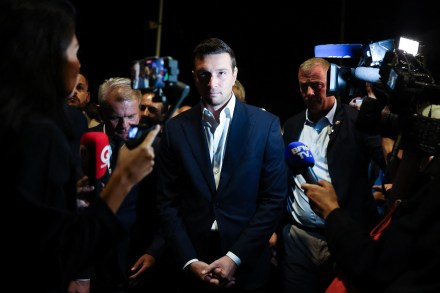
Jordan Bardella has described as “delusional” accusations that he railed against Jews at the start of his political career. The 31-year-old president of the National Rally appeared on television on Monday evening and declared the allegations were part of a left-wing wing plot to “destabilize” his party. Bardella will try and ride out the storm in the belief that most of the electorate will believe him and not the left-wing media In an article published on Monday morning, Mediapart alleged that Bardella had made numerous anti-Semitic remarks when he first joined the National Rally (the National Front as it was at the time). Mediapart claims it has seen dozens of private message sent by Bardella on a social media platform between 2013 and 2015, and several disparaged the Jews.

Rural France is fighting a boar war

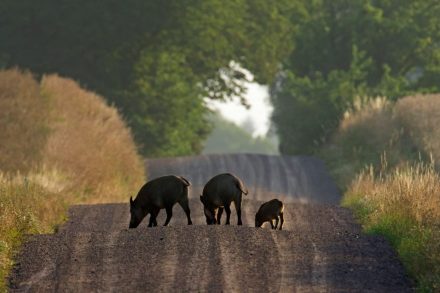
The hunting season began in Burgundy last Sunday. The first couple of weeks are dedicated to the pursuit of small game: pigeons, partridges and hares. Call it the hors d'oeuvre to the main course: the hunting of wild boar, which gets underway in earnest at the start of October. My neighbour, a farmer, hunts, and so does his son and most of their friends. They spent much of Sunday blazing away in the adjacent fields. I felt like I was in the gunfight at the O.K. Corral. Not that I mind. I was a townie in another life but now I’m what the French call a plouc (yokel), and in rural France hunting is sacrosanct. It’s also imperative, specifically the culling of wild boar. Their numbers have exploded in recent years and the damage they do is immense.

My poolside revelations

From our UK edition

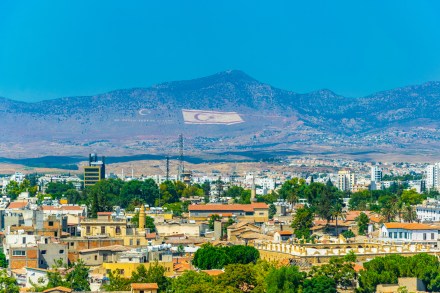
Lying by the rooftop pool of the Hotel Sun in downtown Lefkosa, I felt like a cowboy about to stir from slumber beneath his hat to cause a scene. I had turned into someone in an Elmore Leonard story. My view was a mountain range in full panorama with one hill entirely painted in the red and white flag of the Turkish Republic of Northern Cyprus. The poolside music was country and western. Several times a day it mingled with the call to prayer coming from the minarets along the main drag. In this frontier society where West meets East, I felt like anything was possible. I lay by the pool, watching the scene from under my baseball cap, listening to ‘The Yellow Rose of Texas’ and ‘Don’t It Make My Brown Eyes Blue’, the first song I loved as a child.

The Bayeux Tapestry must never be returned to France

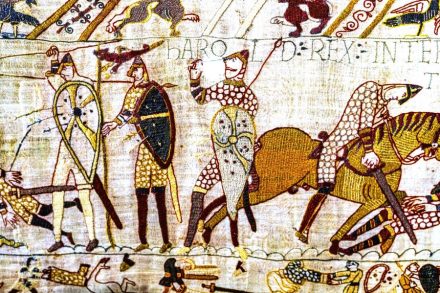
The Norman Conquest is a crime against humanity that remains, over a millennium on, entirely unsettled. The French still refuse to pay reparations for the 1066 genocide. And the rapacious Norman invader class remains firmly at the pinnacle of every aspect of public life in Britain. Indeed, the economist Gregory Clark has shown that, in some ways, the Conquest never truly ended because Norman last names remain overrepresented at Oxbridge some 30 generations on. Some of the nation's most glittering buildings still wear their Norman Caen stone shamelessly; walk past many great ecclesiastical facades and the conspiracy is right there in plain sight, yet no one mentions it. France owes us money and the math is fairly simple So France owes us money and the math is fairly simple.

bayeux

My midnight naked swim

From our UK edition

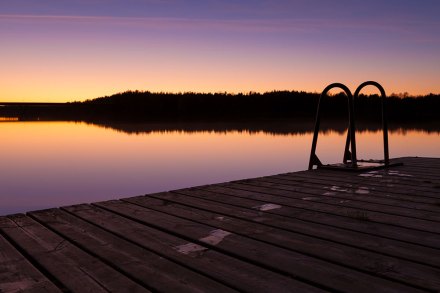
Provence The tiny village of Correns, two villages along, suffered more in the recent fires than we did. Even the green oaks on either side of the narrow road in were burnt to a dusty pale russet brown, like a New England fall but wrong. Sometimes, when I close my eyes, I still see the huge wall of flames and smoke racing down the hill to American Cathy’s house when I helped her escape. Here I could picture a tunnel of flames. No lives were lost – people in vulnerable houses left before the fire took hold – but several homes in the surrounding woods were destroyed.

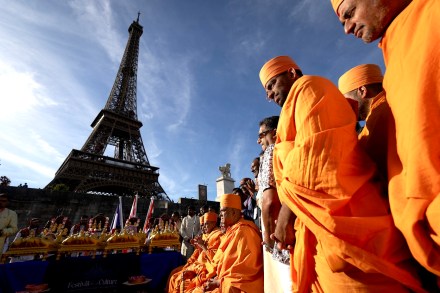
Why were women banned from the Eiffel Tower?

The French are accustomed to rancorous debates about the threat to women’s rights posed by religious orthodoxies – especially Islam, with its restrictive tradition of hijabs, burkas and abayas to cover the female body. Only last week, France’s far-right leader Marine Le Pen, who is far ahead in the polls, declared that she will make illegal Islamic headscarves worn in public. The far left, which panders to the Muslim vote, shot back with a promise to repeal the ban on abayas in French schools. This week, few in France were expecting a scandal over religion and women’s rights that has nothing to do with Islam.