Elon musk

Should millionaires exist?

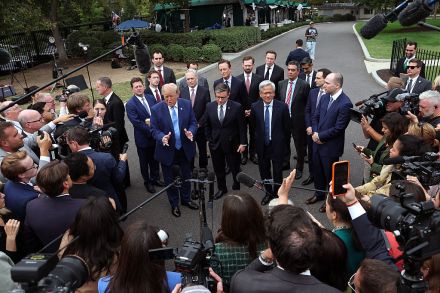
Donald Trump stood outside the Palm Room doors at the White House this week, taking questions alongside the AI titans with whom he’d just had lunch. Elon Musk, Jensen Huang, Dario Amodei, Mark Zuckerberg, Greg Brockman: a still image of the gaggle captures a net worth that edges into the trillions. Cockburn found his mind wandering back to Trump’s interview with The Spectator at the start of his second term. Ben Domenech pointed out that the priorities of his wealthy new big tech friends “and the kind of populist priorities of your voters, don’t necessarily align on everything.” “Probably,” Trump conceded. “Are you going to have to tell them no on some of the things that they’re going to ask of you?” Domenech asked. “Sure.
millionaires

Trump relives high school with the tech nerds

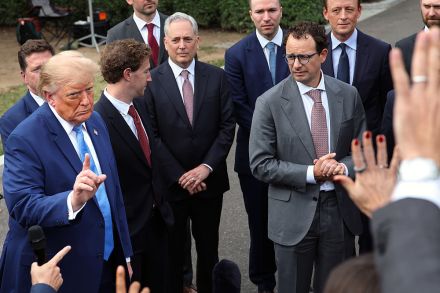
Yesterday President Trump and a gaggle of tech barons appeared before the press pack on the White House lawn, fresh from a meeting to sign the “White House Accord” on AI. The atmosphere was jovial. Trump was weaving about, patting the arms of David Sacks and Mark Zuckerberg while the executives chuckled and joked to one another. Anthropic boss Dario Amodei was invited by a journalist to give his précis of the meeting. Amodei haltingly stepped forward, adjusted his glasses, and then began rather frantically chopping the air with his hands as he outlined the benefits and hazards of AI. After he finished he seemed to flee, retreating to the outer edges of the crowd. Trump looked on benignly. An introverted technologist who is somewhat camera shy?

trump high school dario amodei

The autistocracy: the men on the spectrum who rule our world

Ben Delo, the source of one half of Reform’s £72 million mega-donation, wrote in The Spectator last year about being diagnosed with Asperger syndrome as a child. The self-confessed geek, now 42, was socially awkward. He did not fit in and he did not care to. His condition would shape the course of his life, making him very good at math, very rich and hellbent on getting involved in politics. Christopher Harborne, the crypto billionaire who has matched Delo’s donation, we know much less about. Despite being a billionaire many times over, the 63-year-old has the air of a chemistry teacher and an aversion to interviews. Like Delo, who until recently lived in Hong Kong, he also forged his way in the Far East, living in Thailand.

autistocracy
Elon Musk to Clavicular: should we fear the manosphere? with Peter Hitchens & Toby Young

Elon Musk to Clavicular: should we fear the manosphere? with Peter Hitchens & Toby Young

From our UK edition

40 min listen

For this week’s Edition, William Moore is joined by the Spectator’s associate editor and director of the Free Speech Union Toby Young, journalist and author Esther Walker, and Mail on Sunday columnist Peter Hitchens. This week: the men on the spectrum who rule the world. Charles Steel writes in the magazine about the wealthy, obsessive and often unconventional figures who increasingly shape politics and technology – from Elon Musk to the crypto billionaire Ben Delo. Is autism a useful way of understanding these men or has society become too obsessed with diagnosing people?

Curiouser and curiouser: The Strangers by Naomi Alderman, reviewed

From our UK edition

This aptly titled novel might be Naomi Alderman’s strangest book yet – a work of fiction about a writer called Naomi Alderman who, after her mother’s death, discovers an odd new species in her parents’ garden. The first image ever taken of this creature is captured on a camera she set up in the garden for her father to watch the foxes. It is about the size of a badger and flat-faced, with a long trunk-like nose: It was a mammal, going by the nipples, womb and ovaries. Its fur was thick, soft and waterproof. Its eyes were perhaps a little unusual, with a secondary inner eyelid whose purpose could not be determined. Its four feet were padded and it had three toes on each foot, each one with a long, sharp claw.

Dario Amodei and the AI apocalypse alchemists

Such is the pace of change in AI that it has been, yet again, quite a weekend. On Saturday, Dario Amodei, boss of Anthropic, published an essay, "We Must Pace the Frontier," urging his industry to slow down. Within the hour Elon Musk replied: “Dario is right.” Sam Altman, the boss of OpenAI, followed. By Sunday, Amodei was on Face the Nation, again asking everyone to apply the brakes on the grand and momentous technology of our time. None of it proves imminent superintelligence. But it is the sound of something ominous The cynical explanation is obvious. OpenAI has just shelved this year's IPO; Altman suddenly believes it unwise.

UBI will make us miserable

It’s hard to avoid the constant prophecies of doom about how AI is going to take our jobs – with some of these already being borne out. However, AI leaders such as Elon Musk have declared that the population will be supported by Universal Basic Income (UBI) instead, in which the government will financially support everyone through the huge revenues produced by AI. “Universal HIGH INCOME via checks issued by the Federal government is the best way to deal with unemployment caused by AI,” Musk posted on X earlier this year. Musk imagines that we wouldn’t be unemployed but rather liberated – UBI would allow us to live without the mundane tasks of everyday life, like making PowerPoint presentations, writing emails or finding synergies in our deliverables.

Prometheus SpaceX

The new right-wing art scene is disappointing

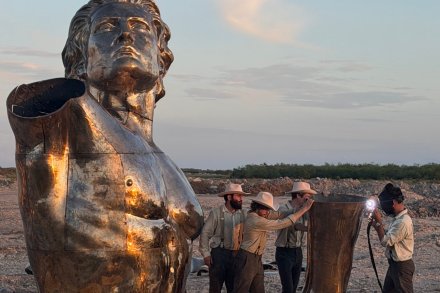
It averaged a brutal 91 degrees this week in Cameron County, the southernmost tip of Texas, and a group dressed as the cast of O Brother, Where Art Thou have been there sweating away at something big. A colossal limbless torso is parked on the dunes and a head, suspended from a crane, is swaying very gently in an ocean breeze. There is the smell of metal and hot dust.  Pending some finishing touches and last-minute dabs of glue, this Atelier Missor’s Prometheus, soon to be unveiled at SpaceX’s Starbase launch site – standing contrapposto, torch aloft, bidding the rockets a comradely “Adieu!

Trump has bet everything on Mars

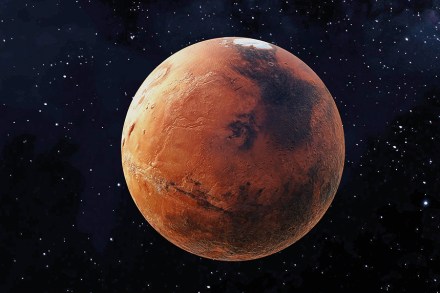
America has what might be the best evidence for life on Mars. NASA’s Perseverance rover has gathered rock samples that could contain compelling biosignatures of ancient microbial life. No one is quite sure yet, and the samples need to be tested in a lab before we can conclusively prove that our distant neighbor once harbored life. Too bad. We’re never going to see the results. In January, funding for the project was canceled. Donald Trump has other plans for the red planet. He obsesses over competition with China and with planting the Stars and Stripes on alien soil. So to the horror of many of the world’s scientists, Trump has pulled the US space effort away from incremental robotic exploration to prioritize human landings on the Moon and Mars.

Would Grok’s Odyssey be better than Nolan’s?

From our UK edition

Elon Musk, who does not rate Christopher Nolan’s film of The Odyssey very highly, has said: ‘Before this year ends, Grok [Musk’s AI] will make a full-length movie of The Odyssey that is historically accurate and true to the art of Homer.’ Will it, now? Around 1200 bc the city that Homer calls Troy or Ilium was destroyed by fire and warfare. In 1873, this site (which archaeologists now call Troy VIIA) was excavated by German adventurer Heinrich Schliemann, who announced to an astonished world that it was the well-spring of Homer’s Iliad and Odyssey. The problem is that there is no evidence at all that VIIA was attacked by Greeks. But there are passages in the Iliad which could be said to match some of the features of VIIA.

What will the successful cities of the future look like?

From our UK edition

Can architecture solve urban crises? Or should architects and planners concentrate on mitigating the consequences of wider events (climate change, war, demographic and economic shifts), then hope for the best? What happens when we have no choice but to build or rebuild cities? In her new book, Gabriella Bennett, a journalist interested in architecture and urban landscapes, spends two years flying around the world looking for answers to these and other questions. Woven through her adventures are two personal quests: to reckon with her unhappy adolescence in the Scottish postwar new town of Glenrothes; and to reset her life after a pandemic-era health crisis that led her to quit her job.

Troy Jackson’s family values

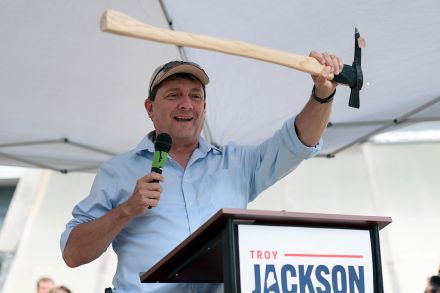
Troy Jackson, Maine’s new working-class Democratic candidate for Senate – following Graham Platner’s demise – has PR problems. Cockburn thinks it’s a case of #MeToo going a little too far. While Platner was on Kik posing in a towel and supposedly sexually assaulting his ex-girlfriends, Jackson was doing the honorable thing – pairing off with his cousin. The level of concern we are seeing over this simple fact is a case of parasocial hysteria. Who cares if Troy is dating, and has two children with, his second cousin? So did FDR. Well, that was his fifth cousin, but still. Though Jackson and his cousin Lana never wed, cousin marriage isn’t even illegal in Maine and for good reason. Troy Jackson is from a town of 250 people. He’s a logger.

troy jackson

Why most scientists don’t want us to believe in life on Mars

From our UK edition

‘Is there life on Mars?,’ asked David Bowie, and would not stay for an answer. The astrobiologist Steven Benner has an answer – which is that Mars not only has had life but still does. The first part of that answer is broadly accepted; the second remains highly contentious. His book is a scattershot plea for increased attention to be paid to searching for evidence – or, as he sees it, more evidence. The stakes are high. As he says in his introduction, if life exists only on Earth, that’s a coincidence; if it exists on Earth and a close neighbour, that’s the start of a pattern. Mars has always excited the imagination. No one has ever speculated hubristically about the chances of anything coming from Mercury. C.S.

Meet the political donors lining up to influence AI policy

Most Americans have yet to work out quite what they think about artificial intelligence, but already the AI game is under way: the buying and placing of political pawns in readiness for America’s first comprehensive federal AI law. Voters have yet to elect their senators and representatives, but the power brokers – political donors – are spending, primary by primary, to help ensure their chosen candidates survive to write that all-important legislation. Two rival networks with differing views about what this law should entail have raised more than $200 million for this year’s midterm elections.

AI

The ADHD administration

At the start of the second Trump administration, the words on everyone’s lips were “breakneck speed.” On the day of his inauguration, Donald Trump declared a border emergency, designated drug cartels as terrorist organizations and challenged birthright citizenship. He withdrew from international climate agreements and ditched Joe Biden’s mandates on electric vehicles. He rescinded various Diversity, Equity and Inclusion initiatives. On January 20, 2025, he issued pardons for individuals connected to the 2021 riot on Capitol Hill. And he established the Department of Government Efficiency (DoGE), which empowered Elon Musk to begin hacking away at federal bureaucratic bloat. Trump signed 143 executive orders in those first 100 days, more than any previous president.

Elon Musk should buy Xbox. Yes, really

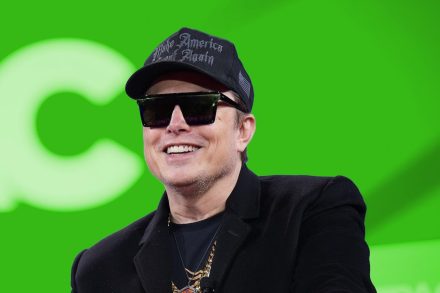
Elon Musk is hardly lacking for toys. He can spend the morning digging vast tunnels with Hyperloop, the afternoon launching rockets with SpaceX and spend the evening posting on his very own X social media network. Even so, there is one gadget that could still tempt Musk: Microsoft’s increasingly error-prone Xbox. It was reported this week that the Xbox division would be axing 3,200 jobs, the equivalent of a fifth of its workforce. The company is also selling four of its game development studios. Xbox has suffered from slim profit margins, spiraling hardware costs and sluggish growth for Xbox’s Game Pass subscription service. And Xbox fans have been outraged at leaks suggesting the company may remove the disc drive in its upcoming machine.

elon musk

The Founding Fathers of AI

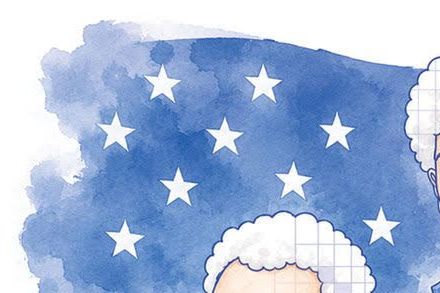
In the spring of 1722, a 16-year-old apprentice in a Boston print shop began slipping letters under the door at night, signed by a middle-aged widow named Silence Dogood, who did not exist. The apprentice was Benjamin Franklin. His brother James, who owned the paper, had no intention of printing his kid brother, so Franklin invented a woman and let her say the things he couldn’t. Readers wrote in guessing at the author. No one suspected the boy sweeping the floor. Franklin would go on to be a printer, a postmaster, a scientist famous across Europe for his electrical experiments and a founder of libraries, fire companies and, in time, of the United States itself.

Portrait of the week: Burnham wins, Starmer resigns and a heatwave hits

From our UK edition

Home Sir Keir Starmer, the Prime Minister, stood outside 10 Downing Street and said that he would resign as leader of the Labour party. Nominations for a successor would open on 9 July (though he still meant to unveil his defence investment plan in time for the Nato summit on 7 July). His decision to depart followed the convincing victory in the Makerfield by-election of Andy Burnham, bringing him back into parliament. An election for mayor of Greater Manchester in his place would take place on 30 July, with Bev Craig, the leader of Manchester City Council, as Labour’s candidate. Mr Burnham packed a suit and tie into which he changed on the train from Manchester Piccadilly to London. He was sworn in as an MP that afternoon. Mr Burnham had received 24,927 votes (54.

When is a Post Opinion not a Post Opinion?

The Washington Post recently published two op-eds by Scott Greer, "a writer who years ago expressed racist and antisemitic views for an online white-supremacist publication," according to Politico. For context: Greer wrote for Richard Spencer's "Radix Journal" under a pseudonym. After Politico reached out for comment, WaPo removed the articles.That move might come across as a squirrelly act of insecurity in the middle of a turbulent time for Post Opinions.

Will Keir Starmer’s under-16 social media ban actually work?

Today, with much fanfare, the British government is rolling out its new policy to protect young people from online harms. Here is a political/legal move for which I am the target audience. I have three teenagers, and for those not so afflicted, let me tell you that keeping them from spending all day, every day goggling at one piece of tech or another is an infernal game of whack-a-mole. Item: Child One, Instagram. Very, very occasionally, she forgets to delete her browser history and Ctrl-H yields page after page after page, hour after hour, of Instagram hits. If you restrict or remove the phone app, it will be re-downloaded or the site opened instead in a browser window.

social media