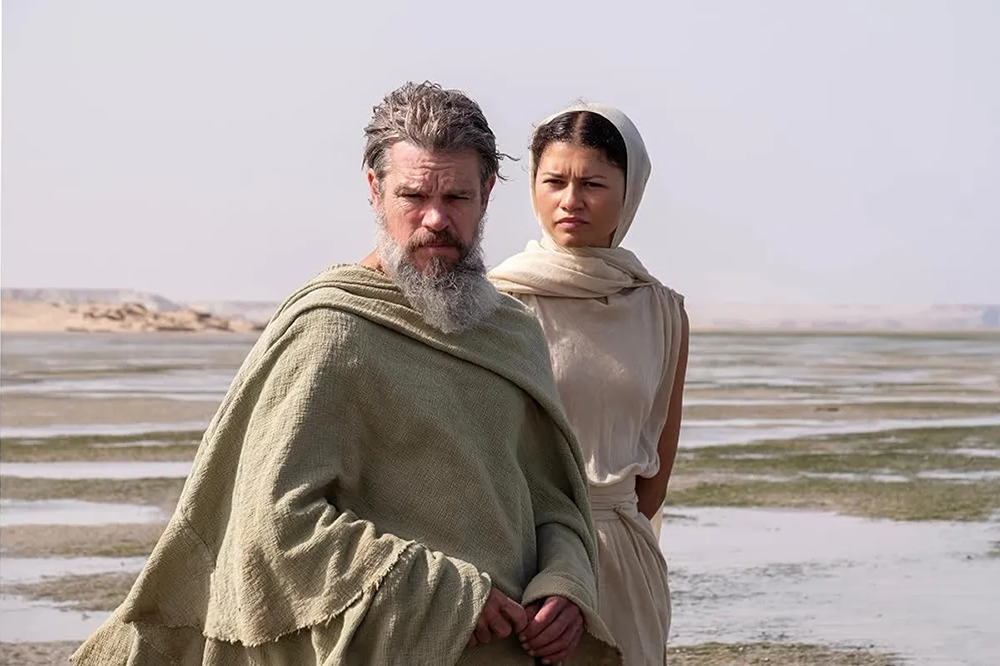
Elon Musk, who does not rate Christopher Nolan’s film of The Odyssey very highly, has said: ‘Before this year ends, Grok [Musk’s AI] will make a full-length movie of The Odyssey that is historically accurate and true to the art of Homer.’ Will it, now?
Around 1200 bc the city that Homer calls Troy or Ilium was destroyed by fire and warfare. In 1873, this site (which archaeologists now call Troy VIIA) was excavated by German adventurer Heinrich Schliemann, who announced to an astonished world that it was the well-spring of Homer’s Iliad and Odyssey.
The problem is that there is no evidence at all that VIIA was attacked by Greeks. But there are passages in the Iliad which could be said to match some of the features of VIIA. On those grounds, it is suggested that oral poets used VIIA to take advantage of a story about a sack of the city by Greeks to win back the Greek hero Menelaus’s wife, Helen, the world’s most beautiful woman, who had been seduced away by the Trojan Paris.
The Odyssey was composed some years after The Iliad and often looks back to it (the hero’s son Telemachus visits old Nestor, Menelaus and Helen to see if they have news of his father).
Over the centuries both poems were sung and embellished by oral poets and some time after the ancient Greeks invented the phonetic alphabet (c. 800 bc), Homer produced the version that has come down to us today.
Since oral poets worked by drawing on earlier versions of the story, our versions of the Iliad and Odyssey contain a centuries-old mishmash of political structures, culture, language, weapons, gods, myths, monsters and so on. So, what would be a ‘historically accurate’ account of what is obviously myth/fiction? There can be only one answer: a male actor, dressed in 8th-century bc garb, reciting to enthralled Greeks, over a stringed instrument, all 12,109/10 lines of The Odyssey in ancient Greek, unless artificial intelligence decides that The Odyssey ended at book 23.296 rather than 24.548, as some ancient scholars have argued (on top of raising doubts about other passages too).
Just put a sock in it, Grok.





Comments