Zoe Strimpel

Zoe Strimpel

Why I’m finished with football

I have spent many, many years dutifully squeezing into pubs full of rapt, drinking men giving excessively loud voice to their feelings of either atavistic triumphalism or atavistic rage – all accompanied by the odd rattle of broken glass and flare-ups of intra-man hostility. But last weekend, as I dutifully prepared to leave my warm flat and make my way in the sub-zero night to the pub for the World Cup quarter-final of England versus France, I realised that I am done. Done with football – and done with England. Well, that’s not entirely accurate. The Women’s Euros final, which saw the Lionesses romp to victory – something their male equivalents haven't done since 1966 and seem unlikely ever to do in my lifetime – was the first time I have ever enjoyed watching footie.

Joyce Carol Oates, a woman for all seasons

From our US edition

Midway through my conversation with the eighty-four-year-old Joyce Carol Oates, one of the most prolific writers America has ever seen (fifty-eight novels, plus plays and children’s books), and now one of its more unpredictable tweeters, with over 226,000 followers, I ask what it’s like being having been one of the country’s “major” literary figures for so long. Oates’s classic 1966 short story “Where Are You Going, Where Have You Been?” about the kidnap and possible murder of a sixteen-year-old girl, and her 1992 Pulitzer-nominated novella Black Water demonstrate her grasp on the dark side of the twentieth-century American psyche.

Oates

Jeremy Hunt is wrong about ‘British compassion’

Delivering his Autumn Statement on Thursday, Jeremy Hunt specified two ‘great national’ qualities: genius and ‘British compassion’. The Chancellor’s announcements made it clear what he was doing: raiding the incomes of the decently well off to fund benefits rises and protect pensions. Talk of our shared compassion then seems a bit off. Politicians should exploit ideas of Britishness less, or at least do so less explicitly. They should focus on what Britain actually needs in order to be uniquely good in a British way. That isn’t hollow words for a population imagined to be at Key Stage One. It’s coherence: a decent economic model, a political philosophy, and a theory of how humans tick.

‘Luxury’ cinemas are a horror show

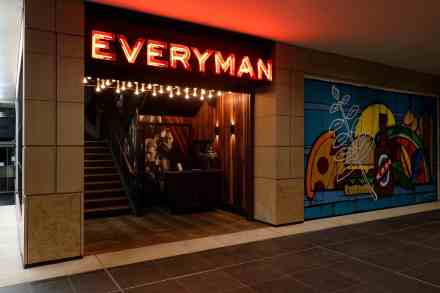
‘I know,’ I said to my friend recently. ‘Let’s see a film!’ We booked the Everyman Kings Cross, the only cinema that happened to be showing what we wanted to watch at a convenient time and location. You might already be familiar with the Everyman concept. According to the chain, it’s ‘redefining cinema’ with an ‘innovative lifestyle approach to our venues, where you swap your soft drink for a nice glass of red wine and a slice of freshly made pizza served to your seat’. And apparently it's popular – an Everyman opened in September in Egham, Surrey, bringing the total to 38, and another one is announced for Durham early next year. But after my latest visit, I found myself marvelling at the success of what might be the most annoying cinema concept on earth.

How politics killed theatre

Hope can be remarkably persistent. And so, despite several years of experience pointing in starkly the other direction, a recent weekend saw me at Who Killed My Father at the Young Vic, the latest from ubiquitous Belgian director Ivo van Hove. A young friend had gone with his father the previous week and both described it as ‘excellent’. Intense, but in a good way. Worthy broadsheet publications gave it four stars. I had my doubts: Édouard Louis, on whose angry memoir about growing up in a working-class, homophobic home in northern France the play was based, is not my cup of tea.

Beware the cocktail bore

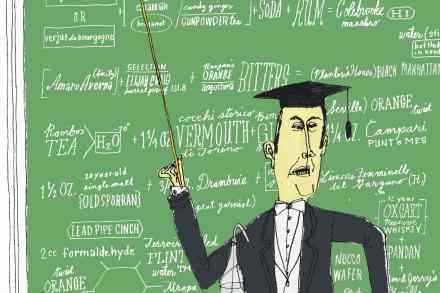
The man at the posh London bar stood with our drinks but wouldn’t give them to us. He had a lecture to deliver first, for cocktail culture – or ‘mixology’ as the craft is now known – is nothing if not didactic. As I looked enviously out at the people with pints of beer across the way, I wearily reflected on how the message to the customer has hardened in the years since cocktail bars with American ambitions crossed the pond. It is: the £19 you’re paying for the drink isn’t enough. You need to be quiet and listen, for you’re not just a drinker: you’re a supplicant. Be that as it may, I felt my eyes violently glaze over as the man redescribed, in even more verbose detail, what we had already pored over on the menu.

Beyoncé and the pornification of pop

Beyoncé Knowles has always been sexy: naturally and consciously so. But her sexiness – those astonishing bottom-swooshing dance moves; the gleaming, undulating chest; the ever-changing, lustrous locks – sat alongside a moral substance that grew as her career progressed. She weighed in on politics, raising $4 million for Barack Obama and singing at his first inaugural ball. She weighed in on sexual morality, telling women in one of her most iconic songs that their man ought to, if he was to be taken seriously, ‘put a ring on it’. She is a committed Christian, having grown up in a Methodist household and frequently spoken of her faith.

Turning 40 is dreadful – let’s not pretend otherwise

Last week, pictures of the actress Sienna Miller frolicking with glee in a tiny orange bikini in St Tropez with her boyfriend were widely shared. Miller is 40, and her boyfriend, the Burberry model Oli Green, is 25. Miller was described as looking 'incredible', a mixture of fantastic abs and, it was implied, exuberance at her still-strong, possibly intensifying sexual power. Women at 40 are a fascinating breed, treading a line of dubious width between youngish and middle aged; between fertility and its winding down. In past centuries, women were lucky (or unlucky) to get to 40.  Now the ether resounds with rhetoric about how empowering it is, how the follies of youth have been left and in their place come the burnished glories of still-attractive maturity.

The curious rise of Soho House

The San Lorenzo neighbourhood of Rome, a short walk from the murderous environs of Termini, the central train station, is not particularly old or beautiful. A working-class neighbourhood once connected to the Wuehrer brewery and freight yard, it was bombed heavily during the war, the only massive bombing in Rome. But like Wedding or Neukolln in Berlin, San Lorenzo’s old working class roots have translated neatly into arty cool, and the area, still scruffy, is now a left-wing hipster paradise, its walls cheerily scrawled with anarchist graffiti.

How Love Island killed sex

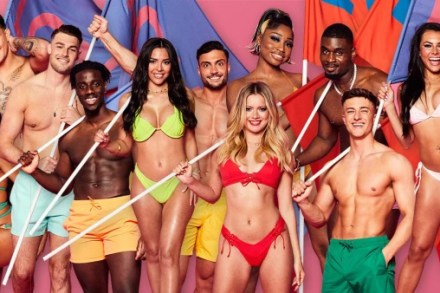
Love Island's annual 'heart race challenge' – where contestants perform jokily seductive dances on the opposite sex – took place last week, an eternity in villa time. The girls and boys who raise heart rates the most win. It is always divisive, since the women in particular – dressed in nearly nothing and manoeuvring with everything they have – understandably get touchy when their man’s heart rate rises more for a rival. Usually the challenge is extremely sexy, but not outright pornographic. This year that changed.

The feminist case for Love Island

Love Island, which started again last night, flirts with virtue just a little more obviously each year. The show is racially diverse, and overwhelmingly working class, despite featuring the odd medic. Hugo Hammond, who was born with a club foot, became the show's first disabled contestant last year. The latest series features a deaf contestant, Tasha Ghouri, a 'dancer' with a perfect body. If the show looks more representative, don't be deceived: there's nothing virtuous about Love Island. But that doesn't mean we should hold this against its beautiful, young contestants. Despite the name, Love Island isn't about love. It’s about money, and specifically, about how to monetise your body.

The rise of aperitivi – and where to try them

Put simply, a meal can be too much: too much pressure both on digestion and on the person you’re with. Europeans understand this, which is why they have such an exquisite pre-dinner offering – aperitivi that can extend late into the night, where non-committal drink follows non-committal drink and a lovely slew of small bites keep the hunger at bay. Aperitivi is also an opportunity to try some of the nicest drinks on offer, at least if you like quirky fizzy local wines, delicate roses, and homegrown cocktails. Can the bliss of aperitivi hour – or hours – be replicated in London, somewhere between pubs and restaurant meals? The answer is yes, and the capital offers varying degrees of decadence both of food and small plates.

Dan Savage has fallen out of love with the left

From our US edition

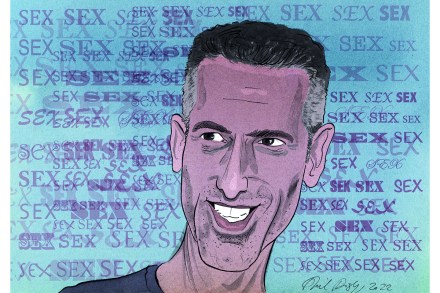
It was a suspenseful business, arranging to meet Dan Savage, America’s most famous giver of sex advice, LGBT rights advocate, porn-festival organizer and all-round cult figure. He was by turns stern, snappy and apologetic in his emails; he was brisk in his replies and then months would pass with no word. And so I breathe a sigh of relief when Savage approaches the outside table of the café I suggested in the Capitol Hill area of Seattle. He is wearing jeans, bright orange hightop sneakers and layered flannel shirts. He walks softly, with the supple watchfulness of a teenage boy. He also talks softly — a contrast with his more forceful podcast voice — apologizing for being five minutes late.

savage

Andrew Sullivan searches for spirituality

From our US edition

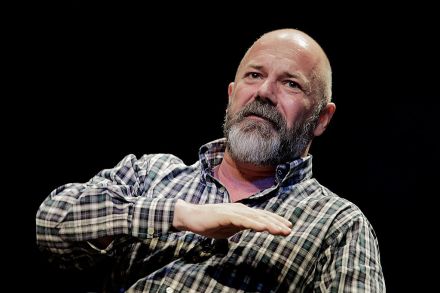
It was daunting preparing to meet Andrew Sullivan, considered one of the cleverest, most fearless journalists of his generation. There is the academic pedigree: the scholarship at Oxford — where he was also president of the union and a celebrated actor — followed by the PhD in political theory at Harvard, where he produced an iconic treatise on the work of British mid-century philosopher Michael Oakeshott, performed the entirety of Hamlet all by himself — "a whacked-out mid-1980s" version — and modeled for Gap. And there is the journalistic firepower. At twenty-eight, in 1991, Sullivan became the youngest ever editor of the New Republic, America's most august political magazine.

Peter Boghossian’s fight for freedom

From our US edition

The prospect of my meeting with Peter Boghossian seemed to have angered the gods, so furious was the disruption to road and rail as I tried to make my way from Seattle to Portland. Torrential rain and flash floods summoned a ricochet of mudslides which abruptly terminated my Amtrak journey in Centralia, a middle-of-nowhere town in Washington State. There was no rail in either direction for at least forty-eight hours, no buses and seemingly just one Lyft — which I managed to slip into an hour later with a few other stranded passengers. Or perhaps it was the anger of very particular gods that rule over the Pacific Northwest, that hotbed of wokeness so concentrated you can feel it like toxic humidity in the air.

boghossian

London’s best restaurants for British food

There was a moment, about 20 years ago, when Londoners began to realise, and then boast about, the transformation in our food scene. No longer deserving of mockery compared to other global centres, our restaurants were suddenly producing delicious food every bit (well, almost) as good as that associated with the likes of New York. The revolution began with fresh takes on exotic cuisines, especially South and East Asian, Spanish and Italian. But soon another, delightful development emerged: the reinvention of British food. Gastropubs began taking ploughmans and sausage rolls and roasts very seriously indeed, and posh restaurants began to show that homegrown food, when it comes from domestic seas and soil, can be sophisticated, innovative and richly satisfying.

Swindled daters aren’t the only ones cynical about Tinder

Elliot, 28: ‘My greatest achievements in life are: drinking a bottle of Listerine in 10 seconds, beating my laptop at chess on easy difficult and surviving till the age of 28’.  Frank, 40: ‘Professional career, into extreme sports and stay fit, yet also enjoy the finer things in life like diner [sic] and a glass of champagne.’ It's the communication culture spawned by Tinder itself that is the biggest menace These were the first two Tinder profiles I saw when I opened the app after watching Netflix's The Tinder Swindler. They capture the fairly gormless but harmless nature of most male Tinder profiles, with fairly gormless but harmless men attached.

Most-read 2021: The Netflix generation has lost its grip on history

We're closing the year by republishing our ten most popular articles in 2021. Here's number four: Zoe Strimpel writing in February about how popular portrayals of the past are being changed to fit the present.  The first thing you notice about Bridgerton, Netflix’s big winter blockbuster set in Regency England, is how bad it is: an expensive assemblage of clichés that smacks of the American’s-eye view of Britain’s aristocratic past. The dialogue is execrable, the ladies’ pouts infuriating. But bad things can be good, especially when it comes to sexy period romps. Bridgerton is no different. The story follows the elder children of the Bridgerton family as they look for love in a utopian sprawl of courtly landscape and sociality.

The capital’s finest cocktail bars

We have finally arrived in the roaring 20s and the urge to drink ­­– after the year and a half we’ve been through – is strong. Lockdown provided ample opportunity to neck wine in the monotonous comfort of one’s own home, so the mood now is firmly for tipples in luxurious, and crucially, public indoor settings. What is required, of course, are cocktails. London is packed full of ebullient options, but as a cocktail snob – they need to be good, or one might as well drink wine – I set out to find the very best. I looked for interesting, creative concoctions that weren’t so zany they ended up being horrible, served in the kind of glamorous, buzzy settings we so sorely missed during lockdown.

How to spend 48 hours in New York

Armed with a US passport, I fly to New York for just two days to interview John McWhorter, an African American professor of linguistics at Columbia University. He is America’s fast-rising star of the anti-woke movement and I am there to talk to him about his brave and funny new book, Woke Racism. I zip over to meet him on one of dozens of daily flights between Heathrow and JFK in advance of America’s reopening on 8 November. The good news is that, after 8 November, the rest of Europe's jet setters can join me. It is strange flying transatlantic in the final days before the US reopens after nearly two years: there are almost as many planes as passengers.