Zoe Strimpel

Zoe Strimpel

Meet my snooty AI sommelier

My grandparents’ home was a proper house, on the cusp of the Hampstead Heath Extension, with roses and flagstones at the front. It was the sort that looked like it housed a robust wine collection – solid on account of good, aged European bottles, bought at a time when standards were, one assumes, higher.  There was one bottle in my grandfather’s possession that came with particular fanfare: a 1974 Bordeaux whose label was so far gone you couldn’t see exactly what it was. As a treat, I arranged to have the sommelier of the Connaught Hotel examine and open it. Once the cork gave way, a thud of brown sediment rocked the bottle. It was decanted and it breathed – inasmuch as a long-dead thing can breathe. Still hopeful, we tried the sherry-looking stuff – and it was nasty.

I’m a recovering biscuit addict

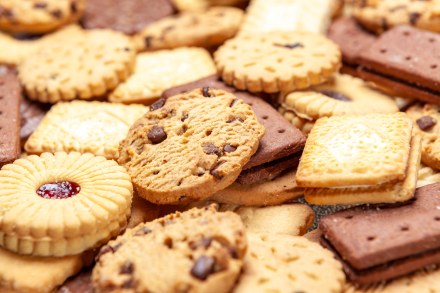
Have you heard of National Biscuit Day, a McVities marketing concoction, which came and went last week? Probably not, but in my view, it was as meaningful a prompt to reflect on British culture as any.  There are, of course, both sociologies and histories of the Great British Biscuit, though more as the silent partner in the Great British Tea. In her book Watching the English, Kate Fox makes the good (if obvious) point that tea and all that goes with it is a social lubricant central to English identity and vital for retaining the ability to keep buggering on.

How Naomi Osaka dressed to kill the ‘womanosphere’

The landscape in which female beauty trends play out is increasingly mean and ludicrous, just when it should be less prone to obsession and caricature than ever before. We should be seeing thick hairy legs on urban streets, not just on LGBTQ activists. We should barely be hearing normal women talking about facial ageing or getting regular poison-loaded needles injected into their faces for the sake of the blandest type of beauty.  And we should definitely not be seeing the rise of teenagers making millions from hawking anti-ageing skin products to other children. And yet, here we are. What is obvious is that a female body is still the most powerful asset a human being can have, if presented correctly.

Hay Festival has forgotten about books

Can it be anything more than sour grapes when a writer (who has not been asked) gets snarky about Hay Festival? I’d like to think it can. For there is a lot to snark about.  Don’t get me wrong. The one time I was invited to speak at Hay, about a decade ago, it was jolly nice. Benedict Cumberbatch said hi to me in the green room, thinking I was someone he was meant to recognise, while Ian McEwan milled about topping up his coffee. Hay is, of course, a pornographically pretty town amid the rolling sheep-studded fields and quaint little streets with pop-up Eccles cakes shops and independent bookshops.

Married at First Sight has always been horrific

Sometimes I just don’t have the emotional bandwidth to watch a series of Married at First Sight UK, a.k.a. MAFSUK, because it is one of the most stressful and at times blankly horrifying things on TV. All reality dating and marriage shows are a potent mix of boring and stressful, including Love Island, where the holy grail is simply deciding to ‘be exclusive’. But MAFS gets so raw and so ugly, so fast. The only good thing about it is that it puts paid to the ludicrous but increasingly popular idea that arranged marriages are the answer to society’s dating woes. Darkness nips and bites at all MAFS seasons, and frequently engulfs the whole, an effect particularly visible in the ‘dinner parties’ where the contestants goad and gang up on each other and frequently explode.

Your hormones aren’t linked to the stars

For most women, the time between your first and last period is defined by things other than the phases of the menstrual cycle. Or at least it used to be. But much has changed in the ontology of modern womanhood from the halcyon era of the 1990s, when women were positively encouraged to get out there and get on with it rather than sit around mooning about how rotten they feel. But here we are. Periods, like so much else that was formerly humdrum, have burst hideously on to the scene; sapping, among other things, a woman’s valuable Right to Ignore. Instead of being seen as a mild inconvenience of only the vaguest interest, menstruation has ascended the feminine ranks to become life-defining, soul-shaping and universe-channelling.

No, we don’t all need therapy

Only the most heartless fantasist would deny the life-saving role that therapy plays in helping people manage mental illness. Some people, of course, find it enjoyable or helpful for their own reasons and fair play to them. ‘You do you, babe,’ as they say.   But in the round, there is more wrong than right with the edifice. What else is one to conclude after Meghan ‘Sussex’ née Markle, one of the luckiest and most spoiled women in the world, posted on Instagram last week that that the ‘hardest seven years’ of her life – those that followed her becoming a duchess, having two healthy children and trading a royal residence for a $29 million mansion in California – had come to an end?

Lena Dunham’s memoir is everything wrong with feminism today

Is the right to be angry and miserable the best that modern feminism can do? Or is it possible, while acknowledging that things are far from perfect, also to recognise that women in the West today are the luckiest ever to live? On the surface, one of the most fortunate women of our times is Lena Dunham. She is revered, famous, rich, apparently in control of her voice and her dramas. Her breakthrough TV series, Girls, which she wrote and starred in, profoundly shaped how young women have been seen since the beginning of this century. Now she has published a bestselling memoir, Famesick, which has put her again at the heart of the debate over the travails of modern women. I am delighted that Dunham has once more managed to turn out a blockbuster.

The soft power of Ukrainian food

New wars bring new fundraising efforts. Since Russia’s invasion of Ukraine, Ukrainians who already lived in London or moved here as a result of the war have conducted a subtle but concerted gastronomic campaign on behalf of their country. Somehow, this avoids all shrillness – unlike the dreadful and relentless Cook for ‘Palestine’ movement.  The Ukrainian food scene doesn’t crow about good and evil but it takes a position on those questions anyway – of course. A wartime enterprise can't do anything else. But with front people like the beautiful, tireless Olia Hercules, who has raised millions for her homeland through culinary ‘cultural diplomacy’ missions, it’s an altogether more skilful piece of food politics than other wartime campaigns.

The American idyll still exists

Though I hadn’t lived there since 1998, when I was 16 and Bill Clinton was in power, I’d always defended America. Sure, it had flaws. Big ones. It had gun problems, drug problems, healthcare problems, race problems, problems winning wars. But, by Jove, it was still the end of the rainbow. It still had the highest concentration of good of any country on earth.  Then Donald Trump inaugurated a new era in which the US went weird, and not in a good way. Not only did the problems with opioids, guns, wars and healthcare only get worse, new catastrophic fault lines opened. The bizarre reign of Joe Biden and Kamala Harris was hardly a comforting interlude.

The vandalism of Banksy

The forces of taste, fashion and regard have long colluded in a disconcerting way around Banksy. He is an ‘artist’ that the great and the good of the auction world take as seriously and reverently as your more common or garden fan who gazes upon his grim graffiti and feels they really ought to like it. In a saner world, in which everyone had not colluded on the premise that Banksy is Important and Good, he would be seen mainly as a vandal and a nuisance.  His vandalism is lucrative in part because it is a parade of ‘subversive’ clichés, so saccharine and obvious they hurt. Thus, we have little black stencils depicting policemen kissing, the House of Commons filled with chimpanzees, or a girl reaching after a heart-shaped balloon.

Wimps aren’t welcome at the Winter Olympics

My family skied a lot. We did it home-style, with packed lunches and Mars Bars on the lifts, my brother and me following my expert Milan-raised father down terrifying drops of ice in the twilight. We took our chances on low or no visibility, scraping round mountainous moguls and – my least favourite – careering through the root, stone and tree-stuffed terrain of the arboreal American off-piste. We wore the least trendy gear imaginable: huge foam-rimmed goggles already years old in the Nineties and never any hint of a helmet. Nobody but over-protective, scaredy-cat dorks wore helmets then. This background gave me two things.

The puerile fantasy of Bridgerton Britain

There is something inherently embarrassing about watching Bridgerton in Britain. It is so palpably, monstrously, uninhibitedly woke; an American fever dream of England in which an all-English (and the odd Australian) cast cavort as members of the ‘ton’ for money they’d probably never get from the BBC. In front of the great Bridgerton mood board scrawled with such words as ‘Downton Abbey’, ‘Jane Austen’, ‘Upstairs Downstairs’ and – of course – the most Shondaland touch of all, ‘Diversity!’, the likes of Adjoa Andoh and Lorraine Ashbourne do their thing while (one imagines) the suits at Shondaland clap with pleasure. Shondaland is the woman (Shonda Rhimes) and production company behind Netflix’s adaptation of the Julia Quinn novels.

Is perimenopause a myth?

I was born in London in 1982 and my parents were neither hippies nor part of the Women’s Liberation Movement. As a result, frank talk about body parts, functions and sexual development was generally non-existent. The arrival of my period was not something I remember having any feelings about whatsoever, and it certainly wasn’t something the womenfolk in my family celebrated. Hormones were rarely invoked in the culture more widely apart from in a general 'raging' way to explain the wildness of teens. Flash forward 40 years and the cultural tides have turned in quite a startling way. Now it often feels like women talk about nothing but their periods, or the dwindling thereof.

Brooklyn Beckham is so typical of his spoilt generation

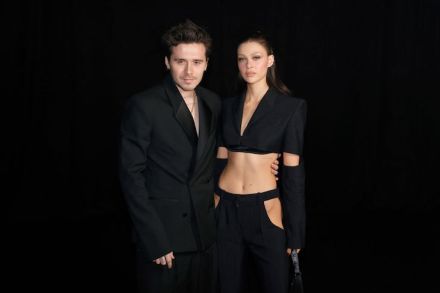
The misadventures and mummy issues of Brooklyn Beckham – articulated in a verbose Instagram post about how much he hates his parents and why – has stirred feelings, even in those least likely to care about anything to do with the Beckhams, senior or junior. The reason why is simple: the 26-year-old man child of Lord and Lady Beckham is the perfect emblem of his spoilt generation. Brooklyn Beckham is a very rich young man, and everything he has and has done has been thanks to the immense privilege he was born into Along with their totalising hostility towards things deemed racist or imperialist or anti-trans, they are also the first generation to celebrate cutting off your family if they fall short of your expectations.

Italian food is revolting

About a week into an open-ended early pandemic stay in Ortigia, the antique, tourist-beloved spit off Siracusa on Sicily’s eastern coast, I had an epiphany. I hated the food. I’d just had a few bites of a clammy aubergine parmigiana, and a plate of oily tuna steak dressed with a bit of lemon was on its way to me. I felt sick and couldn't face another bite – and yet, supposedly, I was right in the heartlands of the finest continental gastronomy. This, at least, is the orthodoxy of the world, of tourists low- and high-end and home cooks everywhere – and especially in Italy itself.

I’m a Jew who loves Christmas

On more than one occasion, I have found myself being lectured by non-Jews (always men) about why I am incorrect in my Jewishness. Judaism is a religion and I can’t be Jewish if I am an atheist, some say. The ones that accept the atheism then feel compelled to categorise me as a ‘cultural’ Jew whose identity is defined by rituals and customs passed down over the centuries. And then there’s the stern mystification about the relatively minor role that Hanukkah plays in the spiritual calendar for Jews. It is hard for some to realise that while it involves lights and wintry nights, Hanukkah is not remotely the equivalent of Christmas. Nothing in Judaism is.

A snob’s guide to last-minute Christmas gifts

The algorithm got me in the end. It began with recipe content, and once I was hooked on food influencer videos, I began to be pummelled with adverts for attractive pots and pans, then clothes, and from there an ever-widening vista of objets and objects by turns pretty or useful and occasionally both. The result, apart from frittering away a certain amount of money on non-essential cardigans and kitchen gadgets, has been the development of a ruthless taste and approach to e-commerce. I want to have, and want to give, nice things, and increasingly I know where to get them. I am also hopelessly disorganised, a snob and far from awash in cash. If you’re anything like me and have yet to get your gifts sorted out, read on.

Michelle Obama’s new book about style lacks substance

From our US edition

First lady is a strange role. Even when your husband is the first black president, and you’re a Princeton and Harvard-educated former corporate lawyer, America still projects its most regressive ideas about gender onto you. So I understand that Michelle Obama, like Hillary Clinton before her (skipping Laura Bush, a more classical first lady, along with, more recently, Jill Biden and Melania Trump), might have felt constrained, faced with expectations she could never satisfy. I don’t doubt that being black added enormously to that burden. Yet there is nothing more irritating than the person of Michelle Obama complaining. And she is always complaining.

michelle obama