

Is the right to be angry and miserable the best that modern feminism can do? Or is it possible, while acknowledging that things are far from perfect, also to recognise that women in the West today are the luckiest ever to live?
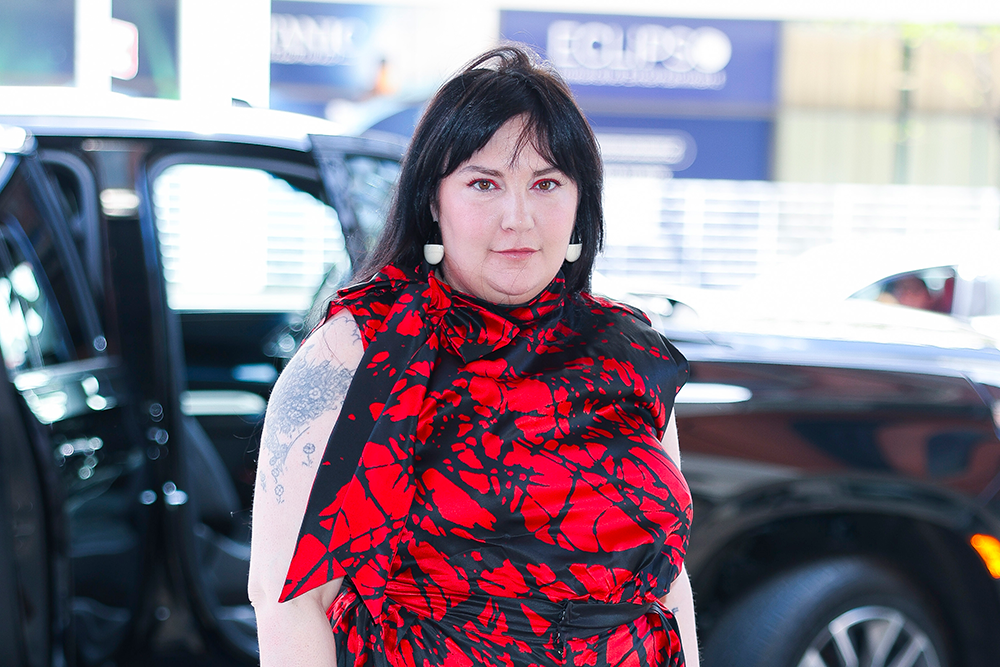
On the surface, one of the most fortunate women of our times is Lena Dunham. She is revered, famous, rich, apparently in control of her voice and her dramas. Her breakthrough TV series, Girls, which she wrote and starred in, profoundly shaped how young women have been seen since the beginning of this century. Now she has published a bestselling memoir, Famesick, which has put her again at the heart of the debate over the travails of modern women.
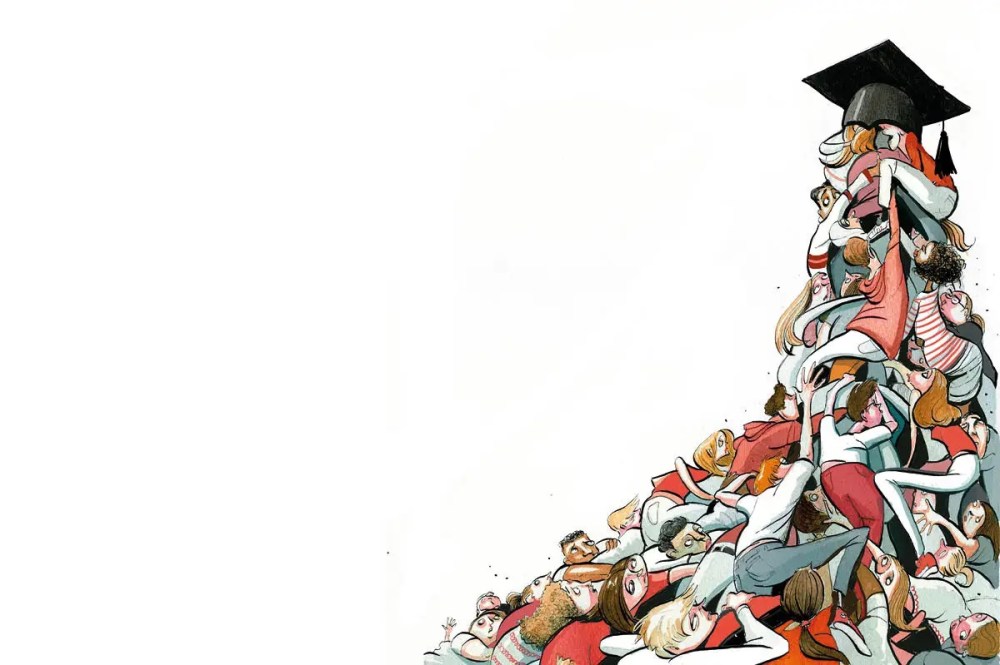
I am delighted that Dunham has once more managed to turn out a blockbuster. But I want women to recognise, celebrate and enjoy the freedom our liberal, democratic, semi-capitalist society gives them. And while I do not doubt the reality and horror of her experience, I am depressed that Dunham has used her skilful artistic voice to make misery, sickness and despair the leitmotifs of modern feminist struggle.
I have just published a book called Good Slut, which is about how western women have all to play for, if only they would stop insisting that they are physical and mental wrecks. Dunham’s book, alas, makes the opposite case. Dunham is, at least by her own representation on the page, a genuine article: intelligent, self-knowing and funny. But the story she tells of being a modern woman is one of pain, passivity and collapse. Her success literally makes her sick. Among the ailments she describes, in varying levels of detail, are OCD, anxiety, depression, ovarian cysts, endometriosis, migraines, hives, acute colitis and Ehlers-Danlos syndrome, a collagen disorder.
She has a hysterectomy at 31 and then succumbs to an opioid addiction. ‘I was starting to understand,’ she writes after the umpteenth endometriosis surgery, ‘that illness wasn’t just a town I was passing through, but a city that I was going to pay taxes in. [Friends and colleagues] were still hoping for the occasionally fragile girl with the random rashes and shitty periods they’d agreed to love. Nobody understood how much pain that girl was already withstanding from the minute she started walking. Not even me.’
Despite Dunham’s charm and self-awareness, the immovable fact remains: just as she did with Girls, she has seized and monumentalised a destructive zeitgeist and enshrined it as the benchmark for female self-expression. Famesick perfectly feeds the assumption that we live in a woman-hating society and yet it disarms and asks for approval (widely granted) for its ‘honesty’. Dunham’s is the perfect wreck memoir and the perfect feminist memoir, because the two have become one.
This goes to the heart of feminism’s problem today. Young western women already glamorise pain and suffering, predation and grievance, and now they’ll do it even more. The pollster Scarlett Maguire published data last week revealing how anguished young women feel about capitalism, the West, their lives and their bodies.
We have returned to the most basic version of femininity: tits and womb and all that goes wrong in between
So much of recent women’s writing reinforces this trend. New York art It Girl Sarah Hoover’s book The Motherload is all about postnatal depression. Leslie Jamison’s Splinters details the romantic ruination consequent on having a baby. Lucy Jones’s Matrescence is a depressing chronicle of many of the unhappy consequences of becoming a mother.
Well-known broadcasters, once interested in world news or celebrity, now dedicate themselves to publicising the horrors of menopause, perimenopause, endometriosis, adenomyosis, polycystic ovary syndrome. One of the most successful novels of the last decade was Ottessa Moshfegh’s My Year of Rest and Relaxation, about a recent Columbia art history graduate who, after the death of both her parents, decides to spend as much of the year asleep on meds as she can. It’s a perfect contemporary satire of womanhood rendered immobile and rotting by a deep reasonless fatigue and access to pharma.
Young women everywhere are embracing fear and loathing, a perpetual state of grievance and wilful, furious weakness, instead of indulging in the many opportunities that are now their birthright. It’s a problem on every side. The left insists that womanhood is constant exploitation and ill-health. The right wants women to be trad-wives confined to the kitchen because that is what ‘nature’ dictates.
All this undermines not just our enormous gains over the past half-century, but women’s full humanity too. The sexual liberation, the improvements in research and understanding of women’s health, the vaulting in women’s higher education opportunities and attainments, the opening of all professions to women and the final erasure of the last vestiges of formal patriarchy mean this should be a time of optimism and possibility. You can choose whether to be a raging slut or a nun, a charity worker, astronaut, martial arts instructor, OnlyFans performer, greedy careerist banker or stay-at-home mum, supported by your partner.
In fact, it’s the very things that the angry leftist young women have been taught to hate most that are the source of our freedom, sexual and otherwise: capitalism, neoliberalism, the sexual revolution and liberal democracy. Instead of launching themselves from these canisters of rocket fuel, young women prefer to moan about the terribleness (and the terrible sexiness) of having female bodies. We seem to have returned, after a century or so of progress, to the most basic version of femininity: tits and womb, and all that goes wrong in between.
Dunham is a good read, but she’s sure as heck not a good guide.
Zoe Strimpel’s Good Slut: How Money, Sex and Power Set Women Free is out now.





Comments