William Atkinson

William Atkinson

William Atkinson is The Spectator's assistant content editor

Will expat voters really help the Tories at the next election?

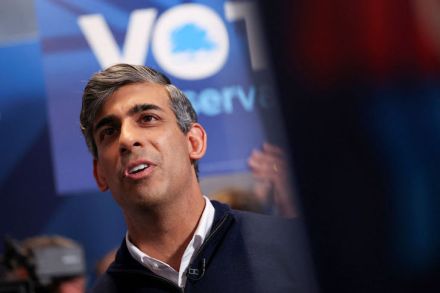
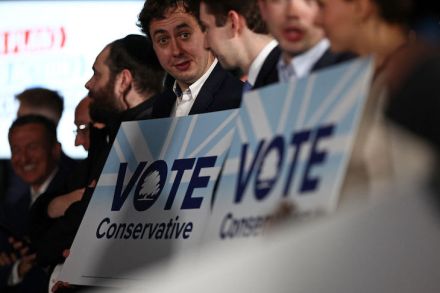
With opinion polls predicting an oncoming electoral shellacking for the Conservatives, it is unsurprising that Rishi Sunak is hoping to find extra voters wherever he can. CCHQ’s latest bet is in the two million or so Britons living overseas who have just had their lifetime voting rights restored. On 16 January, rules came into operation allowing all British citizens living abroad to register to vote in general elections. Labour introduced a 15-year limit on voting rights for expats in 2001. Repealing that limit has been a long-standing Tory manifesto commitment. Doing so with last year’s Elections Act has more than doubled the number of eligible overseas voters from 1.4 million to 3.5 million.

Is it time to scrap the Covid inquiry?

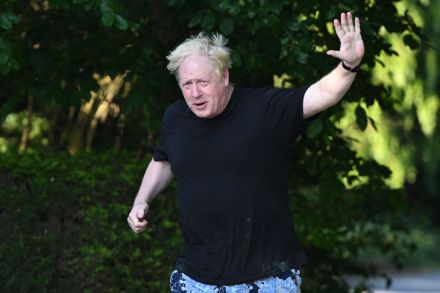
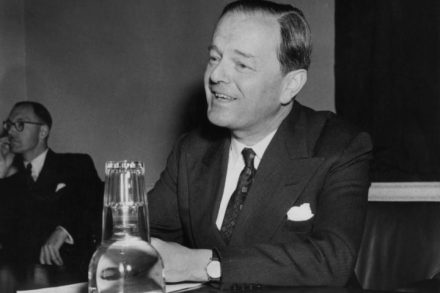
Why do we have inquiries? The late Geoffrey Howe suggested six principal reasons: to establish the facts, to learn from the events, to provide catharsis for those affected, to reassure the public that matters are being resolved, to allocate accountability and blame, and the political urge to show something is being done. By those metrics, the Covid inquiry is not only failing, but becoming a farce. The row over Boris Johnson’s WhatsApps between the Government, the ex-PM, and the inquiry chair Baroness Hallett may end up in court. The inquiry looks set to conclude its public hearings in the summer of 2026. Subjects such as Covid contracts and decisions on care homes will not be tackled until 2025 – five years after the pandemic began, and after Matt Hancock will have left parliament.

Tory supporters should curb their enthusiasm for Penny Mordaunt

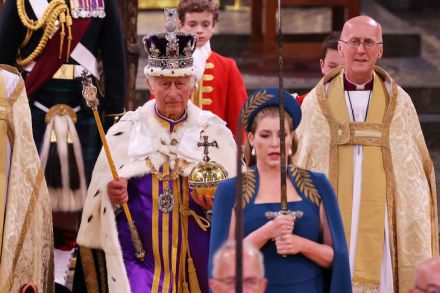
A confession: Penny Mordaunt was my teenage political crush. Publicly admitting that would be rather more embarrassing if the performance of the Leader of the House of Commons at the coronation didn’t have my fellow Conservatives infatuated. God knows what my 15-year-old self would have made of her eye-catching role on Saturday, but many Tory supporters were suitably impressed. As soon as she appeared in ceremonial battledress, 'Oh my Gods' at her outfit mixed with tweets of appreciation for her remarkable ability to carry a weighty sword for an hour. Comparisons have been drawn to other formidable women: Boudica, Athena, and Britney Spears. She may not have been crowned this weekend but we have a new Queen of Tory hearts.

Is it time to ban George Osborne?

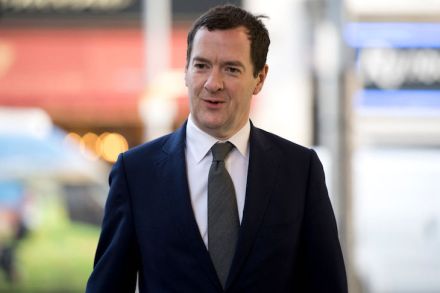
George Osborne has taken a break from his myriad jobs to give his thoughts on health policy. Orange juice should be taxed, and smoking banned, according to the ex-Chancellor. Doing so had been 'too controversial' while he was in government; those 'anti-nanny state Conservatives' who oppose it are 'not worth listening to. Leaving aside the lack of evidence about whether sugar taxes reduce calorie intake, and whether Conservative governments should impose such draconian measures, Osborne’s intervention is oddly timed. Negotiations with Greece on the Elgin Marbles’ future are ongoing; one would have thought the chairman of the British Museum has better things to be doing than opine on orange juice.

We should support Oxford’s crackdown on motorists

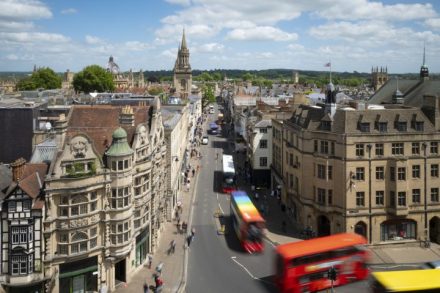
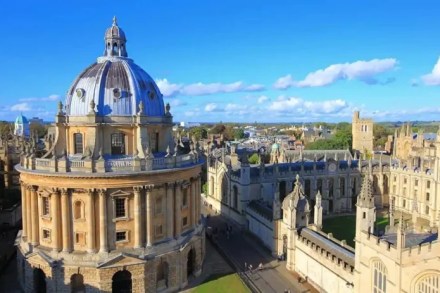
Now that Morse has cracked his final case, Oxford’s streets will be freed from the annual disruption caused by successive Jaguars and their attendant film crews. But that’s of little comfort to residents facing a new source of gridlock – one, ironically, caused by those protesting efforts to reduce the city’s notorious congestion. Last month 2,000 eclectic protestors descended on the city centre to oppose, amongst other things, Low-Traffic Neighbourhoods (LTNs), 15-minute cities, and ‘climate lockdowns’.   As a former resident and council candidate, I’m much too familiar with Oxford’s traffic trouble.

Zoomers like me don’t realise how lucky we are

For millennials like me, talkin' 'bout our generation usually involves complaining. We Generation Zs – or zoomers – can’t seem to catch a break. Even before the pandemic, we were on track to be the first generation worse off than our parents since the Great Depression. It takes us twenty-somethings six times as long to save for a deposit as forty years ago. Having been told by Tony Blair a university education was essential, we leave, saddled with debt, to confront an over-stuffed and unwelcoming graduate market. After spending 2020 locked up against a disease that has a limited impact on young people, we face unemployment and decades of higher taxes to pay off Dishi Rishi’s debt mountain. Unsurprisingly, we’re a tad cross.

Oxford students should resist these medieval trigger warnings

In 1408, the Archbishop of Canterbury convened a synod in Oxford to prohibit the reading of John Wycliffe’s English translation of the Bible without the Church’s permission. Long before Martin Luther, Wycliffe – a priest, theologian, and Oxford fellow – argued scripture was the only reliable guide to God’s truth, and that the Papacy had no Biblical justification. His unprecedented translation was a practical – and, for the Church, worryingly popular – challenge to Church orthodoxy.   Although Wycliffe was long dead, the Pope condemned him for heresy in 1415. His supporters – named ‘Lollards’ for their habit of mumbling – were suppressed. Some were burnt to death.

The Oxford-Cambridge arc shows why the Tories don’t get it

Rishi Sunak has long sought to give Britain its very own Silicon Valley. Partially because pseudo-Californian beaches would provide respite from snarling backbenchers, but mainly because creating a European hub for innovation in Britain would be a good way to rejuvenate our sclerotic growth rates. Hence why today the government is stumping up £2.5 million for a new ‘regional partnership’ driving investment towards Oxford and Cambridge. With two of the world’s leading universities in close proximity, turning swathes of South-East England into a haven for science and technology should be a no-brainer, surely? Alas, the philosopher John Stuart Mill didn’t label the Conservatives ‘the stupid party’ for nothing.

Scrapping university personal statements is a mistake

The decision to scrap personal statements shows up our university system for what it really is: the priority is no longer about educating students, or academic endeavour, but expansion for expansion’s sake. Ucas (the Universities and College Admissions Service) plans to replace the current applicant essay with a survey. This will reportedly ask taxing questions such as why applicants are motivated to study a particular course, why they are ‘ready to succeed’ and any context for their academic achievements – or lack thereof – so far. The justification? That the status quo is unfair on those students without access to ‘high-quality advice and guidance’.

Oxford’s Oriental name change is a mistake

Oxford’s Faculty of Oriental Studies has had a name change: it will now be known as the Faculty of Asian and Middle Eastern Studies. University bigwigs opted to drop the word 'oriental' over fears that it might be too outdated and potentially offensive. This is a small-minded attack on a great and important subject. It's also a distraction from the university’s real problems. The word’s presence in the faculty’s name hasn’t stopped Oxford from accepting more students from China, India, and the rest of what we once knew as the 'Orient' than ever previously – just as Cecil Rhodes’ statue hasn’t prevented the university from having more black students than ever before.

Boris Johnson should quit now to save his career

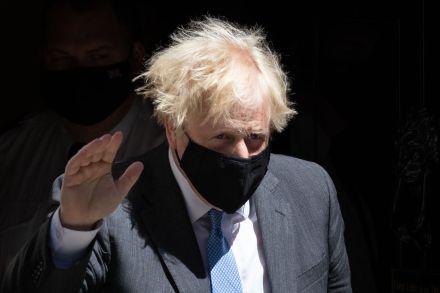
The greased piglet will soon be sausages. That, at least, seems the obvious outcome of this week's Tory party confidence vote. With over 40 per cent of his MPs in open revolt against him, even Boris Johnson, the great political escapologist, is running out of road. He may have survived now. But with two by-election losses looming in the Red and Blue Walls, a cost-of-living crisis spiralling out of control, and MPs manoeuvring against him, this reprieve looks temporary. The Conservative party has still not entirely recovered from Margaret Thatcher’s defenestration 30-odd years ago, and nobody would want to repeat the six months of agony and the electoral shellacking that it finally took for Theresa May to go. Least of all, surely, Johnson himself.

Durham should be proud to be a second-rate Oxbridge

Durham University has long been considered the destination of choice for Oxbridge rejects. But this is an image some students in Durham are keen to shake off. Durham's Students' Union hopes to end the stereotype that it is the alma mater of choice for those who don't make the cut at Britain's ancient universities. It has published a 48-page 'Culture Commission', in which it says the label is unfair since ‘most students are not in fact unsuccessful candidates of Oxford or Cambridge.' Rather than be embarrassed by this label, Durham students should embrace it. This knee-jerk decision to try and rebrand Durham is hardly surprising at an institution where Rod Liddle's appearance led to protests and which once even banned its Conservative association.

Oxford’s petty war on smokers

Life is about to get even more miserable for smokers living in Oxford. Oxfordshire county council has announced plans to make the region ‘smoke-free’ by 2025. Smokers will be prevented from having a puff outside cafes, pubs, and restaurants, while employers will be asked to impose smoke-free spaces in workplaces. Hospitals, schools, and public areas will be urged to ban smoking, and lighting up will be discouraged in homes and other private spaces. In short, Marlboro retailers hoping to ply their wares anywhere between Banbury and Henley are going to be out of luck. I’m not a smoker and I have no desire to be. The combination of a wheezy grandfather and a chronic lack of funds has meant a tobacco habit has never held much attraction.

Studying history isn’t what it used to be

Is history in danger of becoming a thing of the past on campus? In recent weeks, Aston in Birmingham announced a consultation on plans to close its entire history department. Meanwhile, London South Bank has announced that its history course will not be recruiting students from this Autumn.  The condemnation was swift. Former regius professor of history at Cambridge Richard J Evans and author of numerous books on the Third Reich, said that history was 'more important than ever', since it provides the skills to look critically at the evidence and to distinguish fact from fiction' in age of fake news and populism.  But as a history student myself, I'm not convinced a decline in the number of courses is such bad news.

British universities aren’t institutionally racist

There is a spectre haunting British universities: the spectre of institutional racism. 'There is a lot of evidence that points towards universities perpetuating systemic racism, being institutionally racist,' the University of East Anglia’s vice-chancellor, David Richardson, told an upcoming BBC Three documentary 'Is Uni Racist?'. Viewers are likely to be left in no doubt that the answer to that question is 'Yes'. Two people I know appeared in it, and it was moving to hear them share their experiences. Yet the reality is that for most black students there has never been a better time to study at a university in Britain. Of course, that doesn't mean there aren't still problems.

It’s time to call last orders on Britain’s rubbish pubs

Oxford is famous for its pubs. Inspector Morse reveals that they are as much a part of the city’s life as any of its colleges. The insatiable undergraduate demand for cheap beer has meant that pubs like the Turf Tavern and the Eagle and Child have permeated (and intoxicated) the minds of students for centuries. So when the Lamb and Flag closed last week, it was as much a story as any of those bizarre murders John Thaw used to stick his nose into. No Jag-driving detectives are needed to work out why it has shut. A year of missed terms and lockdowns dramatically cut the pub's revenue. Owned by neighbouring St John’s College, the pub has stood on its current spot since 1615. C.S. Lewis and J.R.R.

Rhodes shouldn’t fall but Clive had to go

Tearing down statues and renaming places is all the rage. But acting in this way isn’t always a mistake. Take Clive House, at my old school, Merchant Taylors’, which was, until this month, named after Robert Clive, conqueror of Bengal, hero of Plassey and my school’s most famous former pupil (asides from Michael Mcintyre). Now it will be known as Raphael House, after John Raphael, a former pupil who died fighting in Flanders.  Is this part of the worrying trend of ahistorical, post-BLM iconoclasm that dunked Colston in the Avon, graffitied Winston Churchill and renamed Birmingham’s streets after HR buzzwords? I'm not convinced – and not only because of what Clive got up to after he left Merchant Taylors’.