Tom Holland

Going down fighting

Both the Greeks and the Jews were haunted by the image of a burning city. Indeed, there is a sense in which their radically differing attempts to exorcise it served to define their respective cultures. Among the Greeks, it was believed that everything most glorious about mortal achievement, and everything most terrible about mortal suffering, was to be found in the narrative of the siege and sack of Troy. Among the Jews, nothing did more to shape their understanding of the divine purpose than their anguished attempts to fathom why it was that their god had permitted Jerusalem to fall. Even today, millennia on, the aftershocks of these twin calamities continue to reverberate. The Iliad and the Bible: what would our own civilisation have been without their influence?
Fighting spirit

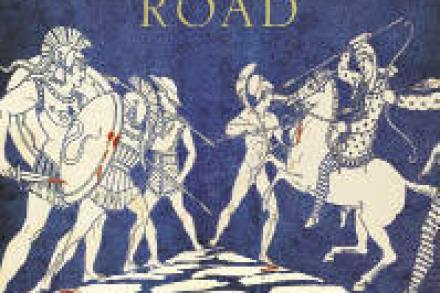
The metaphors that come to us when we are sick, trapped in the no-man’s land bet- ween consciousness and oblivion, are often the most vivid of which our minds are capable. The metaphors that come to us when we are sick, trapped in the no-man’s land bet- ween consciousness and oblivion, are often the most vivid of which our minds are capable. No wonder, then, once we are recovered, that the memory of them may prove impossible to banish. It is the measure of those that came to Peter Stothard when he was receiving treatement for what at the time appeared terminal cancer that they should have inspired this haunting, erudite and beautifully written book.

Give peace a chance

Time was, back in the Renaissance, when barely a book would be published which did not feature some lavish hero-worship of Cicero. Machiavelli, Erasmus, Thomas More: they all regularly name-checked ‘Tully’. The same could hardly be said of authors today. Even those who do deign to mention Rome’s greatest orator have rarely tended to feel much admiration for him. Typical was Kingsley Amis. In Take a Girl Like You, the raffish schoolteacher, Patrick Standish, finds himself drilling his pupils in the Phillipics, the speeches which Cicero, with immense courage, delivered against Mark Antony, at the eventual cost of his life.

Bright sparks of the Dark Ages

Travelling Heroes: Greeks and Their Myths in the Epic Age of Homer, by Robin Lane Fox In Book II of the Iliad, Homer describes for the first time a Greek advance across the plain of Troy. Various similes are deployed to convey its impact, most of them precise and vivid, as Homer’s similes invariably are. One of them, however, has always inspired a faint measure of perplexity. Describing the impact of the Greek troops’ feet on the earth, Homer compares it to ‘the anger of Zeus who delights in thunder, whenever he lashes the ground around Typhoeus in Arima…’ Zeus, of course, was the king of the gods, and Typhoeus his deadliest rival, a colossal and snake-headed monster — but what or where was Arima?

Like father like son

Phillip II of Macedonia by Ian Worthington Alexander the Great, it goes without saying, was a man not much given to modesty. In 334 BC, as he was preparing to embark on his invasion of Asia, his mother, the sinister witch-queen Olympias, whispered in his ear ‘the secret of his birth’, revealing that he was in fact the son of a god, of Zeus himself — and Alexander believed her. Three years later, in Egypt, he travelled hundreds of miles out of his way to consult the desert oracle of Siwah and the priest, it is said, ‘left him in no doubt that he was indeed the son of Zeus’. By 324, with a record of victory behind him second to none, he went the whole hog, and openly demanded divine honours, before promptly dying the following year.

A tale of two timeless epics

It is oddly moving, at a time when mention of the name ‘Homer’ invariably conjures up thoughts of donuts, to know that the author of the Odyssey remains the first classical author to whom most children are introduced. At my daughters’ primary school, for instance, they are told the story of the Cyclops in Year One. The thread of continuity that this represents reaches back ultimately all the way to archaic Greece. Homer’s epics, wrote Alexander Pope, are ‘like a copious nursery, which contains the seeds and first productions of every kind’. The metaphor is doubly effective: for Homer stands at the beginning both of the Western literary tradition and of many an individual’s experience of it.

Making the stones speak

The current must-see exhibition at the Museum of London, 150 London Wall, London EC2 (The Missing Link? until 8 August) includes a limestone sarcophagus containing a headless male skeleton. Discovered in the foundations of the church of St Martin-in-the-Fields, just off Trafalgar Square, it has been dated by archaeologists to around AD 410, the traditional date for the end of Roman rule in Britain. Yet beyond the fact that the man in the coffin was in his forties, of average height and presumably elite status, there is little more that can be deduced with any certainty about him. As is the case with so many finds dredged up from the murk of Roman Britain, the urge to speculate is both encouraged and frustated.

Business as usual | 21 April 2007

Protests against international business are nothing new. Probably the wittiest, and certainly the most brutal, took place long before the first trashing of a Starbucks, way back in the early 1st century BC. This was a period when the Roman Republic, lacking a bureaucracy of its own, had opted to privatise the provincial tax-system — and huge conglomerates, complete with share options, board directors and AGMs, duly reaped spectacular profits. A spectacular whirlwind too, for in 89 BC, the entire province of Asia rose in revolt, and a year later, when the Roman commissioner was taken prisoner, he suffered a memorably hideous fate. ‘The Romans,’ pronounced his judge, ‘have only one abiding motive: greed.

Victims and/or beneficiaries

‘Roman Britain,’ I asked a friend of mine, a committed pacifist and the veteran of endless marches against the war in Iraq, ‘a Good or Bad Thing?’ ‘Oh, good,’ my friend answered, not even deigning to ponder the question. Startled by the knee-jerk speed of her response, I asked her to explain. ‘Well, the roads, of course. And the baths and the central-heating.’ She paused. ‘And the peace.’ I knew exactly where she was coming from. When I pressed her, it turned out that her hazy sense of Roman Britain derived in large part from a Ladybird book that I too had read when I was young. It was the pictures I chiefly remembered.

Never simply a soldier

There was nothing that a Roman general relished more than the chance to raise an earthwork. ‘Dig for victory’ was an injunction that legionaries often followed with a literal cussedness. Advancing into enemy territory, they carried shovels as well as spears. The camp that a legion would build after every day’s march, always identical to the one that it had built the evening before, was the expression of something almost obsessive in the Romans’ military psychology. The blend of caution and remorselessness that this addiction to entrenchment reflected was, in strategic terms, stupendously successful. Who better, then, than a specialist on the Roman army to absorb its implications?