Tom Holland

Is politics becoming more religious? With Tom Holland & Jonathan Sumption

39 min listen

Is British politics becoming more religious? Madeline Grant certainly thinks so, arguing – in the Spectator’s cover article – that the next election could be the most religious for decades. Issues like immigration and Islam, assisted dying – and even the establishment of the Church of England are likely to play a role. The current Labour government's ‘most telling divide’, Madeline writes, is between MPs – like Shabana Mahmood and Wes Streeting – who understand religion – and 'those who don’t’. For the Edition’s Easter special, host Lara Prendergast is joined by vicar – and Madeline’s husband – The Rev’d Fergus Butler-Gallie, former Supreme Court justice Jonathan Sumption and the historian and broadcaster Tom Holland.
I’m a fighter, not a quitter

‘Ring out the old, ring in the new…’ This was the year I discovered that one of my ancestors had been a housemaid deflowered, impregnated and turfed out on to the street by her self-evidently villainous employer – but also that another had been land agent to Lord Tennyson. The perfect incentive for me, then, this festive season, to curl up with ‘In Memoriam A.H.H.’ The poem’s tone of plangent melancholy, its regret that the years must slip by, will be more than usually in tune with my mood: for in 2025, a mere five days after new year, I shall be marking my 57th birthday. There is, as Tennyson well knew, a kind of pleasure in being lugubrious. The older I get, the more I am looking to embrace it.

Easter special: how forgiveness was forgotten

36 min listen

This week: how forgiveness was forgotten, why the secular tide might be turning, and looking for romance at the British museum.  Up first: The case of Frank Hester points to something deep going on in our culture, writes Douglas Murray in the magazine this week. ‘We have never had to deal with anything like this before. Any mistake can rear up in front of you again – whether five years later (as with Hester) or decades on.’ American lawyer and author of Cancel Culture: the latest attack on free speech, Alan Dershowitz, joins the podcast to discuss whether forgiveness has been forgotten.

From The Archives: Tom Holland

45 min listen

As Sam is still away, we've dug out one our favourite podcasts from the archives. Back in 2019 Sam spoke to the historian Tom Holland, about his book Dominion: The Making of the Western Mind. The book, though as Tom remarks, you might not know it from the cover, is essentially a history of Christianity and an account of the myriad ways – many of them invisible to us – that it has shaped and continues to shape Western culture. It’s a book and an argument that takes us from Ancient Babylon to Harvey Weinstein’s hotel room, draws in the Beatles and the Nazis, and orbits around two giant figures: St Paul and Nietzsche. Is there a single discernible, distinctive Christian way of thinking? Is secularism Christianity by other means?

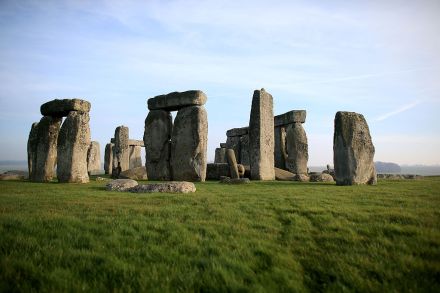
The desecration of Stonehenge

The Conservative party, over the course of its lengthy history, has been defined by two particular traditions. One emphasis the duty of care to the past. It nurtures a suspicion of grandiose and ill-founded schemes. It never forgets that the responsibility of a conservative is ultimately to conserve. Then, parallel to this, there is a second tradition. This emphasises the importance of sound money. It scorns to believe in magic money trees. It does not spray taxpayers’ cash around like there is no tomorrow. It pays scrupulous attention to the bottom line. Today, a supposedly Conservative government has made a mockery of both these traditions.

How to plan the ultimate English road trip

Huge excitement last week, as archaeologists announced the discovery in Southwark of the best preserved Roman mausoleum ever found in Britain. I heard the news on the radio while driving with a friend, and both of us – living as we do south of the river – cheered. Shortly afterwards, I was invited on to the World Service to talk about Roman London. No sooner had the presenter introduced me than he was demanding to know about the mausoleum. I felt a lurch of horror. I realised I knew nothing, absolutely nothing about the mausoleum beyond what I had heard on the radio. ‘What did it look like?’ the presenter pressed. What to say? That it was big? Small? Mausoleum-y? In the event, I decided that honesty was the best policy. I put my hands up. I confessed my ignorance.

Christmas Special

65 min listen

Welcome to the special Christmas episode of The Edition! Up first: What a year in politics it has been. 2022 has seen five education secretaries, four chancellors, three prime ministers and two monarchs. But there is only one political team that can make sense of it all. The Spectator's editor Fraser Nelson, deputy political editor Katy Balls and assistant editor Isabel Hardman discuss what has surely been one of the most dramatic years in British political history (01:13). Then: Christmas is a time to spare a thought for our neighbours. While in the UK we have our own hardships, families in Ukraine are facing a Christmas under siege.

The red line: Biden and Xi’s secret Ukraine talks

38 min listen

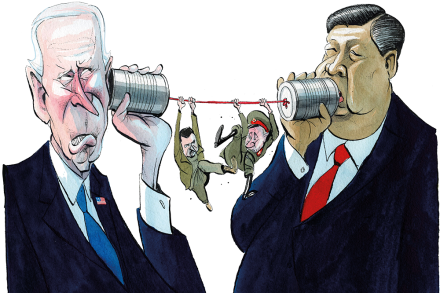
On this week's podcast: Could China be the key to peace in Ukraine? In his cover piece for the magazine this week Owen Matthews reveals the covert but decisive role China is playing in the Ukraine war. He is joined by The Spectator's Cindy Yu, to discuss what Xi's motivations are (00:53).  Also this week:  Harriet Sergeant writes that the Iran is at war with its own children as it cracks down on young protesters. She is joined by Ali Ansari, founding director if the Institute for Iranian Studies, to consider the fragility of the Iranian regime (14:32).  And finally:  Julie Bindel says in the magazine this week that after recent controversy the Society of Authors is no longer fit for purpose.

In defence of pigeons

I have done absolutely nothing this past year except pound away at a book. For complicated logistical reasons that are far too boring to go into, I discovered last summer – rather in the manner of a Bank of England economist blindsided by the inflation rate – that I had badly miscalculated how long I had to finish it. A deadline that I had initially thought was February 2023 turned out to be July 2022. As a result, I have done nothing these past 12 months except write about the Romans. I have incinerated the Temple of Jerusalem, destroyed Pompeii, inaugurated the Colosseum and built Hadrian’s Wall. What I have not done, however, is much exercise – and so no sooner had I breasted the tape of my deadline than I was off for a 20-mile walk across London.

The prickly truth: hedgehogs face a struggle to survive

No wild animal is closer to the hearts of the British than the hedgehog. In poll after poll, it has been voted our favourite mammal. This is hardly surprising. Hedgehogs naturally inspire affection. Mrs Tiggy-Winkle, the companionable washerwoman created by Beatrix Potter, is only the most celebrated of a whole host of them who trot and snuffle through our national imagination. They are familiar to us in a way that few other wild creatures are. They can be met in fields and gardens, in hedgerows and parks. To see one is to feel the tug of a fascination with the natural world as a whole. In the words of Hugh Warwick, the naturalist who serves hedgehogs as their great contemporary champion: ‘These are precious creatures to be treated with great respect.

The church that’s hosted the Virgin Mary, Benjamin Franklin and Hugh Grant

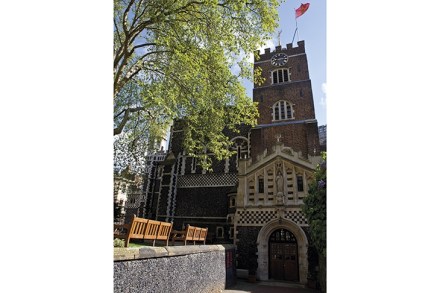
There is only one place in the world that has played host to both the Virgin Mary and Benjamin Franklin, and it is in trouble. At St Bartholomew the Great, London’s oldest parish church, the beams of the Lady Chapel are rotting. Rebuilt in the 14th century, the present chapel stands on the site of a much older structure. It was here, sometime in the late 12th century, that a monk named Hubert was visited by the Virgin. She was not best pleased; the praises offered to her, she complained, were no longer up to scratch. Hubert hurried to relay this to his fellow monks. All of them, from that time on, made sure to raise ‘a readier praise of her name’. Such was the impact of what remains, to this day, the only recorded appearance of Christ’s mother in the capital.

The anxieties that long ago shadowed Christmas are back

Christmas has been given the green light by the government this year less because it marks the birth of Christ than because retailers and the hospitality industry desperately need it to go ahead. Other feast days in the Christian calendar still belong to the church. Christmas is the feast day that a fundamentally secular nation has made its own. It’s become part of the festive tradition for Christians to mourn this as the ultimate triumph of commercialisation and self-indulgence. But it might comfort them this year to know that their anxiety has deep roots.

The history of Thebes is as mysterious as its Sphinx

The Spartans were not the only Greeks to die at Thermopylae. On the fateful final morning of the battle, when Leonidas, knowing that the pass had been sold, ordered the vast majority of the contingents stationed at the Hot Gates to retreat and live to fight another day, two detachments stayed behind to join the 300 in their heroic last stand against Xerxes. Both these detachments came from Boeotia, the fertile plain which stretched directly south of Thermopylae and extended as far as the frontier with Athens. One of these two detachments came from Thespiae, a small but famously cussed city in central Boeotia: 700 hoplites who, alongside the Spartans, fought, died and were lauded as martyrs for Greek liberty. What, though, of the 400 men who constituted the other contingent?

Sugared with wit: How ‘Mr Spectator’ came to life

The Spectator is a child of the 19th century, and damned proud of it. First published in 1828, the link provided by its 10,000 issues to a long-vanished age of Regency waistlines and Romantic poets is one of the great wonders of journalism. Its success was built upon Victorian foundations, yet it is a peculiarity of the current media landscape that The Spectator, the only current affairs magazine actually to have been published in the 19th century, should in many ways seem the least Victorian of the lot. The New Statesman, Prospect, Standpoint: all have a certain quality of moral earnestness that one could imagine Gladstone admiring. The Spectator, by contrast, seems to breathe the coffee-perfumed air of an earlier age.

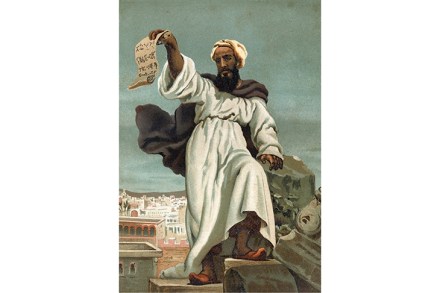
Revelations about the prophet

In 2011, when the editor of Charlie Hebdo put Muhammad on the cover, he did so as the heir to more than 200 years of a peculiarly French brand of anti-clericalism. Just as radicals in the Revolution had desecrated churches and smashed icons, so did cartoonists at France’s most scabrous magazine delight in satirising religion. Although Catholicism was their principal target, they were perfectly happy to ridicule Islam too. If Jesus could be caricatured, then why not Muhammad? Sure enough, one year after the prophet’s first appearance on the cover of Charlie Hebdo, he was portrayed again, this time crouching on all fours and with his genitals bared.

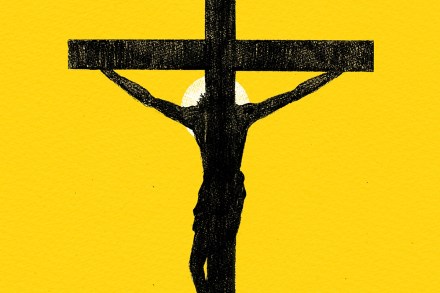
The way of the cross

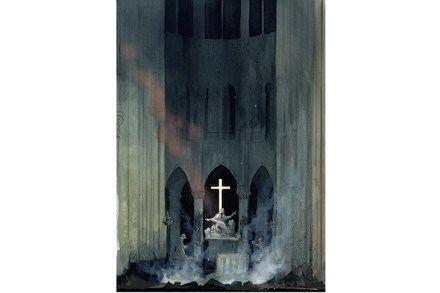
Declarations of hope that Notre Dame can be resurrected have been much in evidence this Holy Week. Such is the lesson of Easter: that life can come from death. Unlike the Eiffel Tower, that other great emblem of Paris, Notre Dame provides the French with evidence that their modern and secular republic has its foundations deeply rooted in the Middle Ages. Notre Dame has always been more than just an assemblage of stone and stained glass. It is a monument as well to a specifically Christian past. Last summer, one of the world’s best-known scientists, a man as celebrated for his polemics against religion as for his writings on evolutionary biology, sat in another cathedral, Winchester, listening to the bells peal.

Decline and fall | 8 November 2018

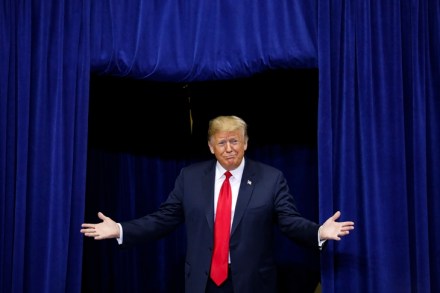
For a millennium and a half now, one of the great pleasures of being a commentator on current affairs has been comparing a political crisis to the fall of the Roman Empire. Nothing recently has quite so turbo-charged this perennial trend like the presidency of Donald Trump. The flamboyant egotism, the patent amorality, the porn stars: all seem conjured up from the reign of a peculiarly depraved Caesar. The vague sense that Rome fell because its rulers were decadent — no matter how divorced from historical reality such a myth may be — still lurks in the public imagination.

Fallen franchise

Back in the mists of prehistory, when I was eight, dinosaur films followed a set pattern. The dinosaurs themselves would be cheerfully unpalaeontological; women would wear improbable outfits; volcanoes would explode. Then, in 1993, courtesy of Steven Spielberg, came a sea-change. Jurassic Park was that cinematic rarity: a science fiction film that succeeded in influencing the science it was fictionalising. The story of a theme park populated by resurrected dinosaurs, it offered a portrayal of Mesozoic fauna that was as close to authentic as could then plausibly be achieved. For the first time, computer-generated imagery was used to portray dinosaurs as scientists had come to envisage them: agile, bird-like, smart. The impact was profound.