Tom Holland

Children and slaves first

In the reign of Constantine, whose conversion to Christianity in AD 310 set the entire Roman world on a course to becoming Christian, a Palestinian scholar named Eusebius pondered the reasons for the triumph of his faith. Naturally, he saw behind it the guiding hand of God; but he did not rest content with that as an explanation. The purposes of heaven were to be traced in the patterns of earthly history. ‘It was not merely as a consequence of human agency that the greater part of the world’s peoples came to be joined under the sole rule of Rome — nor that this should have coincided with the lifetime of Jesus.’ A global faith, Eusebius argued, had been rendered possible by a globalised age.
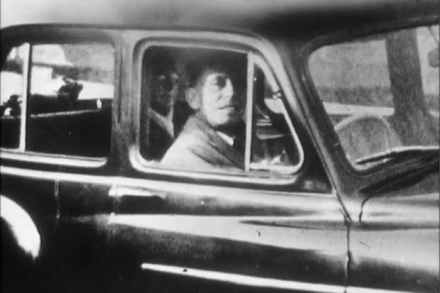
The photograph that filled me with terror

This time last year, in a review for The Spectator of two books on extraterrestrial life, I mentioned how, as a child, the highlight of the summer holidays was when my cousin Simon came to stay. Our great shared passion was mysteries: not only flying saucers, but everything from the Loch Ness Monster to Atlantis as well. Naturally, ghosts figured high on the list of our obsessions. We knew all the classic tales of hauntings: from a spectre in chains reported by Pliny the Younger to have roamed a house in Athens, to Borley Rectory. Nothing, though, gave us quite as delicious a shudder of dread as a photograph of an Ipswich man sitting in a car, taken back in 1951 by his wife after a visit to her mother’s grave — for there, sitting in the back seat, was her mother.

Don’t forget the Yazidis

As the floodwaters subsided, the Ark drifted across northern Iraq. Finally, with a crunching jolt, it hit dry land. Its timbers had scraped the peak of a mountain range called Sinjar. Water began to pour in. Fortunately, a black serpent, its coils as thick as an arm, moved to plug the breach. The Ark did not sink. Noah, his family, and all the various animals on board survived to repopulate the earth. This story, so familiar, so strange, can be seen illustrated in a shady courtyard that also boasts, just for good measure, the very spot where Adam is claimed to have been fashioned from dust. Lalish, a magical compound of domes, towers and stairways, stands in a valley in Iraqi Kurdistan.

The killing God

On 6 July 1535, the severed head of England’s former lord chancellor, Sir Thomas More, was carried across London Bridge to the gatehouse on the southern bank. There it was parboiled and set on a spike. Another head, that of the bishop and theologian John Fisher, was removed to make way for it, and thrown into the Thames. Both men, rather than accept Henry VIII as Supreme Head of the Church of England, had willingly embraced martyrdom at the king’s hands. Both men would end up canonised by the Catholic Church. Amid the violent convulsions of the Reformation, nowhere bore more public witness to the willingness of men to kill and be killed in the cause of God than London Bridge. Time, though, would see the intensity of these religious passions fade.

In praise of a precious poet

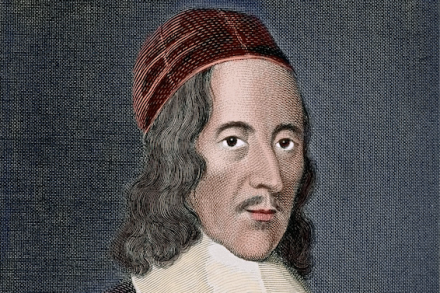
Never having experienced anything that I would attribute to a supernatural cause, I am obliged to confess that my prayers have always gone unanswered. But I only have to read George Herbert — rector of a small church near where I grew up, and therefore a poet who has always been particularly precious to me — to regret this: Softness, and peace, and joy, and love, and bliss, Exalted manna, gladness of the best, Heaven in ordinary, man well drest, The milky way, the bird of Paradise, Church-bells beyond the stars heard, the soul’s blood, The land of spices; something understood.

To earth from heaven

When I was a child, the highlight of the summer holidays was when my cousin Simon came to stay. We shared a common obsession: aliens. Day after fruitless day, we would scan the skies, looking for UFOs. At night, long after we were supposed to have gone to sleep, we would get out our torches and pore over books on extraterrestrial life. These ranged from the sternly scientific — tomes on astronomy or space flight — to paperbacks with altogether more lurid copy. One in particular, filled with vivid images of flying saucers and Area 51, was a focus of our almost superstitious fascination. This was because it contained a picture that —to my deep embarrassment now — we had mutually decided was the scariest we had ever seen.

Diary – 1 September 2016

European unions come and go. Back in 1794, one of the more improbable ones was founded when Corsica joined Britain as an autonomous kingdom under the rule of George III. It didn’t last long, and by 1796, after an ignominious Brexit from the island, the Corsicans once again found themselves under French rule. Today, the episode is chiefly remembered for the injury sustained by one particular officer during the initial British capture of the island: it was during the siege of Calvi that Nelson lost the sight in his right eye. ‘Never mind,’ he wrote to his wife, ‘I can see very well with the other.

Pitch perfect | 21 July 2016

One day, many seasons ago, Jon Hotten was on the field when a bowler took all ten wickets. In his memories, the afternoon has the quality of a dream. The ground was deep in the countryside, surrounded by trees. The boundary line was erratic and the sightscreens weathered. The match was won beneath a ‘perfect sky’. Hotten’s prose, simultaneously spare and lyrical, conjures up the scene as magically as Edward Thomas’s poem evokes Adlestrop. What happened to the people who played with him on that day, Hotten wonders. ‘Have they had good lives since then? I hope so. Nothing ties us except that game, but I doubt that anyone who played has forgotten it.

The perfect religion for Guardian readers (plus some other neglected belief systems)

Exciting news from the world of philosophy! Next year will see the 20th anniversary of the New Stoa, an online community of ‘all those who are Stoics and who wish to be known by the commitment they have made’. Stoicism, the philosophy of choice for sanctimonious Roman billionaires, is evidently making a comeback. Its appeal, to an age obsessed equally by smartphones and virtue signalling, is no great mystery, I suppose. Seneca, who served as Nero’s tutor and whose manipulation of the overseas currency markets may well have precipitated Boudicca’s revolt, was a Stoic.

Would you believe it? A selection of ancient faiths ripe for revival

Exciting news from the world of philosophy! Next year will see the 20th anniversary of the New Stoa, an online community of ‘all those who are Stoics and who wish to be known by the commitment they have made’. Stoicism, the philosophy of choice for sanctimonious Roman billionaires, is evidently making a comeback. Its appeal, to an age obsessed equally by smartphones and virtue signalling, is no great mystery, I suppose. Seneca, who served as Nero’s tutor and whose manipulation of the overseas currency markets may well have precipitated Boudicca’s revolt, was a Stoic.

Of gods and men

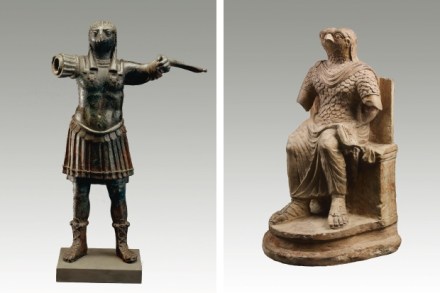
Over the stupefyingly long course of Egyptian history, gods have been born and they have died. Some 4,000 years ago, amid the chaos that marked the fragmentation of the original pharaonic state, an incantation was inscribed on the side of a coffin. It imagined a time when there had been nothing in existence save a single divine Creator. ‘I was alone in the emptiness,’ the god proclaimed, ‘and could find no place to stand.’ Nevertheless, beside him, he could feel the gods that were yet to exist. ‘They were with me, these deities waiting to be born. I came into being and Becoming became.’ The gods emerged, to reign first on earth and then in the heavens, and history began.

Diary – 24 September 2015

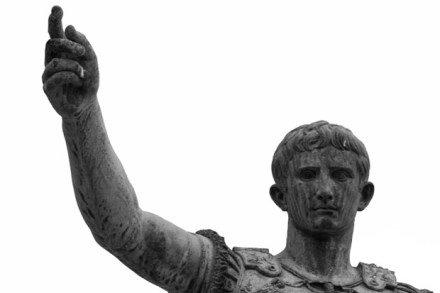
Jeremy Corbyn has been compared to plenty of people over the past few months — a geography teacher, Michael Foot, Brian from the Monty Python film — but my favourite comparison was to a horse. Steve Fielding, professor of politics at Nottingham, declared Corbyn’s election ‘an act of political stupidity unparalleled since Caligula appointed his horse to the Roman senate’. As someone with a book just published on Rome’s first imperial dynasty, I was doubly thrilled. First, Professor Fielding had confirmed the conviction in which I had written my history of the first Caesars: that two millennia on, the West’s primal examples of political excess continue to instruct and appal.

The glory that was Greece

Financial crises are nothing new in Greece. Back in 354 BC, at a time when Frankfurt was still a swamp, the Athenian general Xenophon wrote a briefing paper designed to help his city negotiate the aftermath of a disastrous war. His proposals mixed supply-side reform with Keynesian stimulus. The regulatory powers of Athenian officials, so Xenophon suggested, should be streamlined and enhanced; simultaneously, the city should invest in increasing its commercial and housing stock. The economy, boosted by these measures, would also benefit from encouraging foreign investment. ‘Imports and exports, sales, rents and customs’: all would then surely flourish.

Darius III: Alexander’s stooge

In 1891, George Nathaniel Curzon, ‘the very superior person’ of the mocking Balliol rhyme, and future viceroy of India, arrived at Persepolis. Torched in 330 BC by Alexander the Great, it had once been the nerve-centre of an empire that stretched from the Aegean to the Hindu Kush. For Curzon, whose tour of Iran had already taken him all over the country, the ruins of the great palace were a particular highlight. The Persia of the Achaemenids, the ruling dynasty of the ancient empire, was, so he declared, ‘immeasurably superior to medieval Persia in its attributes and even now more respectable in its ruins’. Coming from a man who was himself no slouch at imperial pomp, this was high praise indeed.

Tom Holland’s diary: Fighting jihadism with Mohammed, and bowling the Crown Prince of Udaipur

As weather bombs brew in the north Atlantic, I’m roughing it by heading off to Rajasthan, and the literary festival where you are most likely to be greeted by an elephant. The life of a writer is rarely glamorous, but for one week in January — should an invitation to Jaipur be forthcoming — it decidedly is. The festival is to India what a Richard Curtis film is to London: a fusion of all the fondest stereotypes that foreigners have of a place. The talks, which run the gamut from the Mahabharata to the future of the novel, are pure literary masala. The parties are visions of perfumed candles, shimmering saris and maharajas’ palaces. The last time I was in Jaipur, there was even a cricket match.

Tom Holland’s diary: Alex Salmond is the Scottish referendum’s answer to Shane Warne

[audioplayer src="http://traffic.libsyn.com/spectator/TheViewFrom22_11_Sept_2014_v4.mp3" title="Fraser Nelson, Tom Holland and Leah McLaren discuss how we can still save the Union" startat=50] Listen [/audioplayer]I feel a bit about the Scottish referendum as I did about the 2005 Ashes series. In both cases, those of us in the know were gripped with a nervous tension right from the very beginning. Shane Warne, Alex Salmond: the same smirk, the girth, the same potentially lethal form. That whole summer of 2005 I was on the rack, following every convulsive twist and turn, hoping against hope that England would manage to cling on to a precarious lead until stumps were drawn on the final day of the series. Tracking the Scottish referendum has been a similarly nerve-jangling experience.

The Islamic State is destroying the greatest melting pot in history

As the fighters of the Islamic State drive from village to captured village in their looted humvees, they criss-cross what in ancient times was a veritable womb of gods. For millennia, the Fertile Crescent teemed with a bewildering variety of cults and religions. Back in the 3rd Christian century, a philosopher by the name of Bardaisan was so overwhelmed by the sheer array of beliefs to be found in Mesopotamia that he invoked it to disprove the doctrines of astrology. ‘It is not the stars that make people behave the way do but rather the diversity of their customs.’ Bardaisan himself was a one-man monument to Mesopotamian multiculturalism.

Pompeii’s greatest gifts are not all archeological

The first visitor to take a break on the Bay of Naples was Hercules. He had just defeated some rebellious giants and buried them beneath Mount Vesuvius. To celebrate, he staged a procession across the mountain’s slope — in Greek, a ‘pompe’. He also founded two cities: one named after the procession, the other after himself. To this day, visitors from across the world still beat a trail to Pompeii and Herculaneum. The popularity of the two cities as tourist destinations owes everything, of course, to the restless thrashing of the giants imprisoned beneath Vesuvius. In AD 79, a particularly violent spasm resulted in an eruption so devastating that both cities ended up entombed in ash. The memory of the disaster never entirely faded.

The night that saved England

Thanks to the centenary of the first world war, counter-factuals are much in vogue. How different might history have been had Archduke Franz-Ferdinand never been assassinated, had Britain kept out of the conflict, had the Allies been defeated? Questions such as these are more than just a parlour game. They serve to cast the shadow of contingency over events that otherwise can seem all too predetermined. Deep and strong though the tides of history are, there have indeed been moments in the past when their flood-surge might have been diverted along profoundly different courses — moments when the fate of nations did truly hang in the balance. The protagonists of one such episode are currently starring in the British Museum’s latest spectacular.

My dear old thing! Forget the nasty bits

There can be a strong strain of self-parody in even the greatest commentators. When Henry Blofeld describes the progress of a pigeon in his inimitably plummy tones, or greets a visiting Ocker to the commentary box with a jovial ‘My dear old thing!’, he is impersonating himself as surely as Rory Bremner has ever done. Just where ‘Blowers’ ends, though, and the man behind the act begins, can be tricky to judge. In Squeezing the Orange he does occasionally show us behind the scenes. He reveals, for instance, the advice which led him to his obsession with describing buses, and cheerily explains how he came by that ‘silly’ catchphrase, ‘My dear old thing’. What Blofeld does not do, though, is to explore anything so untoward as depths.