Toby Young

Toby Young

Toby Young is associate editor of The Spectator.

Tis the season for disagreeing with your spouse about everything

The older I get, the more Scrooge-like I become. I’m dyspeptic, misanthropic, curmudgeonly, parsimonious and unsentimental. Caroline, by contrast, is even-tempered, sweet-natured, charitable, generous and easily moved. Yet paradoxically, I love Christmas, whereas she regards it as a time of year to be endured rather than enjoyed. This inevitably leads to a number of arguments and, as with everything else connected with the festival, they’ve become ritualised. So here are the rows that are guaranteed to occur in the Young household at this time of year. The season always begins with a heated discussion about external lighting. My ideal is to go Full Chav, with a giant neon-lit Santa plastered over the front of the house, along with sleigh, reindeer, elves… the lot.

Faith schools are now under attack from the interfaith community

It’s depressing to read of yet another attack on faith schools in today’s papers, this time from a self-appointed 'Commission' set up by something called the Woolf Institute - an organisation dedicated to 'interfaith research, teaching and dialogue'. It has just published a 'report' on 'religion and belief in British public life' called 'Living with difference: community, diversity and the common good'. I will leave it to others to comment on the substance of the report, but at first glance it reads like a product of the ‘Thought for the Day’ school of theological discourse. In other words, the usual wishy-washy, Kumbuya, inter-faith bilge, overlaid with a thick layer of Jewish and Christian self-loathing, as well as craven praise for 'the religion of peace'.

The politics of envy has failed

Last week I put £25 on Lady C to win I’m A Celebrity… Get Me Out of Here. At 25/1, I thought it was quite a good bet – until she withdrew for medical reasons. For those not watching the 15th series of the jungle reality show, Lady C is Lady Colin Campbell, a self-proclaimed ‘socialite’ and author of several royal biographies. Some of her fellow contestants, such as ex-Spandau Ballet frontman Tony Hadley, have accused her of not being a ‘real lady’, but they don’t have a clue, obviously. They mean she swears a lot, which hardly disqualifies her from being a toff.

Mr Spielberg, you cannot be serious

I wonder if Steven Spielberg is having second thoughts about Bridge of Spies in light of the attack on Paris? Spielberg’s latest film —released this week and tipped for Oscar glory — is an espionage thriller set at the height of the Cold War with no immediate relevance to the ‘war’ we find ourselves in today. But it contains a strong liberal message about the importance of observing due process when dealing with enemy combatants and prisoners of war. The hero of Bridge of Spies is James Donovan (Tom Hanks), a straight-arrow insurance lawyer who is asked by the American government to defend Rudolf Abel (Mark Rylance), a Brooklyn-based artist who’s been caught spying for the Soviets.

Are we looking at the end of liberal democracy?

[audioplayer src="http://rss.acast.com/viewfrom22/parisattacksaftermath/media.mp3" title="Toby Young and Kemi Badenoch discuss the role of integration in the rise of Isis" startat=1470] Listen [/audioplayer]As a graduate student in the Harvard Department of Government in the late 1980s, I became slightly jaded about the number of visiting academics who warned about the imminent demise of the West. The thrust of their arguments was nearly always the same. The secular liberal values we cherish, such as the separation of church and state and freedom of speech, won’t survive in the face of growing religious animosity unless they’re rooted in something more intellectually and spiritually compelling than capitalist individualism.

Western liberalism is no match for the Islamic Game of Thrones

As a graduate student in the Harvard Government Department in the late 1980s, I became slightly jaded about the number of visiting professors who warned about the imminent demise of the West. The thrust of their arguments was nearly always the same. The secular liberal values we cherish, such as freedom of speech and the separation of church and state, won’t survive in the face of growing, religious disenchantment with modernity unless they’re rooted in something more meaningful than rational individualism. They were talking about Islamic Fundamentalism, obviously, although sometimes they threw in Christian Fundamentalism as well in order not to seem 'Orientalist' or 'ethnocentric'.

Meet Leo, the youngest member of our household

I’m pleased to announce an addition to the Young household — a ten-week-old Vizsla. For those unfamiliar with this particular breed of dog, they are Hungarian in origin and when fully grown are about the same size as a lab. They make good bird dogs — they’re excellent retrievers — but can also double up as household pets. We’ve named him Leo on account of his leonine colouring. Caroline says it’s like having a new baby, save for the fact that she isn’t breastfeeding him, and that’s not a joke. For one thing, I had no choice in the matter, just as I wasn’t consulted on the four occasions she decided to get pregnant.

Nature beats nurture nearly every time

I’ve been doing some thinking recently about the findings of behavioural geneticists and their implications for education policy. For instance, a study of more than 10,000 twins found that GCSE results are nearly 60 per cent heritable. (This research, by Robert Plomin, was first revealed in The Spectator.) So genetic differences between children account for almost 60 per cent of the variation in their GCSE results, with the environment, such as the schools they go to, accounting for less than 40 per cent. One very obvious implication of this research is that we may need to lower our expectations when it comes to the impact schools can make on the underlying rate of social mobility. But behavioural geneticists are upending our assumptions in other areas, too. Parenting, for example.

Club class won’t fly any more

I’m getting a lot of abuse on Twitter for saying that having been a member of the Bullingdon is more of a hindrance than a help in contemporary Britain. My comment was a response to a piece by Charlotte Proudman in the Guardian on Monday that Oxford and Cambridge’s drinking clubs ‘cement the succession of power and influence in Britain among a narrow elite’. In response to my claim, numerous people have pointed out that the Prime Minister, the Chancellor of the Exchequer and the Mayor of London were all members of the Bullingdon. The problem with this rebuttal is that merely pointing out that Cameron, Osborne and Johnson are successful politicians doesn’t, by itself, prove their membership wasn’t a hindrance.

The fine art of talking bunkum

At the last minute, a friend invited me to a ‘Distinguished Speakers Dinner’ at the Oxford and Cambridge Club earlier this week. The dinner was being hosted by Christ’s College and the speaker was Sir Nicholas Serota, director of the Tate galleries and one of the college’s alumni. His subject was ‘The arts in education: luxury or necessity?’, which is why my friend thought I might be interested. Indeed I was. There’s an awful lot of bunkum talked about the arts in education and I’m afraid Sir Nicholas’s speech was no exception.

How I’d make a success of a nude-free Playboy

I can’t say that I’m surprised Playboy has decided to stop publishing pictures of naked women. On the contrary, I was amazed to learn that it still does. What on earth is the point of a nudie magazine in an era when pornography of every conceivable kind is available at the click of a mouse? Hugh Hefner, the magazine’s 89-year-old founder, has always strongly objected to the word ‘porno-graphy’ — he prefers ‘erotica’, obviously — and, to be fair, he did manage to position Playboy as more upmarket than rivals such as Penthouse and Hustler. In its heyday, it included interviews with the likes of Martin Luther King and Jimmy Carter and could afford to pay proper writers such as Norman Mailer and Martin Amis to contribute.

What I learnt trying to buy lunch for an anti-Tory protestor

The mood at the Conservative party conference this week was a little subdued, and no wonder. As those who watched the television coverage will know, everyone entering the secure zone had to run a gauntlet of potty-mouthed protestors, their faces twisted into masks of hate. It’s not easy to celebrate after you’ve just been showered with spit and called a ‘Tory murderer’. Jeremy Corbyn made a point in his conference speech last week of asking his supporters to treat their opponents with respect and not descend to personal abuse, but I’m not sure how many of them got the message.

My mission: buy lunch for a protestor outside Conservative party conference

The mood at the Conservative party conference this week was a little subdued, and no wonder. As those who watched the television coverage will know, everyone entering the secure zone had to run a gauntlet of potty-mouthed protestors, their faces twisted into masks of hate. It’s not easy to celebrate after you’ve just been showered with spit and called a ‘Tory murderer’. Jeremy Corbyn made a point in his conference speech last week of asking his supporters to treat their opponents with respect and not descend to personal abuse, but I’m not sure how many of them got the message.

The vision of Steve Jobs

Last week I went to a screening of Steve Jobs, the new biopic about the co-founder of Apple directed by Danny Boyle, and I was impressed. It’s structured like a three-act play, with each act set backstage at the launch of a new product — in 1984, 1988 and 1998 — and then unfolding in real time. Superficially, the film is about the gradual ascent of Apple (and Steve Jobs) as the dominant force in the personal computer industry, but beneath the surface it’s about much more than that. As portrayed by Michael Fassbender, Jobs isn’t just a common or garden perfectionist. He’s neurotic, obsessive, driven, ruthless and almost inhumanly oblivious to the needs of others, including his own daughter.

Corbyn sets off on the wrong track

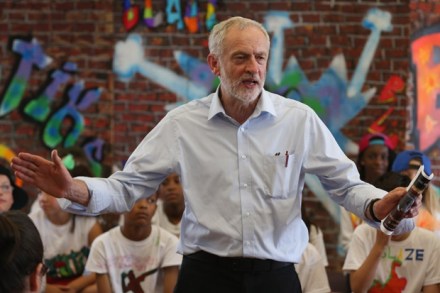
Amid all the excitement about David Cameron this week, I fear that Jeremy Corbyn’s first major policy announcement may have been overlooked. That would be a shamae because the policy is really, really bad. I’m talking about his proposal to ‘renationalise’ the railways. Now, I have to confess to not really understanding this policy. Aren’t the railways in England, Scotland and Wales already owned by the state in the form of Network Rail? I know the Department for Transport lets franchises to private providers, such as FirstGroup and Virgin Group, but that doesn’t mean these private companies own the railways — the clue is in the word ‘let’.

Welcome to the new-look Spectator Life – that’s already making the front page news

I wanted to let you know about the new issue of Spectator Life that’s out today – free with the latest issue of the Spectator. It’s my first issue in charge as editor and I’m pleased to say that one of our stories – a profile of Alan Yentob by ex-Newsnight producer Meirion Jones – has made it on to the front page of today’s Sun. It’s a great read. The Sun has splashed on the allegation that Yentob branded Meirion and his fellow producer Liz MacKean 'traitors to the BBC' after they publicly complained about the Beeb’s decision to pull the film they’d made exposing Jimmy Savile as a paedophile a year before he died.

Is that really the best Lord Ashcroft could dig up?

My first reaction on reading the extracts from Lord Ashcroft’s muckraking biography of David Cameron in today’s Mail was, 'It that it?' Ashcroft has been digging for dirt about the Prime Minister for the best part of five years, even luring Isabel Oakeshott away from the Sunday Times to wield the shovel, and all he’s been able to come up with is that he smoked cannabis with James Delingpole when he was a student and may have been present while someone else took cocaine at his house. And, of course, there’s the pig story. I’m dubious about the pig episode and I’m better informed than most, having been a contemporary of Cameron’s at Oxford.

My obsession with litter is bordering on mental illness

It’s no good. I’ve tried to resist it, but I’ve succumbed. I’m now a full-blown litter Nazi. Whenever I leave my house, I make a point of taking a plastic bag with me so I can pick up litter. This is in Acton, mind you, so we’re talking a full-size bin liner, not your common-or-garden Sainsbury’s job. Everything goes in the bag. Not just beer cans and cigarette packets — I’m talking about mucky stuff like wet newspapers, polystyrene takeaway containers and banana skins. I even pick up those little black plastic bags full of excrement that some dog owners carefully place beside trees or hang on railings. My children are mortified by this behaviour.

Cameron’s crusade (and mine)

Even I was taken aback when, during the election campaign, David Cameron pledged to create 500 new free schools if the Conservatives won a majority. Was he being serious? Five hundred is twice the number that opened during the last parliament and, to be frank, some of those probably shouldn’t have done. Two have closed already — the Discovery New School and the Durham Free School — and a few more will probably shut before 2020. Was this just intended as another negotiating chip for use in the coalition talks in the event of a hung parliament? I don’t think so. I bumped into Cameron at a party in July and the first thing he said to me was that he wanted to keep the momentum of the free schools programme going. He’s in deadly earnest about it.

My own modest proposal: designer babies for the poor

I’ve just written an essay for Quadrant, an Australian periodical, in which I propose a controversial solution to the problem of entrenched inequality: free designer babies for the poor. Yes, yes, I know. It sounds like a 21st-century version of Swift’s ‘Modest Proposal’ and, at first, I rejected it as being too far-fetched. But the more I thought about it, the more sense it seemed to make. So how did I get there? The essay starts by discussing one of the long-term problems with meritocracy, which is that it ends up replacing one hereditary elite with another. This shortcoming was first pointed out by my father, who invented the word ‘meritocracy’ in the 1950s to describe the sort of society he thought Britain was becoming.