Toby Young

Toby Young

Toby Young is associate editor of The Spectator.

Purifying the gymnasium

From our UK edition

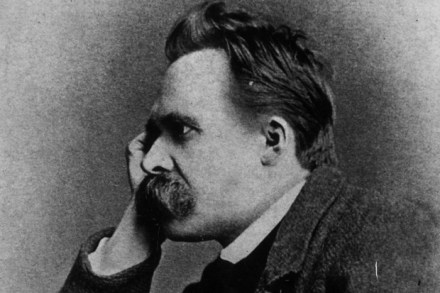
When Friedrich Nietzsche was offered a professorship in classical philology at the university of Basel in 1869 he was so happy he burst into song. He was only 24 at the time — a year younger than Enoch Powell, who became a professor of Greek at the university of Sydney aged 25 — and looked forward to a brilliant academic career. Three years later, when he delivered the six lectures contained in this book, he was already showing signs of disillusionment. His teaching duties included six hours at the local gymnasium — the German equivalent of a secondary school — and he wasn’t impressed by what he found there.

Vote ‘leave’ and stop the blurring of Britain

From our UK edition

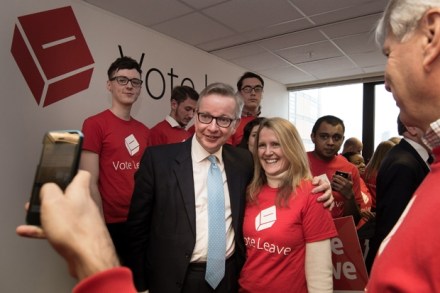
I don’t remember the last European referendum being nearly as dramatic as the current one. In 1975, we were being asked about our membership of the Common Market, not the -European Union, so there was less at stake — at any rate, that’s what the inners -wanted us to believe. The battle was also much more one-sided. Then as now, the pro-European side included the Prime Minister and the leaders of the other two main parties, but there were fewer cabinet ministers on the other side and it was easier to -caricature the antis (Tony Benn, Enoch Powell) as extremists. In 1975, the national press was overwhelmingly in favour of staying in and the ‘yes’ campaign was able to outspend the ‘no’ campaign several times over, neither of which are true today.

Boris Johnson: A mixture of principle and opportunism, just like every politician

From our UK edition

Boris Johnson is a slippery fish, but I don’t think Nick Cohen quite captures him in his blog post earlier today. To accuse him of putting career before country in the EU referendum campaign, as Cohen does, is to fall into the trap of viewing politicians too dichotomously, as if they’re all either men and women of conviction or unprincipled opportunists. Boris, like every front rank politician, is a mixture of conviction and careerism, rather than one or the other. Winston Churchill and Margaret Thatcher are both cases in point. Exhibit A in the case for the prosecution is Boris’s decision to join the Leave campaign.

Emma Thompson’s wrong, and not just about the EU

From our UK edition

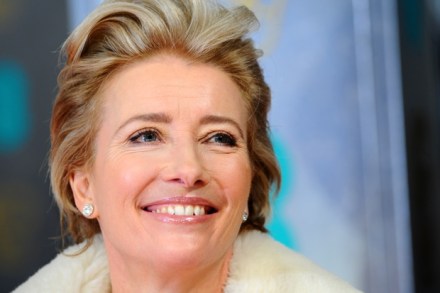
At first glance, Emma Thompson’s intervention in the Brexit debate earlier this week didn’t make much sense. Asked at the Berlin Film Festival whether the UK should vote to remain in the EU, she said we’d be ‘mad not to’. She went on to describe Britain as ‘a tiny little cloud-bolted, rainy corner of sort-of Europe, a cake-filled misery-laden grey old island’. She added that she ‘just felt European’ and would ‘of course’ vote to remain in the EU. ‘We should be taking down borders, not putting them up,’ she said. I think I get the bit about Britain being ‘rainy’. That’s true, obviously, and some people dislike our islands for that reason.

Emma Thompson is wrong about the EU – and cake

From our UK edition

At first glance, Emma Thompson’s intervention in the Brexit debate earlier this week didn’t make much sense. Asked at the Berlin Film Festival whether the UK should vote to remain in the EU, she said we’d be ‘mad not to’. She went on to describe Britain as ‘a tiny little cloud-bolted, rainy corner of sort-of Europe, a cake-filled misery-laden grey old island’. She added that she ‘just felt European’ and would ‘of course’ vote to remain in the EU. ‘We should be taking down borders, not putting them up,’ she said. I think I get the bit about Britain being ‘rainy’. That’s true, obviously, and some people dislike our islands for that reason.

Join Spectator Life for the Baftas

From our UK edition

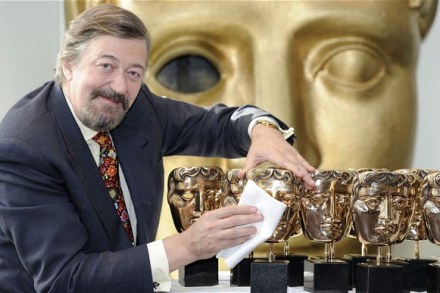
This Sunday, Spectator Life will be live blogging the Baftas. Lloyd Evans, Melissa Kite, Jasper Rees, Emily Hill and I will be covering the red carpet show on BBC3 at 8.30pm and then, from 9pm, the highlight show on BBC1. We'll be covering all the highlights, doing our best to sound knowing, funny and insightful while, at the same time, concealing the fact that we know very little about the film business.

Would I break my neck for a bit of TV fame?

From our UK edition

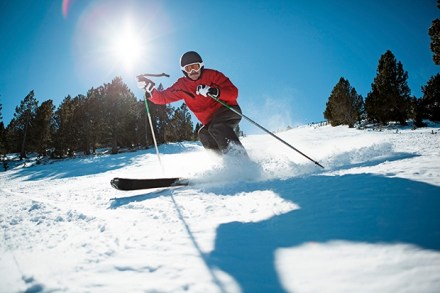
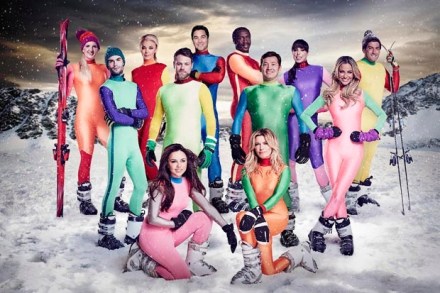
Not long ago I was asked if I wanted to participate in a Channel 4 reality show called The Jump. Rather embarrassingly, I’d never seen it, but my agent’s description of it sounded quite appealing. A bunch of micro-celebrities are taught a variety of winter sports, including skeleton, bobsleigh, speed skating, giant slalom and ski jumping. Once they’ve mastered the basics, they’re flown to an Austrian ski resort where they compete against each other in a D-list version of the Winter Olympics. A lot more appealing than Celebrity Big Brother, I thought, and less risk of ruining your reputation (yes, George Galloway, I’m thinking of you). However, there was a chance of damaging something more concrete.

Why does no one speak up for poor white boys?

From our UK edition

David Cameron can be a frustrating figure at times. He wrote an article for the Sunday Times this week in which he drew attention to the under-representation of disadvantaged students in Britain’s universities, which he was quite right to do. But he is wrong about the ethnicity of those students and wrong about where the problem lies. It’s working-class white boys who fare the worst, not black boys, and when it comes to broadening access, the track record of our tertiary education sector is pretty good. It’s state schools that could be doing more. First, a few facts.

David Cameron is plain wrong about Oxford and race. Here’s why

From our UK edition

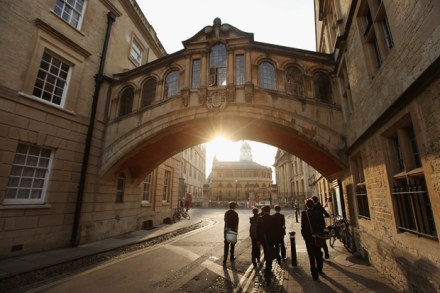
I applaud the Prime Minister for pointing out the scandalous lack of black students at Britain’s top universities, but he’s wrong about whose fault it is – at least when it comes to Oxford, his alma mater. Yes, it’s true that Oxford only admitted five black British Caribbean applicants in 2013, a disgracefully low number, as David Cameron points out, but there’s no evidence to suggest that the cause is 'ingrained, institutional and insidious' attitudes, i.e. racism, on the part of Oxford’s admission authorities. How do I know this?

Is this a golden age of protest?

From our UK edition

Are we living in a golden age of protest? A bunch of aggrieved citizens only has to raise a murmur of protest, whether it’s about racism, sexism, homophobia, transphobia or Islamophobia, and the institution they’re targeting instantly capitulates. A case in point is the Academy of Motion Picture Arts and Sciences. No sooner had a group of prominent African-American actors and directors complained about the lack of black Oscar nominees this year — ‘whitewash!’ — than the president of the Academy announced she would be taking ‘dramatic steps’ to address the problem. The Academy will enlarge its membership to include hundreds of entertainment industry figures from diverse backgrounds.

The Islamist Nazis and Corbyn’s wilful blindness

From our UK edition

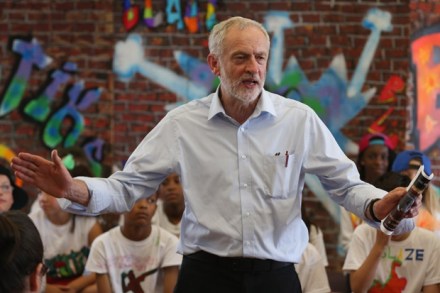
Many people watching Jeremy Corbyn’s interview on Marr last Sunday will have been shocked by his remarks about the need to begin a ‘dialogue’ with the leadership of the Islamic State. ‘I think there has to be some understanding of where their strong points are,’ he said. Afterwards, when these comments were widely reported, Corbyn’s supporters said they’d been taken out of context — the standard defence whenever he is criticised for saying something positive about Islamist terrorists, such as describing Hamas and Hezbollah as his ‘friends’ or the death of bin Laden as a ‘tragedy’. But there are only so many times this excuse can be used to explain these apparently supportive remarks.

Tell the truth about benefit claimants and the left shuts you down

From our UK edition

Next month sees the release of Trumbo, a biopic about Dalton Trumbo, the screenwriter who was blacklisted by the Hollywood studios after refusing to testify before the House Un-American Activities Committee in 1947. Trumbo continued to work under a variety of pseudonyms and won two Academy Awards for his screenplays, neither of which he was able to receive. He wasn’t rehabilitated until 1960, some 13 years later. I’ve seen Trumbo and it isn’t much good, but Bryan Cranston has been nominated for numerous awards for his portrayal of the tortured martyr, including a Bafta. People who work in the film industry are, of course, almost universally liberal, and recognising Cranston’s performance is a way of signalling their disapproval of McCarthy-ism.

The left’s war on science

From our UK edition

How much longer can the liberal left survive in the face of growing scientific evidence that many of its core beliefs are false? I’m thinking in particular of the conviction that all human beings are born with the same capacities, particularly the capacity for good, and that all mankind’s sins can be laid at the door of the capitalist societies of the West. For the sake of brevity, let’s call this the myth of the noble savage. This romanticism underpins all progressive movements, from the socialism of Jeremy Corbyn to the environmentalism of Caroline Lucas, and nearly every scientist who challenges it provokes an irrational hostility, often accompanied by a trashing of their professional reputations.

The plot to save our allotments

From our UK edition

Since turning 50 I have become a gardening enthusiast. It started with tomatoes, then spread to raspberries and last year extended to French beans. I’ve now run out of space and was hoping to get an allotment in 2016. They’re like gold dust in west London, but one of the perks of living on my street is that the residents’ association has access to the Goldsmith’s Close Allotments, a two-acre plot abutting the backs of our houses. I put my name down when I first moved in and was optimistic one might become available this year. Imagine my dismay, then, when the chair of the residents’ association told me the allotments had been sold to someone called David Parry — a local property developer — and the users had been given their marching orders.

It’s time for the annual round of arguments with my sweet-natured wife

From our UK edition

The older I get, the more Scrooge-like I become. I’m dyspeptic, misanthropic, curmudgeonly, parsimonious and unsentimental. Caroline, by contrast, is even-tempered, sweet-natured, charitable, generous and easily moved. Yet paradoxically, I love Christmas, whereas she regards it as a time of year to be endured rather than enjoyed. This inevitably leads to a number of arguments and, as with everything else connected with the festival, they’ve become ritualised. So here are the rows that are guaranteed to occur in the Young household at this time of year. The season always begins with a heated discussion about external lighting. My ideal is to go Full Chav, with a giant neon-lit Santa plastered over the front of the house, along with sleigh, reindeer, elves… the lot.

Steven Pinker interview: Western intellectuals and journalists must promote liberal values

From our UK edition

Rumours of the death of Western liberalism have been cruelly exaggerated, according to Steven Pinker. The Harvard psychology professor spoke to me on the eve of a lecture he is due to give at the New College of the Humanities on the workings of the human brain and we were supposed to be talking about that. But given the parlous state of the world, I was more anxious to speak about The Better Angels of Our Nature, his relentlessly optimistic book about the history of violence. In that 834-page magnum opus, he argues that violence has been in almost continuous decline for the last 2,000 years and that the present is probably the most peaceful time in our history.

Tis the season for disagreeing with your spouse about everything

From our UK edition

The older I get, the more Scrooge-like I become. I’m dyspeptic, misanthropic, curmudgeonly, parsimonious and unsentimental. Caroline, by contrast, is even-tempered, sweet-natured, charitable, generous and easily moved. Yet paradoxically, I love Christmas, whereas she regards it as a time of year to be endured rather than enjoyed. This inevitably leads to a number of arguments and, as with everything else connected with the festival, they’ve become ritualised. So here are the rows that are guaranteed to occur in the Young household at this time of year. The season always begins with a heated discussion about external lighting. My ideal is to go Full Chav, with a giant neon-lit Santa plastered over the front of the house, along with sleigh, reindeer, elves… the lot.

Faith schools are now under attack from the interfaith community

From our UK edition

It’s depressing to read of yet another attack on faith schools in today’s papers, this time from a self-appointed 'Commission' set up by something called the Woolf Institute - an organisation dedicated to 'interfaith research, teaching and dialogue'. It has just published a 'report' on 'religion and belief in British public life' called 'Living with difference: community, diversity and the common good'. I will leave it to others to comment on the substance of the report, but at first glance it reads like a product of the ‘Thought for the Day’ school of theological discourse. In other words, the usual wishy-washy, Kumbuya, inter-faith bilge, overlaid with a thick layer of Jewish and Christian self-loathing, as well as craven praise for 'the religion of peace'.

The politics of envy has failed

From our UK edition

Last week I put £25 on Lady C to win I’m A Celebrity… Get Me Out of Here. At 25/1, I thought it was quite a good bet – until she withdrew for medical reasons. For those not watching the 15th series of the jungle reality show, Lady C is Lady Colin Campbell, a self-proclaimed ‘socialite’ and author of several royal biographies. Some of her fellow contestants, such as ex-Spandau Ballet frontman Tony Hadley, have accused her of not being a ‘real lady’, but they don’t have a clue, obviously. They mean she swears a lot, which hardly disqualifies her from being a toff.

Mr Spielberg, you cannot be serious

From our UK edition

I wonder if Steven Spielberg is having second thoughts about Bridge of Spies in light of the attack on Paris? Spielberg’s latest film —released this week and tipped for Oscar glory — is an espionage thriller set at the height of the Cold War with no immediate relevance to the ‘war’ we find ourselves in today. But it contains a strong liberal message about the importance of observing due process when dealing with enemy combatants and prisoners of war. The hero of Bridge of Spies is James Donovan (Tom Hanks), a straight-arrow insurance lawyer who is asked by the American government to defend Rudolf Abel (Mark Rylance), a Brooklyn-based artist who’s been caught spying for the Soviets.