Toby Young

Toby Young

Toby Young is associate editor of The Spectator.

I’ll vote for Theresa, but only if she passes these three tests

I’ve made no secret of the fact that I wanted Michael Gove to be in the final two in the Conservative leadership race and I’m disappointed that he isn’t. As a Conservative Party member, I’m willing to vote for Theresa May, but on three conditions. First, she commits to repealing the 1972 European Communities Act. I’m less fussed about whether and when she triggers Article 50 – it was the 1972 European Communities Act that surrendered British sovereignty by making European law superior to British law. Repeal that Act, then pass another Act preserving all the laws that would thereby be rendered invalid and then decide which of those laws we want to keep and which we don’t.

Labour: my part in its downfall

A few weeks ago, I took part in a debate at the Cambridge Union about the future of the Labour party. I argued that a combination of factors, such as the decline of Labour’s working-class support, the election of Jeremy Corbyn and the party’s near-universal backing for the EU, meant that Labour would struggle to survive in its present form. But I thought the crisis point would come after the next general election, not after the referendum. It didn’t occur to me that the party would be in its death throes by the end of the month. I suppose I have to accept a small amount of responsibility for this.

A new home for Old Labour

On the eve of last year’s general election result, many pundits predicted the demise of Britain’s two-party system. The likeliest outcome was another hung parliament in which one of the smaller parties — the Lib Dems or the SNP — held the balance of power. These same pundits pointed to the steady decline in membership of the two main parties, as well as the success of insurgent parties in the European and regional elections, as evidence of this sea change. In the event, the pundits were ridiculed for getting it wrong. Yet is it possible they were just a year too early? The surprise Brexit win in yesterday’s EU referendum looks like it may bring about some kind of political realignment.

Who’s sabotaging my Leave campaign?

I’ve never been a great believer in karma. After all, in the absence of some kind of cosmic enforcer of karmic justice what guarantee is there that good deeds will be rewarded or bad deeds punished? Let’s not forget that Joseph Stalin was responsible for between 34 and 49 million deaths, depending on whose estimate you accept, yet died of natural causes in his own bed at the age of 73. Karma? What karma? But events of the past fortnight have caused me to revise my opinion. It’s all to do with the massive Vote Leave billboard outside my house in Acton, and an incident that occurred 42 years ago during the October 1974 general election. It’s rather shaming to admit, but back then I was a Labour party supporter.

Brexit: Facts Not Fear

I’ve made a short film with my friend Roger Bowles about why I’ll be voting Leave on 23 June and why I think you should, too. We’ve focused exclusively on the sovereignty argument, which we think is the most persuasive one. If you’re on the same side as us, please share this with as many people as possible. We’ve called it 'Brexit: Facts Not Fear' because we think it’s important that people should be acquainted with as many facts as possible when they cast their vote. Below is a transcript of the film, with links corroborating the facts referred to. Hi. I’m Toby Young, I’m an associate editor of the Spectator.

Confessions of an England fan

[audioplayer src="http://feeds.soundcloud.com/stream/268140526-the-spectator-podcast-brexit-strategy-what-would-the.mp3" title="Toby Young explains his excitement at Euro 2016" startat=1096] Listen [/audioplayer] If you’re a proper football supporter, getting excited about England on the eve of a major tournament is considered uncool. I’ve lost count of the number of times I’ve tried to engage people in conversation about England’s chances, only to be greeted with a look of bored condescension. ‘I’m not really interested in international football,’ is the inevitable reply. Well, sorry, but I’m pretty fired up about the Euros — although, to be fair, I do conform to the stereotype of the inauthentic, prawn-sandwich-eating fan.

Call yourself a friend?

Should we be surprised that friendship isn’t always mutual? That is one of the findings of a team of researchers at Tel Aviv University who’ve just published a paper in an academic journal. They asked several hundred students to identify which members of their peer group they considered to be ‘friends’. On average, half the people included in this category by each respondent did not feel the same way about them. According to the researchers, this news would come as a shock to most people. The students in the survey thought that 95 per cent of the people they regarded as ‘friends’ would identify them as ‘friends’ too. But I can’t say I’m surprised. In fact, a 50 per cent reciprocity score strikes me as suspiciously high.

The only Eurosceptic in the room

I was in Paris last week to take part in an EU referendum debate at Sciences Po, a French university that specialises in international relations. It’s not an exaggeration to describe Sciences Po as a finishing school for Europe’s political elite. Twenty-eight heads of state have studied or taught there, its graduates include five of the last six French presidents and the current dean is Enrico Letta, a former prime minister of Italy. My fellow panellists included Ana Palacio, the Spanish minister of foreign affairs from 2002 to 2004, and Hubert Vedrine, the French minister of foreign affairs from 1997 to 2002. I think it’s safe to say I was the only Eurosceptic in the room. I was listened to with polite amusement, but almost no one took the threat of Brexit seriously.

My soppy, dopey, deadly predator

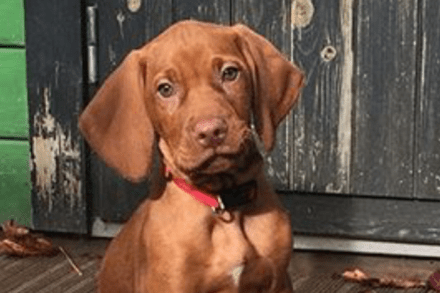
Leo, the Hungarian Vizsla my wife brought home unexpectedly last year, is approaching his first birthday and not getting any easier to manage. Caroline decided to buy him on the spur of the moment because she ‘liked the way he looked’, by which she means he looks like her. Not the face, obviously, but his figure — thin, athletic, muscular, big ears, big feet. Indeed, she was walking Leo in Gunnersbury Park a few days ago when another dog -walker, spotting them together, burst out laughing. ‘I don’t think I’ve ever seen an owner who looks more like her dog,’ he said. This may have been his attempt at flirting — always hard to tell with dog owners. She noticed he had a pug, but managed to avoid the obvious -rejoinder.

These heartless Europhile snobs

One of the interesting features of the Brexit debate is that it has laid bare a schism in British society which runs much deeper than the conventional Labour-Conservative divide. On the one hand, we have the prosperous, educated elite, mainly based in cities and university towns, who are liberal on social issues, pro-immigration, believers in free trade and internationalist in outlook. On the other, we have the white working class, clustered in areas of economic stagnation, particularly seaside towns, who are socially conservative, anti-immigration, suspicious of free trade and staunchly nationalist. This isn’t a perfect summary. Dan Hannan, Boris Johnson and Michael Gove fall more naturally into the first category, whereas Scottish and Welsh nationalists are mainly pro-EU.

Yesterday was one of the worst days of my life

When I got an email from the Evening Standard’s education correspondent at 06.29am yesterday I had no idea that my life was about to turn to shit. She had just read an interview I’d done for a magazine called Schools Week in which, among other things, I said that I was standing down as chief executive of the group of free schools I’ve helped set up. She wanted to talk to me about why I’d made this decision. At that point, I made a terrible mistake. I asked if I could send her an email explaining why I was stepping down rather than talk to her in person. The reason for this is that I’m in the midst of a terrible bout of summer flu.

Zac Goldsmith has nothing to be ashamed of

It’s disappointing to see how many Tories are buying into Labour’s spin about Zac Goldsmith having fought a 'dog whistle' campaign and – even more ludicrously – blaming that for his defeat. Any Conservative candidate faced an uphill struggle getting elected in London, one of the only areas in the country where Labour did better in 2015 than it did in 2010. Even Boris, who has a rare ability to appeal to Labour voters, only beat Ken Livingstone in 2012 by 62,538 votes. The first prominent Conservative to peddle this theory was London Assembly member Andrew Boff, who appeared on Newsnight to accuse Goldsmith of equating 'people of conservative religious views' with 'sympathising with terrorism'.

Middle-class warriors

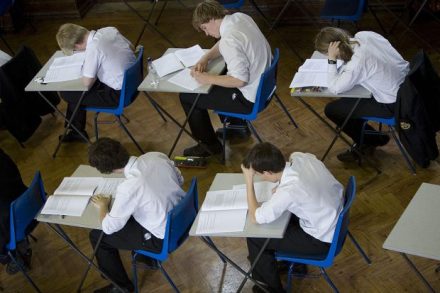
Tuesday’s protest against Key Stage 1 Sats was moronic on so many levels that it’s hard to know where to start. For one thing, it wasn’t a ‘kids’ strike’. Did a national committee of six- and seven-year-olds get together and decide on a day of action? Even in Brighton, the centre of the boycott, that seems a bit far-fetched. The grown-up organisers of the protest clearly believed that was a cute way of packaging it for media consumption, but the thought of such young children engaging in political activism is actually a bit sinister. It’s like something out of a dystopian satire — a cross between Brave New World and Nineteen Eighty-Four. Then there’s the sheer selfishness of the whole thing.

The moronic middle-class Sats warriors are entrenching class divisions

Tuesday’s protest against Key Stage 1 Sats was moronic on so many levels that it’s hard to know where to start. For one thing, it wasn’t a ‘kids’ strike’. Did a national committee of six- and seven-year-olds get together and decide on a day of action? Even in Brighton, the centre of the boycott, that seems a bit far-fetched. The grown-up organisers of the protest clearly believed that was a cute way of packaging it for media consumption, but the thought of such young children engaging in political activism is actually a bit sinister. It’s like something out of a dystopian satire — a cross between Brave New World and Nineteen Eighty-Four. Then there’s the sheer selfishness of the whole thing.

Is it ‘Islamophobic’ to draw attention to Sadiq Khan’s links with extremists?

Zac Goldsmith came in for a fair amount of criticism yesterday after writing a piece in the Mail on Sunday that, among other things, pointed out that Sadiq Khan criticised Labour’s decision to suspend Ken Livingstone in 2006 when he compared a Jewish Evening Standard journalist to a Nazi concentration camp guard. Reviewing the papers on Marr, Owen Jones called it 'another example' of a 'poisonous' and 'disgraceful' campaign that had tried to brand Khan as an extremist simply because he’s a Muslim. He called it 'an attempt to tap into anti-Muslim prejudice' and urged Conservatives to tackle Islamophobia as vigorously as his own party is tackling anti-Semitism.

It will take more than Labour’s ‘inquiry’ to deal with the left’s anti-Semitism problem

Anyone concerned about anti-Semitism in the Labour Party should welcome the appointment of Shami Chakrabarti, the former head of Liberty, to lead an internal inquiry into the matter, but it’s a little late in the day to be addressing this issue. And will the inquiry’s terms of reference allow her to investigate the leader of the party? The Jewish Chronicle drew attention to Jeremy Corbyn’s links to a rogues gallery of “Holocaust deniers, terrorists and some outright anti-Semites” back in August of last year. Among other dubious acts, Corbyn donated money to an organisation run by Paul Eisen, a self-confessed Holocaust denier who boasts of links to the Labour leader dating back 15 years.

What if Murdoch owned the Beeb?

A new book published today by the Institute of Economic Affairs called In Focus: The Case for Privatising the BBC includes a chapter by the economist Ryan Bourne on the BBC’s left-of-centre bias. As you’d expect, Bourne’s contribution includes plenty of fascinating data, such as the fact that ‘Thought for the Day’ contributors are eight times more likely to offer a negative view of market-based and capitalist activity than a positive view. However, Bourne doesn’t accuse the Beeb of straightforward left-wing bias. Its partiality is more subtle and complicated than that. He cites an example of the BBC’s coverage of immigration provided by Roger Mosey, a former editorial director.

There’s nothing ‘racist’ about Boris Johnson’s Obama comments

Nick Cohen is predictably over-the-top in his response to Boris Johnson’s piece about President Obama’s intervention in the Brexit debate in today’s Sun. He begins by claiming he’s approaching this subject 'with the caution of a lawyer and the deference of a palace flunkey'. He then goes on to reprimand Boris for suggesting Obama has an 'ancestral dislike of the British empire' on account of his 'part-Kenyan' heritage and links this to his support for the Remain campaign. We’ll come to that comment in a minute, but Cohen goes on to conflate these remarks with the worst excesses of the birther movement: I’m not someone who throws accusations of racism around – it’s too serious a charge to devalue.

Long may we laugh at our absurd demagogues

In Reflections on the Revolution in France, Edmund Burke warned that ‘pure democracy’ was as dangerous as absolute monarchy. ‘Of this I am certain, that in a democracy the majority of the citizens is capable of exercising the most cruel oppressions upon the minority whenever strong divisions prevail,’ he wrote. He compared demagogues to ‘court favourites’ — gifted at exploiting the -insecurities of the powerful, whether the people or the monarch. For Burke, the risk of democracies being captured by demagogues then degenerating into tyrannies was a good argument against universal suffrage.

My confession: I began dodging tax aged eight

As someone who still entertains hope of becoming a member of Parliament one day, I’d better come clean about my own tax affairs. It’s a torrid tale, as you’d expect, but rather than wait for my political opponents to winkle the story out of me bit by bit, I thought I’d get it all out in the open. I blame the Cub Scouts for starting me on the wrong path. As a boy of eight, I was an eager participant in bob-a-job week, which involved going from door to door on my street offering to do odd jobs. I turned all the money over to my Cub pack, but I realised I could earn extra pocket money from then on by washing cars and weeding gardens. Before long, I’d earned enough money to buy my own portable black-and-white tele-vision — about £40, if I recall.