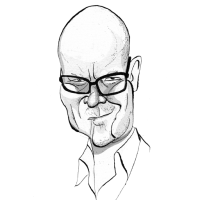
Toby Young

Toby Young

Toby Young is associate editor of The Spectator.

France began breeding jihadis in 1989

From our UK edition

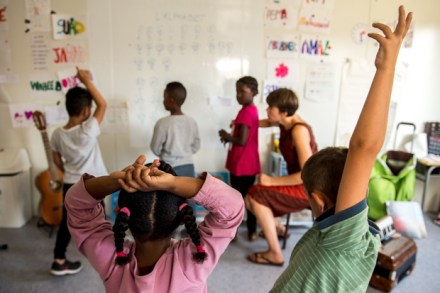
E .D. Hirsch Jr., the American educationalist and author of Cultural Literacy, has a new book out that may throw some light on why France has such a problem integrating its Muslim population. Called Why Knowledge Matters: Rescuing Our Children From Failed Educational Theories, it’s a comprehensive attack on the progressive approach that has done so much harm to schools in the West. Hirsch identifies three ideas in particular: that education should be ‘developmentally appropriate’, with the emphasis on learning through discovery; that it should be ‘child-centred’, taking account of different ‘learning styles’; and that the overarching aim of education should be the cultivation of ‘critical thinking’ skills.

Podcast: Is it wrong to ban the burkini?

From our UK edition

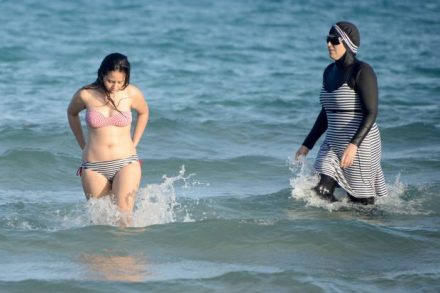
For about a year now, James Delingpole and I have been doing a regular podcast for Ricochet, the American website dedicated to conservative news and commentary. It’s called 'London Calling' and you can hear the latest one here. Among the many topics covered on this episode are the French burkini ban, Robert Tombs’s 'The English and Their History', my appearance on Any Questions last week and James’s appearance this week (alongside Diane Abbott). We also talk about the West London Free School and what we did on our holidays.

The yawn supremacy

From our UK edition

The BBC has published a list of the 100 best films of the 21st century, compiled after consulting academics, cinema curators and critics — and, as you’d expect, it’s almost comically dull. The list contains numerous turgid meditations on the spiritual void at the heart of western civilisation by obscure European ‘auteurs’ and not a single Hollywood comedy. It’s as if the respondents mistook the word ‘best’ for ‘boring’. To give you an idea of just how absurd the list is, it doesn’t include any of the billion-dollar blockbusters from Marvel Studios — no, not even Guardians of the Galaxy — but does have two movies by the impenetrable Danish director Lars von Trier.

In praise of free schools

From our UK edition

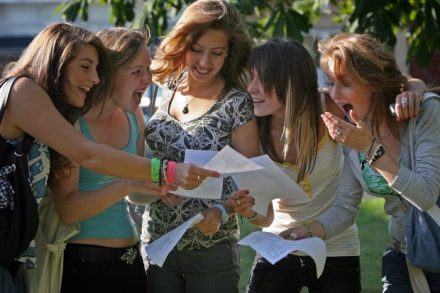
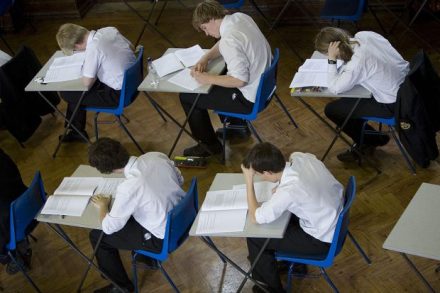
Congratulations to all those free schools who got their GCSE results this morning. We don’t yet have the full picture, but early reports are good. Top marks to Tauheedul Islam Boys' High School in Blackburn, a free school that opened in 2012. Ninety-five per cent of its pupils achieved five A* to C grades in their GCSEs, including English and maths, a metric known as '5A*–CEM'. To put this in context, last year’s 5A*–CEM national average was 56.1 per cent. Another school that has done well is Dixons Kings Academy in Bradford. It was one of the first 24 free schools to open in 2011 – it was originally called King Science Academy – and was taken over by the Dixons Academy chain after financial irregularities were brought to light by a whistleblower.

Hurrah for Cornish holidays!

From our UK edition

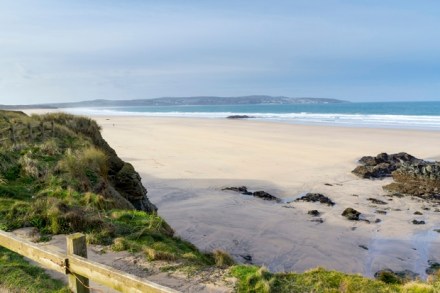
After the misery of going abroad for the summer holidays for the past few years, I’m now happily back in Cornwall. Caroline took some persuading. We used to come every year, but the combination of bad weather and cramped accommodation became too much for her. After a bad experience in a mobile home three years ago, she vowed ‘never again’ and we spent a week in Portugal in 2014 and then ten days in France last year. That was purgatory. The last straw was being un-able to order fresh fish at a seaside restaurant in the Languedoc. To get Caroline to reconsider, I had to splash out on a luxurious ‘chalet’ overlooking Gwithian Beach near St Ives.

The problem with grammar schools

From our UK edition

By rights, I should be one of those Tories who is passionately in favour of grammar schools. After all, I went to one myself. My attachment to them should be particularly strong because before arriving at William Ellis in Highgate I went to two bog-standard comprehensives and failed all my O--levels apart from English Literature, in which I got a C. The only other qualification I left with was a grade one CSE in Drama. William Ellis was the making of me. Had I not got in, I doubt I would have ended up at Oxford. Don’t misunderstand me. I’m not a passionate opponent of grammar schools either.

New grammars won’t do more for social mobility than comprehensives. But there is a third way

From our UK edition

One of David Cameron’s last acts as Prime Minister was to approve an application by Ashlawn School in Rugby to set up a new free school in the city. It’s not surprising that Ashlawn’s application was approved. Not only has it been ranked ‘Outstanding’ by Ofsted, but last year 74 per cent of its pupils got five GCSEs at grade C or above, including English and maths (a metric known as '5A*–CEM'). Even more impressive, 65 per cent of its pupils from disadvantaged backgrounds met that same target. However, before Ashlawn can open its new school in 2017 it has to overcome an obstacle. Ashlawn is one of England’s three dozen or so partially selective schools.

From cosy to crazy

From our UK edition

I spent last weekend at Port Eliot in Cornwall, the only summer festival I’d pay to attend. Indeed, I ended up paying through the nose. Not only did I rent a teepee so that we wouldn’t have to lug our bell tent from the car park to the campsite and back, but I bought Caroline and our four children special wristbands so they could use the ‘posh loos’. I thought she’d get a particular kick out of swanning off with them to do their ablutions in the morning in the lap of luxury while I had to queue up to use one of the Portaloos. For those who’ve never had the pleasure, Port Eliot is a literary and music festival that takes place on the estate of the Earl of St Germans in the last weekend of July.

Paddy Ashdown’s magical thinking

From our UK edition

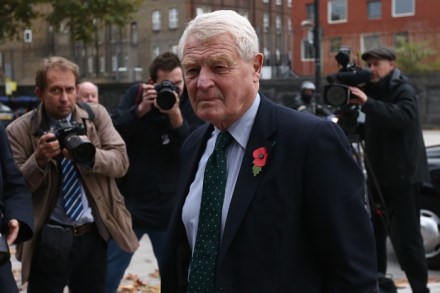
The dog days of July probably aren’t the best time to launch a new political movement, but then the people who campaigned for Remain in the EU referendum aren’t known for their media savvy. Consequently, Paddy Ashdown made a surprise appearance on Marr last Sunday to announce the creation of More United, a ‘tech-driven political start-up’ that takes its name from a phrase the late Jo Cox MP used in her maiden speech: ‘We are far more united and have far more in common with each other than things that divide us.’ More United’s website doesn’t explicitly say that the organisation’s raison d’être is to overturn the result of the referendum. Rather, this is hidden away in a section called ‘Example policies’.

The best way to bring back grammar schools

From our UK edition

Could grammar schools be about to make a comeback? That Theresa May went to one, and that the number of grammar-school-educated members of the cabinet has increased from three to eight since she took over, has fuelled speculation about a shift in education policy. There are various forms this could take. The least politically difficult would be for Justine Greening, the new Education Secretary, to let England’s 164 grammar schools expand. Her predecessor, Nicky Morgan, approved an application by a selective girls’ school in Tonbridge to set up an annexe in Sevenoaks; it’s due to open next year. Greening could approve several more.

The truth about ‘post-truth politics’

From our UK edition

The departure of Andrea Leadsom from the Conservative leadership race was a blow to pundits who claim we’re living in an age of ‘post-truth politics’. According to Michael Deacon, the Telegraph’s political sketchwriter, she was an ideal candidate because she embodied the ‘anti-factual’ mood of the country. ‘Facts are negative,’ he wrote, parodying the attitude of Leadsom’s knuckle--dragging supporters. ‘Facts are pessimistic. Facts are unpatriotic.

The art of the quit

From our UK edition

Brits don’t quit,’ said David Cameron two weeks ago, to which the obvious rejoinder is: ‘Oh but they do!’ The list of quitters since the referendum seems to grow every day, the latest being Nigel -Farage. Everyone made the same joke when they heard he had resigned — ‘How long for?’ — but when I bumped into Suzanne Evans earlier this week she told me he was still in charge. ‘I think he was giving notice of his intention to resign, but hasn’t put a date on it,’ she said. She was paying close attention, given that she became the interim leader the last time Nigel quit and lasted precisely three days. I hope it’s permanent this time, if only to disprove Enoch Powell’s famous maxim.

I’ll vote for Theresa, but only if she passes these three tests

From our UK edition

I’ve made no secret of the fact that I wanted Michael Gove to be in the final two in the Conservative leadership race and I’m disappointed that he isn’t. As a Conservative Party member, I’m willing to vote for Theresa May, but on three conditions. First, she commits to repealing the 1972 European Communities Act. I’m less fussed about whether and when she triggers Article 50 – it was the 1972 European Communities Act that surrendered British sovereignty by making European law superior to British law. Repeal that Act, then pass another Act preserving all the laws that would thereby be rendered invalid and then decide which of those laws we want to keep and which we don’t.

Labour: my part in its downfall

From our UK edition

A few weeks ago, I took part in a debate at the Cambridge Union about the future of the Labour party. I argued that a combination of factors, such as the decline of Labour’s working-class support, the election of Jeremy Corbyn and the party’s near-universal backing for the EU, meant that Labour would struggle to survive in its present form. But I thought the crisis point would come after the next general election, not after the referendum. It didn’t occur to me that the party would be in its death throes by the end of the month. I suppose I have to accept a small amount of responsibility for this.

A new home for Old Labour

From our UK edition

On the eve of last year’s general election result, many pundits predicted the demise of Britain’s two-party system. The likeliest outcome was another hung parliament in which one of the smaller parties — the Lib Dems or the SNP — held the balance of power. These same pundits pointed to the steady decline in membership of the two main parties, as well as the success of insurgent parties in the European and regional elections, as evidence of this sea change. In the event, the pundits were ridiculed for getting it wrong. Yet is it possible they were just a year too early? The surprise Brexit win in yesterday’s EU referendum looks like it may bring about some kind of political realignment.

Who’s sabotaging my Leave campaign?

From our UK edition

I’ve never been a great believer in karma. After all, in the absence of some kind of cosmic enforcer of karmic justice what guarantee is there that good deeds will be rewarded or bad deeds punished? Let’s not forget that Joseph Stalin was responsible for between 34 and 49 million deaths, depending on whose estimate you accept, yet died of natural causes in his own bed at the age of 73. Karma? What karma? But events of the past fortnight have caused me to revise my opinion. It’s all to do with the massive Vote Leave billboard outside my house in Acton, and an incident that occurred 42 years ago during the October 1974 general election. It’s rather shaming to admit, but back then I was a Labour party supporter.

Brexit: Facts Not Fear

From our UK edition

I’ve made a short film with my friend Roger Bowles about why I’ll be voting Leave on 23 June and why I think you should, too. We’ve focused exclusively on the sovereignty argument, which we think is the most persuasive one. If you’re on the same side as us, please share this with as many people as possible. We’ve called it 'Brexit: Facts Not Fear' because we think it’s important that people should be acquainted with as many facts as possible when they cast their vote. Below is a transcript of the film, with links corroborating the facts referred to. Hi. I’m Toby Young, I’m an associate editor of the Spectator.

Confessions of an England fan

From our UK edition

[audioplayer src="http://feeds.soundcloud.com/stream/268140526-the-spectator-podcast-brexit-strategy-what-would-the.mp3" title="Toby Young explains his excitement at Euro 2016" startat=1096] Listen [/audioplayer] If you’re a proper football supporter, getting excited about England on the eve of a major tournament is considered uncool. I’ve lost count of the number of times I’ve tried to engage people in conversation about England’s chances, only to be greeted with a look of bored condescension. ‘I’m not really interested in international football,’ is the inevitable reply. Well, sorry, but I’m pretty fired up about the Euros — although, to be fair, I do conform to the stereotype of the inauthentic, prawn-sandwich-eating fan.

Call yourself a friend?

From our UK edition

Should we be surprised that friendship isn’t always mutual? That is one of the findings of a team of researchers at Tel Aviv University who’ve just published a paper in an academic journal. They asked several hundred students to identify which members of their peer group they considered to be ‘friends’. On average, half the people included in this category by each respondent did not feel the same way about them. According to the researchers, this news would come as a shock to most people. The students in the survey thought that 95 per cent of the people they regarded as ‘friends’ would identify them as ‘friends’ too. But I can’t say I’m surprised. In fact, a 50 per cent reciprocity score strikes me as suspiciously high.

The only Eurosceptic in the room

From our UK edition

I was in Paris last week to take part in an EU referendum debate at Sciences Po, a French university that specialises in international relations. It’s not an exaggeration to describe Sciences Po as a finishing school for Europe’s political elite. Twenty-eight heads of state have studied or taught there, its graduates include five of the last six French presidents and the current dean is Enrico Letta, a former prime minister of Italy. My fellow panellists included Ana Palacio, the Spanish minister of foreign affairs from 2002 to 2004, and Hubert Vedrine, the French minister of foreign affairs from 1997 to 2002. I think it’s safe to say I was the only Eurosceptic in the room. I was listened to with polite amusement, but almost no one took the threat of Brexit seriously.