Theo Hobson

Theo Hobson

Theo Hobson is co-editor of Created for Love: Towards a New Teaching on Sex and Marriage.

Why I’m relaxed about the decline of English at university 

From our UK edition

There’s an interesting article in the Guardian about the study of English at university. It’s in decline, says Susannah Rustin, which is a shame. Bright youngsters who might once have signed up to a few years of sonnets and Chaucer are feeling pressured to study something more useful like engineering. Let them, and those influencing their choices, not suppose that English is self-indulgent thumb-twiddling; let them not forget that it sharpens the critical faculties, and ‘has a humanistic role… in advancing a more expansive and democratic version of Englishness than the nativist one.

The liberal case for Brexit

From our UK edition

Anyone for Whexit? I voted Remain. The theoretical arguments seemed finely balanced, so boring old pragmatism decided it. On the one hand I feel vindicated by the current shambles. But on the other hand, oddly enough, I have become more conscious of the case for leaving. And if we really are leaving it seems worthwhile to accentuate this. But ‘Brexit’ feels tarnished by crude jingoism, and I’m a liberal. I propose that we affirm our exit on old-fashioned liberal grounds: Whig Brexit: Whexit. The assumption is that the EU is a great promoter and defender of liberal values. But ultimately it’s an unhealthy assumption. Liberal values are only fully real when the nation state upholds them, puts them into law.

Justin Welby has shown why his church is in such trouble

From our UK edition

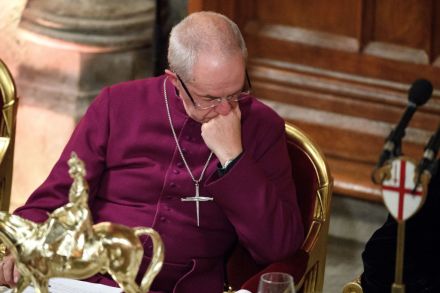
Sorry to sound sectarian, but the Archbishop of Canterbury should really be able to articulate a preference for Anglicanism over other variants of Christianity, including Roman Catholicism. Interviewed here in this week's Spectator, he was more or less invited to do so; instead he said that he was entirely positive about Anglican priests converting to Rome. Hard to imagine the Pope saying the same thing in reverse. Ecumenical enthusiasm is all very nice, but a Church is in trouble if it can’t say why people should stay within it, or choose it over other options. So what is Anglicanism’s selling point? The answer is unfashionable but unavoidable: its socio-political liberalism. Note that I do not say simply ‘liberalism’.

The shame of Naked Attraction

From our UK edition

The fact that Naked Attraction is still being broadcast after a year or so strikes me as proof that there is something very wrong with our culture. In a healthy culture it would have been howled offstage after a few weeks, and the moral babies who made it shunned, and firmer procedures put in place to ensure that this sort of thing is not inflicted on us.  This show, in which people peer at the private parts of potential dates before meeting them, is not funny or daring or witty or brave or ironic or cheeky or iconoclastic or anything else. It’s just wrong. Why is it wrong? It is a very pure act of dehumanisation. It contributes to a culture of superficiality, insecurity, body-fascism (while of course telling us that it is fighting these things).

Does Theresa May’s Anglicanism explain her muddled Brexit?

From our UK edition

Ever since ‘Brexit’ was first breathed, there have been comparisons with Henry VIII’s break with Rome. At first such comparisons seemed a bit far-fetched, for there are some big differences between the Catholic Church and the EU, and between Protestantism and zeal for Brexit. But now they seem uncannily apt. For it looks as if we are embarking on an almighty compromise, a monster muddle middle-way that will be decades in the making. It was about thirty years after Henry’s break that his daughter Elizabeth started stabilising things. Let’s hope we’re a bit quicker to realise that we must lay aside our purism and channel the Tudor spirit of compromise. Now, like then, tidy-minded ideologues on both sides scorn the very idea of a middle-muddle way.

Jordan Peterson is too negative about Western morality

From our UK edition

Jonathan Sacks’ radio series Morality in the 21st Century is a useful introduction to the subject, with some good contributions from world-renowned experts, but it’s rather one-sided. Almost all of these world-renowned experts (such as Jordan Peterson, Robert Putnam, David Brooks) share his approach. There is not much airing of other views, or questioning of basic assumptions. The series is another blast on the communitarian trumpet. Communitarianism is the view that individualism has gone too far, that secular liberalism has descended into selfishness, that a shared moral code has got lost. It has been a major intellectual movement since the mid 1980s. One of its central metaphors is thinness and thickness.

Is it wrong to criticise Israel?

From our UK edition

The Labour Party's tangles over anti-Semitism and Zionism raise basic questions about Western values that are routinely ignored. But sometimes we do need to go back to basics.  A central plank of the ideology of the West is pluralism – the belief that a state should allow the co-existence of various ethnicities and religions, and treat all its citizens equally. It is a slippery plank – some countries, including us, have traditions that technically contravene this principle (we have an established Church, for example). Also, there is an element of hypocrisy in almost every country’s avowal of ethnic and cultural pluralism.

Is losing your religion really good for wealth?

From our UK edition

According to the Times, a new academic study finds that nations become richer when they become more secular. It contests the traditional idea that a nation gets rich, probably with the help of Protestantism, and then loses interest in religion. Instead, a nation first becomes secular, then becomes rich. There might be some truth in this: the keenest capitalists are often rational individualists who idolise financial success. Enough such people can affect a nation’s economy. But the study, judging from the Times’ report, explains the trend differently. The authors found ‘that a decrease in religious belief was linked to an increase in tolerance for individual rights, including of women and gay people and those who seek divorce or abortions.

Justin Welby needs to get off the fence

From our UK edition

My opinion of Justin Welby has been rising over the last few years. At first he seemed a text-book public school Evangelical, a sad contrast to the Welsh wizard Williams. But he proved himself good at the job, which is largely about seeming a good egg while evading awkward doctrinal questions. Having read his book Reimagining Britain, my opinion of him has not exactly fallen, but it has ceased to rise. The book doubtless has its virtues. Its discussions of practical matters such as housing and finance are acute and helpful. But Welby’s treatment of the question of Christianity’s relationship to secular culture is a predictable mix of evasion and muddle. He sounds like a man who is not allowed to say what he wants to say.

Has straight sex become shameful?

From our UK edition

Heterosexuality is marginalised by our liberal arts culture. Not by culture in general: it still allows boy-meets-girl to be celebrated by the masses, sort of (Love Island, Harry and Meghan). But liberal arts culture scorns the crude mechanical drudge of heterosexual coupling. Last night I saw a short monologue on BBC4, one of the series called Snatches, which is part of the Hear Her series. It was about a Liverpudlian typist, circa 1963, discovering the joys of the orgasm. But of course without the aid of a dull old man: it was a female colleague who initiated her. It was well written, well acted, and I make no complaint about the soft-porn content. But it did make me think: our culture has gone a bit weird.

Will the Church’s division over women clergy re-ignite?

From our UK edition

Now that London has a female bishop, you might assume that the whole saga is over: surely the liberals have effectively won? Well, yes and no: because the traditionalist rump that opposes women’s ordination is still officially affirmed as authentically Anglican, and has its own episcopal structure, the liberals’ victories have a hollow feel. Of course liberals have grumbled about this odd situation since its origin in 1992. But charitable rhetoric about co-existence has kept such grumbling in check. Might this now change? You might wonder how this rump has survived, and found new recruits. What is its appeal? It’s hard enough for a vicar to keep a congregation going: why tie one hand behind your back in this way? Well, you could say some clergy like the constraint.

Holy snowflakes

From our UK edition

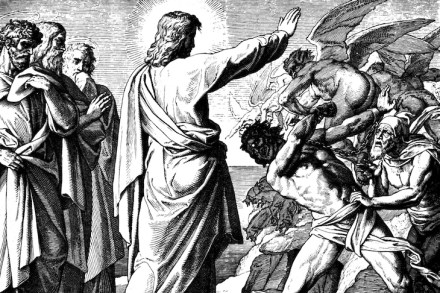
As well as writing about religion, I have always been an amateur religious artist. Recently I’ve been getting a bit more serious about it, and have made a few art works for churches. I recently created one for a City of London church. The vicar, a friend, suggested it might appeal to youngish people somewhat at odds with conventional church (his church hosts such a group). I made a large fabric collage depicting an exorcism: Jesus casting out a demon. I said a few words at its unveiling, which seemed to go well. But not everyone was happy. A few weeks later the vicar told me that the picture had been taken down, following a complaint. Well, my slapdash neo-primitive style is not for everyone, I conceded, a bit baffled.

Martin Luther King’s vision is being betrayed by progressives

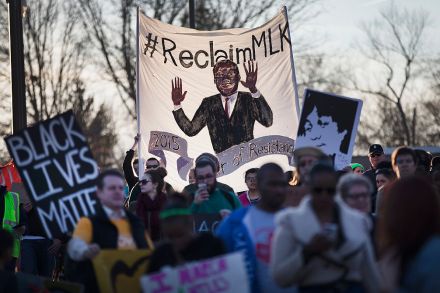
Martin Luther King is easily misrepresented in our era of heightened identity politics, and of scepticism towards grand unifying ideals. For him, the campaign for black civil rights was firmly rooted in a very grand moral and political vision. Today’s progressives have largely lost sight of this wider vision; indeed the thought of it embarrasses them. It seems naïve, unrealistic. Its grandeur is more likely to be mocked than honoured. To black activist writers such as Ta-Nehisi Coates (whom I recently discussed here) it seems a mask for complacent racism. The remarkable thing about King is that he expressed the core ideals of America, and the West, with new intensity and fullness.

The unspoken cause of Labour’s anti-Semitism problem

From our UK edition

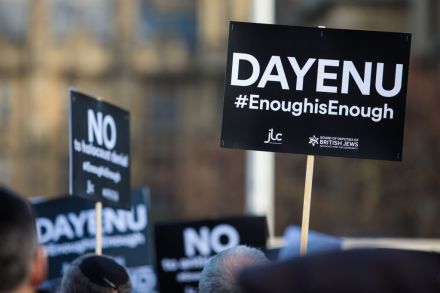
There is another cause of Labour’s anti-Semitism. It is not just that Israel is seen as the last vestige of western imperialism, and that Jews are still suspected of running global finance. It is also that many on the left hate religion, and Judaism is, in some ways, the most intense face of religion. But surely it is far less threatening to the secularist than Christianity or Islam, as it does not seek universal uptake? True, but as the parent of these other monotheisms, it is seen as having a special culpability. Christians and Muslims can be seen as wannabe Jews – they have been infected by the Jewish God-bug. The rationalists of the Enlightenment era saw Judaism as an intolerable affront.

What our Christian culture can learn from Stonehenge

From our UK edition

So Stonehenge was built for the communal fun of it. Maybe. Some archaeologists now wonder whether the main point of the monumental erection was the mass participation involved in getting it up. There were years of feasting and frolicking at the site’s construction, as well as lots of head scratching and mansplaining about whether wax-treated rope could produce maximum torque with minimal tension, or something. It was a cross between Glastonbury and Homebase. Or maybe this theory says more about us than about our oldest public art work. We have a vague awareness that this is what we lack as a culture: a sense of communal religious purpose.

Will Jordan Peterson convert to Catholicism?

From our UK edition

I have mixed feelings about Jordan Peterson, whose 12 Rules for Life I have just ploughed through. There is much socially conservative psychobabble, and life-coachy earnestness, and it’s far too long. But I am in some sympathy with his project. I am interested in its semi-religiosity. His core message is that people should aim high, ‘take the heroic path’, serve a vision of goodness and truth, though this entails sacrifice, and acceptance of the suffering intrinsic to life. No Christian should sniff at such rhetoric, and I do not. But we should sniff around its edges, to ask what exactly he’s up to.

On Valentine’s Day and sexual immorality

From our UK edition

The coincidence of Ash Wednesday and Valentine’s Day seems the right moment to air my dark, wintry perspective on human commingling. I think the new sensitivity to sexual misconduct is partly a good thing. We have begun to admit that there is dark difficulty in sex, that it’s not innocent adult fun. It pains young feminists to admit it, but they sort of are. They want to pin all the blame on male aggressors, but only most of it lies there. In both genders, sex accentuates pride, ego, insecurity, and little moments of cruelty can mutate to monstrous proportions. I got round to reading ‘Cat Person’, the New Yorker short story by Kristen Roupenian that has prompted much reflection on sexual mores.

Will white supremacy always haunt America?

I found Ta-Nehisi Coates’ book We Were Eight Years in Power surprisingly engaging. It combines a calm, friendly voice with a message of cold extremity. The message is that the sin of white supremacy is the true plot of US history. By trying to cure it, Obama exposed its true torrential force. The geniality of the voice makes the message oddly persuasive. Coates uses memoir with great skill, presenting himself as a normal struggling bloke who had an amazingly lucky break. Writers normally sound as if it’s their absolute right to hold forth, that they deserve every column inch they get, and far more money. This humbler attitude (or pose, if you’re cynical) feels very fresh. And it opens one to his radical reading of American history.

Will white supremacy always haunt America?

I found Ta-Nehisi Coates’ book We Were Eight Years in Power surprisingly engaging. It combines a calm, friendly voice with a message of cold extremity. The message is that the sin of white supremacy is the true plot of US history. By trying to cure it, Obama exposed its true torrential force. The geniality of the voice makes the message oddly persuasive. Coates uses memoir with great skill, presenting himself as a normal struggling bloke who had an amazingly lucky break. Writers normally sound as if it’s their absolute right to hold forth, that they deserve every column inch they get, and far more money. This humbler attitude (or pose, if you’re cynical) feels very fresh. And it opens one to his radical reading of American history.

Tim Farron can’t have it both ways on sin

From our UK edition

Tim Farron is a conservative evangelical. Such Christians think they are braver than wishy-washy liberals when it comes to sin – they are not afraid to put it at the heart of their message. But in fact they’re in a muddle on sin. Farron embodies it. During the election he was repeatedly asked by journalists whether he thought gay sex was a sin. He tried to avoid the question by saying that such questions were beyond the bounds of normal political discussion; he implied that secular journalists framed the question in the wrong way, not understanding that we are all sinners. But they kept pestering him. So in the end, under pressure from his colleagues, he said that he did not believe it was a sin.