Theo Hobson

Theo Hobson

Theo Hobson is co-editor of Created for Love: Towards a New Teaching on Sex and Marriage.

Islam – unlike Christianity – refuses to see virtue in secularism

From our UK edition

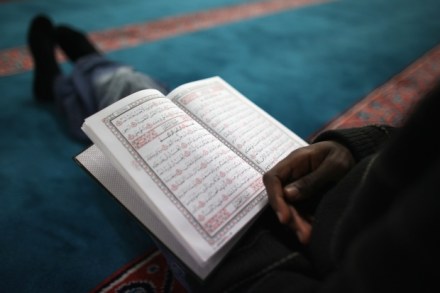
There was a good programme last week on Channel 4 about Muslims looking for love, or at least marriage. It was called 'Extremely British Muslims', and it did indeed show us some young Muslims who were very much like anyone else. But it was also a reminder that many Muslims have a deep-seated assumption about religion and secularism that the rest of don’t. Lots of these young Muslims, though not very religious, saw it as their duty to become more religious as they grew up and settled down. Religion, for them, was an essential part of becoming responsible, civic-minded, family-minded, and about putting away youthful selfishness. And – the other side of the coin – secularism was assumed to be devoid of such healthy values, the site of mere hedonism.

The Church of England should be agnostic towards homosexuality

From our UK edition

Let me state the obvious for a moment: the Church of England does not know what line to take on homosexuality. The traditional line, that it is contrary to God’s will, is opposed by most Anglicans. The clergy in General Synod showed their opposition last week by refusing to approve a report by the bishops that upheld the old line. But the minority that likes the traditional teaching is not for budging. Does the leadership have the stomach to pursue a reform that will create a schism? No. Is a compromise possible? In theory, the Church could drop the ban on gay clergy and the ban on the blessing of gay unions, but retain its opposition to gay marriage.

Camp vicars and smug gossips: is this really the Church of England’s best look?

From our UK edition

I have mixed feelings about ‘the Reverend Richard Coles’, whose new
memoir I have just read. It’s great that a vicar has such high
 visibility - and why shouldn’t there be one or two luvvie-priests, who
 mix smoothly with celebs? And I have no doubt that he combines this
 with being an excellent parish priest, preaching great sermons,
 patiently attending to the needy (in a way that the rest of us don’t). And yet…how shall I put this? It’s not totally ideal that the most
 famous vicar of our day represents the camp-smug-gossipy wing of the church. His love of vestments and incense and saucy humour is in a 
long and venerable-ish Anglican tradition.

Saint Joan is the perfect religious play for our ignorant era

From our UK edition

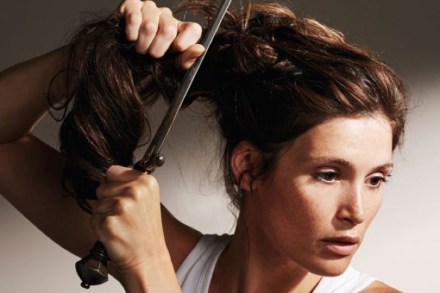
The chief appeal of Saint Joan, which I saw last night at the Donmar, is that it is a brilliant vehicle for a young actress. Gemma Arterton is great, if a little too mature and attractive to convey teenage innocence. Otherwise, I don’t quite see the point of George Bernard Shaw's play, and wonder why it is regularly revived in our time. Does it have anything intelligent to say about religion? It romanticises a medieval mystic who took up arms – which has rather little to do with contemporary Christianity. At one point it suggests that her stubborn individualism is the source of Protestantism, but this is muddled in various ways.

In our post-religious society, we now find faith in Hollywood

From our UK edition

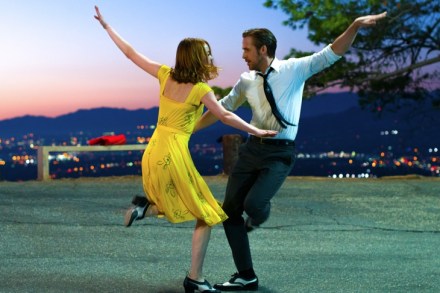
What do we believe in, in our largely post-religious culture? The pursuit of individual happiness, obviously. A vague humanism, thankfully. But something more dramatic is needed too. Something for Hollywood to chew on. La La Land reminds us what it is – the myth of the risk of art. The myth of creativity being a vocation that involves sacrifice. In this case, spoiler alert, it is romantic love that must be sacrificed. It is because it serves this myth that La La Land is being revered. (It is a rather feeble and self-conscious film, always looking at itself in the mirror to see if it looks authentic and fresh.) Another high-hyped recent film of this ilk was Whiplash, about a young music student. There’s one every year or so.

Our debt to the Tudors

From our UK edition

‘The Reformation was a process of both renewal and division among Christians in Europe,’ said the Archbishops of Canterbury and York in a ‘joint reflection’ statement marking 500 years of Protestantism. ‘In this Reformation anniversary year, many Christians will want to give thanks for the great blessings they have received to which the Reformation directly contributed.’ Many will want to? OK, but what about you? Why this timid slippage into the third person? Some journalists reported the statement as an apology. They were technically wrong, but tonally correct. It reminded me of the day after Brexit, when Boris and Gove were so nervous of seeming cocky that they forgot to seem glad.

America won’t forget Obama’s message of hope

From our UK edition

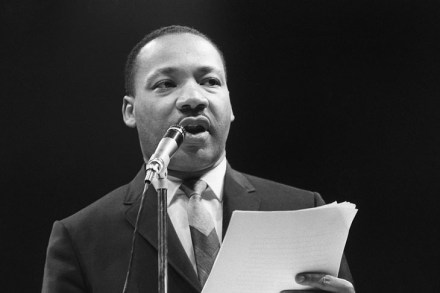
Those who sneer at Obama for promising more than he could deliver have little understanding of the nature of moral idealism. They accuse him of naivety but they are themselves naive. They fail to grasp that Obama expressed the basic moral idealism that unites the vast majority of people in the West. He expressed it more eloquently than anyone else had for decades. To say that he created unrealistic hopes is inept. Those ‘unrealistic hopes’ are intrinsic to the basic creed of the West – ‘liberty and justice for all’ sums it up. Such intense idealism is a crucial aspect of the politics of the West, however awkward this is. It’s risky for a politician to express such ideals with real verve, for a backlash is pretty likely.

Want to make a subject more appealing to students? Add a ‘trigger warning’

From our UK edition

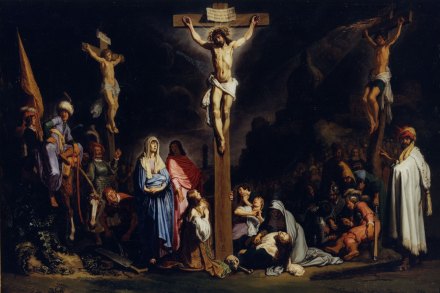
Before you read any further, be warned that this post contains some shockingly racy material. Well, not really - I just wanted to make sure you read beyond the first sentence. That’s what ‘adult content’ warnings are really for. When some mediocre TV drama begins with a warning about ‘scenes of a sexual nature’, I don’t suppose I’m the only person laying aside the remote and saying ‘oh goody!’ So I’m glad to hear that the ‘faux-warning’ is being extended to the study of religion at university. Students at Glasgow are being given ‘trigger warnings’ before being taught about the crucifixion of Jesus - more specifically, before being shown some gory film clips.

George Michael’s death shouldn’t mean that we gloss over his flaws

From our UK edition

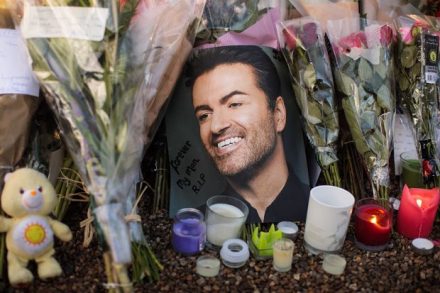
One should not speak ill of the dead, but if their flaws or vices are glossed over that is also problematic. George Michael was admirable in some ways, especially for his quiet charitable donations, but less so in others. I don’t see why his penchant for anonymous sexual encounters should be politely passed over, or treated as a harmless lifestyle choice. He ‘loved anonymous sex’, said Owen Jones in the Guardian - as if fondly recalling someone’s love for opera or snooker. Jones and others will doubtless say it is homophobic to moralise about this.

Is an oath to ‘British values’ really such a bad idea?

From our UK edition

Most commentators have been over-hasty in ridiculing Sajid Javid’s proposal of an oath of allegiance to British values, to be sworn by those holding public office. It’s an opportunity to go right back to basics and ask a huge and naïve-sounding question. What is our public creed? What do we as a society hold in common? Some sneer that there is nothing particularly British about respect for the law, tolerance, human rights. True enough, but the alternative is to call them ‘Western values’ which is more contentious, more clash-of-civilisations-ey. Those who rubbish any attempt to articulate such values make the mistake of implying that such values are just natural, shared by all decent folk everywhere. They are not.

In defence of Britain’s humanist values

From our UK edition

In yesterday's Guardian Giles Fraser dismisses Louise Casey’s report on social division. Its desire to ‘integrate’ communities is serving liberal capitalist ‘hegemony’. And he dismisses Sajid Javid’s call for all Britons to affirm ‘the shared values that make Britain great.’ This, says Fraser, ‘is actually another way of saying that all must be obliged to pay homage to the real god: the economy.’ Thank goodness there are communities that dissent from ‘the dominant model of middle-of-the-road liberal secular capitalism'. He concludes that Muslims should be thanked for maintaining ‘their religious convictions and way of life. They refuse all that nonsense about religion being a private matter.

Theresa May’s religious faith should bring her more joy

From our UK edition

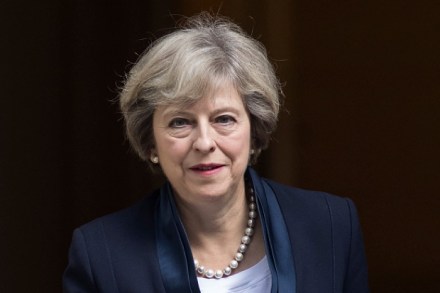
I like the fact that Theresa May is an Anglican, a good, solid, unashamed, unflashy Anglican, whose allegiance has not wavered since childhood. It reassures me. For the CofE is a place of pragmatic idealism, public service, profound humanism, good humour, self-criticism. Also, it’s just about the only place where class and racial divisions are routinely overcome. But when she actually says anything about her faith, she doesn’t come across very well. She sounds nervous of saying the wrong thing, which is fair enough, as horrid bloggers are waiting to pick and sneer at her words. And (pick, sneer) she sounds a bit pinched and negative about her experience as a vicar’s daughter.

Is patriotism a virtue?

From our UK edition

Michael Gove makes a semi-persuasive case for patriotism in The Times this week. Brexit and Trumpism are largely just assertions of the basic, healthy human impulse to love one’s homeland, and to defy the international structures, and liberal sneering, that denigrate this impulse. The reality is that the moral status of patriotism depends on which nation you belong to. It depends whether your nation espouses liberal values. If it does, then your patriotism is linked to a wider-than-national creed. If it does, then your allegiance is also to an international cause: you respect and love your country as a particular expression of this creed. After fascism, the idea of national allegiance subtly shifted in the West.

Donald Trump’s victory shows why liberals must go back to basics

From our UK edition

It is time to bother thinking about the tricky terms ‘liberal values’ and ‘liberalism’. ‘Liberal values’ is what unites us in Western democracies; it means a broad, vague belief in equality, human rights, the rule of law. Liberalism, on the other hand, is a political and cultural agenda. It claims to express liberal values in terms of a concrete political programme. Or let’s put it this way. There is a 'basic liberalism' that unites us (or almost all of us). It says that all human lives matter, that racism is bad, that people should be free to choose how to live, and so on. And there is a 'sharp liberalism' that divides us. It says that certain particular policies are needed, if liberal values are to prevail.

Nietzsche was right – liberal democracy is flawed

From our UK edition

It’s time to consider Nietzsche’s view of liberal democracy. It couldn’t work, it couldn’t bind a nation together, he said. Why not? Because of its excessive moral idealism. The belief in equality and social justice, which he rightly saw as deriving from Judaism and Christianity, would lead to fragmentation. For politics would be dominated by various disadvantaged groups demanding respect. Any sort of unifying ethos would be treated as oppressive, the ideology of the ruling class. If virtue lies in weakness, and victim status, healthy politics is doomed. It is emerging that he was largely right. Progressive politics, which affirms the liberal or humanist vision, seems to be collapsing.

Is Donald Trump a fascist?

From our UK edition

The essence of Trumpism is vitalism, the belief that energy is the key political virtue. Don’t worry about my specific plans, he says, just believe that I will shake things up, even smash things up. Hillary ‘lacks energy’ he keeps saying. This should worry us. For this approach to politics was the seed of European fascism, almost exactly a century ago. The movement initially overlapped with the avant garde art movement, Futurism. Its founder Filippo Tommaso Marinetti announced a punk-like attack on the arts and politics in his manifesto of 1909. Liberal democracy was sapping Italy of manly energy, he said: ‘We wish to glorify war – the sole cleanser of the world.

Christianity is at the heart of the secular left’s response to refugees

From our UK edition

Say what you want about Owen Jones - and I might well agree with you - but he is admirably big-picture. He dares to link current affairs to the largest moral questions. In a piece about refugees on Friday he supplied a sketch of his form of humanist idealism. Empathy, he explains, is a natural human faculty. We naturally desire the good of all our fellow humans - unless some nasty form of politics interferes with this and teaches us to view some group as less than fully human. This is what colonialism did, and what Nazism did, and what Balkan nationalism did, and what Islamic fanaticism is still doing. And it is what the right-wing press is doing, when it promotes a heartless attitude towards refugees.

Western values are more Christian than classical

From our UK edition

There is an important article in this week’s New Statesman. It addresses the big (embarrassingly big) issue of what our most fundamental values are in the West. The historian Tom Holland explains that his study of the classical world has made him realise that a huge gulf exists between the values of that era and modern Western assumptions – especially the assumption that all human lives matter. Classical culture has huge allure for modern intellectuals, but in reality its values were never far from fascist. And it was Christianity that put new values on the table – a fact that Enlightenment thinkers massively downplayed, due to their sneering dismissal of ‘superstition’.

The revolt against ‘liberalism’ is shortsighted

From our UK edition

There are two articles in yesterday's Guardian that are critical of something called ‘liberalism’. Giles Fraser vents his irritation at an advertisement for a hotel chain, aimed the global business elite. It celebrates the idea of the individual’s freedom from boundaries, constraints – be a ‘beautiful nomad’ it urges. This epitomises the worst sort of ‘liberalism’, he says. And Martin Kettle suggests that we are seeing the demise, or at least the failure, of the two versions of liberalism that have dominated national life for decades: the social liberalism of the 60s and economic liberalism of the 80s. Brexit was in part a protest against both, he says.

Why CofE schools must resist becoming more religious

From our UK edition

The Church of England’s relationship with state education seems simple enough. Its schools have been a major source of strength, significantly slowing its rate of decline over the past few decades. Many congregations have been swelled by parents seeking a better-than-average state education for their offspring. From an Anglican point of view, what’s not to like?  Well, this: selection by church attendance is unpopular with those who do not benefit, giving the Church an image problem with its non-members. This makes some of its members, including me, uneasy. Also, the integrity of church attendance is in doubt, in parishes near a popular school. The cliché of the pushy parents faking their piety is partly true, and it affects the meaning of contemporary churchgoing.