Theo Hobson

Theo Hobson

Theo Hobson is co-editor of Created for Love: Towards a New Teaching on Sex and Marriage.

Cop out: Boris’s battle to save the climate summit

From our UK edition

32 min listen

In this week’s episode: Can Cop26 deliver on its grand promises? In our cover story this week, Fraser Nelson assesses the state of the upcoming Cop26 summit in Glasgow and questions their very effectiveness in dealing with climate change in a world of global players with very different priorities. He is joined on the podcast by reporter Jess Shankleman, who is covering Cop26 for Bloomberg. (00:48)‘This one’s in Glasgow, but you’d best think of it as the Edinburgh Festival for environmentalism. Lots of fun, lots of debates, lots of protests, lots of street action, but not really any much of concrete substance.’ – Fraser Nelson Also this week: Is it moral to bribe your child to go to church?

Why I’m paying my daughter to go to church

From our UK edition

It would be weird if my 13-year-old daughter didn’t say she was an atheist. It’s what you say in our culture when you’re that age. To be honest it would creep me out a bit if she was all pious. But she is getting confirmed into the Anglican faith. This is a piece of hoop-jumping that her parents have decided to require of their children. I went for coffee with the vicar to ask if my daughter could join the classes. I admitted that she was a bit reluctant. In fact, it was a mixed picture. Whenever I mentioned confirmation she professed her atheism, but when I didn’t mention it for a couple of weeks she asked when the classes were starting. She is not entirely averse to attention, even if it is directed at her eternal soul. Her church-going to date has been patchy.

Do I have a right to be offended by threesomes?

From our UK edition

I couldn’t get to sleep the other night for worrying about the future of liberalism. So I got up and put the telly on. Maybe there would be something soothing on, to help me forget my worries. There was a show on Channel 4 called My First Threesome. The voiceover explained that lockdown had led many of us to be more sexually adventurous, and even to explore ‘what is for many of us the ultimate fantasy’. Before we met some enthusiastic adventurers, a brief historical segment explained that many wise ancient cultures saw sex with more than one person as a perfectly natural desire. ‘Then for centuries religion and shame pushed it to the realm of fantasy.

‘Farming is hungry work’: The Yorkshire Shepherdess on life with nine children

From our UK edition

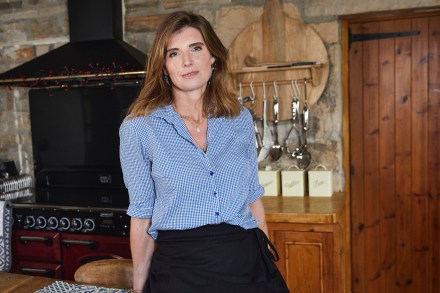
The Yorkshire Shepherdess was raised in suburban Huddersfield, not a sheep in sight. Amanda Owen was a romantic type who pored over pastoral images in library books – by chance, one image of some men at a cattle auction contained her future husband, Clive. She determined to head for the moors and, like some Thomas Hardy heroine, make her way in the windswept world of sheep farming.  She is now the nation’s chief supplier of pastoral, today’s version of a rural-hymning poet, warbling the woodnotes wild. She is also an icon of motherhood, having produced no less than nine young farmhands. For many of us, Our Yorkshire Farm, the Channel 5 programme that mixes family and farming, was an ideal escape from the stresses of lockdown life.

Does ‘white privilege’ exist?

From our UK edition

On Wednesday Radio 4 aired a programme called White Mischief, which promised to trace ‘where whiteness came from and how its power has remained elusive.’ It asked whether white privilege existed. Or rather it pretended to ask. It assumed that it does. Instead of directly admitting that it was putting forward one point of view, it was one of those annoying programmes that affects a sort of light-hearted neutrality, and vaguely claims to be moving away from the unhelpfully limited conversations we have been having so far. So instead of soberly setting out the issue, it began with a jokey clip of Grayson Perry hooting with laughter at some wise brave insight he had just had, and then darting off sidewise into some sociology.

Why can’t men write about sex?

From our UK edition

Not long ago I was a regular Tinder user. Having heard that gingers were romantically incompatible, I decided to mix work and pleasure and put this controversial claim to the test. I set up a sort of interview-date with a nice young lady called Laura, a former international gymnast who was working as a waitress, but looking for more permanent work. She sported a lovely glossy dark ginger mane. We weren’t getting on too badly, but not much of a story there. Luckily there was scope for deepening the research: we went back to mine, and a bit of horizontal research definitively established that the alleged incompatibility of gingers is utter nonsense, doubtless put about by jealous eugenicists. None of the above is true.

Can we talk about Emma Raducanu’s Christianity?

From our UK edition

I’ve just been looking at photographs of Emma Raducanu again, this time focusing on her upper chest. She usually wears a pendant cross, which suggests that she is a Christian. Yes I know that some people wear crosses for fashion reasons, but I don’t think she’s in that camp. Maybe it’s more a sign of cultural than religious allegiance, maybe a treasured gift from a grandparent? Or maybe a sign of solidarity with China’s persecuted Christians. To what extent is it legitimate to inquire into this? The orthodoxy is, not at all, you meddling creep. It’s her business, and it’s utterly irrelevant to her tennis success. But it is not too out-of-order to ponder the symbols that people in the public eye choose to wear.

Justin Welby is missing a trick on climate change

From our UK edition

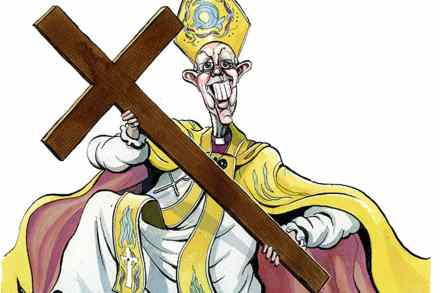
Justin Welby urges us, echoing Deuteronomy, to 'choose life', so that our children may live. It is an apt use of scripture, in the face of the climate emergency. But his performance on Radio 4 this morning was far from impressive. The Archbishop of Canterbury spoke of the need for ‘meaningful sacrifices’, but when asked which ones he was making he sounded a bit muddled, as if he was not ready for such an obvious question. His first answer was ‘recycling and all that’, a locution with an air of irritation, like a man too often nagged to take the bins out.  Can’t Lambeth Palace afford daily sausages? Asked about meat, he said he had cut down, but mainly for health and financial reasons. (Can’t Lambeth Palace afford daily sausages?

The fight for the future of the Church of England

From our UK edition

When the Church of England talks of trying new things, I prick up my ears. Back in 2004 it announced the need for ‘fresh expressions’ — new ventures alongside the normal parish system. Maybe some vibrant arty experimentation would ensue, I felt. But the main result was lots of nimble little evangelical pop-up churches, mostly lay-led. The idea of innovation seems to energise the evangelicals, although their version of innovation doesn’t always energise me. On Easter Day this year I dragged my kids to church, but there was no room at the socially distanced inn. The evangelicals round the corner let us in, so I had a glimpse of a style of Anglicanism that I normally avoid.

Is there anything more uplifting than Our Yorkshire Farm?

From our UK edition

I’m not sure what to say about Our Yorkshire Farm, a documentary on the utterly redeemed Channel 5, that doesn’t sound hyperbolic to the point of idolatry and slight nuttiness. If there is anything else in our culture that is as wholesome, pure and good as this, please tell me about it.  Amid all the murk and sleaze and bigotry and inverted bigotry and tired complacent mediocrity, there is a family that knows how to live well - a family that has more or less restored the whole notion of virtue. Yes, virtue! Amid all the crappy Netflix shows, there is Sidney, who is learning to run his first sheepdog.  Amid all the stale chat about how we’re going to learn lessons from the pandemic, maybe, there is Miles, who looks after the chickens.

Feminism’s sexual inadequacy

There’s an Old Testament story that ought to be better known (who does God’s PR these days?). King David is in his palace, and a servant announces that he has a caller. It’s Nathan the prophet. Good old Nathan — committed to maximizing the life-chances of the poor, a real old-school man of the people, and often a bit spiky with it — a man to keep onside. Yes, yes, send him in. Nathan launches into a story about a humble farmer who has been conned by some smooth-talking landlord and has now lost his land and his last remaining lamb to this greedy sod. The king’s a bit disappointed that Nathan has brought such a tiny issue to his attention — he was hoping for a big juicy cause he could champion, so as to remind the people of his compassionate-conservative credentials.

sexual

Meghan, Harry and the rise of a new religion

From our UK edition

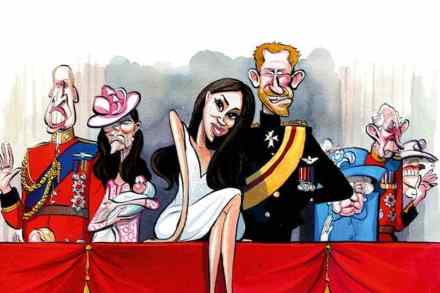
The Meghan and Harry show is a window into our spiritual predicament — in Britain, America and beyond. Through breaking free from royal life, amid much unhappiness, they have acquired a powerful story of self-realisation. This is our culture’s new idea of the spiritual life. What exactly is this new idea? How does it relate to what came before? Is it replacing the old or is its appeal limited to certain sectors of society? The rise of the new spirituality has been gradual. We can neatly chart its rise with reference to Harry’s mother, Princess Diana. First we might pause to ask: why is the British royal family such an important showcase for this shift? It is a place of intense psychological pressure and of spiritual significance.

A dialogue concerning modern feminism

From our UK edition

To mark International Women’s Day, I decided to attempt a conversation about feminism with my wife. I reproduce it, or a version of it, here. I should say that I offered her the chance to write her own words, but she declined, reminding me of her low opinion of journalism. You can ventriloquise me, she said — isn’t that the sort of thing you claim to be quite good at? To put my opening words in context, I had just brought her a cup of tea in bed. Me: I know it’s early in the morning, but what is feminism? Wife: Go on then. Me: What? Wife: I suppose you have some new theory you want to tell me about. Go on then, let’s see where you’ve got to. Me: Well, OK. I was thinking, feminism seems to be a mix of two things.

Why Meghan and the monarchy were bound to clash

From our UK edition

Was Harry and Meghan's departure from royal life inevitable? At the heart of our monarchy is an ideal of serving the public good that is not the same as the currently dominant form of progressive idealism espoused by the likes of Meghan. It is not the same as it, and when it comes down to it, it is not compatible with it. The British monarchy’s ideal of the public good is fairly vague, fairly flexible. But it entails a basic respect for tradition. And it entails the ideal of self-sacrifice. To serve the good means accepting constraints, accepting that you might not get what you want. It means accepting the possibility that you might have to suffer, even in some sense give your life for the sake of the public good.

How the Church of England can bounce back from its Covid crisis

From our UK edition

The bishop of Manchester has warned that many Church of England churches are unlikely to survive the pandemic. The normal trickle of church closures (around 25 per year) is set to become a steady stream in the next few years. 'I suspect the pace (of closures) will increase as a result of Covid', the Right Rev David Walker has said. It will be a sad loss to the nation’s social fabric if hundreds of churches become flats, or offices, or are demolished. But there is another possibility. The pandemic has highlighted our need to invest in local communities, and this is an opportunity to do so.

Is America now a Catholic country?

From our UK edition

'It’s like being in church', said my teenage son. It was a bit — two bursts of prayer, a religious song, a long sermon, and a general air of community-reverence, inclusive piety. We were watching Biden’s inauguration last week, grateful for a mid-afternoon break from other screens. These are quasi-religious events — I knew that. But this time it seemed more pointedly religious than ever. Let’s get back to the true faith, after a spell of gold-plated idolatry. And, if you knew how to spy the signs, this ceremony reflected the new man’s Roman Catholicism — a Jesuit leading the prayers, a quote from Saint Augustine, songs from an Italian-American and a Latina.

The problem with Sex and the City

From our UK edition

So Sex and The City is returning under a new name, and there is a new Russell Davies drama about gay experience. When will television dare to address the experience of heterosexual men with even an ounce of sensitivity?   My thoughts were prompted by the American drama A Teacher (currently on BBC iplayer), about an affair between a teenager and his English teacher. On paper, it is sensitive to the male experience, for the conclusion is that he is traumatised by the affair - despite lots of back-slapping from his mates, he is depicted as a victim of abuse. But this conclusion is disingenuous, and so lacks credibility. For he is, from the start, a cool stud, a sexually fluent dude, and the titillating trysts are predictably porny.

Britain needs to revive its festivals

From our UK edition

Happy Epiphany! The coming of the wise men means that this strange Christmas is finally over. It used to be a twelve day holiday, but nowadays there’s at least a month of build-up. For a century or two, royal and imperial pageantry was a sort of replacement for public religion I have nothing against Christmas (except that it brings out the most hideous bourgeois side of us), but I do worry that it has become the only game in town. Our festive culture is too Christmas-heavy. The phrase ‘the festive period’ says it all. We need lots of little festive periods. In Japan they have about one a month. To Japanese ears, ’the festive period’ would sound as strange as ‘the cultural period’ or ‘the meaningful period’.

Liberals should stop patronising believers

From our UK edition

An editorial in the Guardian on Friday suggests that this year may be a good one for liberal Christians, and gives them a little pat on the back.  Liberalism thinks itself the wiser, cooler sibling of religion The suggestion is based on four things: the churches have shown their social relevance during the pandemic; the incoming American president is a liberal Catholic; in his latest book Pope Francis has called for a ‘new humanism’; the leader of the Orthodox Church, Bartholomew I, has spoken in favour of social justice.

Christmas raises the most basic political question

From our UK edition

A few years ago, around this time of year, I overheard a nice exchange in a charity shop (I was doing my Christmas shopping, I suppose) outside of London, in a middle-England market town. A woman came in, a bit flustered, had a quick rummage through some hangers, and then asked the lady at the till: ‘Have you got anything for a camel? My son’s a camel this year.’ Her meaning was clear, both to the shop assistant and to me: her son was in a nativity play and she needed to cobble together a costume. It gave me a little warm sense of shared meaning, and tradition: something very similar might have happened in these parts 100 years ago – or maybe even 800 years ago. How lovely, to see an ancient festive tradition going strong.