Theo Hobson

Theo Hobson

Theo Hobson is co-editor of Created for Love: Towards a New Teaching on Sex and Marriage.

The BBC’s religious programming shake-up could easily make things worse

From our UK edition

So the BBC resolves to improve its treatment of religion, to take it more seriously as a major force in our culture. Good. But if clumsily undertaken such intentions can backfire, and deepen the liberal elite’s disdain for religion. Imagine if Thought for the Day was doubled in length, or if Songs of Praise was aired twice a week. The challenge is to find new forms of religious broadcasting that unsettle assumptions. I can only think of one example of this in the last decade: Rev, the sitcom that combined affection for the C of E with satire. Because it was irreverent, it could also be profoundly sympathetic – it even showed a man praying, with engaging honesty and wit.

The new Bishop of London is comically evasive on the issue of gay marriage

From our UK edition

A bishop of the Church of England cannot really express his or her view on gay marriage. The secular media has little interest in asking about anything else. Result: bishops sound comically evasive, having to ignore repeated questions on the issue with Michael Howardish determination. This is what happened in the newly-appointed Bishop of London Sarah Mullally’s first grilling on the Today programme. This is what she should have said: ‘I don’t know. Sorry, but I don’t know what line the Church should take on gay marriage, or the ordination of homosexuals. I reject the secular assumption that everyone ought to have a firm opinion on every issue. So I affirm the Church’s teaching on the issue.

Tim Farron is wrong about liberalism

From our UK edition

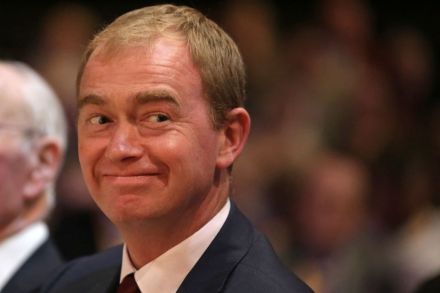
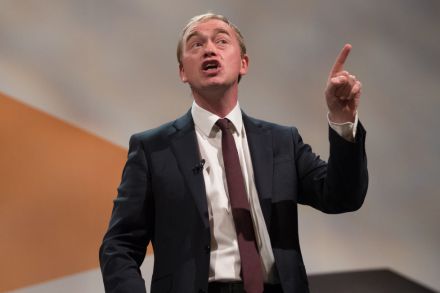
Tim Farron is not the ideal person to explain Christianity’s relationship to liberalism. When he resigned as leader of his party, after a poor election result, he complained about the culture’s anti-Christian bias. It’s a complicated enough issue, without sour grapes being added to the brew. He now says that British liberalism has become empty because it has departed from its Christian roots. Despite outward conformity to liberal principles, there is now ‘no unifying set of British values.’ Look under the surface and people are selfish, tribal and intolerant of difference. True liberalism is rare, and, he implies, it is part of a deeper commitment than secular people are capable of.

James Bond is a notorious British sex pest

From our UK edition

In an article yesterday, Niall Ferguson tried to take a nuanced position on our changing sexual mores. I think he was right to refer to James Bond – I’m surprised other pundits have not. We’re still in quite a muddle, he says, while we revere this fantasy of droit de seigneur. Indeed. Not long ago I turned on the telly on a Saturday afternoon, and found a Sean Connery Bond film. He was staying in a hotel – after flirting with an attractive maid he summoned her to his room, and after some sexy banter he pulled her into the shower with him – cut to the happy couple in post coital bathrobes. It might sound like the scapegoating of a cultural icon, but I think we need to knock double O sex-pest from his pedestal.

Martin Luther’s genius was to teach us that feeble faith is enough

From our UK edition

I sometimes identify with something that Evelyn Waugh once said. A friend asked him how come he claimed to be a Christian, being such a cantankerous curmudgeon, such a master of cruel wit. Well, Waugh replied, imagine how horrid I’d be if I didn’t try to be a Christian. There’s something authentically Christian in that answer – an admission that we can never be very successful Christians. Because it demands so much, this religion is an awkward commitment, full of tension and ambiguity. Because it demands so much, we can be honest about our failure. For me, this capacity for honesty is crucial. If I felt there was no room in Christianity for such honesty, I think I would have walked away.

Britain is a nation of quiet Christians

From our UK edition

The latest survey says that under half of us (42 per cent) identify as Christian, and that just over half have no religion. Does this show that we have finally turned the corner, and are no longer a Christian nation? Well, it’s a very curved corner – we’ve been turning it for about fifty years. But on one level we remain a Christian nation until a movement comes along that redefines us in explicitly secular terms – and there’s no real sign of it. It might sound perverse, but I think these figures show religion to be surprisingly popular. For consider how little religion there is in popular – or indeed less popular – culture. A Martian who visited Britain and studied our culture would assume that just a few per cent sympathised with religion.

Why is there so much naked flesh on TV?

From our UK edition

The other day I frowned at Love Island. I dislike adding (in my tiny way) to such shows’ publicity, but sometimes the obvious moral objection must be made, when sexuality is tackified, and when other commentators queue up to say what kitschy fun it is. The worldly pundit smiles at my earnestness: ‘It’s the culture we live in, it goes with cultural freedom. Why bother disapproving?’ I picture a cool old cove like Simon Jenkins saying this. ‘On the other hand, maybe we do a need a new Mary Whitehouse, just to spice life up a bit,' he smirks. Well, I want to broaden my frown to another show, Channel 4’s Naked Attraction, and I want to step up the earnestness.

How tolerant should liberals be of Islamic theocracy?

From our UK edition

I quite enjoyed James Fergusson’s exploration of British Islam – Al-Britannia, My Country. If it is done intelligently, I approve of someone accentuating the positive, reminding us that the majority of British Muslims have successfully integrated to a large extent, and that optimism is warranted. But I have a couple of quibbles. He spends much time arguing that it is dangerously wrong to conflate conservative Islam with extremism – the alleged sin of the Prevent programme. We should tolerate those who disparage gay rights or feminism, rather than accuse them of extremism, which will drive them underground. Fair point, but I feel his argument misses a central issue.

Why snobs love Love Island

From our UK edition

A certain sort of person likes to show how relaxed he or she is about sex. The current vehicle for such displays is Love Island, a reality show in which supposedly attractive young people are nudged to pair up, swap partners and so on. These people claim to find it refreshingly frank, anthropologically fascinating, harmless fun, a guilty pleasure, a kitsch cult hit they love to watch with their teenagers, whatever, who cares - the point is they puff it up. I find this a bit objectionable. These people would be utterly ashamed at their own privately educated teenagers taking part. They are gawping at the lower orders, enjoying their crude mating habits.

Embracing liberal Christianity can lead the Lib Dems out of irrelevance

From our UK edition

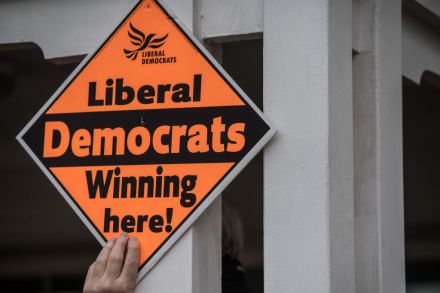
In a sense it was the Liberal Democrats who did worst in this odd election. For the point of this party is to attract progressives who find Labour too dogmatic. And in the past two years Labour has been taken over by old-fashioned socialist dogma. It was the perfect opportunity to create a huge base of homeless New Labour voters. And then came Brexit, doubling this golden opportunity, for the Liberal Democrats were the main party of Brexit-scepticism. Why was the chance missed? Maybe English voters can only really believe in the two main parties, when it comes to governing. In fact, most of us find one of these parties only intermittently credible. So what’s the point of the Liberal Democrats? They must seek purpose and coherence in an idea, a cause.

It is not enough for Muslims to say ‘we condemn terrorism’

From our UK edition

It is not enough for Muslims to say ‘We condemn terrorism’. Sure – we believe you. But something more is needed. What? It’s easy to get bogged down in the slightly wrong issue of violence and war. We should not expect Muslims to condemn all violence that claims a religious justification – for most war does tend to claim such justification, and an element of this lingers in the West, and few of us are complete pacifists. What we need to hear from British Muslims is that they reject the vision from which terrorism comes. It is a vision of society unified by one political and religious ideology. It is a vision of pluralism, and secular politics, swept aside by this vision. It is a theocratic vision.

Can a liberal Catholic now save France?

From our UK edition

France is a muddled nation, n’est-ce pas? And at the root of the muddle is, guess what, religion. Maybe the muddle is a godsend. For if the right were more united on religion, Marine Le Pen would surely have won. The Front National is the strongest far-right party in Western Europe, supported by about a third of the French people. But it is also the most muddled. It has a nostalgic idea of the nation as a traditional organic culture. But it seems utterly ignorant of the gaping problem with such a project. Traditional French culture is split between Catholicism and secularism. Marine Le Pen emphasised secularism, in order to project a clear line against Islam. But this was probably a mistake.

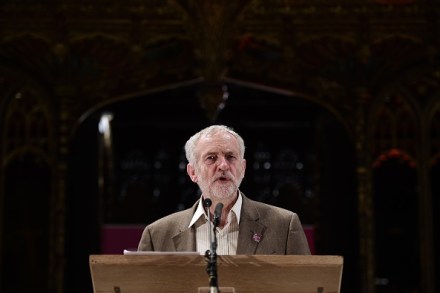
Corbyn’s views on religion contribute to his lack of popular appeal

From our UK edition

This election was won two days before it was announced, on Easter Sunday. Theresa May put out an Easter message in which she suggested that British values had a Christian basis. It was her version of David Cameron’s message two years before, in which he said that Britain is a Christian country. She was rather more convincing. I don’t know whether Cameron is sincerely religious, but he didn’t seem it. He didn’t even seem to try very hard to seem it, as if fearing that his metropolitan support might weaken, and perhaps that George Osborne would make a snarky jibe about it at cabinet. But it still did him good to make those pro-religious noises. St Theresa should keep her piety out of politics, said a few pundits.

Do do God

From our UK edition

This election was won two days before it was announced, on Easter Sunday. Theresa May put out an Easter message in which she suggested that British values had a Christian basis. It was her version of David Cameron’s message two years before, in which he said that Britain is a Christian country. She was rather more convincing. I don’t know whether Cameron is sincerely religious, but he didn’t seem it. He didn’t even seem to try very hard to seem it, as if fearing that his metropolitan support might weaken, and perhaps that George Osborne would make a snarky jibe about it at cabinet. But it still did him good to make those pro-religious noises. St Theresa should keep her piety out of politics, said a few pundits.

Christianity is at the heart of Britain’s shared values

From our UK edition

Theresa May does a decent job of saying that Christianity is at the heart of our shared values. It’s a difficult thing to say without sounding disparaging of non-Christians, but I think it’s something worth saying. Some will say that the Prime Minister should stick to politics, especially when there’s so much politics to do, and stay away from religion. If she wants to give us a headmistressy pep-talk, fine, but keep it strictly secular. I don’t agree. It’s for each prime minister to decide whether to veer into religious territory. (There’s no constitutional bar to him or her getting all happy-clappy – not a danger with this glumly cautious Anglo-Catholic.) And there’s no clear border between politics and religion.

Secularism is part of God’s cunning plan

From our UK edition

How should Christians relate to the culture around them? That is the question raised by Rod Dreher’s article in the Spectator this week. He’s right that it’s a pretty fundamental question. If we Christians don’t know how to answer it, our message is likely to seem muddled. In common with many leading theologians of the last few decades, he claims that the answer is simple, if we are daring enough to see it. We should defy the false gods of the age, ‘the norms of secular society’. Liberal Christianity has failed to do so, and so has allowed the erosion of its sacred inheritance. We must be counter-cultural little Benedicts. He sums up this position with admirable clarity.

In defence of Christian doubt

From our UK edition

A new survey finds that a quarter of British people who describe themselves as Christian say they do not believe in the resurrection of Jesus. Well, it won’t surprise you to hear that I think they are on theologically dodgy ground. Christians should affirm the resurrection of Jesus, however much they struggle to reconcile it with their rational assumptions. Unless it is affirmed, this whole religion is obviously toast. And yet, before we all agree to join in pouring scorn on these muddled sort-of Christians, I want to point out that the issue is not entirely clear-cut. I believe in the resurrection of Jesus but I also don’t really. I affirm it, despite my rational scepticism. I mean, dead people stay dead, don’t they?

Theocracy should scare us more than terror

From our UK edition

In yesterday's Guardian, David Shariatmadari confronts the claim that Islam is an especially violent religion. The claim, he says, is undermined by the fact that jihadi terrorism is a very recent phenomenon. Yes, there is also the violence of empire-building in its history, but you could say this of Christianity too. ‘Aspects of Islamic teaching do indeed justify some kinds of violence. Islam isn’t a pacifist religion. But again, it has this in common with Christianity, Judaism and other world faiths.’ As I have said quite a few times before, it is simply wrong to say that Islam and Christianity have much the same view of war and peace. Judging from its founding texts, Christianity is a pacifist religion, for its founder rejected violence.

Cynicism is the West’s great weakness

From our UK edition

Pankaj Mishra’s book Age of Anger is good in parts, but also shows the weakness of leftist thought. It is a bold history of political ideas that traces the extremism and populism of our day to nineteenth-century sources. Both Isis supporters and Trump supporters are reacting to the insecurity caused by neoliberal globalisation, he argues. ‘Cosmopolitan civilisation based on individual self-interest’ has brought material wealth at the cost of creating huge expectations that lead to dangerous resentment. And now social media intensifies such resentment. More people reject traditional politics, due to ‘the gap between the profligate promises of individual freedom and sovereignty, and the incapacity of their political and economic organisations to realise them.

Is ‘post-theocratic Islam’ a contradiction in terms?

From our UK edition

Omar Saif Ghobash, who is the United Arab Emirates ambassador to Russia, has written a good Muslim-reformist tract called Letters to a Young Muslim. There is plenty of passionate rhetoric denouncing rigidity, praising open-mindedness. There are plenty of insights that give the outsider a glimpse of his difficult inheritance (as a half-Arab, half-Russian boy educated in Britain). But is the bullet bit? A bit. While his liberal sympathies are not in doubt, Ghobash does not quite focus on the core issue with adequate determination. For me, the essence of the Muslim-reformist task is the repudiation of theocracy.