The Spectator

Letters: The limitations of a Covid vaccine

Still distant Sir: In James Forsyth’s analysis (‘Boris’s booster shot’, 14 November) he infers that a vaccine, if provided to the majority of the UK population, would deliver herd immunity from Covid-19, noting that ‘it seems increasingly probable that by the second half of next year, we will be emerging from this Covid nightmare’. I pray that he is right, though fear he may not be. In a recent Lancet editorial the view expressed was the exact opposite, as it notes that any vaccines are ‘unlikely’ to prevent transmission, though will reduce the severity of symptoms and likelihood of death.

Denial is not a strategy, Prime Minister

The psychodrama in No. 10 is badly timed. The government has used emergency powers to ban meetings, church services and even family visits. A million jobs have gone since the first lockdown, with at least a million more to follow when the furlough money runs out. Children’s education was so badly set back by school closures that there are calls to cancel summer exams because pupils won’t be ready. Millions are facing financial ruin. A country looks to its Prime Minister for leadership. Yet the big announcement, made on the eve of the Brexit deal Boris Johnson was elected to deliver, is that he will ban the sale of new petrol cars by the end of the decade and hybrids five years later.

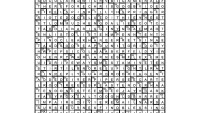
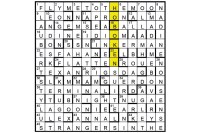
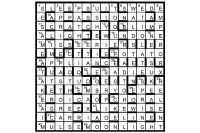
2481: Octet solution

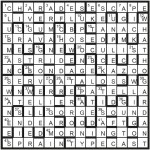
The octet associated with CHERRY STONES (19) is: tinker (1A), tailor (40), soldier (20), sailor (15), rich man (6A), poor man (23), beggar man (1D), thief (32). First prize Anthony Briggs, Brinkworth, WiltsRunners-up Donald Bain, Edinburgh; G.R.

Portrait of the week: Vaccine hopes up, Zoom shares down and Biden calls Boris

Home Pfizer and BioNTech announced a vaccine against Covid-19 of 90 per cent efficacy from two injections three weeks apart. It was not known if it prevented transmission of the virus. The vaccine has to be stored at an ultra-low temperature of minus 80˚C. In July, the British government had bought 40 million doses, enough for a third of the population, with ten million available by the end of the year (along with access to five other vaccine candidates, totalling 340 million doses in all). The army and police planned vaccination centres. Shares in air transport went up; shares in Zoom went down. Asked whether we could say with confidence that life should be returning to normal by spring, Sir John Bell, the Regius Professor of Medicine at Oxford, said: ‘Yes, yes, yes.

Letters: Why lockdown II was necessary

Cancelled procedures Sir: Your leader (‘A lockdown too far’, 7 November) suggests that the Prime Minister should have shown ‘leadership’ and ignored Sage’s call for a second national lockdown. Sam Carlisle (‘No respite’, 7 November) illustrates why this would have been a mistake. Sam reminds us that ‘half of community paediatricians were deployed to acute services’ during the pandemic’s first wave. Many other specialists were similarly redeployed. That the NHS was not overwhelmed in the first wave was precisely because most routine work stopped and staff were redeployed en masse to treat Covid-19 patients. Leaving projections aside, there were in fact 13,000 Covid-19 patients in hospital on Sunday 8 November.

Boris won’t be forgiven if his No. 10 chaos makes him cave on Brexit

Mayhem has once again engulfed 10 Downing Street with the dramatic resignation of Lee Cain, Boris Johnson's communications chief. He was with the Prime Minister on the Vote Leave campaign — as had Dominic Cummings, Oliver Lewis and others who have formed a band of brothers in No. 10. Cain's departure put a question mark over the future of the others, which comes at an odd time because the Brexit they all campaigned for is weeks away from a conclusion. There are huge issues facing the government: a second lockdown, due to end on 2 December. The procurement and rollout of a potential vaccine. But another deadline, just weeks away, is Brexit. This is the mission Johnson was elected to accomplish, this is the drama that has defined British politics for the past five years.

Books of the Year II — chosen by our regular reviewers

David Crane If nothing else, this has been a good time for catch-up. Theodor Fontane’s Effi Briest (translated by Walter Wallich, Persephone Books, £13) was a treat. But the real discovery of the year was an author I had never heard of, Wallace Breem. He seems to have spent his life as a librarian in the Inner Temple but found time to write three historical novels, one of which, The Leopard and the Cliff (Faber Finds, £13), set during the Third Afghan War of 1919, is up there with the very best novels of military life: vivid, tense and deeply moving, with a central character who has a touch of Guy Crouchback about him.

Letters: Wales has been betrayed by Westminster

Woeful Wales Sir: Allison Pearson succinctly points out the absurdity of the so-called Welsh government and its assembly, now trying to masquerade as a parliament (‘Wales of grief’, 31 October). For those of us living in Wales it is difficult to talk of the Welsh Assembly without using the F-word: failure. For the past 20 years it has failed the Welsh people at every conceivable level, while building a conceit that it is a true government. The only irony of the current Covid-19 debacle is that for once it has been forced to actually do something instead of talking endlessly around a subject before doing nothing. I have described its failure as the Sadim effect.

Portrait of the week: England’s lockdown, America’s meltdown and houses fall down

Home The government imposed a lockdown on England to last until 2 December. On television, Boris Johnson, the Prime Minister, looking unhappy, said of Christmas: ‘It’s my sincere hope and belief that by taking tough action now we can allow families across the country to be together.’ People would have to stay at home except for work that couldn’t be done there. The furlough scheme, due to have expired at the end of October, was extended for the new lockdown period. Exercise and recreation outdoors were allowed. Households might not mix indoors or even meet one person in a private garden. Schools and universities were to stay open.

Whatever the science of this lockdown, the execution has been a disgrace

The benefit of having a lockdown announced some days in advance is the ability to savour what is about to be lost. People have been able to visit friends and family, not knowing when it will be legal to meet again. Parishioners have attended church to say their farewells, as have small groups of friends and family. Small shops stayed open until midnight on Wednesday to serve customers, restaurants were booked up. Yes, we face the return of Covid-19. But was also face a government that seems in a flap, unable to decide what to do. Boris Johnson has said that this latest lockdown will last only four weeks, and there is no doubt that he means it.

Books of the year, chosen by our regular reviewers

Clare Mulley In the past I have sometimes wondered how many books I would read if only someone had the kindness to lock me up. It turns out, this Covid year, not to be so many — but the quality has been high. Amelia Gentleman’s brilliant and devastating The Windrush Betrayal: Exposing the Hostile Environment (Guardian Faber, £10.99) fuelled me with an outrage in no way diminished by David Olusoga’s masterful and hugely compelling Black and British: A Forgotten History(Pan, £12.99). I know I was late to the party for that book but, as statues tumbled, I enjoyed Keith Lowe’s very timely and thought-provoking Prisoners of History: What Monuments Tell Us About History and Ourselves (William Collins, £20).

Full text: EHRC report into Labour anti-Semitism

The Equalities and Human Rights Commission has found Labour responsible for unlawful acts of discrimination and harassment. In a long-awaited report, the body identified three breaches of the Equality Act 2010:  Political interference in anti-Semitism complaints;A failure to provide proper training to those handling anti-Semitism complaints, and;Harassment.

A Biden victory would be no great boon for Britain

It is remarkably uncommon for a US president to fail to be re-elected. It has happened just twice in the long lifetime of Joe Biden: with Jimmy Carter in 1980 and George H.W. Bush in 1992. On Tuesday, however, it looks likely that it will happen again. It is not just that Donald Trump is trailing badly and consistently in the national polls — he was behind in 2016 but won nonetheless — it is that his support seems to be draining most in his own heartlands. Biden appears to be well ahead in industrial ‘rustbelt’ states like Michigan and Wisconsin where Trump’s protectionist message gave him victory four years ago. There is little question that a Biden victory would be popular in Britain — as it would in many countries.

Portrait of the week: Shopping bans in Wales, soft drinks in Scotland and stowaways at sea

Home Wales, entering a 17-day ‘firebreak’, closed most shops by law but then tried to stop supermarkets selling ‘non-essential’ items such as bedding, kettles and smoke alarms. At the beginning of the week, Sunday 25 October, total deaths (within 28 days of testing positive for the coronavirus) had stood at 44,745, including 1,166 reported in the past week, compared with 819 the week before. In England, Nottingham entered the most severe restrictions,Tier 3, taking the number of people so restricted to 7.9 million (in Liverpool, Greater Manchester, Lancashire, South Yorkshire and Warrington).

Where is there water in the solar system?

The Moon under water Nasa scientists using spectrometers claim to have found good evidence of water on the surface of the Moon. Where else in the solar system could you potentially go for a dip? — Signs of hidden oceans have been detected on Jupiter’s moons Ganymede, Europa and Callisto and on Saturn’s moons Titan and Enceladus. The latter is also believed to have icy geysers. Water is also believed to exist in craters on Mercury. — There are signs of ample water having been on Mars in the past, although most is believed to have been stripped away along with its atmosphere. The planet may, however, still have water beneath its surface and locked in ice caps at its poles. Free school meals How many children qualify for free school meals? In January, 15.