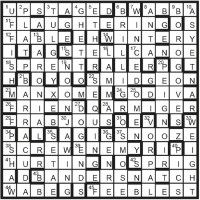
2480: Warning – solution
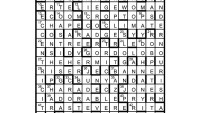
Ten symmetrically placed unclued lights are synonyms for the warning ‘WATCH OUT’.
David Crane If nothing else, this has been a good time for catch-up. Theodor Fontane’s Effi Briest (translated by Walter Wallich, Persephone Books, £13) was a treat. But the real discovery of the year was an author I had never heard of, Wallace Breem. He seems to have spent his life as a librarian in the Inner Temple but found time to write three historical novels, one of which, The Leopard and the Cliff (Faber Finds, £13), set during the Third Afghan War of 1919, is up there with the very best novels of military life: vivid, tense and deeply moving, with a central character who has a touch of Guy Crouchback about him.
Woeful Wales Sir: Allison Pearson succinctly points out the absurdity of the so-called Welsh government and its assembly, now trying to masquerade as a parliament (‘Wales of grief’, 31 October). For those of us living in Wales it is difficult to talk of the Welsh Assembly without using the F-word: failure. For the past 20 years it has failed the Welsh people at every conceivable level, while building a conceit that it is a true government. The only irony of the current Covid-19 debacle is that for once it has been forced to actually do something instead of talking endlessly around a subject before doing nothing. I have described its failure as the Sadim effect.
The start of lockdown The earliest known use of ‘lockdown’ in its current sense was in a 1973 story in the Fresno Bee, a Californian newspaper, referring to prisoners being kept in their cells after a knife attack. Despite apparently giving the world the concept, not all Fresno locals seemed happy to be placed in lockdown in April. A protest in May resulted in a fight between protestors and the president of the city council. Bed cover How full of Covid patients are hospitals?
Home The government imposed a lockdown on England to last until 2 December. On television, Boris Johnson, the Prime Minister, looking unhappy, said of Christmas: ‘It’s my sincere hope and belief that by taking tough action now we can allow families across the country to be together.’ People would have to stay at home except for work that couldn’t be done there. The furlough scheme, due to have expired at the end of October, was extended for the new lockdown period. Exercise and recreation outdoors were allowed. Households might not mix indoors or even meet one person in a private garden. Schools and universities were to stay open.
The benefit of having a lockdown announced some days in advance is the ability to savour what is about to be lost. People have been able to visit friends and family, not knowing when it will be legal to meet again. Parishioners have attended church to say their farewells, as have small groups of friends and family. Small shops stayed open until midnight on Wednesday to serve customers, restaurants were booked up. Yes, we face the return of Covid-19. But was also face a government that seems in a flap, unable to decide what to do. Boris Johnson has said that this latest lockdown will last only four weeks, and there is no doubt that he means it.
Clare Mulley In the past I have sometimes wondered how many books I would read if only someone had the kindness to lock me up. It turns out, this Covid year, not to be so many — but the quality has been high. Amelia Gentleman’s brilliant and devastating The Windrush Betrayal: Exposing the Hostile Environment (Guardian Faber, £10.99) fuelled me with an outrage in no way diminished by David Olusoga’s masterful and hugely compelling Black and British: A Forgotten History(Pan, £12.99). I know I was late to the party for that book but, as statues tumbled, I enjoyed Keith Lowe’s very timely and thought-provoking Prisoners of History: What Monuments Tell Us About History and Ourselves (William Collins, £20).
The unclued lights are heraldic terms. First prize J.P. Carrington, Denchworth, OxfordshireRunners-up David Shields, Merthyr Vale M.E.
The Equalities and Human Rights Commission has found Labour responsible for unlawful acts of discrimination and harassment. In a long-awaited report, the body identified three breaches of the Equality Act 2010: Political interference in anti-Semitism complaints;A failure to provide proper training to those handling anti-Semitism complaints, and;Harassment.
Ask the English Sir: Toby Young rightly criticises the juvenile posturing of the devolved governments of the Union over Covid-19 (No sacred cows, 24 October). Each of these governments has implemented extreme lockdown measures without consideration of their cost to the taxpayer. As 90 per cent of British taxpayers are English, this represents an egregious example of ‘taxation without representation’. In contrast, I watched the Commons announcement of a Tier 3 lockdown in the north of England, which was followed by an opposition reply, and then a reply from the SNP. Surely I wasn’t the only Englishman to ask: ‘What’s it got to do with them?’ Toby Young is right to call for a new referendum to bring this nonsense to a halt.
It is remarkably uncommon for a US president to fail to be re-elected. It has happened just twice in the long lifetime of Joe Biden: with Jimmy Carter in 1980 and George H.W. Bush in 1992. On Tuesday, however, it looks likely that it will happen again. It is not just that Donald Trump is trailing badly and consistently in the national polls — he was behind in 2016 but won nonetheless — it is that his support seems to be draining most in his own heartlands. Biden appears to be well ahead in industrial ‘rustbelt’ states like Michigan and Wisconsin where Trump’s protectionist message gave him victory four years ago. There is little question that a Biden victory would be popular in Britain — as it would in many countries.
Home Wales, entering a 17-day ‘firebreak’, closed most shops by law but then tried to stop supermarkets selling ‘non-essential’ items such as bedding, kettles and smoke alarms. At the beginning of the week, Sunday 25 October, total deaths (within 28 days of testing positive for the coronavirus) had stood at 44,745, including 1,166 reported in the past week, compared with 819 the week before. In England, Nottingham entered the most severe restrictions,Tier 3, taking the number of people so restricted to 7.9 million (in Liverpool, Greater Manchester, Lancashire, South Yorkshire and Warrington).
The Moon under water Nasa scientists using spectrometers claim to have found good evidence of water on the surface of the Moon. Where else in the solar system could you potentially go for a dip? — Signs of hidden oceans have been detected on Jupiter’s moons Ganymede, Europa and Callisto and on Saturn’s moons Titan and Enceladus. The latter is also believed to have icy geysers. Water is also believed to exist in craters on Mercury. — There are signs of ample water having been on Mars in the past, although most is believed to have been stripped away along with its atmosphere. The planet may, however, still have water beneath its surface and locked in ice caps at its poles. Free school meals How many children qualify for free school meals? In January, 15.
The lyrics of the perimetric I’M POPEYE THE SAILOR MAN and FALLING IN LOVE AGAIN were written by Sammy Lerner, while the lyricist of THE RAIN IN SPAIN and I TALK TO THE TREES (3D/16) was Alan Jay Lerner. LERNER (in the tenth row) was to be shaded.
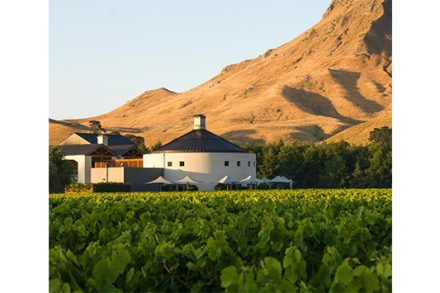
Spectator drinks editor Jonathan Ray and Dawn Davies MW, head buyer for The Whisky Exchange host a very special online whisky tasting.
From our US edition
8:30 p.m. ET — Matt McDonald: Hello and welcome to The Spectator’s live blog for the second and final debate between President Donald Trump and former vice president Joe Biden. Tonight's proceedings kick off in 30 minutes at Belmont University in Nashville, Tennessee. Hopefully we can offer a better quality of debate… 8:31 p.m. ET — Amber Athey: I just took an hour-long boomer nap to really simulate the experience of Biden and Trump preparing for the debate stage. Feeling very refreshed and ready to call anything I disagree with Russian disinformation. 8:32 p.m. ET — Chadwick Moore: I'm wondering if Trump goes in attack-dog style again it will be more effective this time, given the scandals.
Home After ten days spent trying to persuade Andy Burnham, the Mayor of Greater Manchester, to accede to the city entering Tier 3 (which entails the closing of pubs and betting shops), Boris Johnson, the Prime Minister, announced that it would happen anyway, from 23 October. ‘I am deeply sorry,’ he said. Manchester had wanted £65 million in support first. Liverpool complained that it was not allowed to keep gyms open when Lancashire was. The nine million people of London languished in Tier 2, forbidden to meet anyone at home or in a pub, except if they pretended it was a business meeting. Scotland hatched plans for its own tiers.
Special Offa A regulation passed by the Welsh government to prevent people travelling from Covid hotspots in England has brought comparisons to Offa’s Dyke. — There is no firm evidence that the dyke, which takes its name from the king of Mercia between ad 727 and 796, even stretched along the entire English-Welsh border. Moreover, some of the sections which do survive have been dated as early as ad 430, 300 years before Offa’s reign. But whoever built it, its design seems to confirm that it was designed to keep the Welsh out of England rather than the other way round: the ditch is on the west, Welsh side and the dyke takes such a path as to ensure that there are uninterrupted distant views into Wales.
State of the Union Sir: Writing in a week that an opinion poll shows 58 per cent support for independence in Scotland, it seems bizarre for Professor Tombs to claim that commentators are ignoring ‘the death throes of separatism’ (‘Out together’, 17 October). He argues that nationalist supporters rely on the Brexit and Covid-19 crises to advance their cause, and that they will be in retreat once things return to normal. Then, once doubts begin to bubble up about the financial and economic uncertainties of independence, Scottish voters will return to the unionist cause. These arguments may give him some comfort, but here in Scotland they seem unreal.
At the beginning of the Covid-19 crisis it was easy to see why the Prime Minister was so keen to be seen to ‘follow the science’. He had a pandemic plan, designed by past governments, to be guided by the medical facts and expert judgment. There was to be no role for politics. He held press briefings at which he was flanked by the chief medical officer and chief scientific officer, armed with charts and graphs, making it known that everything he did hinged on their advice. At first, we were not even allowed to know the identity of the 50 men and women who sit on the Scientific Advisory Group for Emergencies (Sage). Now they have become the most influential group of people in the country, whose decisions shape the lives of millions.