The Spectator

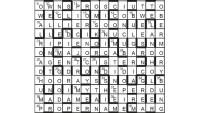
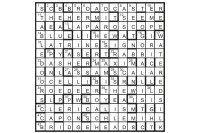
2477: Rendezvous – solution

The unclued lights take an extra letter to make BRAMBLING (1A), BUDGIE (12A), STARLING (14A), REDSTART (23A), BRANCHER (27A), TURACO (34A), STILT (35A) and CHOUGH (38A), which could then meet at a BIRDBATH.

Portrait of the week: new alerts, birthday honours and fires on Kilimanjaro

Home ‘The weeks and months ahead will continue to be difficult and will test the mettle of this country,’ Boris Johnson, the Prime Minister, said in the Commons. In a complicated new system meant to be a simplification, English regions were put into one of three tiers of alert level: 1, medium; 2, high; or 3, very high, according to the proportion of coronavirus cases there. In tier 3, further local restrictions could be added. Liverpool was selected for tier 3, in which betting shops and libraries would close and pubs too, unless they sold main meals. Sir Keir Starmer, the leader of the opposition, called for a two- or three-week circuit-breaker national lockdown, with closure of pubs and restaurants, but not of schools.

Letters: what unites the two sides of the mask debate

Wind worries Sir: You are right to side with the 2013 version of Boris Johnson, when he claimed that wind power could not pull the skin off a rice pudding (‘Boris’s second wind’, 10 October). However, it was wrong to claim that offshore wind at £40 per megawatt hour makes Hinkley Point C, at over twice that price, look like a bad deal. The nuclear plant will be able to provide reliable, constant baseload power for up to 50 years. A wind plant will provide power only when the wind is blowing (and not blowing too hard). To provide reliable baseload requires fossil-fuelled backup. Second, the £40 per megawatt hour is the current strike price offered by the winners of projects to build new capacity.

The truth about race and pay in modern Britain

When the Black Lives Matter protests struck London in the same week that Public Health England published a report into the higher death rate from Covid among the black and ethnic minority population, the Prime Minister did not quite know how to react. He did what modern Prime Ministers so often do when presented with a little difficulty: he kicked the matter into touch by appointing a commission — on ‘race and ethnic disparities’. At least the person charged with overseeing the commission, Equalities Minister Kemi Badenoch, was brave enough to challenge those who were lazily trying to make out Britain is a racist hellhole. Britain is, she asserted in the Commons, ‘one of the best countries in the world to be a black person’.

Now the Tories must make it their mission to repair the country

The centrepiece of Boris Johnson’s speech to Tory party conference this year was his Damascene conversion to the merits of wind farms. Some people used to sneer and say wind power wouldn’t pull the skin off a rice pudding, he said — referring, of course, to himself, writing in 2013. Now, his post-Covid plan for Britain is wind farms powering every home by the end of the decade. But the Prime Minister was right first time. When he was dismissing wind power, it was eye-wateringly expensive and was forecast to stay that way for the foreseeable future. No one envisaged, then, how global competition and technology would force prices down.

What happens when a US president dies?

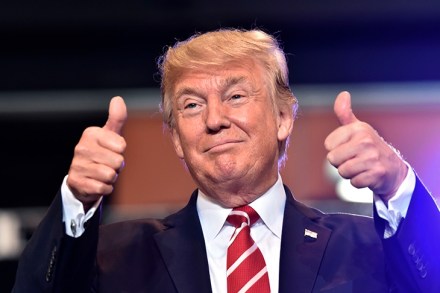
Vice squad Donald Trump catching Covid-19 has concentrated minds on what happens if a US president dies in office. Normally, the vice-president will take over — which is why it matters who is on the ballot. In 1972, however, Americans had no idea who would end up president by the end of what should have been Richard Nixon’s second term. Nixon’s vice-president was Spiro Agnew, but he was forced to resign after pleading ‘no contest’ to charges of tax evasion. Nixon then appointed House leader Gerald Ford as vice-president. Ford became president when Nixon himself resigned before he was impeached over the Watergate scandal in August 1974. Ford lost to Jimmy Carter in the 1976 election and so was never elected by the American people in a national election.

2475: Poem VI – solution

The poem was The Brook by Alfred Tennyson. The words were HERN (8A), LINGER (20), BRIMMING (32A), FLOW (40), TROUT (44), SLIP (2), SPARKLE (6), SWALLOWS (21), BICKER (32D) and STARS (37). ALFRED TENNYSON (diagonally from 1) was to be shaded. First prize R.A.

Letters: The sorry state of BBC sport

Misplaced Trust Sir: Charles Moore is as ever bang on target (The Spectator’s Notes, 26 September). National Trust members have had a raw deal this year, but so have many loyal staff and volunteers. It should not surprise any visitor to a National Trust property that a very rich person built it and lived there. No doubt they achieved great financial wealth by being quick-witted, entrepreneurial and above all ruthless in their dealing. They likely exploited everyone irrespective of race or creed. How many mill owners sent ‘boys’ up chimneys, down mines and into the machinery to clear blockages? The National Trust is a curator of buildings, artefacts and estates. They do not have a remit to delve into the background of their benefactors and make judgments.

The 2020 vice presidential debate — live blog

From our US edition

8:15 p.m. ET — Matt McDonald: Hello and welcome to The Spectator’s live blog for the vice presidential debate in Salt Lake City, Utah, between Vice President Mike Pence and Sen. Kamala Harris. Along with six of my Spectator comrades, I’ll be offering commentary, analysis and jokes (much more my pace), on whatever unfolds on the University of Utah campus tonight. While the pair may offer a more sober affair than Trump and Biden did last week, Cockburn has knocked up a drinking game so you don’t have to join them. I have a six-pack of Carib, let’s get started. 8:16 p.m. ET — Freddy Gray: Vice presidential debates are not that interesting, as a rule. But 2020 is very weird and different and tonight does feel as if it should produce something unusual.

vice presidential

What’s on today at Conservative conference: Monday

Chancellor Rishi Sunak's set-piece speech is big billing of the day. With this autumn's budget overboard and the UK heading into some seriously choppy economic waters, expect the Treasury captain to chart a tight course between Boris Johnson's levelling up agenda and more massive state spending to bail us out. Those who can't withhold their excitement can read Sunak's interview in the Sun this morning.  Main Auditorium highlights 11.00 Department for Education The Conservative PartyRt Hon Gavin Williamson MP, Secretary of State for Education 11.

What’s on today at Conservative conference: Sunday

Nothing irks Tory party members like a big new development on their patch, so the interview with Robert Jenrick should be an interesting watch. Let's hope someone asks him about the growing cladding scandal, covered by The Spectator here. Other sessions to look out for include Priti Patel's keynote speech — expect more hardline rhetoric on law and order and immigration. Here are today's highlights:  Main Auditorium highlights: 10.30 A Meeting of the National Conservative ConventionThe Conservative Party (Members only) Interview with the PM, Lord Sharpe of Epsom (Chairman of the National Conservative Convention) 13.

What’s on today at Conservative conference: Saturday

This year's party conference won't be quite the same. Gone is the warm white wine at ugly hotel bars, instead replaced by ministers desperately trying to unmute themselves on Zoom. That being said, Michael Gove's 'fireside chat' will certainly be one to watch, as will Matt Hancock's talk on the future of the NHS. Here are the main highlights:  Main Auditorium highlights 11:30 Welcome from Andrew Colborne-Baber and the Rt Hon Amanda Milling MP Opening of Conservative Party Conference Rt Hon Amanda Milling MP, Co-Chairman of The Conservative Party and Minister Without Portfolio; Andrew Colborne-Baber, President, National Conservative Convention.

Portrait of the week: Curfew street parties, Trump’s taxes and a bone-eating vulture

Home More than a quarter of the population of the United Kingdom (three-fifths of the Welsh, a third of the Scots and two-thirds of those in northern England) were put under harsher coronavirus restrictions. Boris Johnson, the Prime Minister, amid a flurry of local lockdowns, found himself unable to state the coronavirus restrictions suddenly imposed on the north-east. He said ‘six in a home, six in hospitality’ could meet, though the law said that members of different households could not meet at all indoors. Universal laws, brought in by statutory instruments, prohibited eating or drinking in bars, restaurants or clubs after 10 p.m.

Who started America’s presidential debates?

Word for word US presidential debates are often traced back to the first televised debate, between Richard Nixon and John F. Kennedy in 1960. But they were inspired by a series of seven debates held between Abraham Lincoln and Stephen Douglas while contesting an Illinois senatorial seat in 1858. The debates would have stretched a modern audience — they were each three hours long. It is hard to imagine, too, how modern candidates would have coped with the format: the first speaker was invited to speak for an hour, the second for 90 minutes, and then the first candidate was allowed a further half-hour. Douglas won the seat and, two years later, found himself again facing Lincoln for the presidency. This time, Lincoln declined to debate — and went on to win the top job.