The Spectator

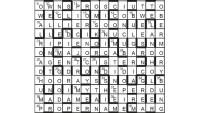
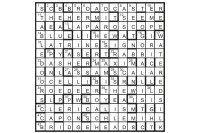
2474: Love Me Do solution

From our UK edition

In George Orwell’s 1984 WINSTON SMITH (31/3) worked for the MINISTRY of TRUTH (43/21). The MINISTRY of LOVE (43/34) got him for THOUGHT CRIME (24/35) and sent him to ROOM 101 (28). He finally gave in to BIG BROTHER (15).

The first 2020 presidential debate — live blog

7:25 p.m. ET — Matt McDonald: Hello and welcome to The Spectator’s live blog for tonight’s tête-à-tête between President Donald Trump and former vice president Joe Biden. Along with eight other Spectator contributors and editors, I’ll be guiding you through the evening’s shenanigans in Cleveland. Hopefully we can offer a better quality of debate... 7:30 p.m. ET — Matt McDonald: Here’s a lovely picture of some anti-Trump protesters gathering in Cleveland’s Wade Park to whet your appetite. Next up, what our writers are most looking for tonight. [caption id="attachment_10426806" align="alignnone" width="1024"] Protesters in Wade Park, Cleveland (Getty)[/caption] 7:35 p.m.

debate live blog

Covid-19 update: Counting lives lost by the lockdown effect

From our UK edition

The Spectator brings you the latest insight, news and research from the front line. Sign up here to receive this briefing daily by email, and stay abreast of developments both at home and abroad. News and analysis Stockport and Wigan are expected to be put under stricter lockdown measures due to the rising number of Covid-19 cases, which would include no longer being able to mix with other households, apart from support bubbles.The UK is now on track for a £400 billion deficit in 2020-21. The government borrowed £35.9 billion in August – the highest amount borrowed in August since records began. UK debt has hit £2.024 trillion, surpassing the £2 trillion mark for the first time in history.

Whose bright idea was the circuit-breaker?

From our UK edition

It’s electrifying! Who invented the circuit-breaker? Thomas Edison patented it in 1879, realising what damage could be caused to electrical equipment in the event of a surge in current created by short-circuit. However, his early electrical installations did not use them, opting instead for fuses — thin wires designed to burn out when the current flowing through them reached a critical level. The first circuit-breaker — with spring-loaded contacts designed to open when the current became too much — was not installed until 1898, at L Street Station by the Boston Electric Light Company. Vehicle recovery Has the recovery in car sales been maintained?

Iran hasn’t earned the right to bear arms

From our UK edition

Hard though it is to remember now, 2020 began with a very different dark cloud on the horizon. For a week or so it looked as if the West’s cold war with Iran would burst into full-scale conflict. The assassination by US forces of Iran’s revolutionary guard leader Qassem Soleimani on 3 January sent oil prices soaring and raised fears that President Trump’s reputation as a war-monger was finally to be deserved. As we now know, the crisis fizzled into nothing. In retaliation, Iran halfheartedlyfired missiles at a couple of air bases in Iraq where US forces were stationed, killing no one. Donald Trump announced ‘all is well’ and, as he had already done with North Korea, succeeded in de-escalating a crisis which he was widely believed to be escalating.

Portrait of the week: New Covid restrictions, a Supreme Court vacancy and an earthquake in Leighton Buzzard

From our UK edition

Home Pubs and restaurants would have to close at ten o’clock, under new coronavirus restrictions announced by Boris Johnson, the Prime Minister, in the Commons. Shop staff and passengers in taxis would have to wear face masks and weddings be limited to 15 people. ‘We’ve reached a perilous turning-point,’ he said. The new laws could be in force for six months. Official advice was changed back to: ‘If you can work from home, you should.’ Police would be able to impose £10,000 fixed-penalty notices on people caught outside their house who had been ordered to stay in quarantine. People in Scotland would not be able to visit each other’s homes. Wales and Northern Ireland made up their own laws.

Full text: Keir Starmer’s conference speech

From our UK edition

I’m delighted that we’re here in Doncaster. My wife’s mum was born and grew up here – just next to the racecourse. We’re regulars here. Visiting family friends but also to go to the Ledger. Though of course sadly not this year. I’m also told that this is the first Labour leaders’ speech in Yorkshire since Harold Wilson in 1967. The circumstances were a bit different then. For one thing, Wilson was able to update conference about Labour’s achievements after three years in government. So I look forward to coming back one day in the same circumstances that brought Wilson here! I want to say a heartfelt thanks to the Labour party staff and volunteers who have moved a virtual heaven and earth this week.

Full text: Chris Whitty on the second wave

From our UK edition

What we've seen is a progression where — after the remarkable efforts which got the rates right down across the country — we first saw very small outbreaks, then we've seen more localised outbreaks which have got larger over time, particularly in the cities. Now what we're seeing is a rate of increase across the great majority of the country.  It's going at different rates, but it is now increasing. And what we found is anywhere that was falling is now beginning to rise and then the rate of that rise continues in an upward direction.  This is not someone else's problem, this is all of our a problem.  This graph is a simple one. It simply shows the number of inpatient cases in England over the period from 1 August.

Who will have more informants: the Stasi or Covid marshals?

From our UK edition

Information overload The government’s plan to put ‘Covid wardens’ on the streets to enforce the new rule against more than six people meeting in public has been likened to the practice of the East German Stasi relying on mass informants. How many East Germans worked on behalf of the Stasi? — According to historian Helmut Mueller-Enbergs, 620,000 Germans acted as informers during the 51-year history of East Germany, including 12,000 West Germans. — When the Berlin Wall fell in 1989, 189,000 East Germans were Stasi informants, just over 1 per cent of its 16 million population, and one in 20 Communist party members. Back in business? In which sectors is the jobs market recovering most strongly?

Portrait of the week: new laws, illegal mingling and bungled tests

From our UK edition

Home At one minute past midnight on Monday, new laws came into force prohibiting households in England increasing their numbers to more than six either at home or in the open air, not passed by parliament but imposed by statutory instrument by the Home Secretary under the Public Health Act 1984. The laws had been given the name ‘Rule of Six’ by Boris Johnson, the Prime Minister. Mingling was singled out for censure. Wales and Scotland had their own variants, principally exempting children from the count. People in Birmingham, Sandwell and Solihull were banned from meeting anyone not part of their household; parents complained that this prevented grandparents looking after their children.

Labour’s identity crisis

From our UK edition

On the face of it, there could scarcely be better conditions for a revival of the Labour party. Even before the Covid crisis, a generation of young people were struggling to earn as much as their parents did at their age. The housing crisis remains unresolved, prices are higher than before the pandemic. The Tories are borrowing far more than they can afford and there will soon be a reckoning — with tax hikes, austerity or both. Unemployment will soar as the furlough scheme is unwound. But much of the left’s energy is being wasted in marching down the cul-de-sac of identity politics. For activists, the summer has been spent in an unseemly competition over who can find offence at the most unlikely people and inanimate objects. This week, they began to turn on their own icons.

2472: All-inclusive solution

From our UK edition

The perimeter quotation is from Mahler. Remaining unclued lights were names of symphonies: 12A Mahler / Schubert; 26A Haydn; 39A Britten; 11D Liszt; 18D Beethoven. ‘Titan’, the name of Mahler’s Symphony No. 1, was to be highlighted. First prize Margaret Lusk, Preston, Lancs Runners-up David Heath, Elston, Newark; Mrs S.

Letters: Why does No.10 seem so oblivious to the threat of Scottish independence?

From our UK edition

Referendum risk Sir: James Forsyth’s excellent analysis (‘To save the Union, negotiate independence’, 5 September) has one flaw: it is not quite correct to say that ‘there is no way a legal referendum can take place without Westminster’s consent’. That is true for a decisive referendum that would commit the UK to the outcome, but not necessarily true for an advisory one. The Commons Library briefing paper (29 May 2019) says that the devolution legislation is unclear and the matter ‘has not been resolved’. This view is supported by the Institute for Government. Nicola Sturgeon is likely to take the issue to the Supreme Court which, with its two Scottish judges, is quite likely to side with Edinburgh.

Ministers need to defy the instinct to lockdown

From our UK edition

One of the many ironies of the past few months is that young people, while least affected by the virus, have paid the heaviest price for lockdown. They have been deprived of education, had their exams thrown into chaos and, as a result, many have been denied the university places they deserved. Apprenticeships and internships have dried up and office closures have kicked away the ladder which allows new arrivals to advance. And now Matt Hancock, the Health Secretary, is accusing ‘affluent younger people’ of dangerously selfish behaviour, of socialising once again in a way that could ‘kill your granny’. We seldom hear from ministers an acknowledgement of the price paid for policies which have had a questionable effect in stemming the advance of the virus.

Portrait of the week: banned gatherings, stopped presses, and Frogmore’s refurbishment

From our UK edition

Home Gatherings of more than six people from more than one household were made a crime in England from 14 September, at home, outdoors, in pubs or restaurants, but not at funerals. At the start of the week, Sunday 6 September, total deaths within 28 days of testing positive for coronavirus had stood at 41,549 — 51 more than a week earlier. Testing found 2,988, 2,948 and 2,420 cases on consecutive days, notably among those aged 17 to 24. Restrictions on home visits in the west of Scotland covered 1.1 million people, a fifth of the Scottish population. People were suddenly banned from leaving Caerphilly without a ‘reasonable excuse’. Seven Greek islands joined countries from which travellers returning to England would have to undergo 14 days’ quarantine.

How important is coffee to Britain?

From our UK edition

Lyrical errors ‘Rule, Britannia!’ begins with the lines: ‘When Britain first, at heaven’s command/Arose from out the azure main.’ — Main is an archaic word for ocean; Edmund Spenser refers to ‘swimming in the maine’ in The Faerie Queene (1590). Azure is perhaps not the best word to describe the colour of the seas around Britain. Nor did Britain in any sense rise from the seas — rather the opposite: it first became an island around 100,000 years ago thanks to glacial floodwaters causing the erosion of the land bridge between Dover and Calais. Caffeine economy Costa announced 1,650 job losses, the latest coffee shop chain to announce a contraction due to a decline in the economy of city centres.