The Spectator

Yes, they’re deplorable – but those football tweets don’t prove Britain is racist

There are two certainties whenever England’s football team plays; one that is long-established and the other a recent phenomenon. Players who never miss a penalty during training sessions will end up fluffing their attempts under the pressure of a shoot-out. And the post-match discussion of football will quickly move on to the issue of racism. England’s first appearance in the final of a major tournament since the 1966 World Cup ought to have been a moment of national celebration. Indeed, that is how it seemed until the three missed penalties. Within hours, though, few seemed to be talking about anything other than the racist abuse directed at the three players who missed the target.

How much does a holiday in space cost you?

Space cadets Richard Branson joined a test flight on his Virgin Galactic craft to the edge of space, to promote the tourist space trips he has been promising for over a decade. How much does it cost to be a space tourist (assuming any succeed in taking passengers)? £180,000: Price for a Virgin Galactic trip to the edge of space. Passengers will experience a few minutes of weightlessness but will not orbit the Earth or cross the Karman Line deemed to mark the boundary between the Earth’s atmosphere and space. Price includes spacesuit. £20m: Price of a seat in Blue Origin’s New Shepard spacecraft, auctioned in June. Includes an 11-minute flight into space, sitting next to Amazon founder Jeff Bezos. £39.

Letters: Let the housing market collapse

Treading the boards Sir: As a teacher, I was sorry Lloyd Evans did not include school productions in his excellent assessment of the cultural devastation inflicted by Covid-19 (‘Staged’, 3 July). While cancellation of West End shows is a tragedy, far more damage will be done to the thousands of children whose one chance to watch or perform in a play or musical has been taken away. These humble, often cheerfully disastrous, amateur productions bring pupils together in a way nothing else can. W. Sydney Robinson Oundle, Northamptonshire Big bad builders Sir: I enjoyed Liam Halligan’s comprehensive assessment of the appalling state of the UK building industry and the dire quality of much of what they produce (‘The house mafia’, 26 June).

Boris Johnson must hold his nerve over lifting restrictions

A charge repeatedly made against Boris Johnson over the past 16 months is that he has ‘ignored scientific advice’. But unless he has been in the habit of drumming his fingers on the table and looking out of the window while Professor Chris Whitty and Sir Patrick Vallance have made their presentations, it is a silly accusation. We do not live in a technocracy where scientific advisers have absolute power. In handling the pandemic, it has been the Prime Minister’s job to weigh up advice from many quarters — medical, scientific, economic, legal and political — and then make decisions.

Who was the first to wear a face mask?

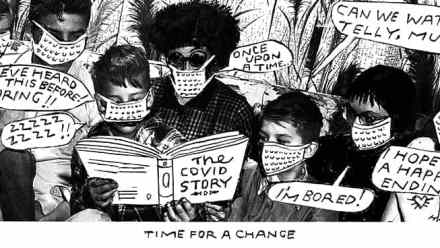
Mask crusader Who first wore a medical face mask? — The beaked outfits worn by plague doctors aside, the first doctor to wear a mask was the French abdominal surgeon Paul Berger in 1897. His mask, made from six layers of gauze, was inspired by the work of German microbiologist Carl Flugge, who had revealed what a good breeding ground saliva is for bacteria. Berger delivered a paper on masks to the Surgical Society of Paris in 1899, after which they were adopted in other countries. Penalty points How many penalties are scored in the European Football Championship and World Cup? — The overall scoring rate is 75%. In shootouts to decide the outcome of drawn matches, the first player to take a penalty has scored 80% of the time.

It’s time to repair the damage done to the Covid generation’s education

Aswitch of personnel at the Department of Health this week has brought a welcome change in the government’s tone. No longer, it seems, are ministers looking for reasons to delay the final stage of lifting lockdown restrictions. After 16 months of curtailments on liberty, 19 July is inked in as the day when society and the economy will finally throw off the shackles of Covid restrictions. The vaccines mean that the virus has been downgraded to the status of flu and pneumonia: nasty bugs, sometimes fatal, but not enough to warrant locking down society with all the immense collateral damage that entails. Yet as pubs, theatres and concert halls are allowed to fill again, it is important to remember that recovering from the pandemic is about more than just reopening society.

Portrait of the week: Hancock out, Javid in and MoD papers found at a bus stop

Home A lively game of hunt the issue followed the resignation of Matt Hancock as Secretary of State for Health after the Sun published a photograph of him kissing an aide, Gina Coladangelo, in May, in contravention of the law at the time on meeting indoors. The Prime Minister had tried to declare the matter ‘closed’ when Mr Hancock apologised, but some Tory MPs and many citizens were scandalised that the man in whose name coronavirus restrictions were made law (as statutory instruments) should exempt himself from their strictures. Mr and Mrs Hancock parted company. Questions were raised over how the security camera images reached the Sun, and how Ms Coladangelo had come to be appointed a non-executive director of the Department of Health.

Letters: We can’t build our way out of the housing crisis

Excess demand Sir: Liam Halligan (‘The house mafia’, 26 June) treats us to an exposé of the shoddy products of the mass housebuilders. In the course of his article, however, he accepts as given that the solution to the housing crisis is to build more houses. The problem, however, is not one of deficient supply; it is a problem of excess demand, driven by ultra-low interest rates, kept so low for so long that the result has been an out-of-control housing boom. The young are being prevented from buying a house, not because housebuilders hoard land and refuse to build, but because buyers with access to eye-watering amounts of borrowed money have forced prices so high that they are now out of reach of most.

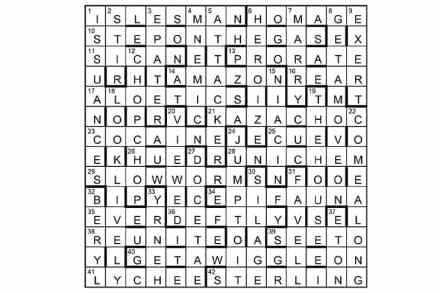
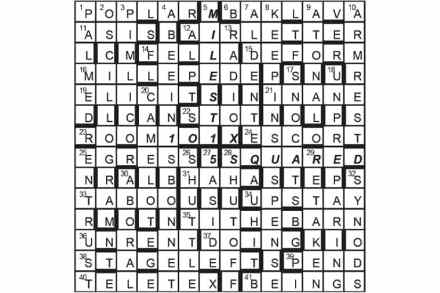
2513: Golden anniversary

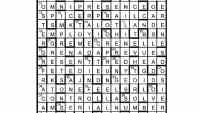
1A, on 23 17, 41 1D 8 in this 31 was 21D. This anniversary announcement consists of eleven words and includes an apostrophe. Each group of coloured squares reveals a name of one of the team, past or present. One blue square does double duty as it overlaps a green square too. Doc compiled the grid and three clues. Pabulum, Lavatch, Mr Magoo and Fieldfare shared the remainder between them. Across 9 Caesar’s journey through Iceni territory (4) 11 Undecided where to paraglide? (10, four words) 12 Swats young bee eludes (4) 14 Feel fond of fighting terrible Tom (6, two words) 16 Cartoon canine is present joy ultimately (5) 20 Men, indeed disciples, saying prayers (7) 21 US mountain or alp blessed by Persian poet?

The virus threat has changed. Now Test and Trace must too

Under what circumstances can a government restrict the liberty of the people? An example was given last year: in a public health emergency, to contain a pandemic which threatens to overrun the health service. Opinions may differ on how close we came to this in March 2020, but the question remains relevant now. Is there any realistic threat, today, of the NHS being overwhelmed? And if not, why is Test and Trace still pinging and confining thousands of people every day? When the Test and Trace system was introduced in May last year, it was supposed to prevent another lockdown.

How many countries have royal yachts?

Royal waves Does any other country have a royal yacht? — The Queen of Denmark uses HDMY Dannebrog, a 260ft vessel built in 1932 to replace a paddle steamer of the same name. — The Dutch royal family own a 50ft 1950s yacht, De Groene Draeck, used only locally. — King Harald V of Norway has the use of HNoMY Norge, a 264ft vessel originally built for aircraft manufacturer Thomas Sopwith in 1937 and bought by the Norwegian people for their royal family after the second world war. It was restored following a serious fire in 1985. — King Mohammed VI of Morocco owns El Boughaz I, a 133ft yacht built for a private American owner in 1930 and originally called the Black Douglas. Covid death counts Is the UK still near the top of chart for Covid deaths?

Portrait of the week: A bombshell by-election, Scotland bans Mancunians and China staffs its space station

Home The government contemplated its promised Planning Bill, blamed for contributing to the astonishing victory for the Liberal Democrat Sarah Green in the Chesham and Amersham by-election. She had gained 21,517 votes to transform the former Conservative majority of 16,223 into one of 8,028. Labour did worse than in any by-election before, securing only 622 votes, 1.6 per cent of the total. John Bercow, the former Speaker, joined the Labour party. Clayton Dubilier & Rice, an American private equity company, offered to buy Morrisons, the supermarket chain, for £5.5 billion. White working-class pupils in England have been failed by decades of neglect, the Education Select Committee found in a report.

Portrait of the week: Freedom off, GB News on and the Queen’s tea with Biden

Home The lifting of coronavirus restrictions was delayed from 21 June until 19 July, probably. The motive was to avoid a ‘significant resurgence’ in hospital admissions from the more contagious Delta variant of the virus. Public Health England declared that the Pfizer vaccine was 96 per cent effective in preventing hospitalisation, and the AstraZeneca vaccine was 92 per cent effective. Boris Johnson, the Prime Minister, appealed to the advantage of administering more vaccinations in the extra four weeks. Vaccinations would be made compulsory for care home staff working with older people in England. From 21 June, guests at a wedding would no longer be limited to 30, but there must be no indoor dancing; similar rules would apply to funeral wakes.

The real value of the Australia trade deal

If Britain had been unable to agree a trade deal with Australia, then Brexit really would have been pointless. The country is one of our greatest allies and we have no rational reason to fear its beef, its sugar or its people. A free trade deal, aligned with visa-free travel, ought to have been the easiest deal to do. A deal is now done, phasing in these freedoms over 15 years. But even this sluggish pace is too fast for the protectionists who are popping up. Some have predicted that our beef farmers will be ruined and the countryside laid to waste as our markets are opened to competition. Many of the claims revolve around the fact that just under half of the beef produced in Australia comes from animals treated with growth hormones — a practice banned within the EU.