The Spectator

The Spectator at war: Unnatural selection

From The Spectator, 10 October 1914: [TO THE EDITOR OF THE "SPECTATOR."] SIR,—It is a self-evident proposition that an army recruited by voluntary enlistment is, caeteris paribus, more efficient than one compulsorily obtained. It is also true, though not so self-evident, that voluntaryism must in the end deleteriously affect national character far more than compulsory service does. Under a voluntary system it is only the men with the most grit in them who usually offer themselves for service. Those of less sterling quality, potential or actual, refrain. Thus, in time of war, the nation which fights with a voluntary army suffers from a higher rate of mortality amongst the best male elements in its community than does the nation which resorts to compulsory service.

The Spectator at war: At loggerheads

From The Spectator, 10 October 1914: AN old explanation of the phrase "at loggerheads"—whether true or not we do not attempt to say—runs as follows: When two armies met in what we should now call entrenched positions, those positions were spoken of as leaguers. The leaguers were pushed on, from both sides just as the trenches are now pushed on, till at last the " leaguer-heads" were almost in contact, and were separated only by a hundred yards or so. The contending armies were then said to be at "leaguer-heads," or "logger-heads." They had reached the ultimate point, and could make faces or shout defiance at each other across the "bridge of war.

Podcast special: The Ukip earthquake

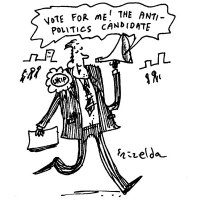
Ukip has arrived at Westminster. Douglas Carswell held his Clacton seat after defecting from the Conservatives, and in Heywood and Middleton Ukip came just 617 votes short of victory. Which was the more startling result, and what does it all mean for the parties' chances at the general election?

The Spectator at war: Knowing one’s place

From The Spectator, 10 October 1914: As we go on in life we do, as a rule, learn our place more or less truly, and we find it is not the one we should have chosen. It may not be lower, but it is almost certainly different from what we expected. As we look over the lists of life's examinations we may find that in some subjects we have done better than we expected. In such-and-such a bad situation we came out fairly well perhaps. We showed judgment, or initiative, or endurance, or even self-sacrifice. But, good heavens, what an effort it was! and how nearly we failed! What a little there was to choose between us and some one who has found his own place much lower down!