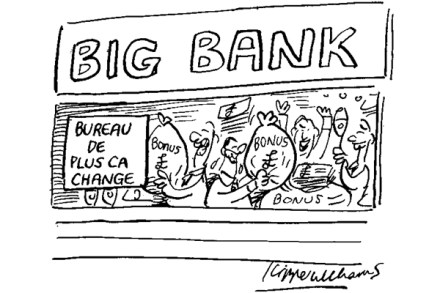
Big Bank
Nothing to fear Sir: So long as we are not breaking any law, we have nothing to fear from the police being able to access our mobiles (‘Licence to snoop’, 11 October). They, however, would be committing a crime if they released any information so gleaned to anyone except to the judiciary if we are being accused of a crime. In these difficult times it is reassuring that the police should have every means at their disposal in pursuing those who would do us harm or commit criminal activity.
Dirty dancing David Cameron was accused of causing racial offence by posing with blacked-up Morris dancers, though it was pointed out that the tradition dates from 16th-century jobless labourers covering their faces with soot. Other Morris dancer controversies: — In 2011 the Slubbing Billys were thrown out of a pub in Durham for breaking a rule against music. They weren’t dancing, just drinking, but had bells on their trousers. — In 2013 officials from Lancashire County Council accused the Britannia Coconut Dancers of breaching health and safety rules when their dance strayed onto the road. Forget me, forget me not? Where have people been most successful at persuading Google to remove links they claim infringe their ‘right to be forgotten’?
Home Checks began at British airports for passengers who might have come from west Africa with Ebola fever (even though there are no direct flights from the countries most affected). People who rang 111 with suspicious symptoms were to be asked whether they’d come from a high-risk country. Police arrested three men and three women from Portsmouth, Farnborough and Greenwich as part of an anti-terrorism operation. Of five men arrested the week before, two were released. The trial began before a jury at the Old Bailey of Erol Incedal on charges of preparing for acts of terrorism; parts of it will be held in secret.
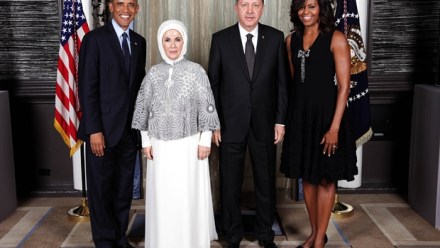
Turkey has long been a bridge between the West and the Middle East. Its record on free speech may be lamentable and it treats its Kurdish minority shoddily, but against that stands a genuine will to improve its human rights record and an ambition to become a modern, free and prosperous state. This has long been the basis of Britain’s support for Turkey joining the European Union. But this week we have seen a reminder of how far the priorities of Turkey’s political establishment are from those of Europe. Its parliament recently consented to the use of an airbase at Incirlik by US forces launching airstrikes against the Islamic State, a move that could dramatically increase the number and effectiveness of such missions.
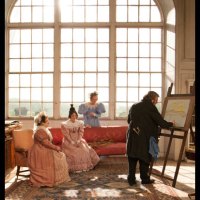

Hollywood has a reputation for creating trite storylines in which either a lawyer is cast as the hero or England as the villain. Its latest epic has both, and this one is reality. Little more than a week after her marriage to George Clooney, the world’s most photographed barrister, Amal Alamuddin -Clooney, has flown off to advise the Greek government on how to force the removal of the Elgin Marbles from the British Museum. Given the rioting, economic meltdown and general chaos of recent years, it would be easy to think that Greece had more immediate worries than the whereabouts of a set of decorative stones rescued in the early 19th century — with permission from authorities in Athens — to save them from being chiselled away by peasants for -quicklime.
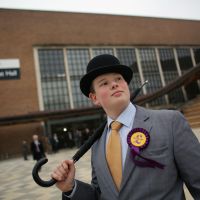
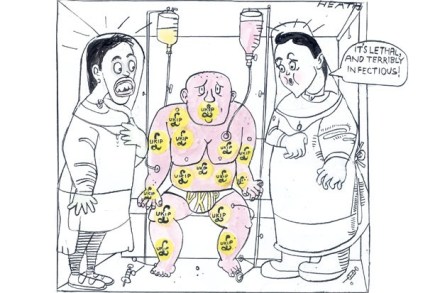
In this week’s issue, Lord Pearson, the former leader of Ukip, describes how he tried to offer the Tories a pact before the last general election, but Cameron refused to meet with him to discuss it. Now it's too late, says Lord Pearson, and Cameron has forced Ukip to fight him to the end. Lord Pearson and Damian Green, the Conservative MP for Ashford, join Lara Prendergast on the podcast to discuss relations between the Tories and Ukip. Should we ever negotiate with the Islamic State? Jonathan Powell has recently suggested we should consider it. Jenny McCartney takes issue with his stance though.
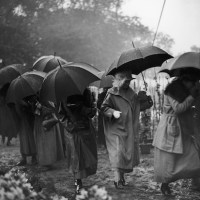
From The Spectator, 17 October 1914: In view of the possibilities, naval and aerial, we cannot help thinking that it would be a good thing if our newspapers suppressed the weather forecasts and all information as to barometrical pressure, which are very probably communicated by wireless to our enemies. These forecasts are now exceedingly accurate, and we can well understand how useful it might be to the enemy to know what kind of weather they might expect when they reached British air. If the authorities think there is anything in the point, they will no doubt take it up. We feel perfectly sure that there will be no annoyance expressed either on the part of the Press or of the general public if they are deprived of weather forecasts.
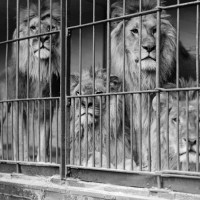
From ‘War and wild life’, The Spectator, 17 October 1914: The siege of Antwerp has been a minor tragedy in a quarter to which few probably gave a thought. The authorities of the Antwerp Zoological Gardens, before the bombardment began, felt compelled to destroy all the dangerous animals in their cages. They could not contemplate the possibility of beasts of prey loose in the streets; a stray shell would break the bars of the strongest enclosure, and the Zoological Gardens are situated near one of the important railway stations, which would naturally attract the fire of cannon.
Home Checks began at British airports for passengers who might have come from west Africa with Ebola fever (even though there are no direct flights from the countries most affected). People who rang 111 with suspicious symptoms were to be asked whether they’d come from a high-risk country. Police arrested three men and three women from Portsmouth, Farnborough and Greenwich as part of an anti-terrorism operation. Of five men arrested the week before, two were released. The trial began before a jury at the Old Bailey of Erol Incedal on charges of preparing for acts of terrorism; parts of it will be held in secret.

From The Spectator, 17 September 1914: THE long periods of darkness and absence of all direct news which add to the gloom of this war are illuminated by the flashlights of soldiers' letters. Letters of the deepest interest have, as we all know, enthralled public attention; but these are of course picked letters. The letters and postcards which come from the mass of soldiers tell nothing of general interest, nothing which could enable any one to picture any corner of the great war, or to share any of the emotions which must possess the souls of those firing and under fire. No hint of patriotic purpose finds expression in them; battle, murder, and sudden death are hardly alluded to, much less described, by the men in their midst; and the golden illusion of glory is not so much as named.
From The Spectator, 17 October 1914: Last Sunday another aeroplane attack was made upon Paris. It appears that no fewer than five aeroplanes were concerned in the raid, and that twenty bombs were dropped, killing four persons and injuring twenty-two. One of the bombs fell upon the roof of the church of Notre Dame, and was at first supposed not to have exploded. Later reperts, however, showed that it burst and set a beam on fire, though fortunately no serious damage resulted. On the following day a further attack was made by a single aeroplane, which dropped six bombs, without, however, doing any appreciable mischief. It is extremely difficult to understand what advantages the German military authorities hope to gain from such exploits as these.

From The Spectator, 17 October 1914: To all British people here and overseas by far the most delightful news of the week is that of the landing of the Canadian contingent at Plymouth on Wednesday afternoon. As may be imagined, the reception given to the Canadian troops was of the heartiest, and the Canadians will know that it was no mere local outburst of enthusiasm. At this moment there is a sense of pride in and gratitude towards the Dominion in the heart of every British man and woman in the country. We should be stone if we were not touched by a pledge "fraught with a pathos so magnificent." The coming of the Canadians would be notable if there were nothing more behind it, but we all know that there are a hundred thousand men behind it, and "more if necessary.