The Spectator
Thursday
Unfair

Spectator letters: John Major on James Goldsmith
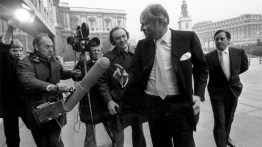
The Goldsmith effect Sir: Much as I admire filial loyalty, I cannot allow Zac Goldsmith’s article about his father to go uncorrected (‘My dad saved the pound’, 28 February). Sir James Goldsmith was a formidable campaigner against the European Union and the euro currency, but at no point did he alter government policy. Zac Goldsmith suggests that I did not offer a referendum on membership of the euro currency out of conviction. This is wrong. I believed that any decision to abandon sterling — which I myself did not favour — was so fundamental that it would need national endorsement. On constitutional grounds some Cabinet members dissented, but many will confirm that I was seeking agreement for such a policy long before the Referendum party was founded.
How weird is it to have a second kitchen?
Cooking statistics Ed Miliband was photographed in a miserable kitchen, but it turned out to be only a snack preparation room which he has in addition to a large kitchen downstairs. What is the state of the nation’s kitchens? — The average size in England, according to official data, is 11 square metres. Five per cent of homes have a kitchen smaller than five square metres and 17 per cent have kitchens large than 15 square metres. Some 13 per cent have, like Ed’s, a separate utility room or second kitchen. — 955,000 English homes are estimated to have a hygiene problem, and in 4 per cent of these the cleanability of the kitchen is deemed to be an issue.
The Conservatives should be the party of immigrants — and here’s how they can be
For a long while, the Conservatives have been puzzled about their lack of popularity among immigrants. In theory, the Conservative party should be the natural home of new voters who are ambitious, entrepreneurial, hard-working and family-orientated. The immigrant vote — to the extent it can be considered a coherent block at all — ought to be fertile Tory territory. By and large, these are families who have moved to Britain to get ahead and to avail themselves of what Michael Howard called ‘the British dream’. Yet at the last election fewer than one in five ethnic minority voters endorsed Conservative candidates and the party is unlikely to fare much better in May.
Portrait of the week | 19 March 2015
Home In a Budget intended to have ‘no gimmicks, no giveaways’, George Osborne, the Chancellor of the Exchequer, offered pensioners with annuities the chance to cash them in and blow the lot. Borrowing in the coming year would be a fraction of a billion less than feared and the annual deficit was to be eliminated by 2019. The income tax personal allowance was raised. Business rates were to be reviewed. Duty on beer, cider and spirits came down a touch, but not on wine. A higher bank levy was predicted to raise £900 million. North Sea oil and gas producers were offered tax reductions. About 15 million people would have to update their tax returns online through the year. The minimum wage would rise in October by 20p an hour to £6.

Books & Arts opener – 19 March 2015

The Spectator at war: Unofficial news
From ‘Unofficial News’, The Spectator, 20 March 1915: THE exclusion of war correspondents from the firing line has greatly reduced the volume of unofficial news available for the enlightenment of the general public. What remains, moreover, has to run the gauntlet of the Censorship. How some of it manages to get through is a mystery which we cannot pretend to fathom. Fortunately all that appears on the tape does not always appear in the newspapers. But disregarding what may be described as "freak" news, it may be worth while to set down some rough aide towards estimating the credibility and value of unofficial intelligence which have been suggested by the experiences of the last eight months.
What the censors miss
From ‘Unofficial News’, The Spectator, 13 March 1915: The exclusion of war correspondents from the firing line has greatly reduced the volume of unofficial news available for the enlightenment of the general public. What remains, moreover, has to run the gauntlet of the Censorship. How some of it manages to get through is a mystery which we cannot pretend to fathom. Fortunately all that appears on the tape does not always appear in the newspapers.
Wednesday
Budget 2015: Full text of Ed Miliband’s response
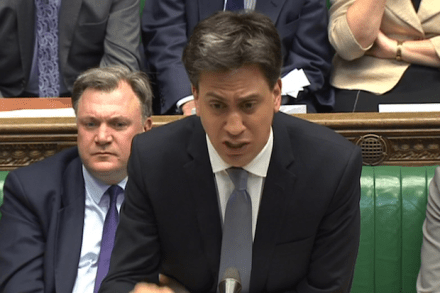
Mr Deputy Speaker, never has the gap between the Chancellor’s rhetoric and the reality of people’s lives been greater than it was today. This is a Budget people won’t believe from a government that’s not on their side. Because of their record. Because of their instincts. Because of their plans for the future. And because of a Budget, most extraordinarily, that had no mention of investment in our National Health Service and our vital public services. It is a budget people won’t believe from a government they don’t trust and this chancellor has failed the working families of Britain. For the first time since the 1920s people are earning less at the end of a government than they were at the beginning. People are £1,600 a year worse off.
Listen: key points of Budget 2015
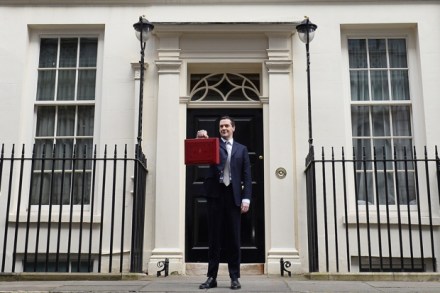
George Osborne delivered his final Budget of this Parliament today.