The Spectator

Barometer | 18 June 2015

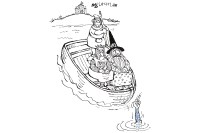
Dropping the Clangers The Clangers made a comeback on BBC television. Some Clanger facts: — The actors doing the voices worked from a script in English, even though they were playing seemingly unintelligible noises on the swanee whistle. It was a good job the young viewers didn’t understand Clanger-language, because the creatures were known to tell each other to ‘sod off’. — The last Clanger episode, made after a gap of two years, was made specially to be broadcast on the evening of 10 October 1974, polling day in the second general election of that year. It consisted of the Clangers being taught how to play party politics, but rejecting the concept. It was written by co-creator Oliver Postgate after he become angry about the miners’ strike.

Let Greece go

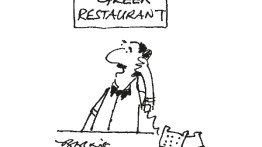
The campaign to keep Greece in the euro has resulted in five years of groundhog days. The unfortunate country seems to be forever approaching a day of repayments it cannot afford. Ministers and diplomats assemble to thrash out a deal. Meetings collapse in bad temper, and markets sink. Then, at the eleventh hour, a deal is somehow forged. Greece agrees to reforms which seek to cut spending and balance the books in return for billions of pounds of bailout cash. Markets rebound. The money is paid, the debt repayments met. And then all starts to go wrong again. A few months later we are back where we began. Anyone who hoped the election of Greece’s Syriza government in January would break the cycle has been disappointed.

Portrait of the week | 18 June 2015

Home Talha Asmal, aged 17, from Dewsbury, West Yorkshire, died in a suicide bomb attack on forces near an oil refinery near Baiji in Iraq, having assumed the name Abu Yusuf al-Britani. A man from High Wycombe, Buckinghamshire, Thomas Evans, 25, who had changed his name to Abdul Hakim, was killed in Kenya while fighting for al-Shabab. Three sisters from Bradford were thought to have travelled to Syria with their nine children after going on a pilgrimage to Saudi Arabia. Britain had had to move intelligence agents, the Sunday Times reported, because Russia and China had deciphered documents made public by Edward Snowden, the CIA employee who has taken refuge in Russia. Payments expected by customers of the RBS group of banks failed to enter accounts overnight.

The Spectator at war: Peace talk

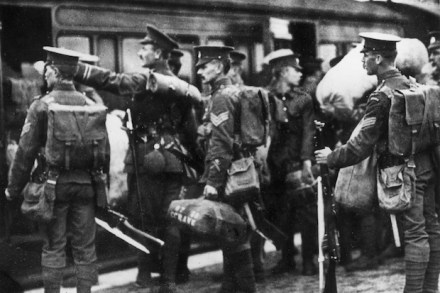
From ‘Chatter About Peace’, The Spectator, 19 June 1915: THE student of foreign telegrams will not have failed to notice that during the past week there have been a good many hints as to the possibilities of peace, and the willingness of the Germans to end the war on what they consider would be reasonable terms. Especially are we told that in America German emissaries are talking about peace, and of Germany's readiness to go back to the status quo ante bellum, if only she can in addition obtain, not for herself, of course, but for the world at large, what she terms "the freedom of the seas.

Birdsong

From ‘Literature and Soldiers’, The Spectator, 19 June 1915: In this war some of the most moving poetry has been written by young soldiers. The most vivid accounts of fighting have been extracted from soldiers’ letters. These were certainly not written without a close companionship with letters. We wonder how many torn and thumbed copies of Shakespeare, Milton, Homer, or Virgil are in trenches and dug-outs at this moment. We wonder how many officers have added an entirely non-military zest to their movements by studying domestic Gothic architecture, or the buildings bearing the more grandiose imprint of Louis XIV’s days, as they passed through the interesting towns of Flanders.

The Spectator at war: Law of the sea

From ‘The American Note’, The Spectator, 19 June 1915: Mr. Wilson recognizes the existence of a painfully simple issue. The issue is between the German submarines and international law. Consent to the continuance of German submarine warfare as now practised means the abolition of international law at sea. Mr. Wilson understands that he must choose between the two things. He chooses international law ; and consequently he cannot possibly yield to the submarines. He knows well that consent to German submarine methods would mean delivering the world-to an era of violence, of "no-law," of horrible barbarism, which would be much worse than any hostilities that are now called into immediate prospect.

The Spectator at war: Men of letters

From ‘Literature and Soliders’, The Spectator, 19 June 1915: In this war some of the most moving poetry has been written by young soldiers. The most vivid accounts of fighting have been extracted from soldiers' letters. These were certainly not written with- out a close companionship with letters. We wonder how many torn and thumbed copies of Shakespeare, Milton, Homer, or Virgil are in trenches and dug-outs at this moment. We wonder how many officers have added an entirely non-military zest to their movements by studying domestic Gothic architecture, or the buildings bearing the more grandiose imprint of Louis XIV's days, as they passed through the interesting towns of Flanders.