Bears 3
From our UK edition
From our UK edition
From our UK edition
From our UK edition
From our UK edition

From our UK edition
From our UK edition
From our UK edition
From our UK edition
The case for Daesh Sir: For once the admirable Rod Liddle has got it completely wrong (‘You can’t take the Islam out of Islamic State’, 4 July). We absolutely shouldn’t call the homoerotic, narcissistic death cult ‘Islamic State’ — not because it offends ordinary Muslims, nor because it has nothing to do with Islam (it has everything to do with Islam) but because it legitimises and validates the preposterous project. The media has a responsibility not to run terrorist propaganda unchallenged. Politicians, including the Prime Minister, are starting to wise up to this and should be applauded for doing so. We are in an information war with our enemies.
From our UK edition
Naming terror David Cameron and the BBC argued over what to call the terror group most papers refer to as Isis — with the PM preferring Isil and the BBC continuing to call it Islamic State. Two more terror groups whose names caused problems in Britain: — The Red Army Faction was a German terror group which existed between 1970 and 1998, when it declared itself dissolved. Faced with the acronym RAF, British media preferred to call the group by its nickname the Baader-Meinhof Gang. — In the 1970s Italy was terrorised by a group known as the Red Brigades, most notorious for kidnapping and murdering the former prime minister Aldo Moro in 1978.
From our UK edition
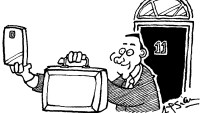
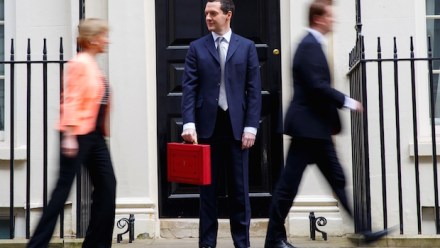
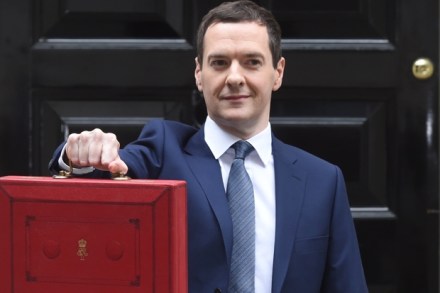
Home In his Budget, George Osborne, the Chancellor of the Exchequer, slowed the planned rate of bringing in £12 billion of welfare cuts. He forecast a surplus by 2020. The bank levy would be reduced but a surcharge on bank profits imposed. The total of benefits that a family can claim a year would be cut to £23,000 in London and £20,000 outside it. Tax credits for those with more than two children were to be reduced. Local authority and housing association tenants in England who earn more than £30,000 (£40,000 in London) would have to pay more rent. Maintenance grants for students would be turned into loans. Income tax thresholds were raised.
From our UK edition
In his hastily scripted victory speech, David Cameron hit upon a mission that he wanted to define his remaining years in office. ‘I want my party, and I hope the government I would like to lead, to reclaim a mantle that we should never have lost: the mantle of one nation,’ he said. The problem was obvious: how could he reconcile this phrase with the hideous financial decisions that he had to make in office? With having to decimate not just unemployment benefits, but the support given to the millions trapped in low pay? George Osborne started to give his answer with his Budget this week. His main decision was a to introduce a new ‘living wage’ of £7.20 an hour, rising to £9 an hour by 2020.
From our UK edition
From our UK edition
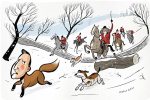
The hunting ban could be gone soon – but the hypocrisy will linger on, says Melissa Kite in this week's issue. Cameron knows he has to deliver something to the hunting fraternity now that he leads a majority government, because he promised a vote on repeal in his manifesto. The trouble is that he can’t risk a free vote, which only entrenches the hunting ban if it goes against him. So a solution has been hit upon that involves amending the Hunting Act by statutory instrument. But as David Amess MP, a member of Conservatives Against Fox Hunting, suggests on this week's podcast, it won't work - because there is no appetite for another debate about hunting. Camilla Swift, who presents this week's podcast, suggests that there may be.
From our UK edition
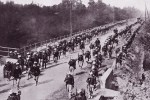
From 'The Crumbling of Austria-Hungary', The Spectator, 10 July 1915: SUPERFICIALLY Austria-Hungary may seem to have "come again." Compared with the position a few months ago, when the Russians were bursting through the Carpathians, when Przemysl had just fallen, and when the major portion of Hungary was seething with distrust and discontent, the Empire of the Hapsburgs appears to have passed out of its period of earthquake and eclipse and to be renewing its powers. Galicia and Bukowina are clear of the enemy, and very soon the Dual Monarchy will be able to say that not merely are there no Russians in her Polish provinces, but that a great slice of Russia is occupied by her soldiers. Nevertheless, and in spite of these favourable signs, Austria-Hungary as a State is crumbling away.
From our UK edition
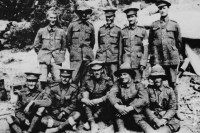
From ‘Sir Ian Hamilton’s dispatch’, The Spectator, 3 July 1915: The Dardanelles affair is a war in itself — much more exacting and complicated than many wars in the past which have made the names of British generals and regiments immortal. If the policy which has governed this war is not creditable to our foresight and sagacity, the tale of devoted bravery and unfailing resource which Sir Ian Hamilton unfolds makes us forget much that is disquieting in sheer wonder and admiration.
From our UK edition
[audioplayer src="http://rss.acast.com/spectatorpolitics/summerbudget2015/media.mp3" title="Fraser Nelson, James Forsyth and Isabel Hardman discuss the Summer Budget"] Listen [/audioplayer] Mr Deputy Speaker, This is a Budget that puts security first. It’s a Budget that recognises the hard work and sacrifice of the British people over the past 5 years and says: we will not put that at risk, we have a job to do and we’re here to get on with it. This will be a Budget for working people. A Budget that sets out a plan for Britain for the next 5 years to keep moving us from a low wage, high tax, high welfare economy; to the higher wage, lower tax, lower welfare country we intend to create. This is the new settlement.

From our UK edition
From ‘Sir Ian Hamilton's Despatch’, The Spectator, 10 July 1915: THE despatch from Sir Ian Hamilton which was published in the papers of Wednesday leaves the reader in no doubt that the Dardanelles campaign is one of the most difficult operations of war ever undertaken by an army. We have tried, and are still trying, to take by assault positions which may be compared with Gibraltar, the fortified walls of Heligoland, the ancient Roman Capitol, or any other famous fortified place of which the very name stands for impregnability.
From our UK edition
From ‘The Impulse of the Phalanx’, The Spectator, 10 July 1915: A mass of men, large enough to be beyond the control of any immediate words of command, is a difficult thing to stop when once it has been set in motion. It acquires a momentum of its own. The wills of individuals become submerged in the will, or what may pass for the will, of the mass. They respond to an impulse which nobody could precisely trace or define. In a very rough manner one sees the process at work when a crowd comes out of a public building.

From our UK edition
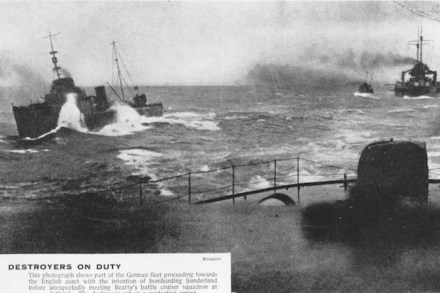
From 'News of the Week', The Spectator, 10 July 1915: IN the western theatre of the war there has been a great deal of talk about renewed German activity on a huge scale, of imperative orders by the Kaiser to take Calais without delay, of vast movements of troops, and of huge guns intended when Calais is taken to bombard Dover and cover the invasion of England by aluminium boats. What special virtue there is in aluminium for this purpose does not appear. We can understand that aluminium was a very proper metal out of which to construct boats meant to be dragged across the Syrian Desert in order to facilitate the passage of the Suez Canal.
From our UK edition
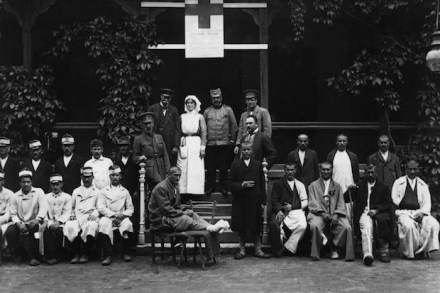
From ‘The Open-Air Hospital at Cambridge’, The Spectator, 3 July 1915: We are all familiar with the open-air treatment of various diseases, and particularly of tuberculosis, but no such startling lesson on the value of open air for wounds, and one may say for practically all diseases, has been given to us before. Even diseases like pneumonia and bronchitis, which by intelligent doctors are still commonly sheltered from any rigours of temperature, have followed an extraordinarily prosperous course in the open-air wards at Cambridge. Of course in winter the wards were bitterly cold. That did not matter much to patients who had plenty of blankets and hot-water bottles. The real sufferers were the nurses.