Wall 2

Don’t write off Assad Sir: Ahmed Rashid refers to our ‘Arab allies’ supporting al-Qaeda (‘The plan to back al-Qaeda against Isis’, 18 July). Clearly they are no allies of ours, so thank you Mr Rashid for pointing this out. Apart from that, his perspective is peculiar. He starts off by accusing Assad of plunging Syria into a bloody civil war. Clearly that is not the case. The civil war was started by Assad’s opponents, encouraged by the ‘success’ of the Arab Spring elsewhere. Of course we now see that the ‘success’ was illusory. He also suggests that Assad is finished. Now that his ally Iran has come in from the cold, I think it is a bit early to write him off.
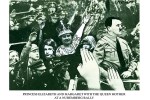
Gesture politics A royal home movie from 1933 apparently showed the future Queen, aged seven, and her mother giving a Nazi salute. Like the Swastika, the stiff-armed salute was not invented by the Nazis. In this case they took it from the Mussolini and his Fascists, who thought it came from ancient Rome. Three Roman soldiers are shown making such a gesture in Jacques-Louis David’s 1784 painting ‘Oath of the Horatii’.But the US beat both Nazi Germany and Fascist Italy by using the gesture to accompany the pledge of allegiance. Hitler himself claimed the salute was one of peace, saying it meant ‘Look! I am holding no weapon.
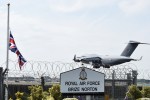
"Whether it’s in Iraq, Syria, Libya or elsewhere — as Prime Minister, if I believe there is a specific threat to the British people, would I be prepared to authorise action to neutralise that threat? Yes, I would." It is almost two years since David Cameron lost a vote on intervening in the Syrian war and he has barely spoken about foreign affairs since. He is now slowly returning to the subject, making the case for pursuing Islamic State in Syria. The recent murder of 30 British holidaymakers in Tunisia was almost certainly planned in Isis’s Syrian stronghold of Raqqa. The Prime Minister is making the fairly simple case that the military ought to be able to pursue the enemy. But there is no chance of the RAF ‘neutralising’ the threat.
Home Parents would be able to have their children’s passports removed if they were suspected of planning to travel abroad to join a radical group, under provisions outlined by David Cameron, the Prime Minister, to deal with Islamist extremism. It emerged that five British pilots embedded with allied forces had been taking part in air strikes over Syria, which Parliament had voted against in 2013. Julian Lewis, the Conservative chairman of the Defence Select Committee, accused Mr Cameron of making up policy ‘on the hoof’. Lord Richards of Herstmonceux, the former Chief of the Defence Staff, said that in order to defeat the Islamic State, ‘tanks would have to roll and there’s going to have to be boots on the ground’.
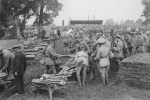
From ‘Armour and Shields’, The Spectator, 17 July 1915: A bone, a book, a cigarette-case, even a five-franc piece in the pocket, will often save a man from death by a bullet. Still oftener will these flimsy substitutes for armour save life in the case of scraps of shrapnel or pieces of shell which have no very great penetrating power. The French Army has already adopted the steel cap for the trenches, with excellent results. Not only are a great many men wounded in the head, but head wounds, owing to the germs preserved in hat and hair, are exceedingly likely to prove septic, and so dangerous, or even fatal. Experiments have also been tried with steel breastplates, apparently with good results; and Dr.
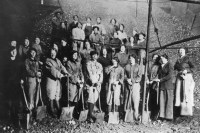
From ‘Coal and its problems’, The Spectator, 24 July 1915: Instead of attempting to regulate prices, the government ought to have contented themselves with taxing profits, and by that phrase we mean not only the extra profits of the coalowner, but also the extra wages of the coalminer. The assumption that the coalminer is morally justified in obtaining an extra wage for himself out of the nation’s needs, and that the coalowner is not justified in obtaining an extra profit, cannot possibly be defended.
From 'Women and the War', The Spectator, 24 July 1915: It is not too much to say that without the help and inspiration of the women we could not win the war. But we have had the good fortune to know from the moment that war was declared that if we did not win it would not be the fault of the women. All fears that a great war would be too nerve-shattering and too horrible for women to give their moral sanction for its continuance have been absolutely dissipated. We have heard of no single case of a woman throwing impediments in the way through a loss of nerve, or through that kind of particularism which might have been expected to make many women argue in terms of deeply moved personal affection rather than of the intellect.
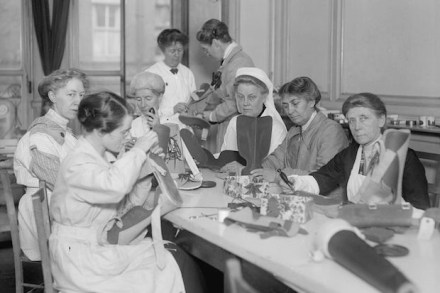
From 'The Struggle in the East', The Spectator, 24 July 1915: Even if the Germans take Warsaw and practically the whole of the Polish salient, and are not too badly punished by the Russian armies during the operation, they will have to begin the painful and dangerous task of invading Russia. No doubt in theory this is not a necessity. The Germans could go into winter quarters in Poland and stave off Russian attacks. That, however, we venture to say—though the proof would take too long to give on the present occasion—will turn out an impossible task. Germany will have to go forward into Russia as long as the Russian armies are in being. It will be seen that we always come back to this point. What matters is to keep the Russian armies in being.
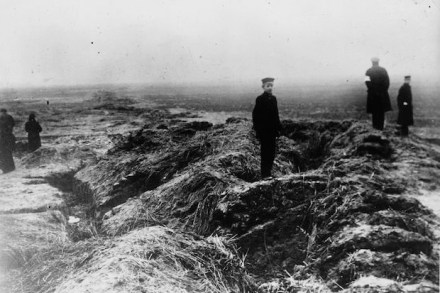
From 'News of the Week', The Spectator, 24 July 1915: The United States Government have received from Germany an admission that the American vessel 'Nebraskan' was sunk by a German submarine. The German Government, in apologizing and promising reparation, explain that no attack on the American flag was intended, and that the affair was an unfortunate accident. The German apology does not, of course, in any way modify the strength of the American case against German submarine warfare. Rather it increases it. For it is obvious that if Germany continues to act on suspicion, as she certainly must in the particular kind of warfare she conducts at sea, she is sure to kill many neutrals.
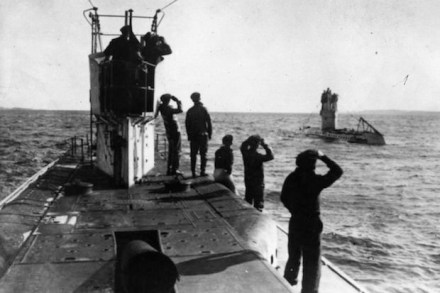
From ‘The Magnanimity of Italy’, The Spectator, 18 July 1915: The Italian always aspires not only to do great things, but to do them in the great way, whether it be to build a church, a hospital, or a railway station, paint a picture, or write an ode. Picturesqueness and the refinement of miniature work—these appeal to him very little. He wants the big brush, the big canvas. What Sir Thomas Browne so well called " the wild enormities of ancient magnanimity" inspire no fears in his mind. The grandiose does not alarm him, but only the mean and the petty. This great-heartedness is shown very clearly not only in Italian manners, which have always been the most stately and full-sweeping in the world, but in the Italian titles and the Italian language.
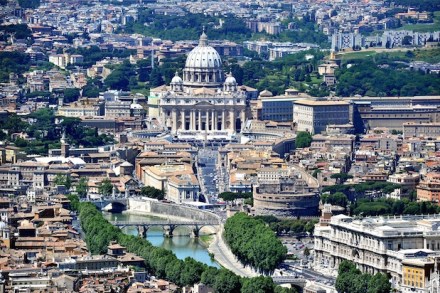
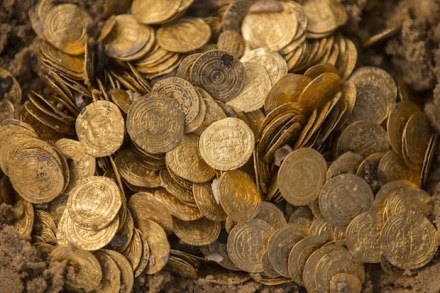
From ‘Phantom Gold’, The Spectator, 17 July 1915: There is something about the sight of golden coins which excites the imagination. Was it for economic nations alone that the world settled upon gold as the universal token? What delight children take in counters made to represent sovereigns—small children who have certainly never possessed a real twenty shillings. They know the round yellow shams have no value, they do not think about spending them seriously, but they love to play with them nevertheless. There are analogous games which we all play with phantom counters from time to time. The counters represent nothing that we have, or have lost, or even expect to have; they represent our friends' incomes. These tokens represent a very uncertain quantity.