The Spectator

The Spectator podcast: It is time for a new workers’ party

To subscribe to The Spectator’s weekly podcast, for free, visit the iTunes store or click here for our RSS feed. Alternatively, you canfollow us on SoundCloud. It has been another extraordinary week in politics. Nigel Farage resigned as Ukip leader, Labour MPs are still trying – but failing – to get rid of Jeremy Corbyn, and the Conservatives are in the midst of a leadership contest. But while most Tory MPs are asking who should come next, James Forsyth and Fraser Nelson argue in this week's magazine that the question should be what should come next. Britain needs a new form of Conservatism – and the Tory party needs to become the new workers' party.

Why the Tories should send May and Gove to the country

As a radical paper, The Spectator has always been an admirer of Michael Gove, particularly his education reforms. He was, perhaps, a little too radical when abandoning Boris Johnson at the eleventh hour last week – but let it not be said that he lacks the steel needed to become Prime Minister. Andrea Leadsom was impressive during the referendum campaign and might be a triumph as Prime Minister. But there is only one battle-tested Brexiteer in this contest – and he is Michael Gove. Tory MPs will today choose which two candidates they will ask the membership to choose between. The glitch in the voting system means they get to choose with only one vote.

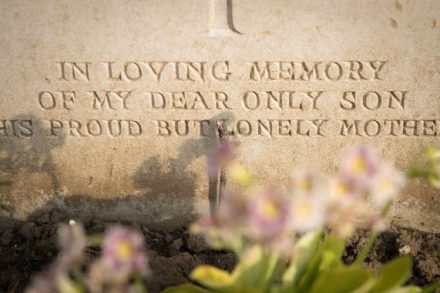
The meaning of the Somme

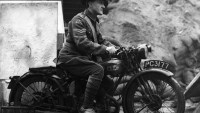
From ‘News of the week’, The Spectator, 8 July 1916: On the surface of London life there is hardly a ripple, and yet not a hundred and fifty miles from our shores is being waged the first stage of what in all probability will prove not only one of the greatest and momentous battles in all history, but a battle fraught with consequences that must make or mar us as a nation. All that we hold dear as men and women and as a race, all that makes life worth living, all that goes with home and liberty and independence, all the things that matter, depend upon the issue of the operations which have begun at the Somme. Though there may be, and indeed must be, pauses in the battle, this, for good or evil, is the beginning of the end.

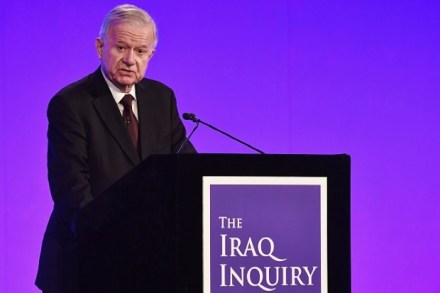
Sir John Chilcot’s full statement introducing the Iraq War inquiry report

We were appointed to consider the UK’s policy on Iraq from 2001 to 2009, and to identify lessons for the future. Our Report will be published on the Inquiry’s website after I finish speaking. In 2003, for the first time since the Second World War, the United Kingdom took part in an invasion and full-scale occupation of a sovereign State. That was a decision of the utmost gravity. Saddam Hussein was undoubtedly a brutal dictator who had attacked Iraq’s neighbours, repressed and killed many of his own people, and was in violation of obligations imposed by the UN Security Council.

The Chilcot report has exposed Blair’s real crime: failure to prepare

'If it falls apart, everything falls apart in the region' Note from Tony Blair to George W Bush, 2 June 2003. The extraordinary length of time that we have had to wait for Sir John Chilcot’s report into the 2003 invasion of Iraq has not made the end result any more satisfying. For some, nothing less than the indictment of Tony Blair on charges of war crimes would have sufficed. As for Blair himself, and many of those who surrounded him when the decision was made to remove Saddam from power, they will go on believing until their dying day that not only was the war just, but there was nothing much wrong with the way in which it was sold to the public and to Parliament.

‘There were no stragglers’: The Spectator reports from the Somme, July 1916

This piece first appeared in the Spectator in July 1916: Our men have advanced with an elan and a spirit to which the history of war affords no parallel. It is a commonplace of esoteric military history that there is a very seamy side to those glories of the assault upon which the ordinary describer of battles loves to dwell. We hear of the rush of the charge, of the cheers, of the officers pressing forward to lead their men and of the men following them to the death. What we seldom hear about is what Milton called the 'raw edge of war', of the ten or fifteen per cent.

Letters | 30 June 2016

A rational vote Sir: There has been a lot of bile poured out about those who voted Leave by the Remainers. Their intelligence, their racial tolerance and their general moral standing has been called into question. I was a Remain voter, but live in an area that was 69 per cent Leave, and work with people who were strongly anti-remaining. To take one example, being anti-free migration is being referred to as racism. For many people migration is not anything to do with race or even nationality: 1,000 people from the next town would create the same degree of concern as 1,000 Poles. When jobs, houses, school places and so on are limited, it is the amount of competition faced that creates the problem, not where the competition comes from.

Barometer | 30 June 2016

Repeat until fade More than three million voters disappointed by the result of the EU referendum have signed a petition demanding a re-run. — They may have in mind the Danish referendum on the Maastricht Treaty in 1992, rejected by 50.7% of voters. A year later, after exemptions were offered to Denmark, the country voted again and approved the treaty by 56.7%. — Or it could always go like the 1997 Winchester by-election. Having lost his seat by two votes in the general election, Conservative MP Gerry Malone challenged the result. In the re-run, Lib Dem Mark Oaten won with a majority of 21,556. Jam yesterday Concert-goers on the way to Glastonbury were stuck in a five-hour traffic jam. They were the lucky ones.

Portrait of the week | 30 June 2016

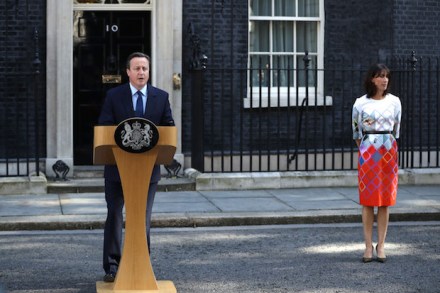
Home David Cameron, standing in the middle of Downing Street with his wife Samantha alone near him, announced his resignation as prime minister after the United Kingdom voted to leave the European Union by 17,410,742 votes (51.9 per cent) to 16,141,241 (48.1), with a turnout of 72.2 per cent. The result surprised the government. Mr Cameron said he’d stay on until a new Conservative party leader and prime minister could be chosen, before the party conference in October. In Scotland, 62 per cent of the vote was to remain and in London 59.9 per cent. The area with the highest Leave percentage was Boston, Lincolnshire, with 75.6, and the highest Remain percentage was in Lambeth, with 78.6 (apart from Gibraltar, which recorded 95.9 per cent in favour of remaining).

A vote of confidence

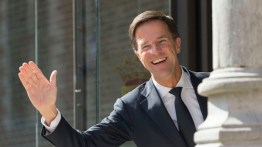
During the referendum campaign, it seemed at times as if a competition was on to issue the most hyperbolic claim of what might happen should the British public vote to leave the European Union. Now politicians and commentators are competing to come up with the most hysterical assessment of the British decision to leave. Leading the field is Mark Rutte, the Dutch Prime Minister, who declared that ‘England has collapsed: politically, monetarily, constitutionally and economically.’ In other words: without us, you’re nothing. Politics in collapse?

‘I’m Theresa May and I’m the best person to be Prime Minister’

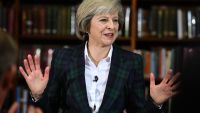
'My pitch is very simple, I'm Theresa May and I think I'm the best person to be Prime Minister', she said. here's the rest of the speech: I want to start by paying tribute to the Prime Minister. It’s easy to forget how far the Conservative Party and our country have come since David Cameron was first elected leader in 2005. Thanks to David we were elected into government for the first time in 18 years, we won a majority in the House of Commons for the first time in 23 years and in difficult times we stabilised the economy, reduced the deficit and helped more people into work than ever before. But David’s legacy is about more than the economic rescue mission we undertook.

Reasons to be cheerful | 30 June 2016

Noel Malcolm It may sound both Pollyannaish and paradoxical to say this, but leaving the EU will enable us to have stable, friendly, cooperative relations with all our EU neighbours. Being cooped up in a dysfunctional system, where so much depends on backroom arm-twisting and competing for favours in a zero-sum game, doesn’t produce stable friendships. For those of us who feel (as I do) like real Europeans, it will be so much better to be the friendly next-door neighbour than the unwanted in-law in the quarrelling family home. Noel Malcolm is a Senior Research Fellow of All Souls College, Oxford.

Preparing for peacetime

From ‘Preparation for peace’, The Spectator, 1 July 1916: All industrial development relies in the last resort upon human energy, and the amount of human energy existing in this country has been enormously stimulated by the war. The country is awake, and will remain awake. But this readiness of every man and every woman to ‘do their bit’ in the battle of peace (if we may be allowed so mixed a metaphor) will not save us from great suffering in the first few months that will follow the cessation of hostilities and the return of the troops, if we have not tackled the problem beforehand, but have lulled ourselves with the belief that it will be all right ‘on the night’.

David Cameron’s Commons statement on the EU referendum – full text

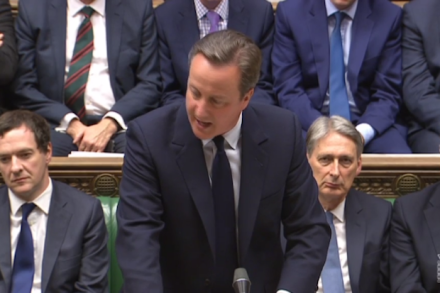
With permission, Mr Speaker, I would like to make a Statement on the result of the EU referendum. Last week saw one of the biggest democratic exercises in our history with over 33 million people from England, Scotland, Wales, Northern Ireland and Gibraltar all having their say. We should be proud of our Parliamentary democracy. But it is right that when we consider questions of this magnitude, we don’t just leave it to politicians but rather listen directly to the people. And that is why Members from across this House voted for a referendum by a margin of almost 6 to 1.

Britain votes for Brexit

The final results are in: Britain has voted to leave the European Union. Scroll down for our full coverage from throughout the night. And join us on our daytime live blog  where the Prime Minister has announced his decision to step down. Results: Leave 52%, Remain 48% with 382/382. Turnout 72.2% Remain: 16,141,241;  Leave: 17,410,742 Britain has voted to leave the European Union. The pound has plunged heavily, as the markets react to Brexit. Wales has voted Leave, with 18 of its 22 authorities having declared. Scotland has voted Remain by a margin of 62 per cent to 38 per cent, with all 32 council areas voting to stay in the EU. Turnout in the referendum was 72.2 per cent - the highest since the 1992 election.

Can you forgive him? | 23 June 2016

David Cameron bet everything on winning this European Union referendum. He lost. His resignation was inevitable, but the timing was not. Indeed, scores of pro-Brexit Tory MPs had signed a letter asking him to stay as Prime Minister - or, at the very least, not walk out of No.10 on the morning after the vote. Yes, he would not be the best person to lead Brexit talks – but these talks could be several months, perhaps years away. So there was no reason to rush for the exit and plenty reason not to do so. Brexit vote was always going to create uncertainty in the financial markets. Adding political uncertainty, in the form of a Prime Ministerial resignation, was never going to help.

Letters | 22 June 2016

European identity Sir: Alexander Chancellor (Long life, 18 June) echoes the widely accepted view of the European Union as a ‘bulwark against the nationalism that is rising again’. The European project was, of course, conceived as a means of averting the catastrophes that nationalism wreaked upon Europe during the 20th century. However, in practice the EU has stoked nationalism within its constituent member states. As a top-down, elite-driven process, EU integration has crucially failed to mobilise the masses in favour of a common European identity that transcends national allegiances. Combine this with a simultaneous erosion of state sovereignty and the EU’s democratic deficit, and it is not difficult to understand why nationalist sentiment has again resurfaced.

Barometer | 22 June 2016

Big game hunt Wales beat Russia 3–0 to finish above England in their group at the European Football Championships. Which is bigger in Wales, football or rugby? — The Football Association of Wales was founded in 1876, five years earlier than the Welsh Rugby Union. However, rugby then took off rapidly in south Wales while football remained stronger in the north. — Wales lost their first matches to England in both football (2–1) and rugby (8–0). — Rugby and football matches have both filled Cardiff’s Millennium Stadium (capacity 76,000), though in a recent Wales Online poll, rugby was still reckoned more important, by 56% to 44%.