The Spectator

Portrait of the week | 28 July 2016

Home The collapse of BHS after Sir Philip Green had extracted large sums and left the business on ‘life support’, with a £571 million pension deficit, was ‘the unacceptable face of capitalism,’ said a report by the Business and the Work and Pensions select committees of the House of Commons. The British economy grew by 0.6 per cent in the quarter ending in June. A man was shot dead at a commercial pool party in Headley, Surrey, organised by Summerlyn Farquharson, known as the Female Boss Krissy, and the Jamaican reggae artist Jason White, known as Braintear Spookie. HMS Ambush, a Royal Navy Astute-class nuclear-powered submarine, was in a ‘glancing collision’ with a merchant vessel while submerged off Gibraltar.

Letters | 28 July 2016

Better Europeans Sir: There are many reasons why a majority of people in the UK voted to leave the European Union. Among them was certainly not a wish to be inhospitable and uncooperative with our fellow Europeans (Leading article, 23 July). Now it is even more important that EU nationals in Britain should have their status respected and not be used as a bargaining point in future relations with Brussels. Nor should we forget the considerable contribution that so many of them make to our national wellbeing. Furthermore, what about the two million or so UK nationals living and settled in many parts of Europe? Are they to be ignored and their security put at risk for no valid purpose?

The new Secretary for War

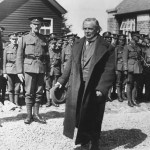
From ‘The military situation’, The Spectator, 29 July 1916: We have a new Secretary for War. Mr Lloyd George, as we all know, is a man of great personal power, with the faculty of stimulating and inspiring, and securing that what he desires shall be accomplished. With him good is not enough. He knows that more and better things can always be done, and he has a voice and a will to compel others to share his opinions. His mind is receptive to new ideas. He never stands still.

Barometer | 21 July 2016

How Britannia got her trident Parliament voted to renew Trident as Britain’s independent nuclear deterrent. But what about Britannia and her trident? — Unnoticed by some, our coinage was unilaterally disarmed in 2008 when a new 50p was issued, with a crest, not Britannia. — But then Britannia didn’t always bear a trident. When she was first put on coins by the Romans she carried a spear in one hand and an olive branch in the other. — She retained her spear until 1797 when, to celebrate Britain’s naval power, the weapon was replaced by a trident. The inspiration came from Poseidon and Neptune, Greek and Roman deities of the sea. They carried a trident because it was used in the ancient world for fishing.

Portrait of the week | 21 July 2016

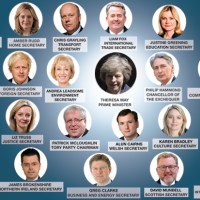
Home Theresa May made a speech in the open air in Downing Street after kissing hands with the Queen as the new Prime Minister. ‘As we leave the European Union,’ she said, ‘we will make Britain a country that works not for a privileged few, but for every one of us.’ In her new cabinet Boris Johnson, the failed contender for the leadership of the party, was made Foreign Secretary, replacing Philip Hammond, who became Chancellor of the Exchequer in place of George Osborne, who was sacked. Amber Rudd became Home Secretary, replacing Mrs May, and Liz Truss became Justice Secretary and Lord Chancellor, replacing Michael Gove, who was sacked. She is the first female Lord Chancellor in the millennium-long history of the office.

Theresa’s first mistake

This week's lead article, as read by Lara Prendergast Helga Hunter met her husband Michael when he was a Scots Guardsman serving in Münster in 1968. She moved back with him, and they have lived in Britain ever since. Last week, she was astonished to receive a letter from the Scottish National Party saying that she is still ‘welcome in Scotland’ and faces ‘no immediate changes’ to her status due to the Brexit vote. But as a German national, she now faces ‘great uncertainty over how events will unfold’. To the SNP’s enemies, this seemed a deplorable scare tactic intended to fuel indignation and stoke demand for a second independence referendum. It’s certainly deplorable. But in fact, the scare tactic came from Downing Street.

Over the top | 21 July 2016

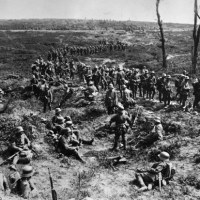
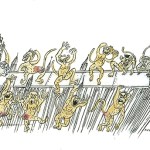
From ‘The Battle of the Somme’, The Spectator, 22 July 1916: What we seldom hear about is what Milton called the ‘raw edge of war’, of the 10 or 15 per cent or more of stragglers who fail to go on — men who do not show anything which can be reasonably called cowardice in face of the enemy, but who seize with great alacrity various forms of excuse, legitimate or semi-legitimate, for not advancing… Now the amazing, the absolutely unique thing about the battle of the Somme is that there has been literally no ‘raw edge’ to these assaults on fortified positions. The testimony of the correspondents, of the officers, and of the men on this point is in agreement.

Barometer | 14 July 2016

Nuggets on May Some trivia about Theresa May — At 59, she is the oldest new prime minister since Jim Callaghan, 64, in 1976. — She has the shortest surname of any prime minister since Andrew Bonar Law, who held the post for 211 days in 1923. — She is the first childless PM since Edward Heath — She is one of three recent prime ministers whose fathers were preachers: Gordon Brown is the son of a Church of Scotland minister and Lady Thatcher’s father was a Methodist preacher as well as shopkeeper. In spite of her father being a Church of England vicar, Theresa May at one point attended a convent school — Like Lady Thatcher, May suffered a by-election failure before securing a safe Conservative seat.

Portrait of the week | 14 July 2016

Home Theresa May became Prime Minister and leader of the Conservative party when Andrea Leadsom withdrew her candidacy for election by party members. This came after a front-page report by the Times based on an interview with Mrs Leadsom in which she said: ‘I feel being a mum means you have a very real stake in the future of our country — a tangible stake. She [Mrs May] possibly has nieces, nephews, lots of people, but I have children, who are going to have children.’ Her remarks were criticised by some fellow Conservatives, which Mrs Leadsom found ‘shattering’. Mrs May said gnomically that ‘Brexit means Brexit’.

Cameron’s Legacy

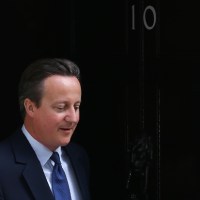
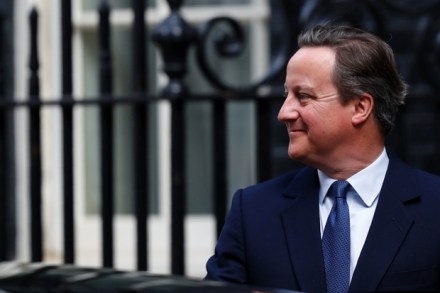
Midway through his final cabinet meeting, David Cameron realised — with some horror — that it had turned into a political wake. Theresa May had just lavished praise upon him, and his eyes had moistened. Then it was George Osborne’s turn: the Chancellor was a bit more humorous, but no less affectionate: ‘Being English, David, you’ll hate all this praise,’ he said. ‘You’re quite right,’ Cameron replied. ‘I am English, and I don’t much like it.’ Fearing that every member of his government was about to deliver an elegy, he brought the meeting to an abrupt end. Defining Cameron’s legacy is an important task for the Conservatives if they are to build on it.

Never again

From ‘Terms of peace’, The Spectator, 15 July 1916: As the man in the street might say, ‘The Allies are not going to give the Germans a chance to come at us a second time. Never again! is our motto.’ And if this is the object of the war, it will also be the object of the peace. We shall not dictate peace terms which will lead to the destruction of the German people or any section of them, or to any annexations of true German provinces; but we shall, as far as lies in our power, see to it that such a structure of government as that presented by militarist Germany is an impossibility for the future.

David Cameron’s legacy: a stronger, fairer Britain

Midway through his final cabinet meeting, David Cameron realised — with some horror — that it had turned into a political wake. Theresa May had just lavished praise upon him, and his eyes had moistened. Then it was George Osborne’s turn: the Chancellor was a bit more humorous, but no less affectionate: ‘Being English, David, you’ll hate all this praise,’ he said. ‘You’re quite right,’ Cameron replied. ‘I am English, and I don’t much like it.’ Fearing that every member of his government was about to deliver an elegy, he brought the meeting to an abrupt end. Defining Cameron’s legacy is an important task for the Conservatives if they are to build on it.

Technology by numbers

Digital tech turnover growth 2010-2014    1. Dundee 129%. 2. Edinburgh 48%. 3. Glasgow 42%. 4. Newcastle & Durham 29%. 5. Sunderland 44%. 6. Leeds 47%. 7. Liverpool 49%. 8. Manchester 40%. 9. Sheffield & Rotherham 45%. 10. Leicester 63%. 11. Birmingham 17%. 12. Worcester & Malvern 48%. 13. Norwich 22%. 14. Cambridge 46%. 15. Oxford 42%. 16. Bristol & Bath 53%. 17. Cardiff & Swansea 15%. 18. Ipswich 24%. 19. Reading & Bracknell 23%. 20. London 101%. 21. Southampton 180%. 22.Truro, Redruth & Camborne 153%. 23. Exeter & Newton Abbot 41%. 24. Bournemouth & Poole 39%. 25. Brighton 17% BRITAIN’S UNICORNS 43% of all European ‘unicorns’ (companies with $1bn dollar valuations) are based in the UK. JOBS IN TECHNOLOGY 3.

Letters | 7 July 2016

Junior elitists Sir: In response to Andrew Peters’s reminder that in many cultures it is the older and more experienced whose views are respected, I am stunned by the social media tsunami of self-regard shown by so many apparently well-educated young people in the wake of what they see as an adverse referendum result (Letters, 2 July). I have heard many of them vehemently expressing a sense of betrayal by their elders and, not a few times, by those less educated than themselves. Do they not realise that they are already sounding like junior members of the self-serving, self-appointed elite, the very people whose blinkered arrogance led directly to Brexit’s triumph?

The shame of Iraq

‘If it falls apart, everything falls apart in the region’ — Note from Tony Blair to George W. Bush, 2 June 2003.   Instead of asking why we fought the war, we should ask why we lost The extraordinary length of time that we have had to wait for Sir John Chilcot’s report into the 2003 invasion of Iraq has not made the end result any more satisfying. For some, nothing less than the indictment of Tony Blair on war crime charges would have sufficed. As for Blair himself, and many of those who surrounded him when the decision was made to remove Saddam Hussein from power, they will go on believing until their dying day that not only was the war just, but there was nothing much wrong with the way in which it was sold to the public and to Parliament.

Portrait of the week | 7 July 2016

Home Conservative MPs set about finding two candidates for the party leadership to be put to party members as rival choices. Theresa May proved the frontrunner, gaining 165 votes in the first round, with Liam Fox least fancied, being eliminated in the first round with 16 votes, and Stephen Crabb gaining 34 and throwing in the towel. Boris Johnson, having been forced out of the contest by the sudden entry of his presumed supporter Michael Gove (who attracted 48 votes in the first round), gave his backing to the next most popular woman candidate among MPs, Andrea Leadsom, who polled 66. Mrs May said that the position of British citizens in the EU and those from the EU in Britain would be an issue in the negotiations with the EU.