The Spectator

Portrait of the Week – 3 November 2016

Home Mark Carney, the Governor of the Bank of England, said he would stay on for another year when his initial five-year term ends in 2018, to ‘contribute to securing an orderly transition to the UK’s new relationship with Europe’. More than 150 Conservative MPs, including cabinet ministers, voted to appoint Keith Vaz, a Labour MP, to the Commons Justice Select Committee, even though he had left the Home Affairs Select Committee when a newspaper revealed an alleged scandal involving rent boys. Greg Clark, the Business Secretary, told the Commons that he had assured Nissan, which decided to continue operations in Sunderland, that Britain would seek trade for the motor industry that was ‘free and unencumbered by impediments’ after Brexit.
A passage to India | 3 November 2016

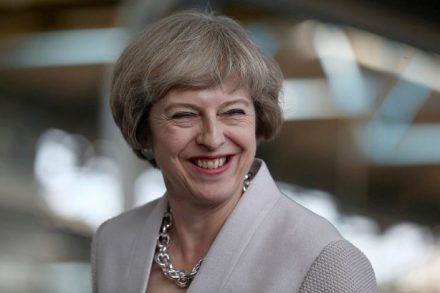
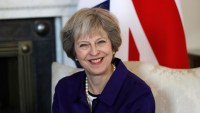
When a Prime Minister flies off abroad with a few business-leaders it is seldom worthy of comment. Such trade missions tend to achieve little, beyond generating headlines intended to flaunt politicians’ pro-business credentials. But with the impending departure of Britain from the European Union,-Theresa May’s visit to India next week, accompanied by Sir James Dyson and others, has huge significance. For the first time in four decades, a British Prime Minister can discuss doing trade deals — something which we have until now been forced to contract out to officials in Brussels. Mrs May has chosen her destination shrewdly. With its rapidly expanding economy and the gradual liberalisation of economic policy, India is everything that the EU isn’t.

Full text: Theresa May’s ‘Politician of the year’ acceptance speech

Oh come on, we’re all builders now. Thank you very much indeed and it’s a great pleasure to receive this award. I am particularly pleased to receive the award from George, because I gather when it came to the voting it actually got very tight and I owe it to George - he just nudged me over the line because he told all the other members of the jury that if they didn’t vote for me, the economy would collapse and world war three would start. I feel I just have to make a comment or an intervention on a previous speech: Boris, the dog was put down, when it’s master decided it wasn’t needed any more. I have to say... the new job is very interesting, there's a lot to do but I am discovering some side effects of it.

Love and death

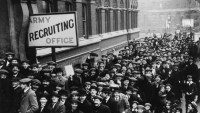
From ‘Romance’, The Spectator, 4 November 1916: There is indeed a glamour and a pathos about the private soldier, especially when, as so often happens, he is really only a boy… You can’t help loving him. Most of all, when he lies still and white with a red stream trickling from where the sniper’s bullet has made a hole through his head, there comes a lump in your throat that you can’t swallow, and you turn away so that you shan’t have to wipe the tears from your eyes.

Letters | 27 October 2016

Bear baiting Sir: I couldn’t agree more with Rod Liddle’s exposé of western politico-militaristic hypocrisy (‘Stop the sabre-rattling’, 22 October). We’ve already poked the Russian bear way too hard — unnecessarily so. What Rod could have also highlighted was that Nato has spread so far eastwards that it’s a blessed surprise the next world war hasn’t already started. It almost did in 1962 when Khrushchev tried to move nuclear missiles into Cuba. The same principle applies to what ‘we’ are doing now — frontline, aggressive technologies, nuclear-implied, established in the old Soviet states of Latvia, Estonia, Lithuania and even Poland.

Flights of fancy | 27 October 2016

An extra runway for Heathrow was first proposed by a Labour government — not Gordon Brown’s, or Tony Blair’s, but Clement Attlee’s in 1949. The revived scheme, announced in 2003, has taken 13 years to win government approval. Even now it’s unclear whether it will ever be built, given the legal, practical and political obstacles. The MPs who will vote on this in a year’s time will have difficult questions to answer. Is it wise to further entrench the power and pull of Europe’s busiest airport, rather than expand Gatwick and promote competition? And must we expect regional traffic to go via Heathrow for long-haul flights? Why not allow smaller airports to expand, so that Mancunians can fly to Manchuria without needing to go near London?

Barometer | 27 October 2016

Folio society A new collection of Shakespeare’s work credits Christopher Marlowe as co-author of the three Henry VI plays. Some other candidates claimed to have written Shakespeare plays: FRANCIS BACON (1561-1626). His poems are said to share a similar structure. But lacks motive to use Shakespeare as a pen name. WILLIAM STANLEY, 6th EARL OF DERBY (1561-1642): A Jesuit spy claimed he was secretly writing plays. EDWARD DE WERE, 17th EARL OF OXFORD (1550-1604): Theatre patron said to have used pen name because an aristocrat could not take credit for public plays. Dead for the last 12 years of Shakespeare’s life. ROGER MANNERS 5th EARL OF RUTLAND.

A deadly silence | 27 October 2016

From ‘Secrecy and disease’, The Spectator, 28 October 1916: The war might have damned us, as Germany planned, but it will end in saving us. Afterwards we shall be a more highly organised nation than we once thought necessary or desirable, and we shall see all things rather differently, but we shall be much stronger. A very noticeable example of the change of heart and outlook is the attitude of people towards this question of venereal diseases. The war has brought us much too closely into contact with real and hard things for us to shrink blushing, as people too often used to do, from a question which concerns the health and safety of the whole nation. The matter, of course, was always too important for the kind of silence that mistook itself for modesty or decency.

Theresa May’s Ukip opportunity

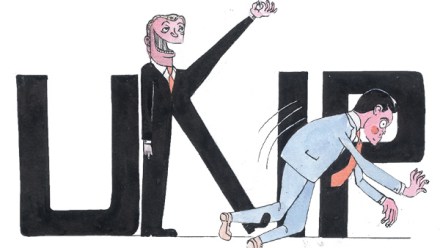
Since Nigel Farage’s latest resignation as Ukip leader, it has become clear that he is the only person who can hold the party together. Without him, Ukip has become a seemingly endless brawl between various hostile factions. Still, this leaderless mess has more supporters than the Liberal Democrats. That’s because Ukip, for all its flaws, has given a voice to those ignored in an overly centrist political debate — first Eurosceptic Tories, then working-class Labour voters. With decent leadership, Ukip could still do to the Labour party in the north of England what the SNP has done to it in Scotland. Steven Woolfe might have been able to supply that leadership, had he not been hospitalised by a fellow MEP. He has now quit, saying that Ukip is over.

Barometer | 20 October 2016

Ape escapes A gorilla got out of its enclosure at London Zoo and entered a keepers’ area, prompting an evacuation of visitors. Other gorillas who tried to emulate King Kong: — Casey, a 400 lb male, scaled a 15-foot wall and a four-foot fence at Como Zoo in Minnesota in 1994 and spent an hour at large before being coaxed back. — Little Joe, a 300 lb male, got out of Franklin Park Zoo, Boston, in 2003 and roamed free before being shot with a tranquiliser dart. Two people were injured. — Jabari, a 300 lb Western Lowland Gorilla, scaled 16 ft walls to escape at Dallas Zoo in 2004. He injured four people, including a boy of three, before being shot dead. A 19-year-old female gorilla escaped briefly at the same zoo in 2010.

When Isis comes home

The Islamic State’s pretence to nationhood was based on the holding of territory. With the battle for Mosul this week, together with the loss of the land that it controlled in Syria, that pretence is becoming harder to maintain. The area involved is now limited to a few shattered cities, and corridors between them. The decline of this terror organisation is to be welcomed. But this is a war which can have no neat ending. If Isis were a genuine state, it would by now be forced to consider unconditional surrender. That is not going to happen. More probably it will dissolve, its leaders and lesser agents making an escape or going into hiding. There is a danger that many Isis fighters will attempt to return to the European cities from which they came and continue an underground jihad.

Portrait of the week | 20 October 2016

Home Steven Woolfe, the MEP who spent three days in hospital after an altercation at a Ukip meeting, said he was resigning from the party, which was in a ‘death spiral’. Nicola Sturgeon, the leader of the Scottish National Party, told its annual conference that an independence referendum bill would be published for consultation this week. A decision on airport expansion in England was postponed again, and Downing Street said that ministers would be allowed to express their personal opinions. Olympic athletes in a parade in Manchester were joined on an open-topped bus by two young impostors wearing Team GB tracksuits and plastic medals. The annual rate of inflation measured by the Consumer Prices Index rose to 1 per cent in September from 0.

The King’s contribution

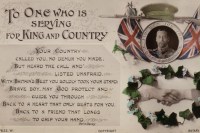
From ‘A Royal contribution’, The Spectator, 7 October 1916: His Majesty has passed through troublous times, in the constitutional controversy, in the Irish imbroglio, and in the war, when passion rose to its highest point. The temptation to go behind his Ministers, and to snatch popular favour at their expense, must have been tremendous sometimes. ‘Remember, I am not responsible for this!’ represents the attitude of many sovereigns who have called themselves constitutional. The King never by a hint, a suggestion, a word, or a gesture has taken the stage against his advisers.

Letters | 13 October 2016

Cathedral going Sir: While I enjoyed much of Simon Jenkins’s analysis of why England’s cathedrals are thriving (‘Why cathedrals are soaring’, 8 October) his article misses the point. As a self-confessed non-worshipper, his understanding of these buildings and their significance lacks a crucial dimension. The raison d’être of our churches and cathedrals is faith and worship. By focusing exclusively on historical and aesthetic elements and ignoring their continuing important spiritual role, Jenkins risks behaving like a restaurant critic who never bothers to taste the food on offer.

Portrait of the week | 13 October 2016

Home The pound fell against the dollar and the euro, weakening by 19 per cent against the dollar from its level at the time of the EU referendum to lows last seen in 1985. The FTSE 100 index almost beat its highest-ever closing level. There was much unrooted talk about what votes Parliament should have on the Brexit process and when. A spokesman for Theresa May, the Prime Minister, said: ‘Parliament is of course going to debate and scrutinise that process as it goes on’ and would then perhaps vote on the ‘final deal’. Cuadrilla was given permission by the government to drill four shale-gas wells in Lancashire that would employ hydraulic fracturing. Wolfgang Suschitzky, the photographer, died aged 104. Some Tory MPs called for the commissioning of a new royal yacht.