The Spectator

Portrait of the week | 22 September 2016

From our UK edition

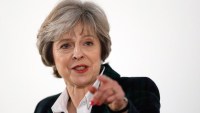
Home Theresa May was ‘quite likely’ to invoke Article 50 in January or February 2017, Donald Tusk, the president of the European Council, said she had told him. A Brexit agreement limiting EU people’s right to work in Britain would be vetoed by Hungary, Poland, the Czech Republic and Slovakia, according to Robert Fico, the Slovakian prime minister. At a UN summit, Mrs May said there should be a greater distinction between refugees and people trying to enter a country for economic reasons. Diane James was elected leader of the UK Independence Party. Two men who sold tooth whitener with 110 times the legal limit of hydrogen peroxide at the Royal Welsh Show in Builth Wells were jailed for 18 months.

Barometer | 22 September 2016

From our UK edition

Underbooked David Cameron is said to be struggling to get a good price for his memoirs, with talk of a £5 million advance shrinking to just £1.5 million. How does that compare with the advances for previous political memoirs? Greenland’s former prime minister said he had no regrets about the country’s vote to leave the EU in 1982, though it took three years to negotiate an exit. What happened to the economy before the vote, during negotiations and after departure from the EU in 1985? Tony Blair, A Journey (2010) £4.6m Lady Thatcher, the Downing Street Years (1993) £3.

Turning the tide

From our UK edition

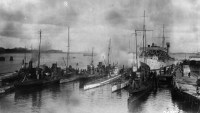
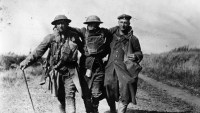
From ‘The Battle of the Somme’, The Spectator, 23 September 1916: It may prove to be the fact that the battle of last week was, indeed, the most important fought by British troops in the whole war. For it is possible that just as our men advanced on to the forward slope of the ridge the German moral slipped backwards down the slope, there and then, with the final, if secret, conviction that it could never recover itself… Our losses, of course, have been heavy, but there is not a shadow of evidence that they have been disproportionate to the ends accomplished.

Britain has shown Germany how to handle a migrant crisis

From our UK edition

Only now does Angela Merkel concede that she made mistakes when admitting a million refugees last year. It was obvious to most people in Europe at the time that her undoubtedly warm-hearted gesture would lead to catastrophic results. In declaring that all Syrian refugees would be welcome if they made it to Germany, she doubled the fortunes of the human trafficking industry. The asylum seekers came from Syria and North Africa through Austria and Hungary, having landed on the shores of Italy and Greece. Thousands died on the way. When Theresa May addressed the United Nations in New York yesterday, she was able to point to a British way of handling the crisis.

Letters | 15 September 2016

From our UK edition

What immigration debate? Sir: Henrik Jonsson says (Letters, 10 September) that Swedes ought to learn from the Brits how to maintain a broad and dynamic public debate. I can’t say I witnessed anything approximating public debate on the topic of immigration during the referendum, when the debate was carried out through the ballot box, not in reasonable parliamentary discussion. What we need is for more senior politicians to be willing to engage in public discourse and take a non-careerist approach. Too many leaders have thought it best to avoid this toxic issue rather than risk their positions. As Enoch Powell once described the typical politicians’ view on immigration, ‘It’s better for us to do nothing now and let it happen perhaps after our time.

Portrait of the week | 15 September 2016

From our UK edition

Home Schools in England would have the right to select pupils by ability, under plans outlined by Theresa May, the Prime Minister. New grammar schools would take quotas of poor pupils or help run other schools, a Green Paper proposed. ‘We already have selection in our school system — and it’s selection by house price, selection by wealth. That is simply unfair,’ Mrs May said in a speech. Sir Michael Wilshaw, the chief inspector of schools, said the idea that poor children would benefit from a return of grammar schools was ‘tosh’. Oversubscribed Catholic schools which wished to expand would be able to choose all their additional pupils on grounds of faith.

Defending Dave’s legacy

From our UK edition

It is too early to tell what sort of Prime Minister Theresa May will turn out to be, but we already know who she does not wish to be. From the moment that she arrived in Downing Street she has been inclined to define herself as the Conservative antithesis of David Cameron. She has developed a code for it, saying she’s for ‘the many, not the privileged few’ — as if she is still seeking to portray the Tories as a Nasty Party that must wash away the memory of its old leader. David Cameron got the message and resigned this week: next, he’ll be airbrushed out of No. 10’s photographs to complete his transition from Prime Minister to unperson.

In defence of Asquith

From our UK edition

From ‘Mr. Asquith’, The Spectator, 16 September, 1916: King George has no other subject who is trusted so widely by his countrymen and who is respected so heartily by our Allies as the Prime Minister. Under his guidance we are now, after two strenuous years of war, an even more thoroughly united nation than we were at first, although we have parted one by one with what we regarded as our traditional and indispensable privileges and liberties.

Letters | 8 September 2016

From our UK edition

What Swedes don’t say Sir: Tove Lifvendahl is, unfortunately, exactly right in her analysis of Swedish immigration and asylum policy (‘Sweden’s refugee crisis’, 3 September). Those in Sweden who support free movement and free trade feel it has long been obvious that the consensus in the riksdag would lead to disaster. Last autumn saw a celebrity-studded ‘Sweden Together’ celebration of the open-border immigration policy. Then, just six weeks later, we experienced the closure of borders and passport controls enforced on the Öresund bridge connecting Sweden to Denmark.

Portrait of the Week – 8 September 2016

From our UK edition

Home David Davis, the Secretary of State for Exiting the European Union, made his first statement to the Commons and said that if membership of a single market meant having to give up control of United Kingdom borders, ‘that makes it very improbable’. The official spokesman for Theresa May, the Prime Minister, who was away in China, disagreed, claiming that Mr Davis was merely ‘setting out his opinion’. ‘Saying something is probable or improbable,’ she said, ‘I don’t think is necessarily a policy.’ Speaking in China about freedom of movement after Brexit, Mrs May said: ‘I want a system where the government is able to decide who comes into the country — I think that’s what the British people want.

Migrant benefits

From our UK edition

Calm is slowly returning to the debate about Britain and Europe. The shrillness of the referendum campaign, and the hysteria from people who ought to have known better, is giving way to an acceptance that the end is not nigh and that things could be as good, if not better, than before. The idea that the British public had somehow voted for a recession is being steadily abandoned. The next stage is to accept that Brexit was not a populist yawp about protecting our borders. It was not a demand to stop immigration, but to manage it better. So when Theresa May rejected an Australian-style points-based immigration system this week, it did not mean that she had betrayed Brexit or shown her desire to water down the whole process.

Fire in the sky

From our UK edition

From ‘The burning of the Zeppelin’, The Spectator, 9 September 1916: Half London formed the vast proscenium for this tragedy of the air, and saw on the aerial stage the triumph of right over might — saw with their natural eyes David smite Goliath and hurl him in flaming ruin to the ground. Never before in human history had men sat in such a theatre and seen such a curtain rung down from the starry heights above them. But what made this drama of the open Heaven memorable above all record was the cheer that greeted its close. Those who had the inexpressible good fortune to hear that soul-shaking sound heard something which for its quality and its volume no ear had ever heard before, and, it may be, will never hear again.

School portraits | 8 September 2016

From our UK edition

Rugby When Rugby School first allowed girls into its sixth form in 1976, just ten joined. In 1995 it went fully co-ed and today there are 373 female pupils. The ankle-length skirts that form part of the uniform look old-fashioned, but the school’s co-educational aproach is far more progressive. The transition wasn’t all smooth, though. When the first head girl was appointed, some boys hung protest banners in the Warwickshire school’s chapel and boycotted a service marking the bicentenary of former headmaster Thomas Arnold. These days the head girl and head boy work seamlessly together and Rugby performs solidly in the league tables, with IGCSEs in most subjects and 29 different A-levels. As you’d expect, the school that invented rugby is strong on sport.

School report

From our UK edition

Teaching maths the Asian way English primary schools have received funding of £41 million to embrace the ‘Asian style’ of teaching maths. The method, used in Singapore, Shanghai and Hong Kong — all of which are at the top of Pisa’s study into the school performance of 15-year-olds — is more visual than the ‘normal’ British style of maths teaching, and focuses on children being taught in a mixed-ability group, rather than being divided into streams. The funding, announced in July, will allow 700 teachers to be trained in the Asian method, in addition to the 140 who have already completed their training.

Barometer | 1 September 2016

From our UK edition

Behind the cover-up Some facts about Burkinis: — The Burkini was invented by Ahedi Zanetti, a Lebanese-born Australian businesswoman, in 2004 after watching her niece trying to play netball in a hijab. — Muslim lifeguards started wearing them on Sydney beaches in 2007. — According to Zanetti, 40% of her customers are non-Muslim. — Two years ago, several swimming pools in Morocco were reported to have banned them for hygiene reasons. Drowning by numbers Five men drowned at Camber Sands in Sussex after being trapped playing football on a sandbank. Where did the 311 people who drowned in Britain last year die?

Letters | 1 September 2016

From our UK edition

Against Boris Sir: In discussing my attitude to Boris (‘The Boris-bashers should be ashamed’, 27 August), Mary Wakefield is too kind — to Boris. She claims that I am agin him because he has no plan and no philosophy. Not so: my criticisms are nearer those of the Oxford contemporaries whom she cites and who described Boris as a ‘sociopath’. He is a charismatic narcissist in a long tradition stretching back to Alcibiades. Such characters have no moral, intellectual or political integrity, but have a sublime confidence in their ability to charm themselves out of every embarrassment. Mary goes on to claim that David Cameron had no plan either, and surrounded himself with ‘yes men’. David was once asked about his overall objective.

A rotten windfall

From our UK edition

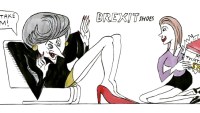
It’s strange that, even now, the Brexit vote is routinely referred to as an expression of anger or frustration — as if the most easily baffled half of the population had voted in response to forces they could not understand. In fact, the result of the 23 June referendum seems to look wiser with every week that has passed. Of course, leaving has its risks. But 52 per cent of voters judged that a greater one lay in staying in a European Union that is changing all the time — and invariably for the worse.

Portrait of the week | 1 September 2016

From our UK edition

Home Britain rejected a call by Nicolas Sarkozy, the former president of France who hopes to return to power next year, ‘for the opening of a centre in England to process asylum requests for all those who are in Calais’. More than 9,000 migrants camp at the so-called Jungle near Calais; it was Mr Sarkozy who in 2003 helped implement the bilateral treaty that allowed Britain to place border officials on the French side of the Channel. Southern Rail reinstated 119 of the 341 daily services it cut in July. Katrina Percy resigned as the chief executive of the Southern Health NHS Trust following criticism that the deaths of people with mental illness or deficiencies had not been examined properly.