The Spectator

to 2403: Hexad

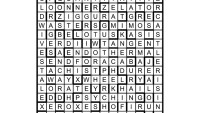
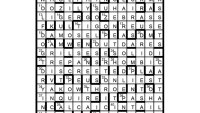
The second and fourth letters of six unclued lights gave abbreviations of the states forming New England: ACATER (13) Connecticut, ERNIE (24) Rhode Island, AMBEROID (27) Maine, ANCHOS (1D) New Hampshire, KVETCHED (22) Vermont and SMEAR (34) Massachusetts. NAG/LEND (17/36) is an anagram of ENGLAND suggesting ‘New England’.   First prize Mike Conway, Grantham, Lincs Runners-up John Sparrow, Padbury, Bucks; G.H.

In pictures: May Day protests in Paris turn violent

Hundreds of people have been arrested after violent May Day clashes in the centre of Paris. Tens of thousands of demonstrators took to the streets of the French capital to mark the event. Stone-throwing protestors clashed with police, as officers – more than 7,000 of whom were deployed – responded with tear gas. Gilets jaunes, who have held anti-government protests weekly since November, teamed up with May Day marchers.

Innovation and the NHS

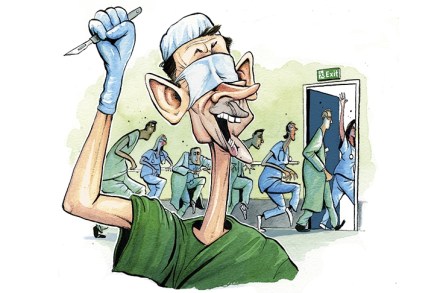
Why does the NHS need to change? Increased pressure The waiting list for hospital treatment has risen by 46% over five years. The number of beds available overnight in NHS hospitals has fallen by 11,220 (8.1%) since 2011. In the past 12 months, 834 overnight beds have been lost. The waiting list for consultant-led treatment has risen by 46% in the past five years. The current waiting list is estimated at 4.28 million — up 7% year-on-year. In 2018, an average of 12,835 people were admitted to hospital via A&E each day — up 6.7% on 2017 and 22.9% on five years ago. This amounts to an extra 2,389 emergency admissions a day. In 2018, 18.5% of people attending hospital A&E spent longer than four hours in the department, compared with 3.4% in 2010.

Letters | 25 April 2019

Not an island Sir: I and those with whom I live and work are all within coughing distance of Sam Leith’s ‘threshold of death’ and we need no reminders that your body is your own, because we wish to God it wasn’t (‘Last rights’, 20 April). But as it is, we owe it to that body to see the process through. My ‘going hence’ is not a private matter. I am not an island but a piece of the continent and that connection is the key to the human genius of social literacy. We demented dodderers are an eighth age, a new demographic, practically a new species, and we bring with us new ethical dilemmas.

Portrait of the week | 25 April 2019

Home Theresa May, the Prime Minister, returned to parliament after the Easter recess to find backbenchers plotting to get rid of her. The 1922 Committee agonised over whether to change its rules in order to hold another vote of no confidence in her. More than 70 local Conservative association chiefs called an extraordinary general meeting of the National Conservative Convention to consider the proposition: ‘We no longer feel that Mrs May is the right person to continue as prime minister.’ A poll of Conservative councillors by Survation, for the Mail on Sunday, found that 40 per cent were planning to vote for the Brexit party in next month’s EU elections.

What Isis wants

It has become commonplace to describe terror attacks as ‘senseless’. The horrific Easter Sunday bombings in Sri Lanka, which cost the lives of more than 350 people, several British citizens among them, make little sense. The only way to understand them is as a symptom of the growing globalisation of terror. The tactics — synchronised bombs on a Christian holy day — are grotesquely familiar. And it was not surprising to learn that one of the attackers was partly educated in London. The attacks, on three Catholic churches and three hotels favoured by westerners, clearly targeted Christians. The culprits have been identified as local Islamic extremists. The purpose of the attacks, therefore, was to increase tensions between Muslims and non-Muslims.

Backing Mrs Thatcher

From ‘Be brave’, 28 April 1979: We can think of a number of reasons why voters might feel reluctant to vote for Mrs Thatcher. But this reluctance should be set aside. We must be brave. Only time can tell whether the Tories possess the necessary qualities of resolution and ability which are needed to deal with the nation’s problems. What we do know is that Labour entirely lacks them… The problems are familiar: a State which spends an ever-increasing proportion of ever diminishing national wealth; the atrophy of those traditions and mores which have supported British social life, resulting in growing lawlessness; a deplorable industrial record which may reasonably be blamed on a trade union movement that positively exults in maintaining low productivity.

Barometer | 17 April 2019

Embassy endurance Julian Assange was thrown out of the Ecuadorian embassy in London, seven years after seeking sanctuary from extradition proceedings. But there are people who have hidden longer in embassies: — Jozsef Mindszenty, a Hungarian cardinal, spent 15 years in asylum in the US embassy in Budapest. He had served eight years in jail for opposing the communist regime but was freed during the Hungarian uprising in 1956. In 1971, he was allowed to leave Hungary to live in exile in Austria. — Berhanu Bayeh, Ethiopian foreign minister between 1986 and 1989, has been sheltering in the Italian embassy in Addis Ababa since 1991, when his government was overthrown by the Ethiopian People’s Revolutionary Democratic Front.

Portrait of the Week – 17 April 2019

Home Although the latest date for Brexit had been postponed by the European Council until Halloween, 31 October, the government had to confront the prospect of holding elections to the European parliament on 23 May if parliament would not agree to Theresa May’s withdrawal agreement before then. Former Conservative leader Iain Duncan Smith said that May should go before those elections, which ‘would be a disaster for the country. What are you going to say on the doorstep — vote for me and I’ll be gone in three months?’. Nigel Farage launched his Brexit party. The House of Commons went into recess until 23 April, St George’s day.

Out of the ashes | 17 April 2019

‘Great edifices, like great mountains, are the work of centuries,’ wrote Victor Hugo in Notre-Dame de Paris. ‘The man, the artist, the individual, is effaced in these great masses, which lack the name of their author. Human intelligence is there summed up and totalised.’ The foundation stone of the cathedral of Our Lady of Paris was laid 850 years ago, but it was the work of generations, and took 200 years to complete. It soon became one of the greatest churches in Christendom and, as such, was ripe for desecration by the Jacobin fanatics of the French Revolution. In 1793, its altar was torn out in a ceremony that was too grotesque even for Robespierre.

to 2401: sign here please

The unclued lights are ACCENTS or DIACRITICAL SIGNS and any appearing on letters in the grid had to be ignored.   First prize Professor Colin Ratledge, E. Yorkshire Runners-up V.A. Plomer, Swindon; B.

Israel and the UN

From ‘Israel’s Candidature’, The Spectator, 22 April 1949: Israel’s application for UN membership received a chillier reception than had been expected. There was a widespread feeling more needs to be known about Israel’s intentions on certain points before the final seal is given to her international position. Does she propose to do anything about the Arab refugees except quibble ? Was the round-up of the Stern Gang which followed Count Bernadotte’s assassination a piece of window-dressing, or is there a serious intention to bring the murderers of the UN mediator to book? Does Israel mean to block or to co-operate with plans for the internationalisation of Jerusalem?

Barometer | 11 April 2019

Flextensions Some organisations which may have benefited from Donald Tusk’s offer of a ‘flextension’ to Article 50: — Adidas, which has marketed a ‘Porsche Design Sport Flextension Easy Trainer’. — DB Flextension, a South Africa company which makes commercial signage systems. — Flextension, a Dutch charity which supports the development of wheelchairs and other equipment for boys and young men suffering from muscular dystrophy. Worse than smoking? A University of Washington study claimed that poor diet kills more people globally than smoking does.

Letters | 11 April 2019

All Cameron’s fault Sir: In this time of febrile political speculation, there can have been few more arresting subject headings on your Letters page than ‘Not Cameron’s fault’ (6 April). Your correspondent Mike Jeffes added to the sense of unreality by writing that ‘Cameron did nothing wrong’. You need to be neither a Remainer nor Brexiteer to follow in horror the painful result of Cameron’s opening of this Pandora’s Box in 2016. In the 2010 and 2015 elections, the subject of Europe was well down on the list of voter concerns, but with a mixture of hubris, stupidity, and narrow political interest, Cameron’s decision to call the referendum has driven us into this political quagmire.